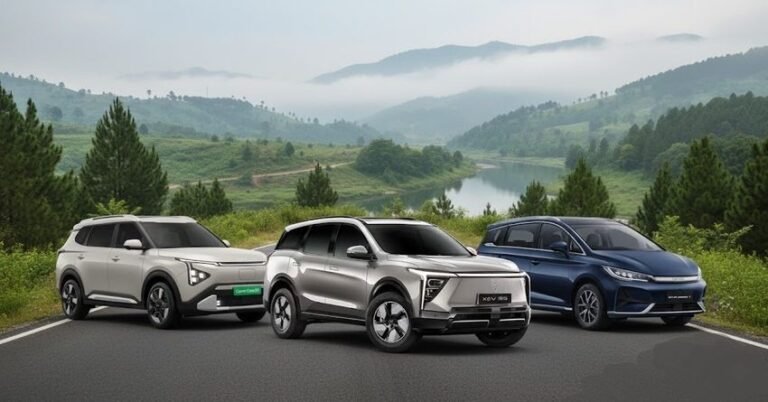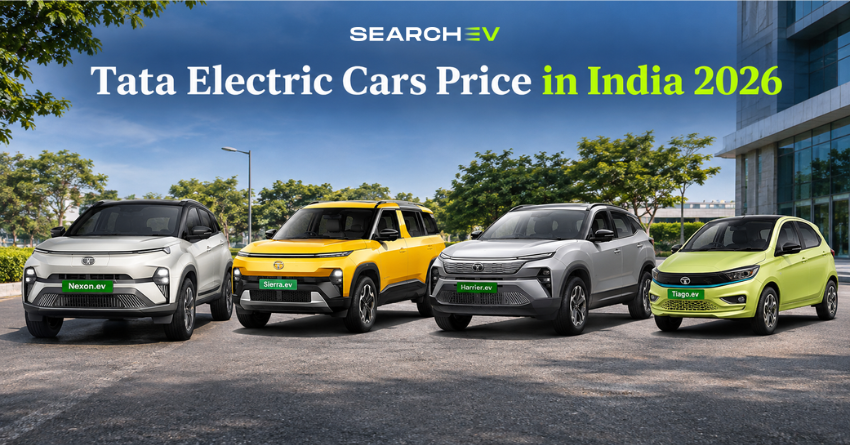
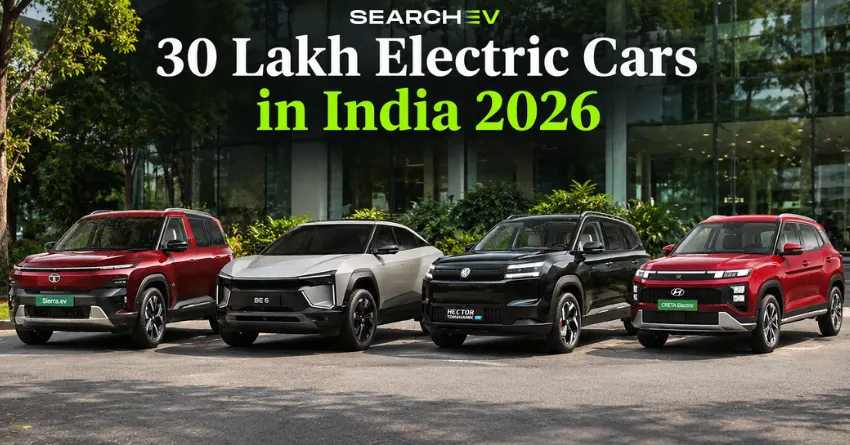
30 lakh electric cars in India start at Rs. 18.79 lakh for the Tata Sierra EV and go up to Rs. 29.95 lakh for the Mahindra XEV 9S and XEV 9e (ex-showroom). In this budget, you get up to 500 km of real-world range, up to 350 hp, all-wheel drive and even seven seats, from Tata, Mahindra, Hyundai, MG and VinFast.
30 Lakh Electric Cars Price List 2026
| Electric Car Variant | Battery | Claimed Range | Top Speed | Ex-Showroom Price |
| Tata Sierra EV Pure 63 | 63 kWh | 565 km | 165 km/h | Rs. 18.79 lakh |
| Mahindra BE 6 One 59 | 59 kWh | 548 km | 200 km/h | Rs. 19.45 lakh |
| MG Hector Tomahawk EV Excite | 69.2 kWh | 517 km | 160 km/h | Rs. 19.49 lakh |
| Hyundai Creta Electric Executive (O) LR | 51.4 kWh | 473 km | 180 km/h | Rs. 20.00 lakh |
| Mahindra XEV 9S Pack One Above 59 | 59 kWh | 521 km | 202 km/h | Rs. 20.65 lakh |
| Tata Harrier EV Adventure 65 | 65 kWh | 538 km | 160 km/h | Rs. 21.79 lakh |
| Mahindra XEV 9e Pack One 59 | 59 kWh | 522 km | 200 km/h | Rs. 21.90 lakh |
| Mahindra XEV 9S Pack One Above 79 | 79 kWh | 679 km | 202 km/h | Rs. 22.65 lakh |
| Mahindra BE 6 Three 70 | 70 kWh | 651 km | 202 km/h | Rs. 22.95 lakh |
| VinFast VF7 Earth | 59.6 kWh | 438 km | 200 km/h | Rs. 22.99 lakh |
| MG Hector Tomahawk EV Essence (7-seat) | 69.2 kWh | 517 km | 160 km/h | Rs. 23.49 lakh |
| Tata Sierra EV Empowered 75 | 75 kWh | 665 km | 165 km/h | Rs. 23.79 lakh |
| Hyundai Creta Electric Excellence LR HC Knight DT | 51.4 kWh | 473 km | 180 km/h | Rs. 24.70 lakh |
| Mahindra BE 6 Three+ 79 | 79 kWh | 683 km | 200 km/h | Rs. 24.95 lakh |
| Tata Harrier EV Fearless Plus 75 | 75 kWh | 627 km | 180 km/h | Rs. 25.29 lakh |
| VinFast VF7 Wind | 70.8 kWh | 532 km | 200 km/h | Rs. 25.89 lakh |
| Tata Sierra EV Empowered A 75 QWD | 75 kWh | 624 km | 165 km/h | Rs. 25.99 lakh |
| Mahindra XEV 9e Pack Two 79 | 79 kWh | 656 km | 200 km/h | Rs. 26.50 lakh |
| Mahindra BE 6 Four 79 | 79 kWh | 683 km | 200 km/h | Rs. 26.95 lakh |
| VinFast VF7 Sky AWD | 70.8 kWh | 510 km | 200 km/h | Rs. 27.49 lakh |
| Tata Harrier EV Empowered QWD 75 | 75 kWh | 622 km | 180 km/h | Rs. 29.29 lakh |
| Mahindra XEV 9S Pack Three Above 79 | 79 kWh | 679 km | 202 km/h | Rs. 29.95 lakh |
| Mahindra XEV 9e Pack Three 79 | 79 kWh | 656 km | 200 km/h | Rs. 29.95 lakh |
Claimed range is MIDC, except the VinFast VF7 (ARAI). The table shows the entry, key middle and top variants of each car under Rs. 30 lakh; every model’s section below links to its full variant list.
Quick picks: the Mahindra XEV 9S gives seven seats and the best real-world range, the Mahindra BE 6 is the most fun to drive, and the Tata Sierra EV gives the most space for the money. For a 7-seater on a tighter budget, the MG Hector Tomahawk EV starts below Rs. 20 lakh.
Best 30 Lakh Electric Cars Explained
Tata Sierra EV
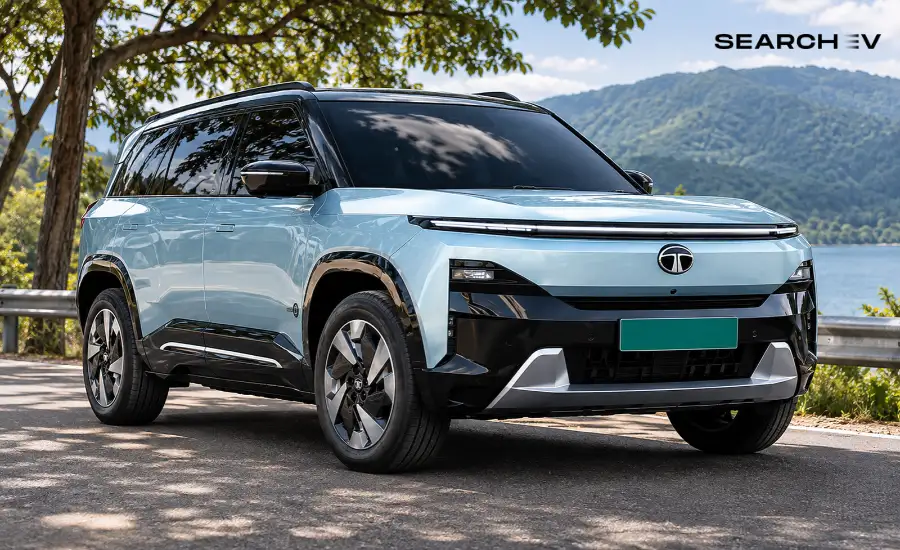
The Tata Sierra EV launched in June 2026 and quickly became the space champion of this list. It has a 622-litre boot plus a 55-litre frunk, three 12.3-inch screens and Level 2+ ADAS. Tata quotes a real-world range of 510 to 530 km for the 75 kWh pack, while the dual-motor QWD version hits 100 km/h in 5.8 seconds.
Best for: families who want the most cabin and boot space for the money.
Mahindra BE 6
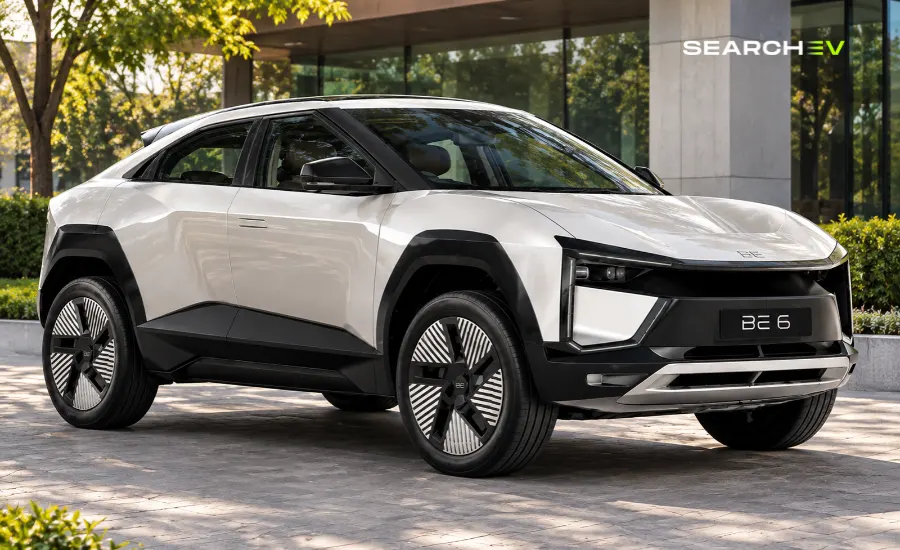
The Mahindra BE 6 got its Sporteq update in August 2026, with a new cockpit and a new 70 kWh battery. The 79 kWh version makes 286 PS (about 282 bhp) and 380 Nm, and in Autocar India’s real-world test it covered about 449 km on a charge. It is a sporty five-seater with a 455-litre boot and a 45-litre frunk.
Best for: enthusiasts who want sharp handling and fighter-jet styling.
MG Hector Tomahawk EV
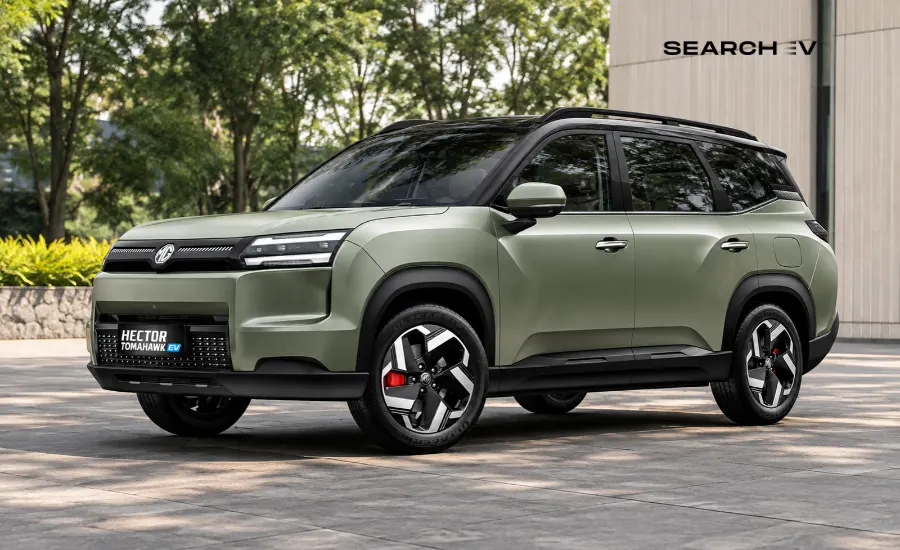
The MG Hector Tomahawk EV launched on 26 August 2026 with a 69.2 kWh LFP battery and a choice of five or seven seats. Its front motor makes 204 hp, and it returned about 446 km in real-world testing, the best city efficiency in this list. The five-seater gets a huge 610-litre boot, and V2L lets you power appliances from the car.
Best for: big families who want a 7-seat EV without crossing Rs. 25 lakh.
Hyundai Creta Electric
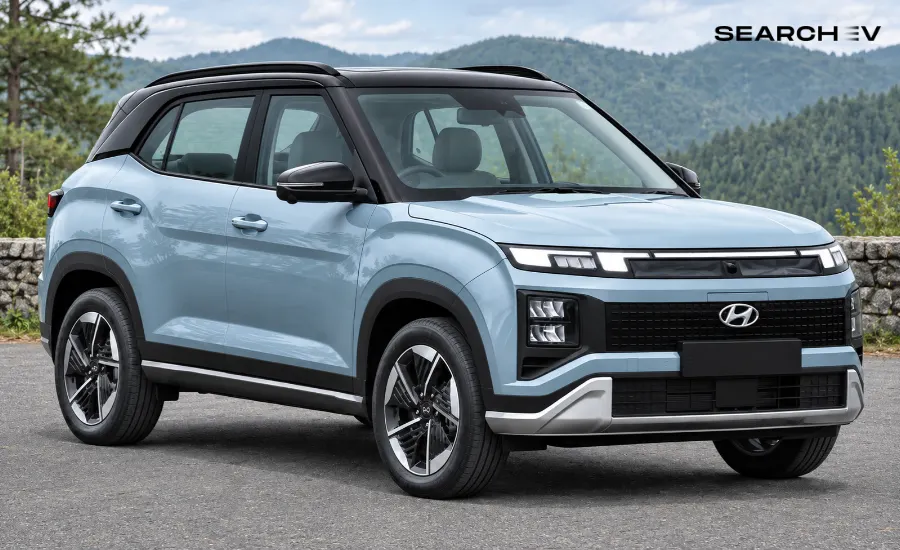
The Hyundai Creta Electric is the most familiar name here. Its 51.4 kWh Long Range version makes 171 PS, hits 100 km/h in 7.9 seconds and charges from 10% to 80% in about 50 minutes on a DC charger. You get a 433-litre boot plus a 22-litre frunk, Level 2 ADAS and Hyundai’s huge service network.
Best for: buyers who want a compact, easy-to-drive EV from a trusted brand.
Mahindra XEV 9S
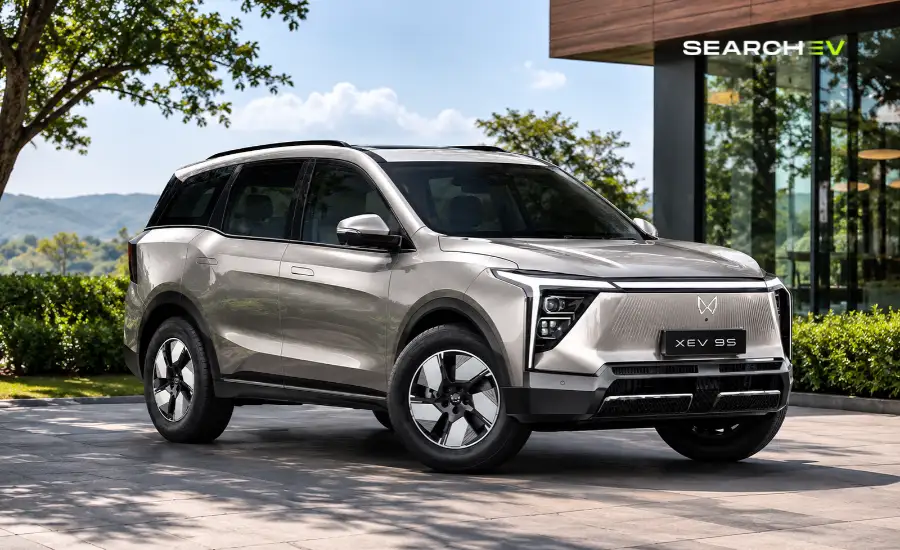
The Mahindra XEV 9S is the only three-row electric SUV in India with up to 679 km of claimed range. In real-world testing, the 79 kWh version did about 478 km, the best figure in this budget. Since August 2026, you can also pick six-seat captain chairs for about Rs. 25,000 extra.
Best for: families of six or seven who want the longest range.
Tata Harrier EV
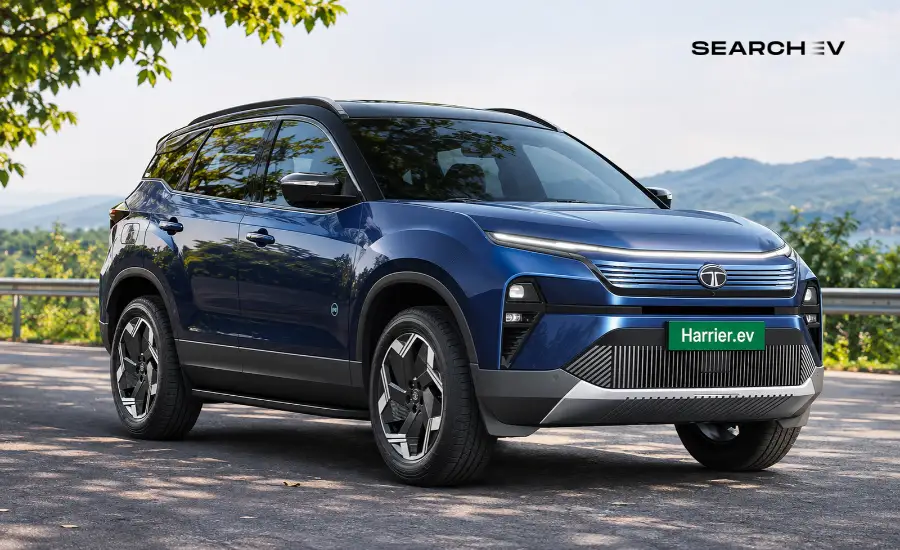
The Tata Harrier EV is the rugged choice. The RWD version makes about 235 bhp, while the dual-motor QWD makes about 390 bhp and 504 Nm, with off-road terrain modes. Tata quotes a real-world range of 460 to 490 km for the QWD, and the boot holds 502 litres plus a frunk of up to 67 litres.
Best for: buyers who want all-wheel drive and a tough SUV for hill roads.
Mahindra XEV 9e
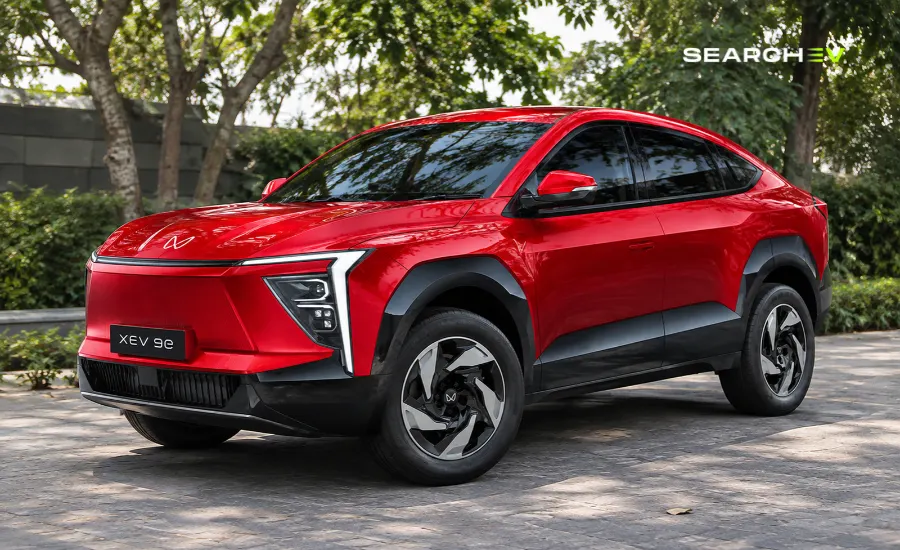
The Mahindra XEV 9e is a five-seat coupe-SUV with three screens across the dashboard. It shares the XEV 9S’s 79 kWh battery and 286 PS motor, and it managed about 456 km in real-world testing. Its 663-litre boot is the biggest of any five-seater here.
Best for: buyers who want a premium, tech-heavy five-seater.
VinFast VF7
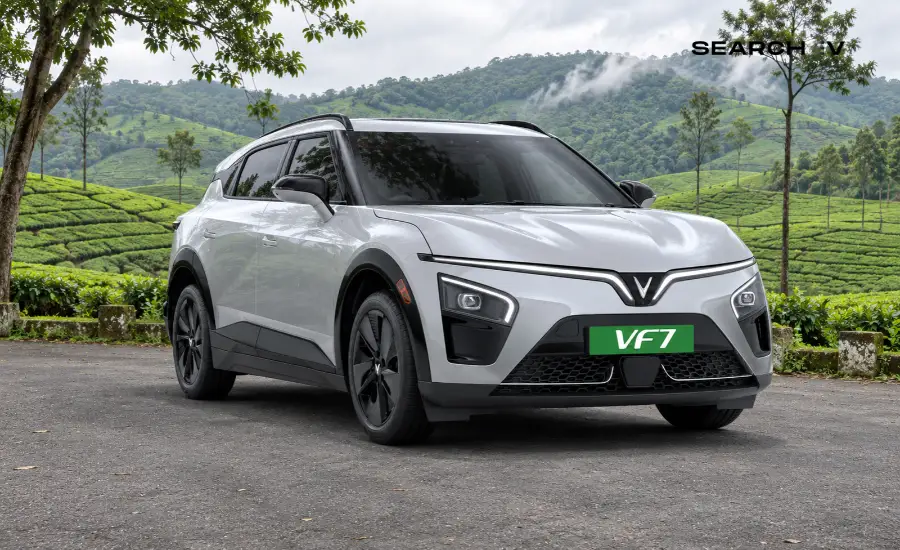
The VinFast VF7 is one of the quickest cars in this budget: the Sky AWD makes 350 hp and 500 Nm, reaches 100 km/h in 5.8 seconds and has a top speed of 200 km/h. It also has the longest warranty, 10 years or 2 lakh km on both car and battery, plus free charging at VinFast’s V-Green stations till July 2028. Boot space is 537 litres.
Best for: buyers who want maximum performance and peace of mind on warranty.
30 Lakh Electric Cars On-Road Price in Top 5 Cities
| Electric Car (Variant) | Delhi | Mumbai | Chennai | Hyderabad | Bengaluru |
| Tata Sierra EV Pure 63 | Rs. 19.60 lakh | Rs. 19.60 lakh | Rs. 19.60 lakh | Rs. 19.60 lakh | Rs. 21.11 lakh |
| Mahindra BE 6 One 59 | Rs. 20.29 lakh | Rs. 20.29 lakh | Rs. 20.29 lakh | Rs. 20.29 lakh | Rs. 21.85 lakh |
| MG Hector Tomahawk EV Excite | Rs. 20.33 lakh | Rs. 20.33 lakh | Rs. 20.33 lakh | Rs. 20.33 lakh | Rs. 21.89 lakh |
| Hyundai Creta Electric Executive (O) LR | Rs. 20.86 lakh | Rs. 20.86 lakh | Rs. 20.86 lakh | Rs. 20.86 lakh | Rs. 22.46 lakh |
| Mahindra XEV 9S Pack One Above 59 | Rs. 21.53 lakh | Rs. 21.53 lakh | Rs. 21.53 lakh | Rs. 21.53 lakh | Rs. 23.19 lakh |
| Tata Harrier EV Adventure 65 | Rs. 22.72 lakh | Rs. 22.72 lakh | Rs. 22.72 lakh | Rs. 22.72 lakh | Rs. 24.46 lakh |
| Mahindra XEV 9e Pack One 59 | Rs. 22.83 lakh | Rs. 22.83 lakh | Rs. 22.83 lakh | Rs. 22.83 lakh | Rs. 24.58 lakh |
| VinFast VF7 Earth | Rs. 23.96 lakh | Rs. 23.96 lakh | Rs. 23.96 lakh | Rs. 23.96 lakh | Rs. 25.80 lakh |
| Mahindra BE 6 Four 79 | Rs. 28.07 lakh | Rs. 28.07 lakh | Rs. 28.07 lakh | Rs. 28.07 lakh | Rs. 30.77 lakh |
| Mahindra XEV 9S Pack Three Above 79 | Rs. 31.19 lakh | Rs. 31.19 lakh | Rs. 31.19 lakh | Rs. 31.19 lakh | Rs. 34.18 lakh |
| Road tax on electric cars | 0% (up to Rs. 30 lakh) | 0% | 0% (till 31 Dec 2027) | 0% (till 31 Dec 2026) | 8% up to Rs. 25 lakh, 10% above |
Approximate on-road prices. They include first-year insurance at about 3.8% of the ex-showroom price and about Rs. 10,000 for FASTag and other charges. Registration is free for EVs across India.
Bengaluru is now the costliest of the five cities. Karnataka brought back road tax on electric cars in April 2026, so a Rs. 20 lakh EV pays about Rs. 1.6 lakh more there than in Delhi or Mumbai. Above Rs. 25 lakh, the rate jumps to 10%, which adds about Rs. 3 lakh to an XEV 9S Pack Three Above. Meanwhile, Hyderabad’s zero road tax ends on 31 December 2026, so buyers there can save the most by registering this year.
Upcoming 30 Lakh Electric Cars
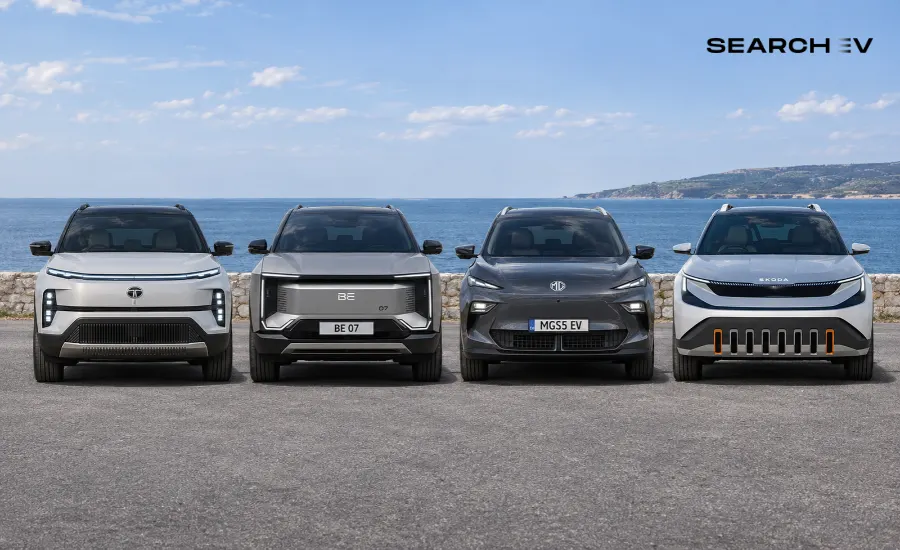
| Upcoming EV | Expected Launch | Expected Price | Battery / Range | Status |
| Tata Safari EV | January 2027 | Rs. 22.5 to 30 lakh | 65 kWh and 75 kWh, RWD and AWD | Testing; first three-row Tata EV |
| Mahindra BE.07 | Before June 2027 | Rs. 25 to 29.5 lakh | 59, 70 and 79 kWh options | Launch confirmed by Mahindra |
| MG S5 EV | 2027 | Not announced | 49 kWh and 64 kWh, up to 500+ km | Will replace the MG ZS EV |
| Skoda Epiq | 2027 | Rs. 20 to 26 lakh | Not confirmed for India | Expected; Skoda’s first affordable EV |
The Safari EV is the one to wait for if you need a 7-seater from Tata, as it should borrow the Harrier EV’s batteries and dual-motor setup. Meanwhile, the BE.07 will add a new Mahindra electric SUV on the same platform and batteries as the BE 6 and XEV 9S. All prices here are estimates, since no brand has announced official figures yet.
Warranty, BaaS, Charging and Running Cost
| Electric Car | Battery Warranty | DC Fast Charging (Approx.) |
| Tata Sierra EV | Lifetime for first owner | 20–80% in about 26 min (120 kW) |
| Tata Harrier EV | Lifetime for first owner | 20–80% in about 25 min (120 kW) |
| Mahindra BE 6, XEV 9e, XEV 9S | Lifetime for first private owner; 10 years or 2 lakh km for later owners | 20–80% in about 20 min (140 kW+) |
| MG Hector Tomahawk EV | Lifetime for first owner (confirm with dealer) | 30–80% in about 35 min (90 kW) |
| Hyundai Creta Electric | 8 years or 1.6 lakh km | 10–80% in about 50 min |
| VinFast VF7 | 10 years or 2 lakh km (car and battery) | 10–70% in 24–28 min |
A lifetime warranty usually applies only to the first registered owner, so it does not lift resale value as much as it seems. In comparison, VinFast’s 10-year cover and Mahindra’s 10-year cover for later owners transfer with the car. Our guide to EV battery warranty in India explains the fine print.
Battery-as-a-Service (BaaS): several cars in this list now let you buy the car without the battery and pay a per-km battery rent. This cuts the upfront price sharply, as our battery-as-a-service guide explains.
| Electric Car | BaaS Starting Price | Battery Rent |
| Mahindra BE 6 (59 kWh) | Rs. 11.45 lakh | Rs. 3.75/km |
| Tata Sierra EV 63 | Rs. 11.99 lakh | Rs. 5.5/km |
| Mahindra XEV 9S | Rs. 12.65 lakh | Varies by variant |
| MG Hector Tomahawk EV | Rs. 13.99 lakh (introductory) | Rs. 4.90/km |
| Tata Harrier EV 65 | Rs. 14.49 lakh | Rs. 5.9/km |
Running cost: most cars here cover about 6 km per unit in real use. At home rates of about Rs. 8 per unit, that works out to roughly Rs. 1.3 per km. A petrol SUV of this size that does 12 km a litre costs about Rs. 8.5 per km. So, if you drive 1,500 km a month, you save about Rs. 10,800 a month, or around Rs. 1.3 lakh a year. Public fast chargers cost more per unit, as our EV running cost comparison shows.
FAQs on 30 Lakh Electric Cars
1. Is the Rs. 30 lakh budget ex-showroom or on-road?
Most lists use ex-showroom prices, but the on-road price can be much higher in some states. For example, a Rs. 27 lakh EV costs over Rs. 30 lakh on-road in Bengaluru because of 10% road tax. Also, Delhi’s road tax waiver only covers EVs priced up to Rs. 30 lakh ex-showroom.
2. What will the EMI be on a Rs. 25 lakh electric car?
With a 20% down payment, a five-year loan of Rs. 20 lakh at 9% interest works out to an EMI of about Rs. 41,500. Since you save around Rs. 10,800 a month on fuel, the real monthly cost is closer to Rs. 30,700.
3. Do these prices include a home charger?
Not always. Mahindra’s prices exclude the wall charger and its installation. On the Tata Sierra EV and Harrier EV, the charger comes only with ACFC variants for about Rs. 50,000 more, and Hyundai charges extra for its HC variants.
4. Which electric cars under Rs. 30 lakh have a 5-star Bharat NCAP rating?
The Tata Harrier EV, Mahindra BE 6 and Mahindra XEV 9e all scored five stars in Bharat NCAP crash tests. Check the latest rating for newer launches before you buy.
5. Which is the fastest electric car under Rs. 30 lakh?
The Tata Sierra EV QWD and VinFast VF7 Sky AWD both reach 100 km/h in about 5.8 seconds. The Mahindra BE 6 Formula E edition follows at 6.44 seconds with its boost function.
6. Can these EVs power appliances outside the car?
Yes, several can. The Tata Sierra EV and MG Hector Tomahawk EV support V2L and V2V, so you can run a laptop or kettle, or even charge another EV. The Hyundai Creta Electric also supports V2L.
7. How much does a 500 km highway trip cost in an EV?
At about 6 km per unit, a 500 km trip needs around 83 units. On public fast chargers at Rs. 22 to Rs. 25 per unit, that costs roughly Rs. 1,800 to Rs. 2,100, against about Rs. 4,300 for a petrol SUV.
8. Can I still claim an income tax benefit on an EV loan?
No, not for new loans. Section 80EEB allowed a deduction of up to Rs. 1.5 lakh on EV loan interest, but only for loans sanctioned between April 2019 and March 2023. Business owners can still claim depreciation if the car is used for work.