Quick answer: Charging at home costs roughly ₹1 per kilometre. A public DC fast charger usually works out at ₹2 to ₹3.30 per kilometre. Over 1,000 km a month, that is about ₹1,100 at home and ₹2,000 to ₹3,300 at a fast charger. Petrol, for comparison, would set you back ₹6,500 to ₹8,000.
Ask anyone thinking about an electric car what worries them and the running cost question comes up quickly. Not the sticker price, but the monthly bill. The honest answer is that it depends on where you plug in.
Home and public charging are priced so differently that your habits matter more than the car you choose. Here is how the numbers stack up, and how to keep yours at the low end.
How to work out your EV charging cost
You don’t need an app for this. Two simple sums do the job.
- Cost per full charge = battery size (kWh) × price per unit (₹ per kWh)
- Cost per kilometre = price per unit ÷ kilometres per kWh
Most electric cars manage around 7 to 8 km for every kWh in real driving, so this article uses 7.5 km per kWh throughout. At home, add roughly 10% for losses in the charger and cable, because you pay for what leaves the meter, not what reaches the battery. The prices come from recent 2026 tariff guides and operator rates, so treat them as a guide and check your own bill.
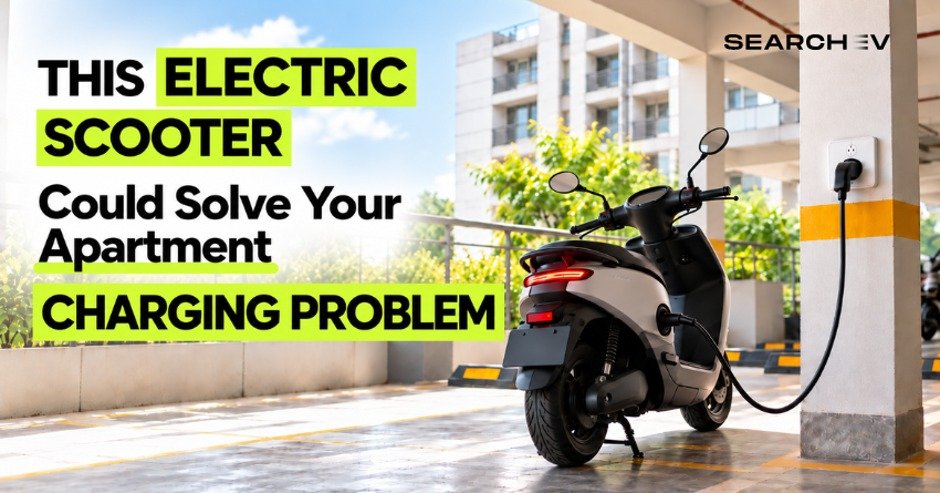
Charging at home: the cheapest option, with a catch or two
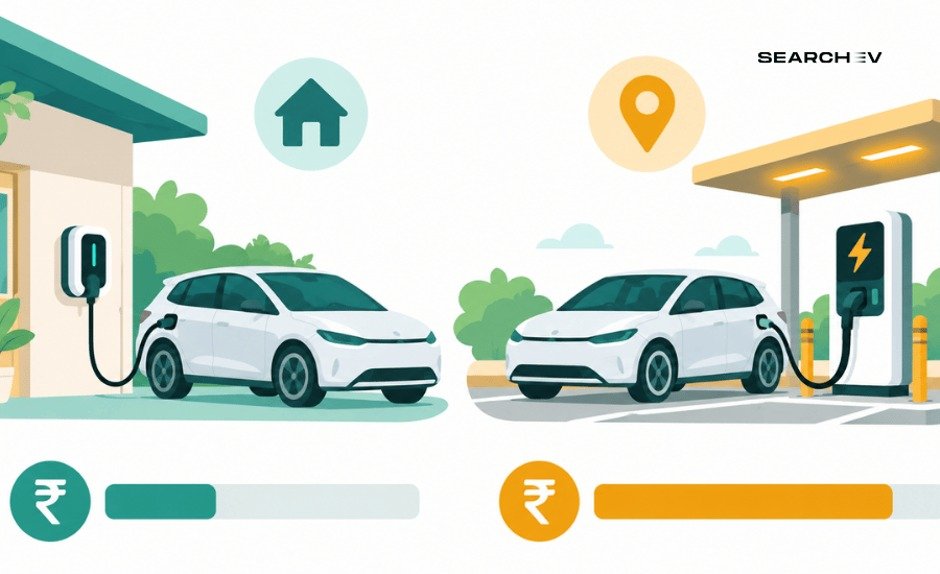
Most households pay between ₹6 and ₹9 a unit on a domestic connection, depending on the state and the slab. A Tata Nexon EV with a 45 kWh pack at ₹8 a unit costs about ₹360 to fill from empty, or roughly ₹400 once losses are counted.
Some states go further. Recent tariff guides list dedicated EV rates of around ₹4.50 to ₹5 a unit in Delhi and Karnataka, usually on a separate meter, and Telangana has introduced a time-of-day rate for EV charging. Rules differ between electricity providers and they change often, so ask yours before assuming.
Then there is the slab trap. Adding 150 to 200 units of charging to a normal household bill can push you into a higher bracket, where units cost ₹9 to ₹12. Watch your meter for the first couple of months and you’ll avoid a nasty surprise.
Public charging: convenient, but you pay for it
Public prices vary by operator, city and charger speed. AC chargers typically cost ₹10 to ₹18 a unit. DC fast chargers from networks such as Tata Power EZ Charge, Statiq, ChargeZone and Jio-bp mostly sit between ₹15 and ₹25, and premium mall or hotel sites can go higher.
One 2026 comparison put a 20% to 80% top-up on a 45 kWh Nexon EV at about ₹270 at home, against ₹430 to ₹570 at some public networks. That is roughly double for the same electricity.
Watch for extras too. GST, service charges and idle fees (for leaving the car plugged in after it is full) can push the final bill above the headline rate.
What a typical month costs
Here is how the options compare over 1,000 km, using 7.5 km per kWh.
| Charging method | Typical price per unit | Cost per km | Cost for 1,000 km |
| Home, dedicated EV tariff | ₹4.50–5 | ₹0.65–0.75 | ₹650–750 |
| Home, domestic tariff | ₹6–9 | ₹0.90–1.30 | ₹900–1,300 |
| Public AC charger | ₹10–18 | ₹1.30–2.40 | ₹1,300–2,400 |
| Public DC fast charger | ₹15–25 | ₹2–3.30 | ₹2,000–3,300 |
| Petrol car (about ₹100 a litre) | n/a | ₹6.50–8 | ₹6,500–8,000 |
Home figures include the 10% loss allowance. Public prices are for energy delivered, so no extra is added.
Most owners mix the two. Do 800 km a month at home and 200 km on fast chargers and you’re looking at around ₹1,400. Even if you rely entirely on fast chargers, you’d still pay roughly half of what petrol costs, or less.
Five ways to cut your charging bill
- Ask about an EV tariff. A separate EV meter or rate can cut your cost per unit noticeably, where your provider offers one.
- Charge overnight where time-of-day rates apply. If your state has them, off-peak hours are the cheapest.
- Save fast charging for journeys. It is the priciest option, and speeds drop sharply above 80%, so topping up further mostly costs you time.
- Compare apps before you plug in. Chargers of similar speed can differ by several rupees a unit between networks.
- Track your units. A smart charger or sub-meter shows exactly what the car adds to your bill and whether you are creeping into a higher slab.
Frequently asked questions
1. How much does it cost to charge an EV at home in India?
Roughly ₹250 to ₹450 for a full charge, depending on battery size and your state’s tariff. That works out at about ₹1 per kilometre.
2. Is fast charging cheaper than petrol?
Usually, yes. At ₹2 to ₹3.30 per kilometre, even DC fast charging is well below the ₹6.50 to ₹8 that petrol typically costs.
3. Is it cheaper to charge at night?
Only if your electricity provider has a time-of-day or EV tariff. On a standard domestic tariff, the rate is the same all day.
4. Will an EV push my electricity bill up a lot?
Expect an extra 150 to 200 units a month for about 1,000 km of driving. Check which slab that lands you in.
The bottom line: plug in at home whenever you can, keep fast chargers for journeys, and an EV will cost a fraction of what petrol does.