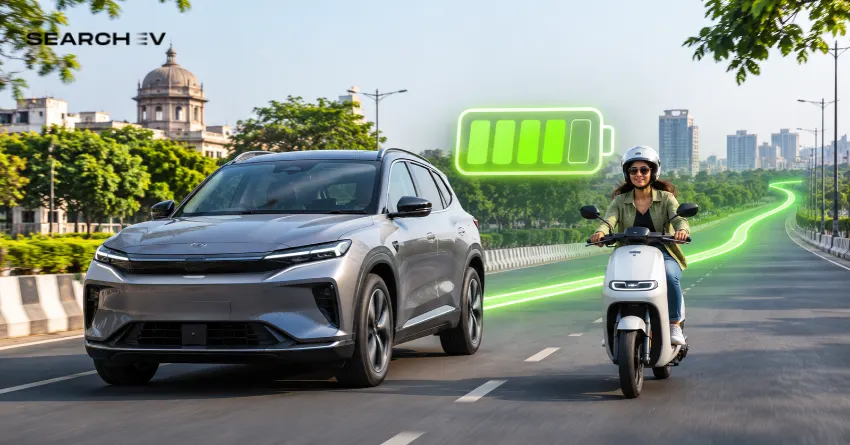
Driving range is one of the first things Indian buyers check before purchasing an electric vehicle. Whether someone is considering an electric scooter for daily commuting or an electric car for regular highway travel, the distance a vehicle can cover on a single charge plays an important role in the buying decision.
However, the range mentioned in a vehicle’s specifications does not always match the distance owners experience on the road. Traffic conditions, riding or driving habits, road quality, weather and the use of electrical features can all influence how far an EV travels.
Understanding these factors can help buyers choose a vehicle that suits their daily requirements and help existing owners make better use of the available battery charge.
What Does Electric Vehicle Range Mean?
Electric vehicle range refers to the distance an EV can travel using the energy stored in its battery before it needs to be recharged.
Manufacturers generally publish a certified or test-cycle range for each model. This provides a standardised basis for comparing vehicles, but everyday usage involves conditions that may differ from the testing environment.
For an Indian EV owner, the useful question is not simply how many kilometres a vehicle can cover under a test cycle. It is whether the vehicle can comfortably handle daily commuting, occasional longer trips and the routes the owner regularly uses.
The right range requirement can therefore vary considerably between a city commuter, a highway traveller and someone who uses an electric two-wheeler for work.
What Factors Affect Electric Vehicle Range in India?
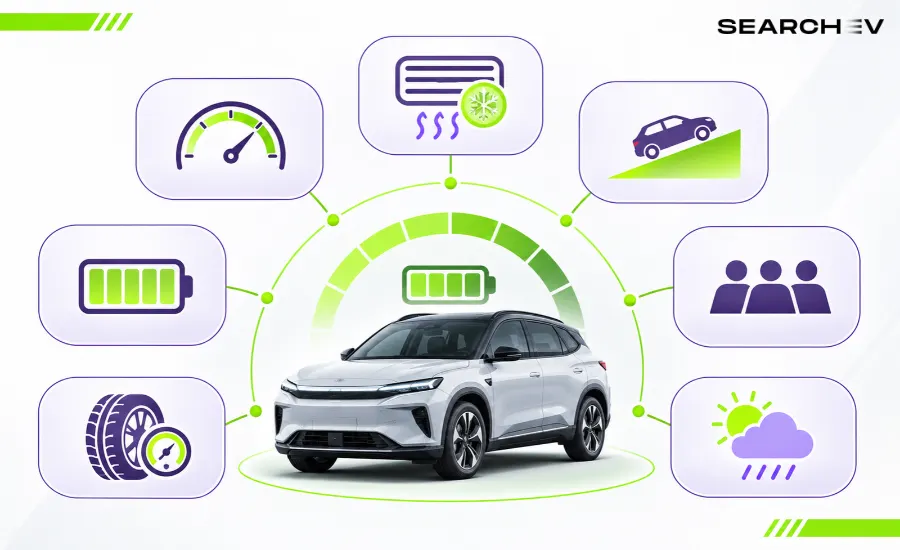
An EV’s range is influenced by how much energy it stores and how efficiently that energy is used. Several everyday factors can change the distance a vehicle covers on a charge.
1. Battery Capacity
Battery capacity, usually measured in kilowatt-hours (kWh), is one of the key factors influencing electric vehicle range.
A larger battery can generally store more energy, which can support longer driving distances. However, battery capacity alone does not determine range. Vehicle weight, motor efficiency, aerodynamics and energy consumption also matter.
This is why two EVs with similarly sized batteries may deliver different driving ranges.
2. Speed and Acceleration
Driving at high speeds usually requires more energy because aerodynamic resistance increases as speed rises. Frequent rapid acceleration can also increase energy consumption.
On highways, maintaining a steady and sensible speed can help reduce unnecessary energy use. In city conditions, smoother acceleration and anticipating traffic movement can make a difference.
3. Traffic and Road Conditions
Indian roads present a mix of stop-and-go traffic, open highways, uneven surfaces, flyovers and steep gradients.
Regenerative braking can recover some energy when an EV slows down, which can be useful in certain urban driving conditions. However, repeated acceleration, congestion and poor road surfaces can also increase energy demand.
On hilly routes, climbing requires additional energy. Descending may recover some energy through regenerative braking, but it does not necessarily compensate for all the energy used during the climb.
4. Air Conditioning and Electrical Features
In electric cars, air conditioning can contribute to battery consumption, particularly when the cabin needs substantial cooling.
Other electrical systems, including cabin heating, lighting, infotainment and ventilation, also draw energy. Their impact varies depending on the vehicle and how long these systems are used.
For electric scooters and motorcycles, the effect of electrical accessories is generally different, but overall energy consumption still depends on the vehicle’s systems and usage.
5. Passenger Load and Luggage
Carrying additional passengers or heavy luggage increases the load the motor has to move. This can increase energy consumption, especially during acceleration and uphill driving.
Two-wheelers can also experience changes in efficiency when carrying a pillion rider or additional cargo.
6. Tyre Pressure and Vehicle Maintenance
Incorrect tyre pressure can increase rolling resistance and reduce efficiency. Poorly maintained tyres, brakes or other components can also affect energy consumption.
Checking tyre pressure at recommended intervals and following the manufacturer’s maintenance schedule are simple steps that help keep an EV operating efficiently.
7. Battery Health and Temperature
Battery performance can vary with temperature and battery condition. Over time, battery degradation can reduce the amount of energy a pack can store compared with when it was new.
The extent of the effect depends on battery chemistry, thermal management, usage patterns and the vehicle’s battery management system.
How Can You Improve Your EV’s Range?
You cannot control every road or weather condition, but a few practical habits can help reduce unnecessary energy consumption.
- Maintain a steady speed: Avoid repeated hard acceleration and sudden braking wherever possible.
- Use regenerative braking sensibly: Select the level recommended for your route and driving style.
- Maintain correct tyre pressure: Check the manufacturer’s recommended pressure rather than relying on a generic value.
- Avoid unnecessary load: Remove items you do not need to carry regularly.
- Use climate control thoughtfully: Set a comfortable temperature instead of constantly using the system at maximum output.
- Plan longer journeys: Check charging locations and keep a practical battery reserve for unexpected delays.
- Follow battery-care recommendations: Use the charging practices and maintenance guidance specified by the manufacturer.
These steps will not guarantee a fixed increase in range. Their purpose is to reduce avoidable energy consumption and make everyday EV usage more predictable.
How Much EV Range Do You Need in India?
The right range depends on the distance you travel, charging access and how frequently you make longer journeys.
A person who travels a short, predictable distance every day may not need the same battery capacity as someone who regularly covers long distances. Similarly, an electric scooter used for commuting has different range requirements from an electric motorcycle used for weekend touring.
Rather than choosing an EV only because it has the highest advertised range, consider these questions:
- How many kilometres do you travel on a normal day?
- Can you charge the vehicle at home or at your workplace?
- Do you regularly travel outside your city?
- Are public charging stations available along your usual routes?
- How much additional range would you want as a reserve?
It is also worth comparing the practical range expectations of different vehicle categories. You can explore our guides to long-range electric scooters in India and long-range electric cars in India before shortlisting a model.
How to Plan an EV Journey Around Range
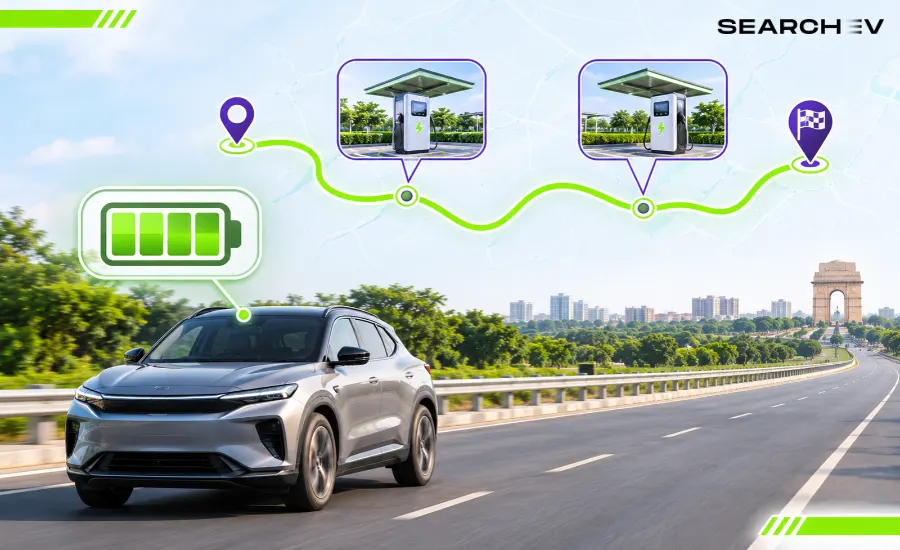
For daily commuting, it helps to understand your usual distance and the battery percentage consumed over a few regular trips. This gives you a more useful picture of your vehicle’s energy consumption than relying only on the dashboard’s estimated remaining range.
For longer journeys, plan around the distance between charging opportunities rather than assuming the vehicle will always deliver its maximum certified range.
Keep a reasonable reserve for traffic diversions, weather changes, unexpected stops and charging delays. If you are comparing a particular vehicle’s expected distance with its certified figure, use our EV range calculator and real-world EV range calculator as additional planning tools.
Electric Vehicle Range: What Buyers Should Remember
Range is important, but it should not be the only factor in an EV purchase. Battery capacity, charging speed, efficiency, vehicle price, service support and charging access all influence the ownership experience.
A vehicle with a very high claimed range may not be the most suitable choice if it is outside your budget or does not meet your everyday requirements. On the other hand, an EV with a more modest range may be perfectly practical if your daily travel is predictable and charging is convenient.
The best approach is to match the vehicle’s usable range and charging requirements with your actual travel pattern. That will help you choose an EV that works in everyday Indian conditions, rather than buying one based on a single range figure.
Frequently Asked Questions
1. What determines the range of an electric vehicle?
Battery capacity, motor efficiency, vehicle weight, speed, acceleration, road conditions, temperature, tyre pressure and the use of electrical features all influence EV range.
2. Does driving at high speed reduce EV range?
Yes. Higher speeds generally increase aerodynamic resistance and energy consumption. Maintaining a steady, moderate speed can help improve efficiency.
3. Does AC reduce electric car range?
Air conditioning uses electricity from the vehicle’s energy system. Its effect on range depends on the outside temperature, cabin cooling requirement, trip duration and vehicle efficiency.
4. Does regenerative braking increase EV range?
Regenerative braking recovers some energy when the vehicle slows down and sends it back to the battery. It can improve overall efficiency, but it cannot recover all the energy used during acceleration.
5. Does battery capacity alone determine electric vehicle range?
No. Battery capacity indicates how much energy the battery can store, but the distance covered also depends on how efficiently the vehicle uses that energy.
6. How can I calculate my electric vehicle’s range?
A basic estimate can be made using usable battery capacity and energy efficiency. SearchEV’s EV range calculator can help you understand the relationship between these values.
7. Does an electric vehicle lose range as its battery ages?
Battery degradation can reduce the amount of energy a battery stores over time. The extent depends on battery chemistry, temperature exposure, charging habits, usage and battery management.