Quick reads
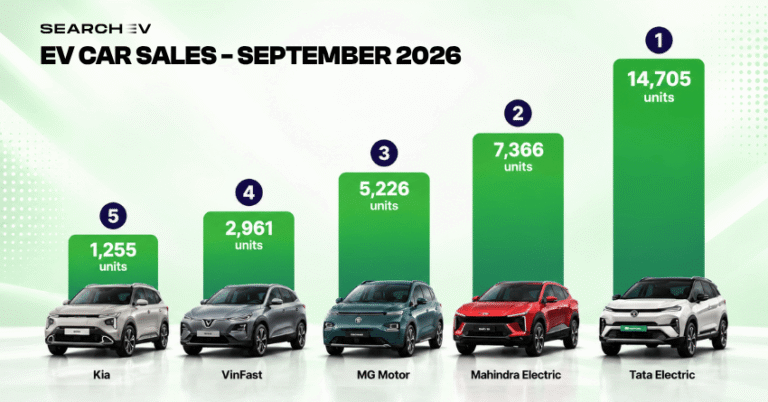
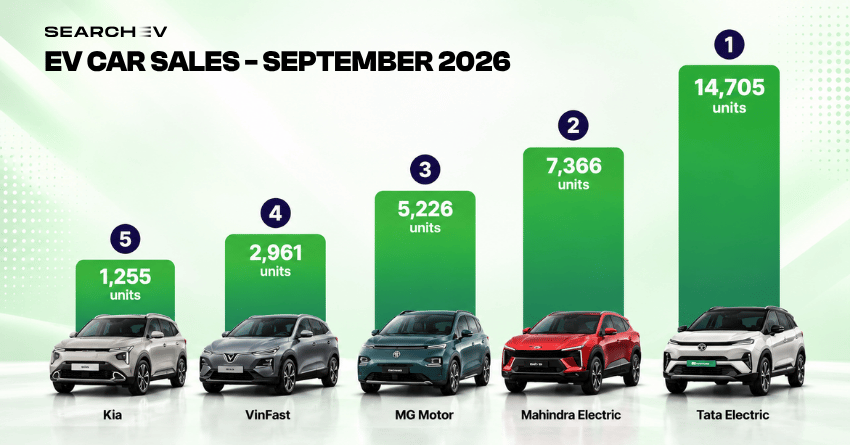
- Tata Motors maintained its iron grip on the segment with 14,705 retail registrations.
- Mahindra consolidated its second place position by delivering 7,741 units to customers.
- JSW MG Motor followed closely in third place by registering 5,226 electric vehicles.
- Vietnamese automaker VinFast achieved a massive 32.2 percent monthly growth to reach 2,961 units, climbing to the fourth position
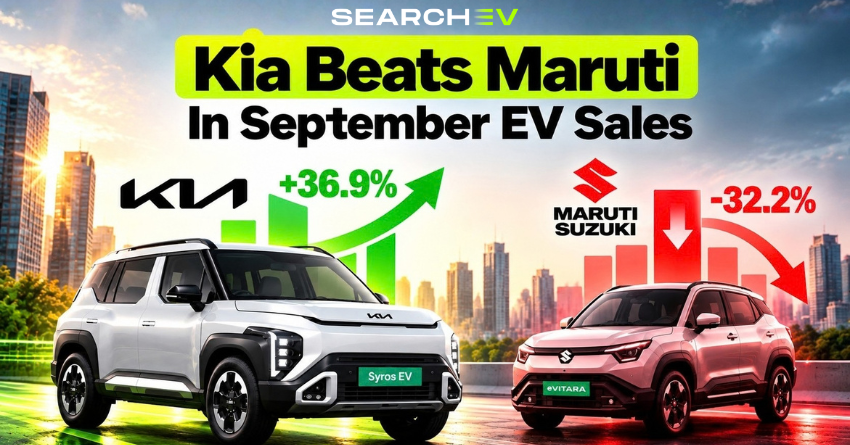
- Kia registered a staggering 47.6 percent monthly increase by selling 1,255 electric cars.
- Maruti Suzuki lost its fifth position to Kia, as sales went down by 377 units in September
| Rank | Manufacturer | September Registrations | August Registrations |
| 1 | Tata Motors | 14,705 | 13,801 |
| 2 | Mahindra | 7,741 | 6,820 |
| 3 | JSW MG Motor | 5,226 | 4,928 |
| 4 | VinFast | 2,961 | 2,239 |
| 5 | Kia | 1,255 | 850 |
| 6 | Maruti Suzuki | 1,095 | 1,472 |
| 7 | BYD | 831 | 566 |
| 8 | Hyundai Motor | 789 | 840 |
| 9 | BMW | 501 | 290 |
| 10 | Tesla | 279 | 117 |
The Battle for Market Dominance in September
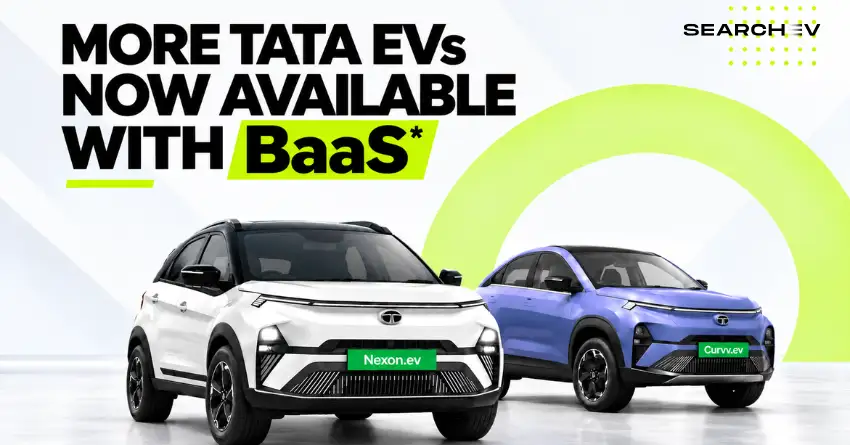
Tata Motors remains the undisputed champion of the Indian electric car market. The brand registered 14,705 units in September, achieving a notable jump from the 13,801 units sold in August. Their recent expansion of the Battery as a Service program across premium models clearly helped maintain strong footfall in showrooms. Mahindra secured a comfortable second place by delivering 7,741 units. This marks a solid improvement from their 6,820 registrations in the previous month. The continuous success of their born electric SUV range proves that Indian buyers appreciate sharp styling, comprehensive equipment list, coupled with extensive driving range.
JSW MG Motor captured the third position with 5,226 units. The brand recovered well from the 4,928 units recorded in August, relying heavily on the Windsor crossover and fresh battery rental structures for its flagship models. Meanwhile, Vietnamese newcomer VinFast recorded an impressive 2,961 registrations. They achieved this feat despite being a relatively newer brand in the country.
Mid Tier Contenders and Luxury Performance
Kia emerged as a very strong contender by registering 1,255 units, which is a jump from their 850 August dispatches. Maruti Suzuki maintained a steady presence by registering 1,095 units, experiencing a slight drop from the 1,472 units sold the previous month. Chinese automotive giant BYD followed closely with 831 units, outperforming Hyundai Motor India, which recorded 789 electric vehicle sales during the same period.
While BMW delivered a consistent demand in the luxury sector with 501 units, Tesla registered a MOM growth in excess of 100% claiming 279 units being retailed.
The Consolidation of Market Power Among the Top Five
The Electric car market in India is heavily skewed toward the top performers. The top five brands collectively control over 80 percent of the entire market.
The battle for supremacy within this elite group remains fierce. Automakers are completely overhauling their pricing structures and launching heavily localised products to claim more market share.
Tata Passenger Electric Mobility Retains the Crown
Tata Motors continues to operate as the undisputed heavyweight champion of the Indian electric vehicle ecosystem. The domestic giant represented a steady 6.5 percent MOM growth over August. The brand currently controls nearly 40 percent of the total market volume for the month.
The success of Tata Motors is fundamentally tied to their wide EV portfolio as well as aggressive product lifecycle management and innovative financial engineering.
Their entry level products, especially like the Tiago EV and Punch EV continue to generate massive footfall in tier two and tier three cities. Their cumulative year to date total now stands at a staggering 1,00,948 units..
Mahindra Accelerates Growth in the EV Segment
Securing the second position with absolute authority is Mahindra. The sports utility vehicle specialist registered more than 13 percent month on month growth. Mahindra now commands nearly 20 percent share of the national electric vehicle market.
For a very long time, Mahindra relied almost entirely on the XUV400 to generate its electric sales volume. However, with the launch of their dedicated born electric vehicles like the 9S and the BE6, buyers have been win over owing to their aggressive styling, sprawling digital displays, and extensive driving ranges.
JSW MG Motor India Sustains Premium Appeal
Occupying the third position is JSW MG Motor India. MG currently holds a little less than 15 percent share of the total retail market.
MG holds a very unique position within the Indian automotive sector. They were among the very first manufacturers to introduce the Battery as a Service rental scheme to the mass market.
Their bread and butter electric vehicle in the Indian market remains the Windsor electric crossover. The Windsor offers an incredibly spacious cabin tailored specifically for chauffeur driven comfort, creating a distinct niche that competitors have largely ignored.
Alongside the Windsor, the compact Comet EV continues to find favor among urban commuters seeking a secondary household vehicle. Furthermore, the brand has recently introduced its all new MG Hector Tomahawk EV as well.
VinFast Auto India Delivers Massive Disruption
The most fascinating narrative of the year belongs to VinFast Auto India. The Vietnamese automaker captured the fourth position, representing an explosive 32.2 percent monthly growth.
VinFast entered the market with extraordinary aggression. They bypassed the traditional slow rollout strategy and immediately established a sprawling dealership network across major metropolitan regions.
The company is heavily subsidising its initial vehicles to aggressively capture market share from established legacy brands. Their total year to date registrations have already hit 12,535 units.