
Quick reads
- All Tata electric cars are now available with BaaS (Battery as a Service)
- The scheme was previously limited to the entry-level Tiago EV and Punch EV models
- Buyers can now purchase the Nexon EV, Curvv EV, Sierra EV, and Harrier EV at much lower upfront prices
- The program separates the cost of the high-voltage battery from the overall vehicle
- Owners pay a per-kilometre rental fee based on the specific model and battery capacity
- The flagship Tata Harrier EV gets a massive upfront price drop of Rs 7.30 lakh under this new financial structure
The financial mechanics of owning an electric vehicle in India are undergoing a major shift. Tata Motors has officially expanded its innovative Battery as a Service scheme to cover its entire zero-emission portfolio. Previously restricted to the budget-friendly Tata Tiago EV (launched earlier this year) and Tata Punch EV, the program now includes premium models like the Nexon EV, Curvv EV, Sierra EV, and even the flagship Harrier EV. By treating the most expensive component of an electric car as a separately financed asset, the automaker aims to completely erase the initial price gap between battery-powered vehicles and traditional combustion engine cars.
Understanding the BaaS Economics
The Battery as a Service model fundamentally changes how consumers buy electric cars. Instead of paying the full price for the vehicle, the battery itself remains under a separate financial agreement. Customers then pay a recurring rental fee based on the distance they drive, though some policies have a fixed minimum monthly cost. This effectively reduces the upfront cost of the vehicle with the battery being financed. Tata Motors calculates the per-kilometre rental fee based on the battery size of each specific model.
However, buyers must carefully evaluate their annual driving habits. The total cost of ownership over a ten-year period will depend heavily on the accumulated battery rental fees.
Model Wise Savings and Rental Fees
The upfront savings grow substantially as buyers move up the Tata Motors product hierarchy. For example, the popular Nexon EV, equipped with the 30 kWh battery as standard, costs Rs 14.34 lakh (ex-showroom). Under the BaaS model, the entry price plummets to just Rs 8.99 lakh, alongside a battery rental fee of Rs 4.4 for every kilometre driven.
The premium SUVs see even larger price cuts. The newly introduced Tata Sierra EV with a 63 kWh battery (standard option) drops from its Rs 18.79 lakh base price tag down to Rs 11.99 lakh, saving the buyer Rs 6.80 lakh initially. The flagship Harrier EV, which uses a 65 kWh battery on the standard trim, experiences the highest reduction. The initial acquisition cost falls by Rs 7.30 lakh, bringing the entry price down to a competitive Rs 14.49 lakh.
Complete BaaS Pricing and Savings Structure
| Model | Standard Ex Showroom Price | BaaS Upfront Price | Upfront Savings | Battery Rental Fee |
| Tiago EV | Rs 6.99 Lakh | Rs 4.69 Lakh | Rs 2.30 Lakh | Rs 2.6 per km |
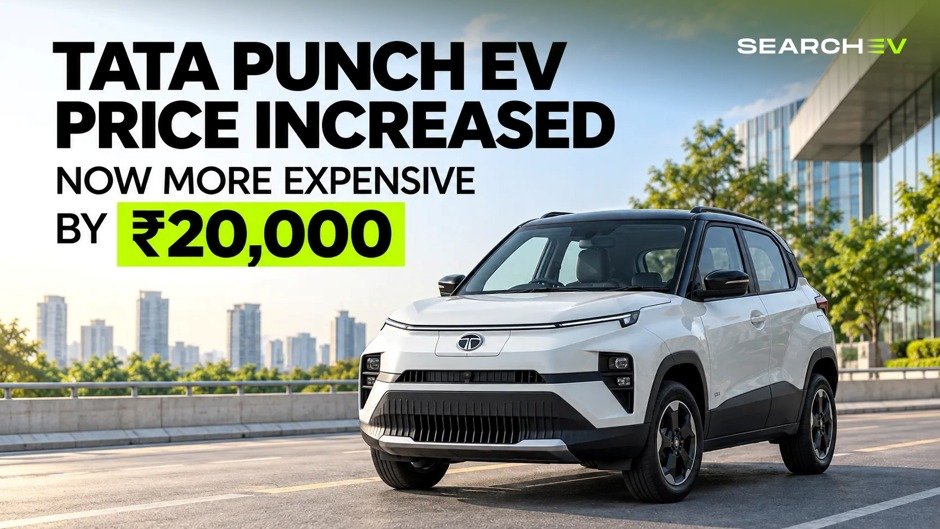
| Punch EV | Rs 9.79 Lakh | Rs 6.49 Lakh | Rs 3.20 Lakh | Rs 2.6 per km |
| Nexon EV | Rs 14.34 Lakh | Rs 8.99 Lakh | Rs 5.35 Lakh | Rs 4.4 per km |
| Curvv EV | Rs 17.19 Lakh | Rs 10.99 Lakh | Rs 6.20 Lakh | Rs 5.0 per km |
| Sierra EV | Rs 18.79 Lakh | Rs 11.99 Lakh | Rs 6.80 Lakh | Rs 5.5 per km |
| Harrier EV | Rs 21.79 Lakh | Rs 14.49 Lakh | Rs 7.30 Lakh | Rs 5.9 per km |
What Do We Think
Extending the Battery as a Service scheme to premium SUVs is an aggressive move by Tata Motors to maintain its market dominance. By bringing the initial purchase price of a Harrier EV or Sierra EV down to the level of standard compact SUVs, the automaker has removed the biggest psychological barrier preventing mass electric adoption. Consumers now have the flexibility to choose between outright ownership or a usage-based financial structure that perfectly suits their driving patterns. However, we have seen the adoption of BaaS by customers remains thin as of now, though this can potentially increase with more appealing options and awareness.