Quick reads
- Electric car dispatches reached 36,593 units in August 2026, reflecting an 84.9 per cent year-on-year growth.
- Tata Motors retained overall manufacturer leadership with 16,042 units and a 43.8 percent market share.
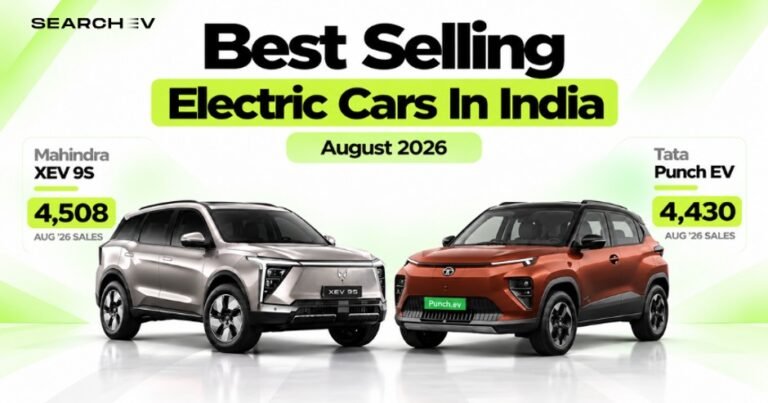
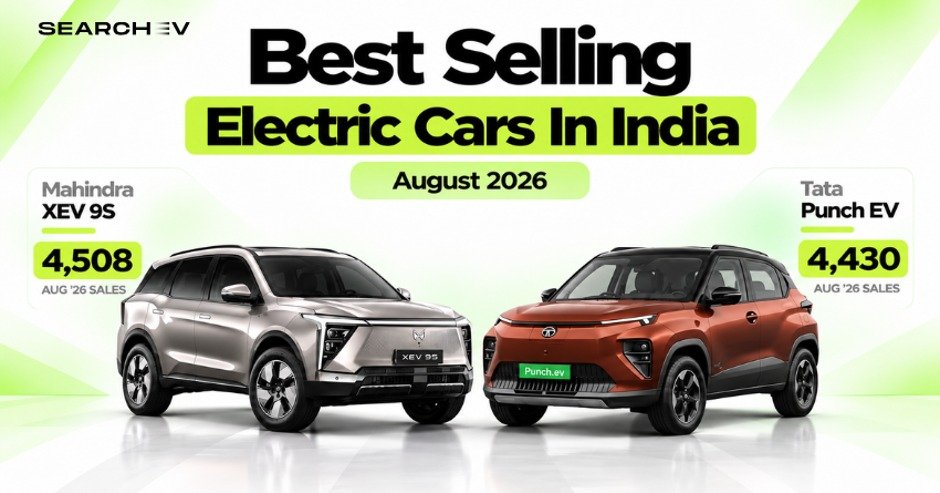
- The Mahindra 9S became the best-selling electric car in India, with 4,508 units dispatched.
- VinFast climbed to the fourth position in overall brand sales with its fleet model Limo Green.
- Maruti Suzuki captured a 4.3 percent market share with its new eVitara.
- The top five models contributed 18,721 units, representing 51 percent of total electric car dispatches.
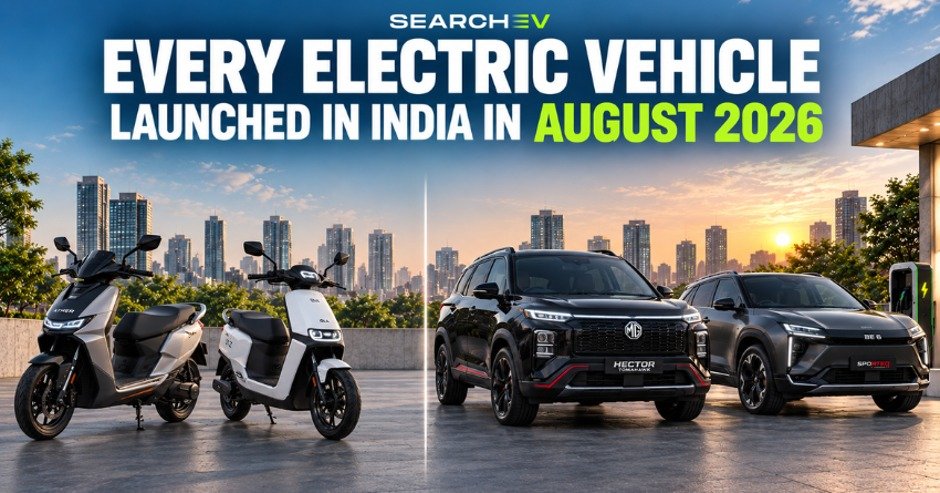
India’s electric car market delivered one of its best months on record in August 2026. Manufacturers dispatched 36,593 units to dealerships across the country, a jump of 84.9 percent over the 19,792 units shipped in August last year. The growth this time isn’t coming from one runaway brand. Mahindra, Tata, MG, VinFast and Maruti Suzuki are all fighting for space on the same sales chart, and the numbers show it.
Tata Punch EV Dethroned by Mahindra XEV 9S
The most significant development in August was the dethroning of the Tata Punch EV. After being introduced towards the end of last year, the Mahindra 9S has already taken the top spot. It dispatched 4,508 units, only 78 more than the Punch EV. Buyers looking for a bigger, more upmarket electric SUV seem to like what the 9S brings, especially its fresh styling and longer range.
Tata Still Holds Ground With Nexon EV
Tata Motors still held its ground, with five of its models making the top ten. The Nexon EV took third place with 3,975 units. Close behind was the MG Windsor EV at 3,705 units. Its sales dropped 18 percent compared to last year, yet the Windsor keeps selling in good numbers as a comfort-focused electric crossover.
Together, the top five models added up to 18,721 units. That’s roughly half of all wholesale dispatches.
The Tata Sierra EV, which brings back a name many Indians grew up with, came in seventh with 1,930 units. Right after it, in eighth, was the VinFast LimoGreen with 1,901 dispatches. For a brand that’s still finding its feet here, that’s a solid performance.
Top 10 Best-Selling Electric Cars in August 2026
| Rank | Manufacturer | Model | August 2026 Dispatches | August 2025 Dispatches | Year on Year Growth |
| 1 | Mahindra | XEV 9S | 4,508 | 0 | New |
| 2 | Tata | Punch EV | 4,430 | 1,476 | 200% |
| 3 | Tata | Nexon EV | 3,975 | 2,766 | 44% |
| 4 | MG | Windsor EV | 3,705 | 4,511 | Decline 18% |
| 5 | Tata | Harrier EV | 2,103 | 1,780 | 18% |
| 6 | Mahindra | XEV 9e | 2,001 | 2,313 | Decline 13% |
| 7 | Tata | Sierra EV | 1,930 | 0 | New |
| 8 | VinFast | LimoGreen | 1,901 | 0 | New |
| 9 | Tata | Tiago EV | 1,730 | 1,342 | 29% |
| 10 | Mahindra | BE 6 | 1,696 | 1,551 | 9% |
Manufacturer Dispatches and Market Share Dynamics
Looking at overall automaker dispatches paints a clear picture regarding brand dominance. Tata Motors remained the undisputed market leader, shipping 16,042 electric vehicles to capture a 43.8 percent market share. The brand recorded a massive 93.5 percent year on year growth. Mahindra held the second position with 8,313 dispatches and a 22.7 percent slice of the market. Together, these two domestic giants controlled 66.6 percent of all wholesale electric car sales in the country.
The real shockwave came from the lower half of the chart. Vietnamese automaker VinFast dispatched 3,028 vehicles to snatch the fourth position, achieving an 8.3 percent market share. Meanwhile, Maruti Suzuki is also making its presence felt in the mass market electric space. The brand dispatched 1,586 units of the recently launched eVitara, securing fifth place and a 4.3 percent market share. The eVitara marks the first serious step into full electrification for India’s largest carmaker.
SearchEV Insights on the Shifting EV Landscape
The August 2026 dispatch data confirms that the Indian electric car market is evolving at a phenomenal rate. Automakers shipped over 36,000 units. Automakers shipped more than 36,000 units in the month.
Tata Motors still holds the biggest share of wholesale dispatches. But the picture is changing. The strong run of the Mahindra 9S, along with VinFast’s bold push into the market, suggests that the next stage of EV growth won’t belong to just one or two companies. More brands are now in the race, and each one wants a bigger piece of it. The 16.6 percent sales decline experienced by MG also demonstrates that overall market expansion does not automatically guarantee growth for every single brand. In the end, it’s buyers who gain the most. They now have more models to pick from than ever, and the technology inside these cars keeps getting better.