Quick Reads
- Volvo India will launch the EX90 and ES90 on October 12.
- Mercedes-Benz has confirmed the GLC Electric for November 4.
- Hyundai’s made-for-India compact electric SUV is due for launch in Q4 2026.
- Tata is preparing the Safari EV for the 2026 festive period, and it was spotted testing multiple times
- MG’s IM6 is expected before the end of 2026, but it is still officially unconfirmed
Upcoming Electric Cars In India: Festive Season 2026 (October-December)
| Electric Car | Expected Launch | Expected Price |
| Volvo EX90 | October 12 | Rs 1.40-1.50 crore |
| Volvo ES90 | October 12 | Around Rs 1 crore |
| MG IM6 | October 2026 | Rs 55-60 lakh |
| Mercedes-Benz GLC Electric | November 4 | Around Rs 85 lakh |
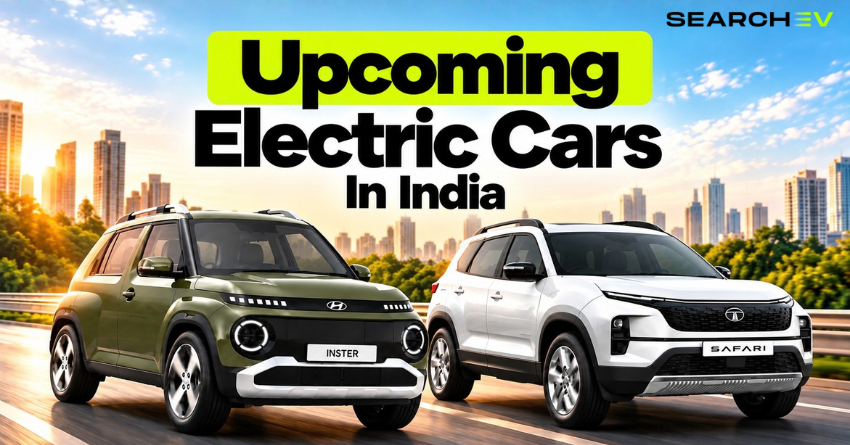
| Hyundai Inster EV | Q4 2026 | Rs 9.79-12.99 lakh |
| Tata Safari EV | Festive season 2026 | Rs 22.5-30 lakh |
*These are expected timelines and prices, which have not been officially confirmed.
Volvo EX90 And ES90 – October 12
Volvo will kick things off by launching not one but two flagship electric cars on October 12 – the Volvo EX90 SUV and Volvo ES90 sedan. The date has been officially confirmed by the brand. The EX90 will be a top-spec model in Volvo’s SUV range, and is expected to get a 106 kWh battery, a dual-motor AWD powertrain producing 456 hp and a claimed 625 km WLTP (Worldwide Harmonised Light Vehicles Test Procedure) range.
The Volvo ES90, meanwhile, brings Volvo back into India’s luxury sedan segment and will sit alongside the EX90. These won’t be volume drivers but more of a niche segment, which will expand Volvo’s portfolio in India.
MG IM6 – Expected October 2026
MG could also launch the MG IM6 electric SUV. The coupe-SUV is currently expected to arrive around October, although MG hasn’t announced a confirmed launch date yet. It is expected to be a complete import and will be positioned in the roughly Rs 55-60 lakh price bracket.
Internationally, the IM6 gets a 100 kWh battery, with the rear-wheel-drive version producing 408 hp and offering a claimed 555 km WLTP range. There’s also a much more powerful 778 hp AWD version, although the India-spec powertrain is yet to be confirmed.
Mercedes-Benz GLC Electric – November 04, 2026
One launch we don’t have to speculate about is the Mercedes-Benz GLC Electric.
Mercedes-Benz has confirmed an India launch on November 4, with bookings opening in October. More importantly, the GLC Electric will be locally assembled at the company’s Chakan, Pune facility.
India will get the GLC Electric 400 4Matic, combining a 94 kWh battery with dual motors producing 490 hp and 800 Nm. Mercedes claims a 715 km WLTP range, while the SUV can accelerate from 0 to 100 kmph in 4.3 seconds. Its 800V architecture also supports up to 330 kW DC charging.
Hyundai’s Inster EV – Q4 2026
This could possibly be one of the most important launches on this list, and even for the Indian EV market. Hyundai has confirmed that its first electric vehicle developed specifically for India will arrive during Q4 2026. It will sit alongside the Hyundai Creta Electric and the Ioniq 5. And the Hyundai Inster EV was already spotted testing on Indian roads, which confirms that its launch is near.
Unlike the premium Ioniq 5 or Creta-based EV, the upcoming model is expected to target a more accessible part of the market, where budget-conscious buyers make the majority. We estimate its price to be around Rs 9.79 lakh to Rs 12.99 lakh.
That would potentially put Hyundai into the same ballpark as the Kia Syros EV and other popular electric cars from Tata, MG and others. Final specifications, however, remain under wraps.
Tata Safari EV – Festive Season 2026
Tata could finish 2026 with one of its biggest electric SUVs yet – the Tata Safari EV. It was already spotted testing on Indian roads and will be the brand’s first three-row electric SUV, which will rival the current best-selling electric car in India in August 2026, the Mahindra XEV 9S.
The three-row electric SUV is expected to arrive during the 2026 festive season and will become Tata’s first three-row EV. It is expected to share its acti.ev+ architecture and much of its powertrain hardware with the Harrier EV, potentially including 65 kWh and 75 kWh battery options as well as RWD and AWD configurations, with different modes. It was also spied with a triple screen setup recently, which suggests that it will get quite a lot of premium features.
SearchEV Takeaway
The next three months look particularly interesting because the launches cover almost every end of the EV market. At one end, Volvo, Mercedes-Benz and MG are expanding India’s premium electric car segment. On the other hand, Hyundai’s upcoming made-for-India, Inster EV, could bring another serious contender into the affordable segment, rivalling the likes of Tata Nexon EV, MG Windsor EV, and the Kia Syros EV.
But the Safari EV could be the one to watch from a mainstream perspective. Tata already has one of India’s widest electric car lineups, and adding a three-row electric SUV would fill the few remaining gaps in its lineup. The only thing worth keeping in mind is that Volvo’s October 12 launches and Mercedes’ November 4 launch are confirmed; the MG, Hyundai and Tata timelines remain expected windows and can still move around.