Let’s be straight about something. When most people search for “cheap electric cars in India,” they’re not looking for a ₹3 lakh solar-powered two-seater that barely fits two adults and a grocery bag. They want something genuinely affordable — a real car, with real range, that doesn’t come with a hidden list of compromises long enough to fill an owner’s manual.
The good news? In 2026, that car exists. Several of them, actually. The price of getting into an electric vehicle in India has dropped to a point where a first-time buyer with a budget around ₹7–10 lakh has more interesting options than a petrol buyer in the same bracket. The bad news is that not everything marketed as “cheap” is actually worth buying — and some options that look expensive on paper actually work out significantly cheaper over three to five years.
This guide cuts through all of that. Real prices, honest range figures, who each car is actually built for, and what the running costs look like once you’re past the showroom.
What’s Available: The Full Picture
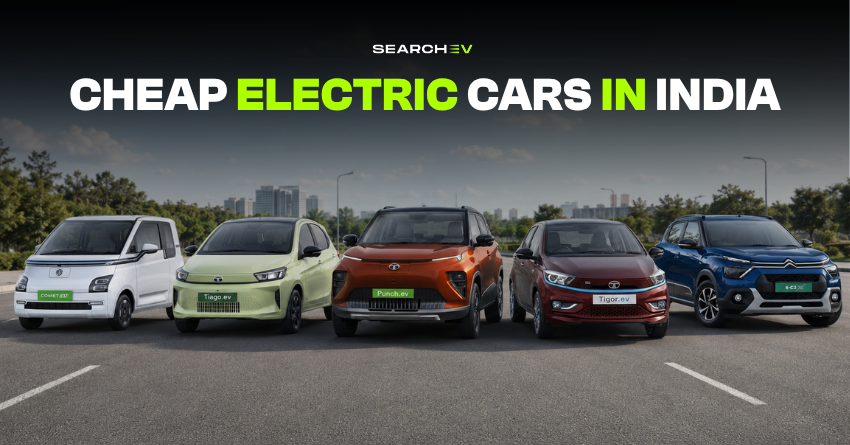
Here’s every genuinely practical cheap electric car in India right now, sorted by starting price:
| Car | Starting Price | Real-World Range | Best For |
| MG Comet EV | ₹6.99 lakh | 150–180 km | Solo urban commuters, narrow lanes |
| Tata Tiago EV | ₹6.99 lakh | 180–230 km | First-time EV buyers, city families |
| Tata Punch EV | ₹9.69 lakh (₹6.49L BaaS) | 250–300 km | Families wanting SUV + value |
| Tata Tigor EV | ₹11.99 lakh | 230–270 km | Sedan lovers, Tier 2 city buyers |
| Citroen eC3 X | ₹9.45 lakh | 220–250 km | Bad-road warriors, comfort seekers |
Prices ex-showroom, Delhi. BaaS = Battery-as-a-Service, where you pay per km instead of owning the battery.
The “Cheap vs. Affordable” Problem Nobody Talks About
Before we get into individual cars, there’s something worth saying plainly.
A ₹5 lakh electric car that needs an authorised service centre 200 km away isn’t cheap to own. A ₹10 lakh EV that costs ₹1.2 per km to run and never needs an oil change is. The sticker price is just one number — running costs, service availability, and real-world range in your city determine what you’re actually paying.
To understand how electric cars compare to petrol and diesel on total ownership cost, the math is often more in favour of EVs than people expect. And if you’re planning to charge at home — which is really the only way to make a budget EV make complete sense — setting up a home charger costs ₹8,000–₹15,000 as a one-time expense that changes the economics entirely.
With that context, here’s what each car is actually like.
MG Comet EV
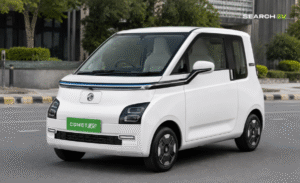
Price: ₹6.99 lakh – ₹9.99 lakh (ex-showroom)
The MG Comet EV is a car you either immediately get or immediately dismiss. It’s tiny — genuinely tiny — with a footprint smaller than most auto-rickshaws on a good day. But if your daily commute is through the narrow lanes of South Delhi, old Pune, or Bengaluru’s Indiranagar, that’s not a bug, it’s the whole point.
You get dual 10.25-inch screens, a 17.3 kWh battery, and a claimed range of 230 km — real-world in city traffic with AC running settles closer to 150–180 km. That’s enough for a 30–40 km daily commute with room to spare between charges.
What it isn’t: a family car. There’s barely enough space for two adults, the boot is a joke, and taking it on the highway at anything above 80 kmph feels like you’re testing its structural integrity. If you’re a working professional who needs a second car for the commute, or a couple who does most of their driving inside a city, this makes a strong case. For a four-member family with monthly outstation runs? Wrong car.
Tata Tiago EV
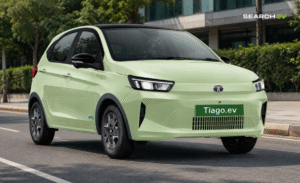
Price: ₹6.99 lakh – ₹9.99 lakh (ex-showroom) | BaaS from ₹4.99 lakh
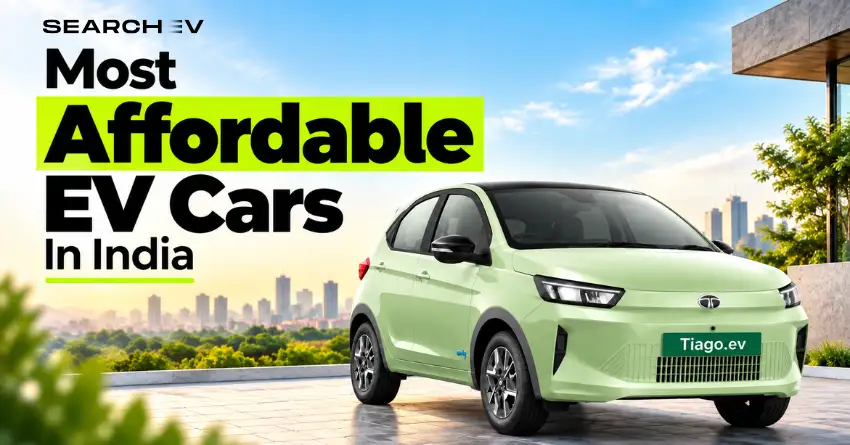
If you’ve never owned an EV before and you want to go electric without taking on too much risk, the Tata Tiago EV is the answer. It starts at the same price as the Comet but carries five adults, has a usable boot, and comes with the trust of a brand whose EV service network is the most extensive in India.
The 24 kWh long-range variant is the one worth buying — real-world range comes in at 180–230 km in city conditions, which covers 4–5 days of a typical 40–50 km daily commute without touching a public charger. The 19 kWh base variant is an option only if your daily run is genuinely under 40 km.
The 2026 update brought better interior materials, an improved 10.25-inch touchscreen, and wireless Android Auto and Apple CarPlay across more variants. It doesn’t have the SUV stance of the Punch EV, it doesn’t have the seat ventilation of the MG Windsor, and it won’t do Mumbai to Pune on a single charge without some planning. But for a family using one car for daily commuting and occasional weekend trips within city limits, it’s genuinely hard to argue against.
There’s one thing to note: the Tiago EV does not have a DC fast charging option on most variants. If you’re depending on public infrastructure for daily charging rather than a home setup, this matters. Plan around a home charger and it becomes a non-issue.
Tata Punch EV
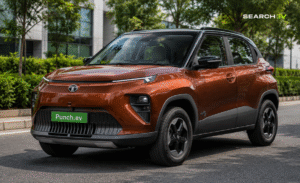
Price: ₹9.69 lakh – ₹12.59 lakh | BaaS from ₹6.49 lakh
The Tata Punch EV sits at the top of the “cheap” bracket — and if your budget allows even one step up from the Tiago, this is where you go. SUV body style, 5-star Global NCAP safety rating, a frunk (front boot — rare at any price point in India), and a 40 kWh battery that does 250–300 km in real-world mixed conditions.
The 65 kW DC fast charging option on select variants means a 0–80% charge in 26 minutes at a public DC charger — that’s a meaningful practical difference from the Tiago if you ever need to charge away from home. Tata also offers a lifetime battery warranty on the 2026 Punch EV, which is the kind of ownership confidence you don’t get at this price anywhere else in the market.
At ₹9.69 lakh for the base and ₹10.89 lakh for the Smart+ 40 kWh (the sweet spot), this is genuinely the most complete product in the affordable EV segment. The BaaS entry at ₹6.49 lakh makes it price-comparable to a midrange petrol hatchback on the sticker — do the per-km math carefully before choosing that route, but for buyers under 1,000 km per month, it can work. For a full variant-by-variant breakdown, our Punch EV variants guide covers everything worth knowing before you book.
Citroen eC3 X
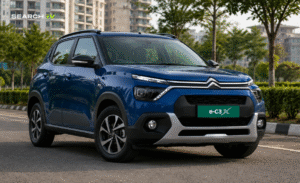
Price: ₹9.45 lakh – ₹11.50 lakh (ex-showroom)
The Citroen eC3 X doesn’t get talked about as much as the Tata lineup, and that’s a mistake. It has something none of the others do at this price: genuinely exceptional suspension tuning that was designed for India’s roads, not Europe’s. If your city has the kind of potholes that feel like a dental appointment every morning, this is the one car in the affordable EV segment that actually addresses that.
The 29.2 kWh battery gives a claimed 320 km range; real-world city use settles around 220–250 km. Standard AC charging tops out at 7.2 kW, so this isn’t a fast-charging car — but the base price is attractive and the ownership costs are low.
The honest catch: Citroen’s service network in India is nowhere near Tata’s. Before you book one, check how many authorised Citroen service centres exist in your city. If you’re in Mumbai, Delhi, Bengaluru, Chennai, or Hyderabad, you’re fine. If you’re in a Tier 2 city, verify before you commit.
Tata Tigor EV
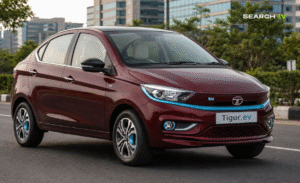
Price: ₹11.99 lakh – ₹12.99 lakh (ex-showroom)
The Tata Tigor EV is the car that sedan buyers in India seem to have forgotten about. Everyone’s moved to hatchbacks and SUVs, but if you need a proper three-box sedan — higher ground clearance than a car but with a proper boot — the Tigor EV makes a reasonable case.
The 26 kWh battery gives real-world range of 230–270 km in city use. It’s not the most exciting car here, and the feature set doesn’t match what you’d get in the Punch EV at a similar price. But for buyers who specifically want a sedan for a family of four, cab aggregators looking for an EV fleet option, or Tier 2 city buyers where sedan body style still carries social weight, it fills a gap nothing else in this list does.
What About the Vayve Eva at ₹3.25 Lakh?
Every cheap EV article in India has started including the Vayve Mobility Eva because, technically, it’s the lowest-priced electric “car” in the country. And it’s genuinely interesting — solar roof, city-only focus, India’s first solar EV — but it’s also a two-seater microcar with an unproven brand, limited service infrastructure, and a form factor that doesn’t work for anyone with children, luggage, or a highway drive in their life.
If you’re a solo commuter doing under 30 km a day and you can park near a charging point, it deserves a look. For most Indian buyers reading this, the Tiago EV at ₹6.99 lakh is the more sensible starting point. The cheapest car isn’t always the cheapest to own.
The BaaS Question: Is BaaS Actually Worth It?
Battery-as-a-Service — where brands like Tata and MG let you buy the car without the battery and pay per km — has made headlines because the entry prices are genuinely disruptive. Tata Punch EV at ₹6.49 lakh. MG Windsor at ₹12.04 lakh. Numbers that feel impossible until you look at the fine print.
We’ve gone deep on how BaaS works and whether it’s worth it — but the short version is this: BaaS makes mathematical sense for buyers doing under 1,000–1,200 km a month. Beyond that, the per-km charge starts compounding against you faster than the lower sticker price saves you. Run your own numbers before you book.
Who Should Buy What
- Under ₹7 lakh, solo city commuter, parking in tight spaces: MG Comet EV. Accept its limitations, love its strengths.
- Under ₹7 lakh, family of four, first EV, home charging available: Tata Tiago EV 24 kWh. Best overall value at this price.
- ₹9–11 lakh, want an SUV, plan to own for 5+ years: Tata Punch EV Smart+ 40 kWh. Buy this. Lifetime battery warranty and DC fast charging make it the strongest long-term bet.
- ₹9–12 lakh, roads are bad, ride comfort is non-negotiable: Citroen eC3 X — but check service centres in your city first.
- ₹12 lakh, specifically want a sedan: Tata Tigor EV. Nothing else at this price fills this exact brief.
Things Nobody Tells You Before Buying a Cheap EV
Home charging changes the entire ownership experience. If you have a parking spot and can spend ₹10,000–₹15,000 on a proper wall charger installation, your running cost drops to around ₹1–1.5 per km. Without home charging, an affordable EV becomes an inconvenient one fast. This guide on EV home charging setup is worth reading before you decide.
The service network matters more than the spec sheet. Tata’s EV network is the benchmark in India right now. If your city has limited authorised service centres for a brand you’re considering, that’s a real ownership risk — not a minor inconvenience.
Battery health is a long-term variable, not a one-time worry. The habits you build from day one of ownership affect what the battery looks like in year five. Knowing how to maintain your EV battery isn’t optional information; it’s the difference between a battery that outlasts the car and one that needs attention earlier than it should.
Real-world range is always lower than claimed. Apply a 65–70% factor to any ARAI range figure for Indian summer city driving with AC. If the claimed range can’t survive that filter and still cover your commute comfortably, the car isn’t the right fit regardless of its price.
State subsidies can move the price meaningfully. Maharashtra, Delhi, and Gujarat offer additional EV purchase subsidies over and above the central government incentives. Check what your state offers before finalising the on-road price calculation — it occasionally makes the difference of a lakh or more.
Frequently Asked Questions
1. What is the cheapest electric car in India in 2026?
By sticker price, the Vayve Mobility Eva starts under ₹4 lakh, but it’s a two-seater microcar. For a practical four-seater, the MG Comet EV and Tata Tiago EV both start at ₹6.99 lakh. With BaaS pricing, the Tata Punch EV is accessible from ₹6.49 lakh.
2. Are cheap electric cars good for highway driving?
Most affordable EVs are designed for city and mixed use. The Tata Punch EV handles occasional highway trips well. The Tiago EV and Comet EV are primarily city cars — not because they can’t go on the highway, but because range and charging speed become limiting factors on longer runs.
3. Is a cheap EV cheaper than a petrol car to run?
In most cases, yes, significantly. Running cost on a home-charged EV typically falls between ₹1 and ₹1.5 per km, compared to ₹6–8 per km for a petrol car. Maintenance costs are also lower since there’s no oil, no clutch, and far fewer moving parts. The full petrol vs electric running cost comparison breaks this down with actual numbers.
4. Should I buy a cheap EV or a used EV at the same price?
Both have merits. A new cheap EV comes with warranty and modern battery chemistry. A used premium EV at the same price might give you more features and range, but battery health becomes a question. Our used EV buying guide covers exactly what to check before going that route.
5. Which cheap EV has the longest range?
Among genuine budget options, the Tata Punch EV 40 kWh has the best real-world range at 250–300 km in city conditions. If you stretch slightly in budget, the Tata Nexon EV at ₹12.49 lakh offers another step up in practical range.