Skip to content
  • Scooters

    Newly Launched

    • Simple Wave
    • Ather Konarc
    • Simple Ultra
    • Ola S1X (Gen 3)
    View All

    Most Popular

    • Ather Rizta Z
    • Bajaj Chetak
    • TVS iQube ST 2025
    • Ola S1 Pro
    View All

    Under 1.5 Lakhs

    • TVS Orbiter
    • Bajaj Chetak
    • Ather Rizta S
    • Ampere Magnus G Max
    View All
  • Cars

    Newly Launched

    • Tata Sierra EV
    • Vinfast MPV 7
    • Mahindra XEV 9S
    • Tata Punch EV
    View All

    Most Popular

    • Mahindra XEV 9E
    • Mahindra BE 6 SPORTEQ
    • Tata Sierra EV
    • MG Windsor EV
    View All

    Under 15 Lakhs

    • MG Windsor EV
    • Tata Nexon EV
    • Mahindra 3XO EV
    • MG Comet EV
    View All
  • Bikes

    Newly Launched

    • Royal Enfield Flying Flea C6
    • Ultraviolette X47
    • Oben Rorr EVO
    • Raptee T30
    View All

    Most Popular

    • Ultraviolette F77 Mach 2
    • Oben Rorr EZ Sigma
    • Matter Aera
    • Ola Roadster
    View All

    Under 3 Lakhs

    • Royal Enfield Flying Flea C6
    • Ultraviolette X47
    • Ola Roadster X+
    • Raptee T30
    View All
  • News

    Explore by Topics

    • Latest Electric Scooter News
    • Latest Electric Car News
    • Latest Electric Bike News
    View All


    • Latest EV Updates
    • Latest EV Launches
    • Latest EV Infra Updates
    image (28)
    Electric Scooters Top Stories
    Simple Wave Vs Ather Rizta: Battle Of The Two Top-Notch Electric Scooters In 2026
    02 Sep 2026
    image (29)
    Electric Scooters Top Stories
    Simple Wave Vs Ather Konarc: Battle Of The Ultimate Family EV Scooters
    02 Sep 2026
  • Blogs

    Explore by Categories

    • Electric Scooters
    • Electric Bikes
    • Electric Cars
    View All
    image (30)
    Electric Scooters Electric Scooters Comparison SearchEV Blog
    Simple Wave vs Bajaj Chetak: Which is the Better Electric Scooter for You
    03 Sep 2026
    2026 Simple Wave Colours Explained: Which Sets A Dynamic Appeal?
    Electric Scooters SearchEV Blog
    2026 Simple Wave Colours Explained: Which Sets A Dynamic Appeal?
    02 Sep 2026
    image (30)
    Electric Scooters Electric Scooters Comparison SearchEV Blog
    Simple Wave vs Bajaj Chetak: Which is the Better Electric Scooter for You
    03 Sep 2026
    2026 Simple Wave Colours Explained: Which Sets A Dynamic Appeal?
    Electric Scooters SearchEV Blog
    2026 Simple Wave Colours Explained: Which Sets A Dynamic Appeal?
    02 Sep 2026
  • No matching city.
    Find EVs with AI
    • No matching city.
      • Scooters

        Newly Launched

        • Simple Wave
        • Ather Konarc
        • Simple Ultra
        • Ola S1X (Gen 3)
        View All

        Most Popular

        • Ather Rizta Z
        • Bajaj Chetak
        • TVS iQube ST 2025
        • Ola S1 Pro
        View All

        Under 1.5 Lakhs

        • TVS Orbiter
        • Bajaj Chetak
        • Ather Rizta S
        • Ampere Magnus G Max
        View All
      • Cars

        Newly Launched

        • Tata Sierra EV
        • Vinfast MPV 7
        • Mahindra XEV 9S
        • Tata Punch EV
        View All

        Most Popular

        • Mahindra XEV 9E
        • Mahindra BE 6 SPORTEQ
        • Tata Sierra EV
        • MG Windsor EV
        View All

        Under 15 Lakhs

        • MG Windsor EV
        • Tata Nexon EV
        • Mahindra 3XO EV
        • MG Comet EV
        View All
      • Bikes

        Newly Launched

        • Royal Enfield Flying Flea C6
        • Ultraviolette X47
        • Oben Rorr EVO
        • Raptee T30
        View All

        Most Popular

        • Ultraviolette F77 Mach 2
        • Oben Rorr EZ Sigma
        • Matter Aera
        • Ola Roadster
        View All

        Under 3 Lakhs

        • Royal Enfield Flying Flea C6
        • Ultraviolette X47
        • Ola Roadster X+
        • Raptee T30
        View All
      • News

        Explore by Topics

        • Latest Electric Scooter News
        • Latest Electric Bike News
        • Latest Electric Car News
        • Latest EV Updates
        • Latest EV Launches
        • Latest EV Infra Updates
        View All
      • Blogs

        Explore by Categories

        • Electric Scooters
        • Electric Bike
        • Electric Cars
        View All
      • Find your EV with AI
      • All
      • Electric Scooters
      • Electric Cars
      • Electric Bikes
      SearchEV Blog
      • Home /
      • SearchEV Blog /
      • Fast Charging vs Slow Charging: Which One Is Actually Better for Your EV?

      Fast Charging vs Slow Charging: Which One Is Actually Better for Your EV?

      27 May 2026 | 6:36 PM
      Published By: Drupada
      Share
      Bookmark

      There’s a question almost every EV owner has at some point — usually standing at a public charging station, watching the percentage climb on the screen.

      Should I be doing this regularly? Is fast charging quietly killing my battery? Or is slow charging just a waste of time when I have somewhere to be?

      It’s one of those topics where you’ll find a hundred different opinions online. So let’s cut through it — explain what’s actually happening inside the battery during each type of charge, what the data says, and what you should actually be doing depending on your situation.

      First — What Do Fast and Slow Charging Actually Mean?

      Not all charging is the same, and the terminology gets confusing fast. Here’s a clean breakdown:

      Slow charging (AC charging) is what happens when you plug into a regular home socket or a standard wall box. Your car’s onboard charger receives alternating current and converts it to direct current before it enters the battery. It’s a gradual process, generates very little heat, and is gentle on the cells. Depending on your battery size, a full charge takes anywhere from 4 to 10 hours. For a scooter, it’s usually 3 to 5 hours.

      Fast charging (DC fast charging) bypasses the car’s onboard charger entirely and sends direct current straight into the battery. No conversion step, just raw power going in at a much higher rate. A 50 kW DC charger can get most EVs from 20% to 80% in around 30 to 45 minutes. Higher-powered chargers — 150 kW, 250 kW — can do it in 15 to 20 minutes.

      The speed difference is significant. The reason the two methods exist is because there are times you need the speed, and times when the speed doesn’t matter.

      What Fast Charging Actually Does to Your Battery

      Here’s where a lot of content online either overstates the risk or completely dismisses it. The truth is somewhere in the middle — and the data is actually quite reassuring.

      Fast charging generates more heat than slow charging. That part is true. When you push high current into a battery quickly, the cells warm up. Heat is the number one enemy of battery longevity, which is why the concern exists in the first place.

      But here’s what the real-world data shows. A study by Geotab analysing over 22,700 electric vehicles found average battery capacity degradation of just 2.3% per year — across vehicles that regularly used DC fast charging. After eight years of typical use, most batteries still retained over 80% of their original capacity. A separate study found essentially minimal difference in battery health between vehicles predominantly using slow AC charging versus those relying heavily on fast DC charging.

      Modern EVs are built for this. They have thermal management systems specifically designed to regulate battery temperature during fast charging. When the battery gets too warm, the system throttles the charge rate. It’s not a passive process — the car is actively managing the situation every second.

      So no, occasional fast charging is not silently destroying your battery. But the word “occasional” matters — and we’ll come back to that.

      What Slow Charging Does Right

      Slow charging — your home wall box, your overnight charge — is genuinely the better option for the battery’s long-term health. Lower current, less heat, a more stable charge process. The cells aren’t being pushed hard. They’re being filled gradually, the way they prefer.

      There’s also a practical angle here that’s easy to miss. Most EV owners in India charge at home overnight. You plug in at 11pm, wake up at 7am, and the car is ready. No extra time spent. No waiting. No cost above your home electricity rate. It’s the most convenient form of charging that exists — the car fuels itself while you sleep.

      For daily commuters on a scooter or a city EV — covering 30 to 50 km a day — slow home charging covers everything you need without ever stressing the battery.

      The Real-World Recommendation
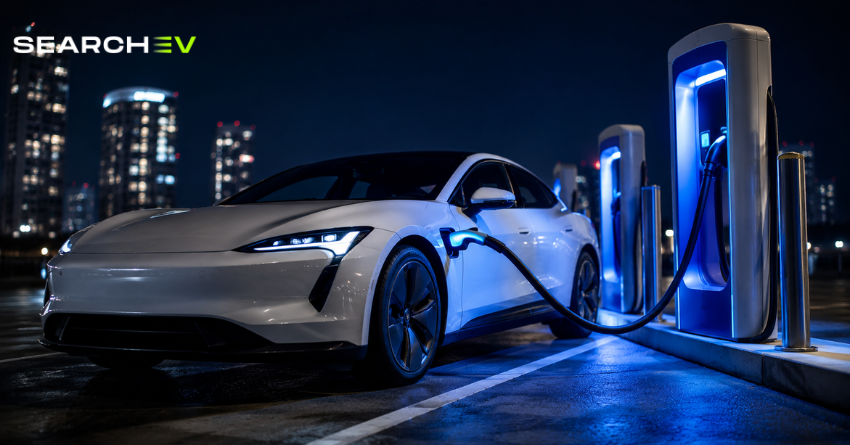
      DC fast Charging Vs Slow Charging

      This is the part most articles are too careful to actually say clearly. So here it is:

      Use slow charging as your default. Use fast charging when you genuinely need it.

      That’s it. That’s the recommendation. And here’s how it breaks down in practice:

      • If you have home charging — plug in every night, set your charge limit to 80% for daily use, and don’t think about it. Reserve fast charging for highway trips, long drives, or the days you forgot to plug in and need a quick top-up before heading out.
      • If you don’t have home charging — fast charging is going to be a bigger part of your routine, and that’s fine. The degradation impact is real but small. Follow the 20–80 rule, avoid charging to 100% unless necessary, and try not to fast charge when the battery is already warm from a long drive.
      • For scooter owners specifically — almost all electric scooters currently available in India use slow AC charging anyway. Fast charging infrastructure for two-wheelers is still limited. Your home charger is your primary tool, and for a scooter battery, that’s actually the ideal situation.

      One more thing: avoid fast charging repeatedly when the battery is nearly full. Fast chargers naturally taper the charging rate after 80% — your car does this automatically — but if you’re routinely plugging into a fast charger and pushing to 100%, you’re adding unnecessary stress at the most sensitive end of the battery’s range.

      The Cost Difference Is Worth Knowing

      Fast charging at a public station in India typically costs between ₹15 and ₹25 per unit of electricity, depending on the network and location. Home charging on a standard domestic tariff runs around ₹6 to ₹9 per unit in most states.

      Over time, a heavy reliance on fast charging can meaningfully raise your running costs — partially offsetting the savings that made the EV attractive in the first place. Another reason to lean on home charging for daily needs and treat fast charging as a tool, not a routine.

      Bottom Line

      Fast charging isn’t the villain it’s sometimes made out to be. The data doesn’t support the panic. But slow charging is better for your battery, cheaper per unit, and genuinely more convenient for anyone who can charge at home.

      Use them for what they’re built for. Fast charging is for when time matters. Slow charging is for when the car is just sitting there anyway. Get that balance right, and your battery will be in good shape for a long time.

      Stay on top of every EV technology update and ownership guide — SearchEV covers what actually matters.


       Also Read

      Battery as a Service (BaaS) — What It Is, How It Works, and Which EVs Use It in India (2026)

      Follow the SearchEV WhatsApp channel to get instant updates from the EV Industry.

      Follow Us:
      Facebook Instagram Youtube X-twitter Pinterest

      Featured Posts

      Top7UpcomingElectricCarsinIndiafor2026-Cover-BlogImage-min
      Electric Cars
      Top 7 Upcoming Electric Cars in India for 2026: Specs, Features, and Prices
      30 Dec 2025
      tata-sierra-ev-what-to-expect
      Electric Cars
      Tata Sierra EV: 7 Things to Expect Ahead of Its India Launch
      24 Dec 2025
      xev9s-vs-emax7-vs-clavis-ev
      Electric Cars
      Mahindra XEV 9S vs. BYD eMax7 vs. Kia Carens Clavis EV: A Detailed Comparison
      19 Dec 2025

      Recently Added

      Top7UpcomingElectricCarsinIndiafor2026-Cover-BlogImage-min
      Electric Cars
      Top 7 Upcoming Electric Cars in India for 2026: Specs, Features, and Prices
      30 Dec 2025
      tata-sierra-ev-what-to-expect
      Electric Cars
      Tata Sierra EV: 7 Things to Expect Ahead of Its India Launch
      24 Dec 2025
      xev9s-vs-emax7-vs-clavis-ev
      Electric Cars
      Mahindra XEV 9S vs. BYD eMax7 vs. Kia Carens Clavis EV: A Detailed Comparison
      19 Dec 2025

      Tags:

      AC Charging in EV,DC charging in EV,DC fast charging vs AC charging in EV,Electric Vehicle,EV Charging,EV fast charging

      Related Posts

      image (30)
      Electric Scooters Electric Scooters Comparison SearchEV Blog
      Simple Wave vs Bajaj Chetak: Which is the Better Electric Scooter for You
      03 Sep 2026
      Simple Wave vs Bajaj Chetak: Which is the Better Electric Scooter for You
      2026 Simple Wave Colours Explained: Which Sets A Dynamic Appeal?
      Electric Scooters SearchEV Blog
      2026 Simple Wave Colours Explained: Which Sets A Dynamic Appeal?
      02 Sep 2026
      2026 Simple Wave Colours Explained: Which Sets A Dynamic Appeal?
      Simple Wave vs Hero Vida VX2 Compare price, battery, charging, performance and features to find the better family electric scooter.
      Electric Scooters Electric Scooters Comparison SearchEV Blog
      Simple Wave vs Hero Vida VX2: Which is the Better Electric Scooter for You
      02 Sep 2026
      Simple Wave vs Hero Vida VX2: Which is the Better Electric Scooter for You
      image (19)
      Electric Cars SearchEV Blog
      MG Hector Tomahawk EV Features: Explained In Detail
      27 Aug 2026
      MG Hector Tomahawk EV Features: Explained In Detail
      image (17)
      Electric Cars Electric Cars Comparison SearchEV Blog
      MG Hector Tomahawk EV vs Mahindra XEV 9S: Which Three-Row Electric SUV Should You Buy?
      27 Aug 2026
      MG Hector Tomahawk EV vs Mahindra XEV 9S: Which Three-Row Electric SUV Should You Buy?
      tomahawk vs sierra
      Electric Cars Electric Cars Comparison SearchEV Blog
      MG Hector Tomahawk EV vs Tata Sierra EV Comparison: Which Electric SUV Should You Buy?
      27 Aug 2026
      MG Hector Tomahawk EV vs Tata Sierra EV Comparison: Which Electric SUV Should You Buy?

      A one-stop platform to explore, compare, and get updates about electric vehicles in India.

      Connect with Us

      Facebook Instagram Youtube X-twitter Pinterest Whatsapp

      Listings

      • Electric Cars
      • Electric Bikes
      • Electric Scooters
      • Top EV Brands

      Worthy Reads

      • Latest EV News
      • Blogs & Articles

      Useful Links

      • Partner with SearchEV
      • About Us
      • Contact Us
      • SearchEV Pulse

      Need Help?

      • Support
      • Terms Of Use
      • Cookie Policy
      • Media

      Popular Electric Cars:

      • Mahindra BE 6 SPORTEQ
      • Tata Harrier EV
      • Hyundai Creta Electric
      • Vinfast VF6
      • Vinfast VF7
      • Mahindra XEV 9S
      • MG Windsor EV
      • Tata Nexon EV
      • Volvo EX30
      • Mahindra XEV 9E
      • MG Comet EV

      Top Electric Scooters:

      • TVS iQube S
      • Ather Rizta Z
      • Bajaj Chetak
      • Ola S1 Pro+ (Gen 3)
      • Ather 450X
      • Ultraviolette Tesseract
      • Simple Energy One
      • TVS Orbiter
      • River Indie
      • Hero Vida V2 Pro
      • Ola S1 Pro Sport

      Popular Electric Bikes:

      • Raptee T30
      • Oben Rorr EZ Sigma
      • Revolt RV400 BRZ
      • Ultraviolette F77 Mach 2
      • RE Flying Flea S6
      • Ultraviolette X47
      • Ola Roadster Pro
      • Ola Roadster X+
      • Ultraviolette Shockwave
      © 2026 – SearchEV India. All Rights Reserved.
      • Terms and Conditions
      • Privacy Policy
      • Cookie Policy