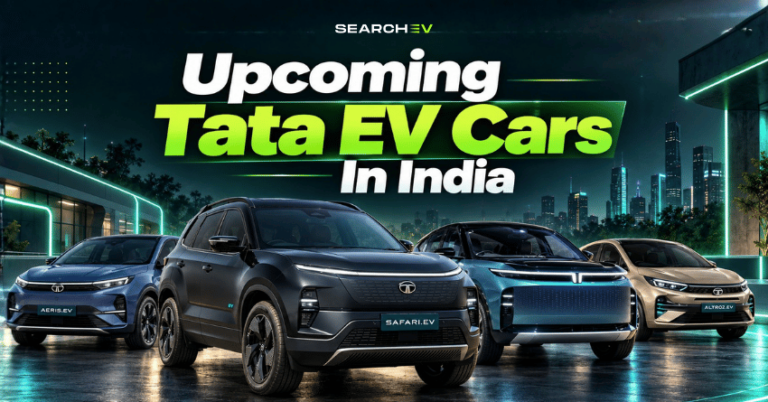
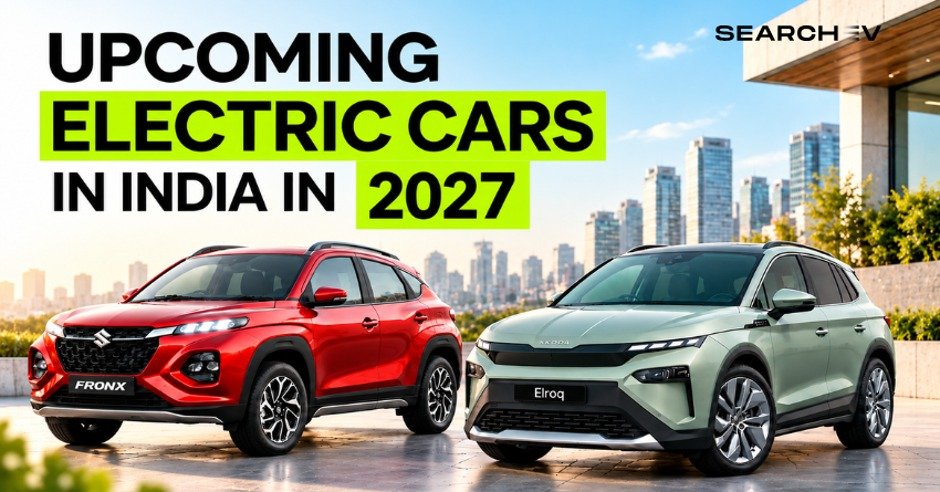
The upcoming electric passenger cars in 2027 will revolutionise the segment in India, featuring high-performance engineering and enhanced vehicle design architectures. The electric cars market in India is in a pivotal transformation phase, moving away from the initial ICE architecture and expecting the arrival of a slew of ground-up, born-EV, software-defined cars. The year 2027 is expected to see the launch of several flagship new-age electric vehicles for passenger mobility.
From mass-market urban electric vehicles to new-age ground-up electric flagships, here is an extensive breakdown of upcoming electric cars slated for launch in 2027 in India:
Maruti Suzuki Fronx EV
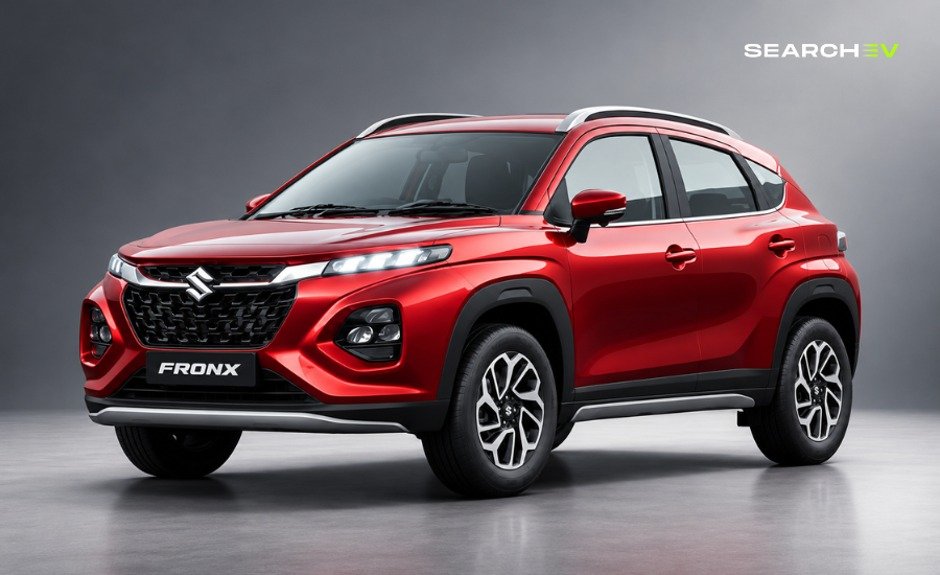
A Premium Urban EV For India | Expected Price: Rs 11 Lakh
| Maruti Suzuki Fronx EV Ex-Showroom Prices (Expected) | |
| Base Tier Trim Price | Can Start At Rs 11.00 Lakh |
| Top Tier Trim Price | Can Be Up To Rs 15.00 Lakh |
The Maruti Suzuki Fronx EV is expected to feature a borrowed body architecture of the currently in-production petrol-powered Fronx – but the EV counterpart will be a premium style statement while featuring a unique closed-off-grille section to truly represent the new-age EV design language. The Maruti Suzuki Fronx EV will come with distinctive lighting elements that can help it resonate as a premium-rich urban EV – a tag that can reassure and boast premium-rich interiors.
With a much lighter architecture to be expected, the upcoming 2027 Maruti Suzuki Fronx EV will be designed to be performance-focused and range-efficient to a large extent; the following are the powertrain capacities that can be expected from the Fronx EV slated for launch in India:
| Maruti Suzuki Fronx EV Expected Specifications | |
| Battery Options | 40 kWh |
| Peak Power | 75-80 kW |
| Combined Torque | 170-200 Nm |
| Certified Range | 250-300 km |
The 2027 Maruti Suzuki Fronx EV is also expected to feature a front-wheel drivetrain with a single motor configuration for helping deliver the above-mentioned performance capacities.
Hyundai Electric SUV Code: HE1i
An India-Specific Compact e-SUV | Expected Price: Rs 12 Lakh
| Hyundai HE1i Ex-Showroom Prices (Expected) | |
| Base Tier Trim Price | Can Start At Rs 12.00 Lakh |
| Top Tier Trim Price | Can Be Up To Rs 17.50 Lakh |
The upcoming Hyundai electric compact SUV – under the code name HE1i – is expected to be a localised vehicle iteration developed around the company’s e-GMP (Electric Global Modular Platform), designed to maximise performance capacities while prioritising high-range output.
In terms of design, the HE1i will feature an aerodynamically efficient architecture for better range efficiency. With flush door handles, aero-design-based alloy-wheel construction, and seamless contours, the HE1i will prioritise dynamicity and performance without compromising efficiency. Speaking of which, the company also promises to establish good safety and comfort standards without compromise. Nonetheless, the HE1i is expected to feature the following capacities:
| Hyundai HE1i Compact Electric SUV Specifications | |
| Battery Options | 40-48 kWh |
| Peak Power | 75-84 kW |
| Combined Torque | 170-200 Nm |
| Certified Range | 300-355 kms |
The Hyundai Electric Compact SUV under the code name HE1i is expected to feature a front-wheel-drive configuration with a single-motor setup designed to be lightweight for dynamic performance. When launched in FY2027, the Hyundai HE1i, by then featuring a production name, can contend with the Kia Syros EV and Tata Nexon EV, among other electric compact SUVs in India.
Skoda Elroq EV
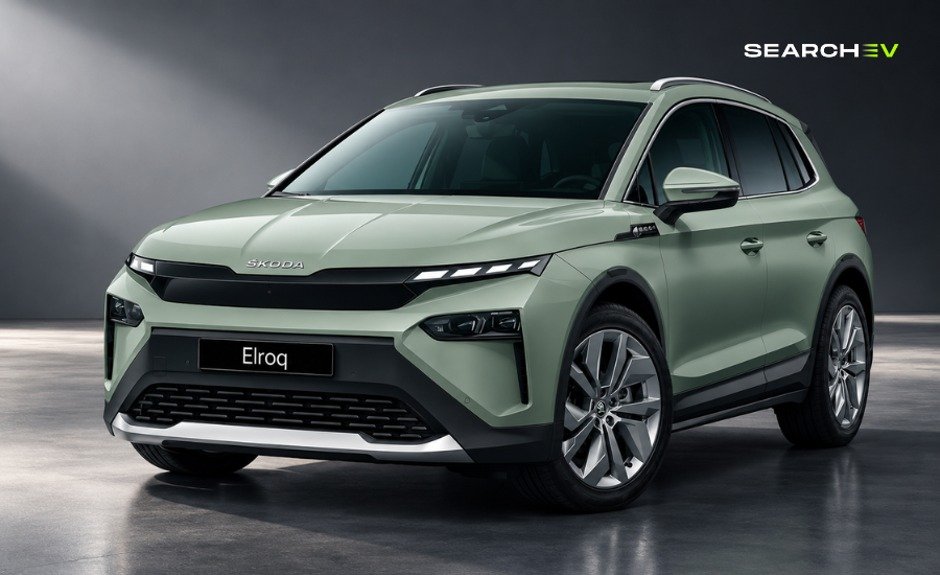
A Modern-Solid Electric Compact SUV | Expected Price: Rs 25 Lakh
| Skoda Elroq EV (CKD) Ex-Showroom Prices (Expected) | |
| Base Tier Trim Price (Elroq 50) | Can Start At Rs 25.00 Lakh |
| Mid Tier Trim Price (Elroq 60) | Can Be Around Rs 30.00 Lakh |
| Top Tier Trim Price (Elroq 85) | Can Be Up To Rs 35.00 Lakh |
The Skoda Elroq EV will be a strategic move to be made by the company to further establish a strong market presence in the country’s compact electric SUV sector. To be placed below the company’s globally renowned Skoda Enyaq EV flagship, the upcoming Skoda Elroq electric compact SUV – which will serve as an electric equivalent to the Karoq – can come with a completely new design architecture for India. However, built on Volkswagen Group’s MEB modular EV platform, the Elroq EV is poised for success, but only if it is launched as a Completely Knocked Down (CKD) product, and here’s why:
The pricing factor is where Skoda needs to prioritise to establish the upcoming 2027 Elroq EV as a direct competitor to India’s diverse electric compact SUV flagships. Nevertheless, the performance capabilities of the upcoming Skoda Elroq will define its market share and help it pivot into the list of top-notch electric SUVs in India in the year 2027. The following are expected performance criteria:
| Skoda Elroq EV Specifications | |||
| Battery Options | 55 kWh | 63 kWh | 82 kWh |
| Peak Power | 125 kW | 150 kW | 210 kW |
| Combined Torque | 310 Nm | 310 Nm | 400 Nm |
| Certified Range | 370 kms | 400 kms | 570 km |
The Skoda Elroq is slated for launch in FY 2027 will come with high-performance capacities to maximise operating dynamics across city and highway conditions. For the same reasons, the company says the Elroq EV comes with a drag coefficient of 0.26 – this means that the vehicle is aerodynamically efficient to maximise driving and range performance across highway conditions.
Tata Avinya EV
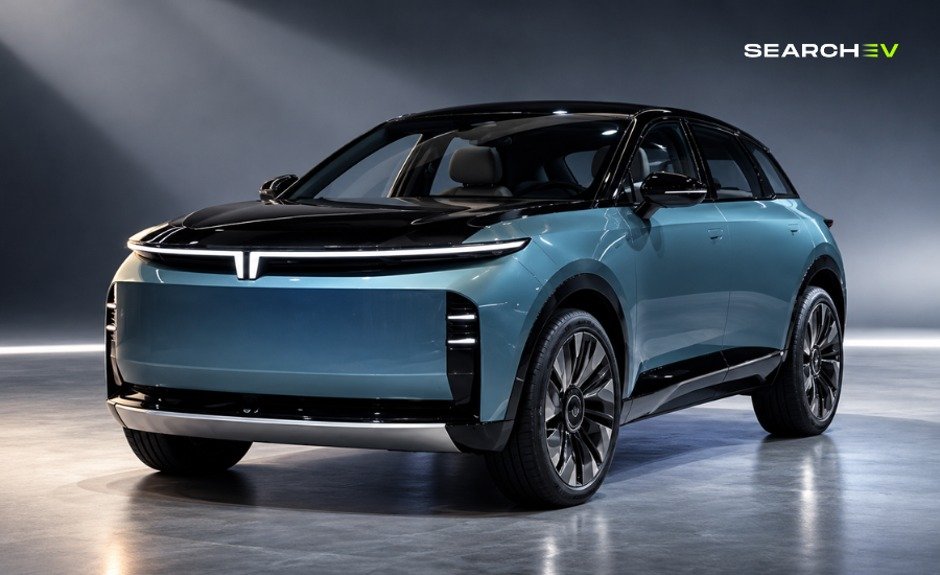
A Pure ‘Born EV’ Gen SUV | Expected Price: Rs 35 Lakh
| Tata Avinya EV Ex-Showroom Prices (Expected) | |
| Base Tier Trim Price | Can Start At Rs 35.00 Lakh |
| Top Tier Trim Price | Can Be Up To Rs 40.00 Lakh |
The Tata Avinya EV is officially slated for launch in early 2027, with market rollouts expected in the months of February and March of 2027. The serial manufacturing of the Tata Avinya EV will be conducted at Tata Motors’ highly sophisticated Panapakkam, Tamil Nadu, manufacturing facility. The Avinya will be designed around a high-voltage electric vehicle powertrain architecture. The vehicle will also feature 800V fast-charging capability for seamless turnaround and high uptime.
Rather than establishing the Avinya on Tata Motors’ existing EV lineup, the Avinya will be featured as a standalone luxury EV SUV sub-brand for India; the Tata Avinya SUV is expected to come with luxury interiors enhanced by premium upholstery, seamless dashboard construction with software-defined inclusions, and segment-first features like luxury swivelling seats. In terms of safety, the Tata Avinya EV will feature advanced driver assistance systems. This is in addition to the strong construction supported by architectural reinforcements for crash safety.
| Tata Avinya EV Specifications | |
| Battery Options | 80-85 kWh |
| Peak Power | 270-320 kW |
| Combined Torque | 500-550 Nm |
| Certified Range | 500-600 km |
While the expected performance capacities are established through the table above, the Tata Avinya EV is still under the development stages, with claims of test mule production carried out on-road tests for the final production-ready iteration. Although the design concept was showcased at the Bharat Mobility Auto Expo, Tata Motors is yet to launch the product; however, the expected launch timeline, as per industry insights, suggests 2027 as the sweet spot, as mentioned earlier.
Tata Altroz EV
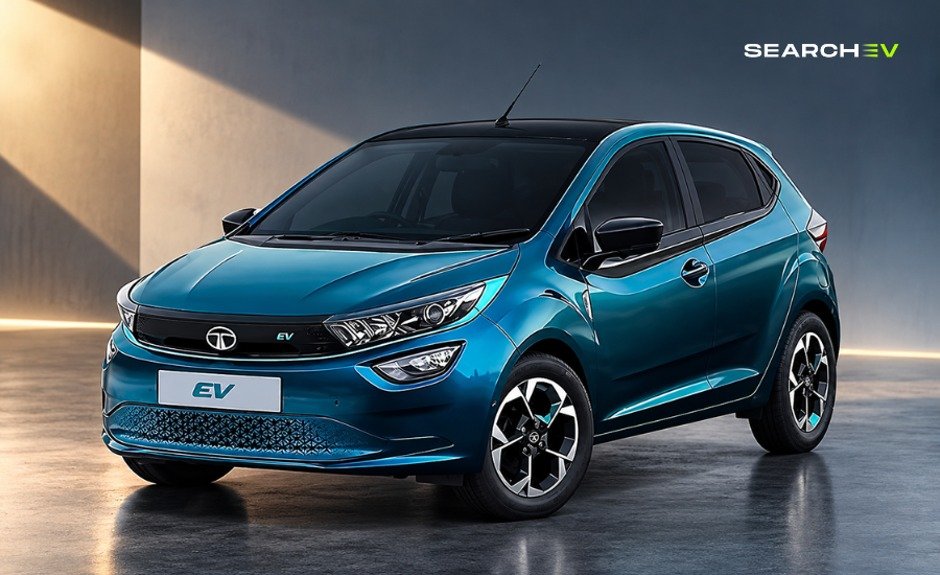
A Premium EV Hatchback | Expected Price: Rs 10-15 Lakh
| Tata Altroz EV Ex-Showroom Prices (Expected) | |
| Base Tier Trim Price | Can Start At Rs 10.00 Lakh |
| Top Tier Trim Price | Can Be Up To Rs 15.00 Lakh |
Designed around the ALFA-ARC platform architecture, the Tata Altroz EV, based on its ICE counterpart, should maximise structural strength, featuring architectural reinforcements to enhance crash protection. As a matter of fact, its ICE counterpart has scored a 5-star rating in GNCAP crash tests. The facelifted Altroz ICE also scored a 5-star in the BNCAP crash test; hence, this safety quotient and its continuum are expected to be passed on to the upcoming Tata Altroz EV in India.
Also, the Altroz EV will feature its signature 90-degree openable doors for easy ingress and egress, a cool factor that Tata Motors boasted with the launch of the Altroz ICE model. Featuring an EV powertrain, the Altroz EV is expected to maximise torque potential, somewhat similar to that of the ICE counterpart currently available in the Indian car market. For tractable performance, the Altroz EV can also feature large 16-inch wheels with wide tyre construction; while on the subject of performance, the following are the key attributes that make the upcoming Altroz EV powerful:
| Tata Altroz EV Specifications | |
| Battery Options | 30-45 kWh |
| Peak Power | 70-75 kW |
| Combined Torque | 170-200 Nm |
| Certified Range | 250-300 km |
It is evident from the table above that the Tata Altroz EV is designed to maximise torque performance and range performance; this is anticipated, since it will feature a highly advanced permanent magnet synchronous electric motor and transmission integration. The Altroz EV, like the ICE counterpart, is also expected to offer good steering feedback and planted stability on highways. The suspension setup will also be tuned for stiffer performance to give a sporty feel.
Maruti Suzuki YMC EV
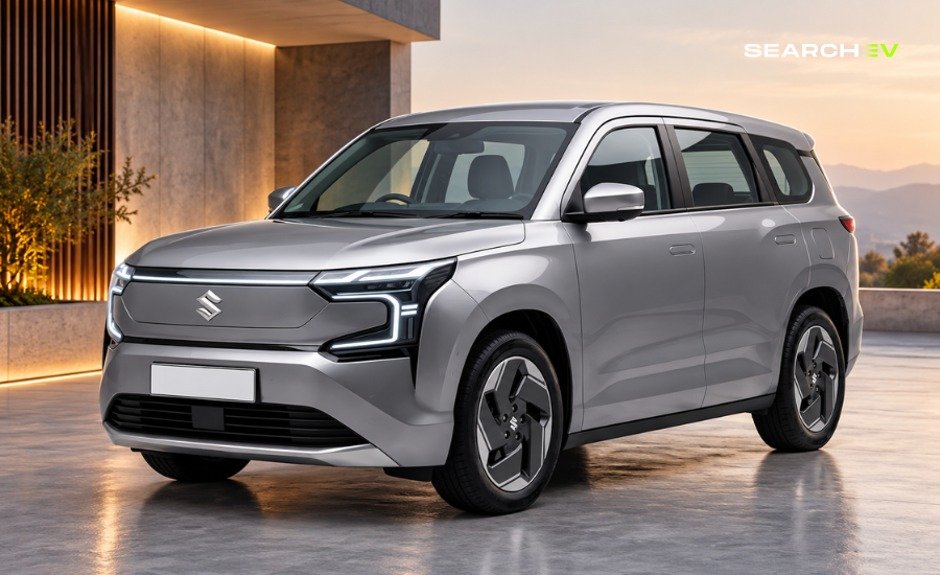
A Premium Multi-Utility Vehicle | Expected Price: Rs 15-20 Lakh
| Maruti Suzuki YMC EV Ex-Showroom Prices (Expected) | |
| Base Tier Trim Price | Can Start At Rs 15.00 Lakh |
| Top Tier Trim Price | Can Be Up To Rs 20.00 Lakh |
The “Maruti Suzuki YMC Electric” name tag is the publicly circulated codename for the company’s upcoming 7-seater electric multi-utility vehicle poised to help Maruti Suzuki enter the mass market people mover segment. Designed as a long-wheelbase vehicle – with a wheelbase measuring around 4,500 mm in length, the YMC Electric is designed to accommodate a third row with sufficient footwell area. With underfloor battery placement, the vehicle can eliminate the traditional transmission tunnel too, for a flatter floorboard to accommodate occupants comfortably with spatial advantage.
The Maruti Suzuki YMC EV is also expected to feature a rear-wheel drive (RWD) architecture to maximise tractable performance and enhance driveability for an overall better user experience. Moreover, the standard trims should feature the RWD configuration; this will allow the company to optimise weight to ensure tractable performance across loose surfaces for better acceleration. The following are more details on the performance attributes of the upcoming YMC EV:
| Maruti Suzuki YMC EV Specifications | |
| Battery Options | 49-61 kWh |
| Peak Power | 108-130 kW |
| Combined Torque | 170-193 Nm |
| Certified Range | 440-553 km |
Designed around the ‘HEARTECT E’ platform architecture, the upcoming 2027 Maruti Suzuki YMC EV will be a strong establishment in the EV space that can conveniently master the segment featuring software-defined feature integrations. Moreover, a connected infotainment and digital cluster screen fitment is the only cabin feature sighted on what seems to be a prototype of the YMC on test grounds.
Range Rover Electric
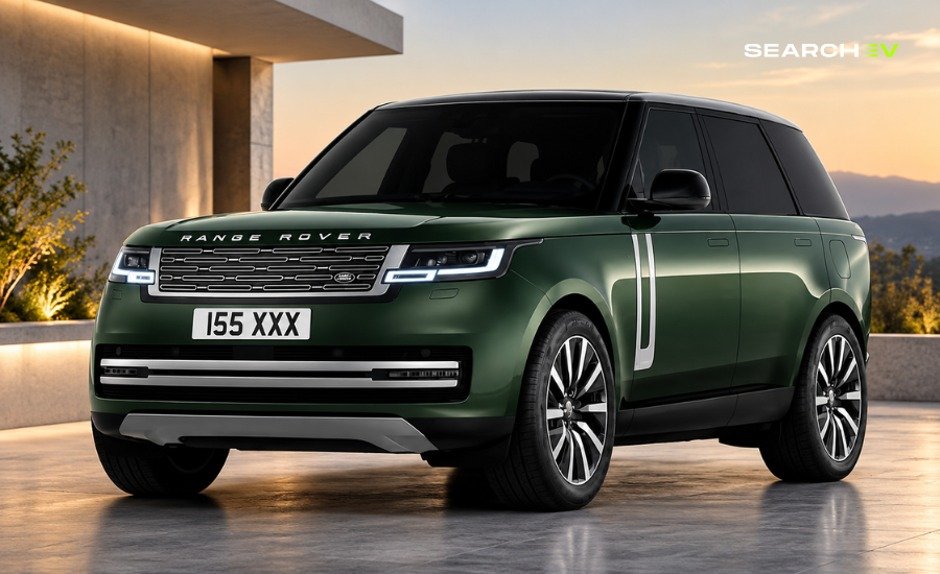
Ultra-Luxury Electric SUV | Expected Price: Rs 3.00 Crore
| Range Rover Electric EV Ex-Showroom Prices (Expected) | |
| Base Tier Trim Price (Autobiography) | Can Start At Rs 3.00 Crore |
| Top Tier Trim Price (SV variant) | Can Be Up To Rs 4.00 Crore |
Designed around the fifth-generation Range Rover stature, the upcoming Range Rover Electric is an EV iteration that comes with renowned luxury SUV architecture, blending the ICE counterpart’s design strengths (boxy silhouette) while being paired with a high-torque electric powertrain. The long-range Range Rover Electric is also crafted to reduce highway charging sprees – a convenience factor. For the same reasons, the upcoming Range Rover Electric comes with an 800V battery architecture, which can ensure up to 220 km of range with a 10-minute top-up.
The 2027 Range Rover Electric is also asserted by the company to be a high-performance SUV which comes with the promise of “wade deeper and climb steeper” suited for all terrain; for the same reasons, this ultra-luxury SUV gets a dual-motor configuration which can churn 20% more torque than other motors of the same size and weight construction. The vehicle is also expected to come wth All Terrain Progress Control (ATPC), which offers auto power and torque calibration based on selected terrain modes for tractable performance. The following are the expected performance capacities of this SUV:
| Range Rover Electric EV Specifications | |
| Battery Options | 100-110 kWh |
| Peak Power | 400-405 kW |
| Combined Torque | 560-850 Nm |
| Certified Range | 535-600 km |
Moreover, being a luxury e-SUV meant to be launched sometime next year (2027), the Range Rover Electric has garnered significant attention among enthusiasts and ultra-luxury-seeking customers looking to represent their style, all while featuring the option for factory-provided customisations. What is however for sure is the fitment of 22-inch wheels to enhance the style factor to a whole other realm.
Conclusion | Upcoming 2027 EV Cars Comparative Summary
| Vehicle Model | Expected Range | Battery Capacity | Highlights |
| Maruti Suzuki Fronx EV | 250-300 kms | 40 kWh | Feature-rich urban electric car for city and highways |
| Hyundai Electric SUV Code: HE1i | 300-355 kms | 40-48 kWh | Premium EV compact SUV with high range output |
| Skoda Elroq EV | 370-570 kms | 55-82 kWh | Compact urban CKD SUV for India with premiumness |
| Tata Avinya EV | 500-600 kms | 80-85 kWh | Ultra-luxury and powerful born-EV design architecture |
| Tata Altroz EV | 250-300 kms | 30-45 kWh | Five-star safety hatchback with good driving dynamics |
| Maruti Suzuki YMC EV | 440-553 kms | 49-61 kWh | Premium MPV with adequate feature integrations |
| Range Rover Electric EV | 535-600 kms | 100-110 kWh | Ultra-high-luxury electric SUV designed for high-range performance. |
All in all, these performance attributes and range dynamics of these upcoming electric cars slated for launch in 2027 demonstrate the advancement of the EV passenger car sector; prioritising new-age design language and performance characteristics distinct from each other. Supported by the growing EV infrastructure and battery ecosystem, electric cars are the future of mobility and the future of the automotive industry, while ICE counterparts will exist alongside them for years to come.