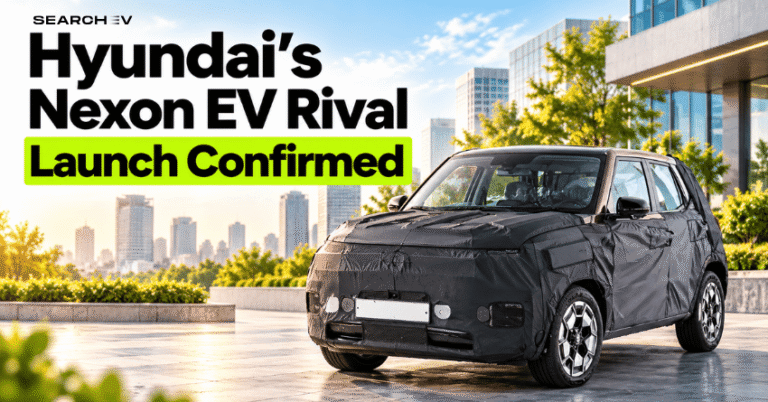
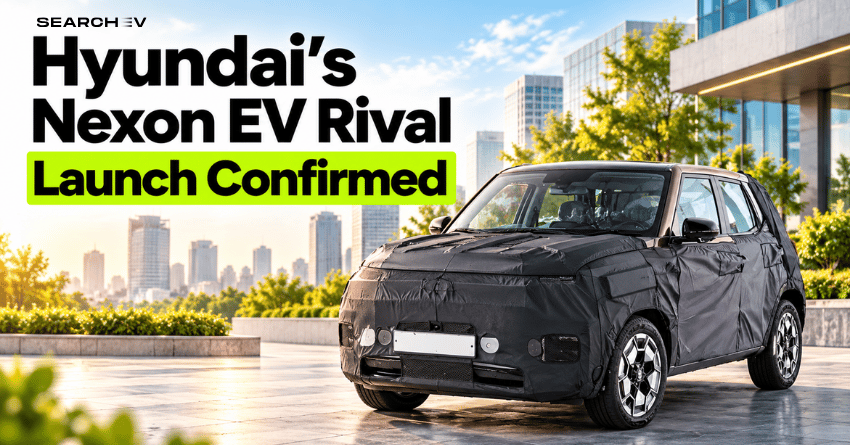
Hyundai’s made-for-India compact electric SUV is now reportedly set to debut in the first quarter of 2027, with January being the month doing the rounds. That is a step back from the end-of-2026 launch Hyundai Motor India’s CEO had been talking about only weeks ago. It also puts the car back on the schedule the company first announced.
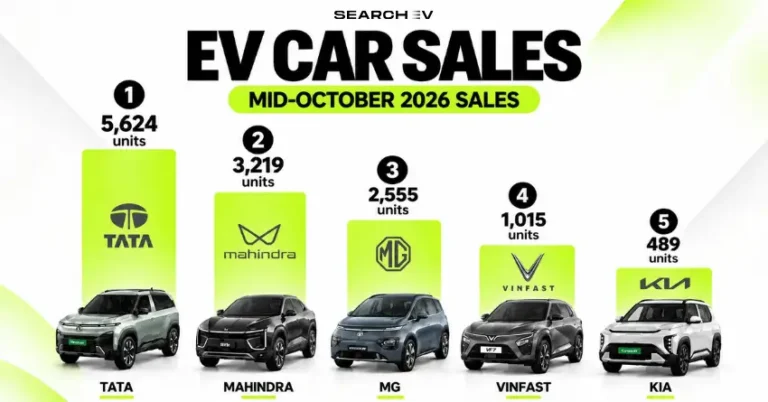
The SUV, codenamed HE1i, is a sub-4-metre model aimed at the part of the market where Tata, Mahindra and Kia already sell electric cars.
Shifting Timelines and Segment Ambitions
Hyundai first put a deadline on the car at its 2026 CEO Investor Day, where it said the SUV would debut in India by March 2027, the last quarter of FY2027. Hyundai Motor Company CEO Jose Munoz described it as a compact SUV designed and localised in India.
Hyundai Motor India leadership later accelerated those expectations. Managing Director Tarun Garg publicly stated that the model could arrive as early as late 2026.
Despite that aggressive push, current reports indicate a strategic delay. The official rollout is now slated for Q1 2027.
Garg said they will be initially using Svolt cells (Chinese battery supplier) in their new EV, so cell supply is likely not the obvious culprit.
A January debut means the car misses the festive months; not to mention this vehicle holds massive importance for the brand as it will be their cheapest EV in India and will directly challenge domestic heavyweights like the Tata Nexon EV.
Where the car sits in Hyundai’s line-up
Hyundai India currently sells two EVs, the Creta Electric and the Ioniq 5. Its first electric car here was the Kona Electric, back in 2019, but the numbers have stayed modest.
The new sub compact Electric SUV is meant to widen that base, especially with this EV designed and developed specifically for India.
Production will be at Hyundai’s Sriperumbudur plant in Tamil Nadu. Hyundai has called the state its EV hub for India and already runs a battery sub-assembly plant there. Within the range, the car is positioned below the Creta Electric.
Platform Architecture and Powertrain Expectations
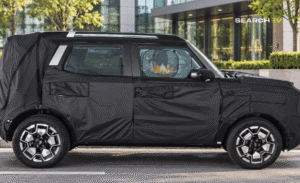
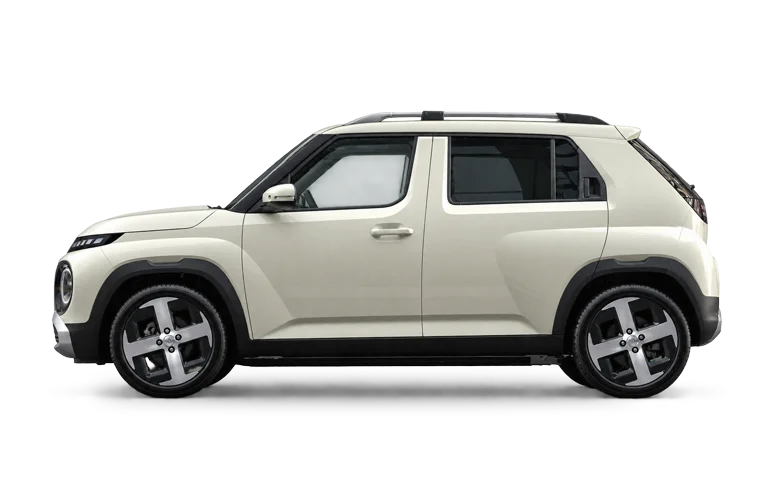
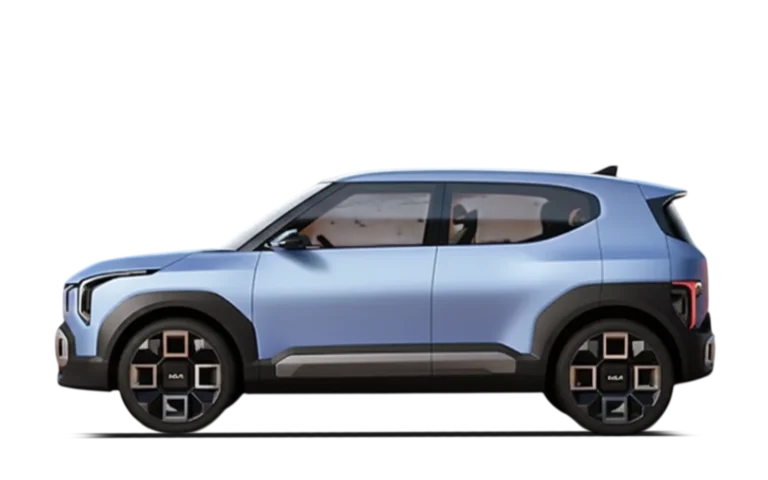
The upcoming Hyundai electric vehicle will share a heavily localised platform with the global Hyundai Inster EV and the recently launched Kia Syros EV, which is essentially Hyundai’s E-GMP (K) platform. However, treat it as a shared foundation, not a rebadged Inster, since it’s a much more compact vehicle, especially when Hyundai says the new car was planned specifically for India.
Hyundai has said the car will come in Standard Range and Long Range versions, but exact specifications are under wraps. Here’s what the global Inster EV and the India-specific Syros EV gets:
| Hyundai Inster EV (global) | Kia Syros EV (India) | |
| Battery | 42 kWh and 49 kWh | 42 kWh and 51.4 kWh |
| Power | 97 PS and 115 PS | 133 bhp and 169 bhp |
| Torque | 147 Nm | 255 Nm |
| Claimed range | 327 km and 370 km (WLTP) | 443 km and 526 km (MIDC) |
Kia currently offers the Syros EV with two separate battery configurations. Customers can choose between a 42 kWh pack and a larger 51.4 kWh unit. The larger battery delivers a claimed driving range of up to 526 kilometers on a single charge.
The Hyundai derivative is highly likely to mirror these exact powertrain options. Both battery packs support advanced DC fast charging architectures. When plugged into a 100 kW fast charger, the battery can replenish from 10 percent to 80 percent in just 39 minutes. A front axle mounted electric motor will provide the propulsion.
Next Generation Features and Cabin Technology
Hyundai plans to heavily equip its most affordable electric vehicle to justify a premium position within the mass market. Taking direct cues from the global Inster EV and the Kia Syros EV, the cabin should feature a column mounted shift by wire selector to free up vital center console space.
Safety will remain a core focus for the Korean automaker. The manufacturer will include six airbags as standard equipment across all variants. Higher trims will boast a Level 2 advanced driver assistance suit. Buyers can also expect a premium audio setup, dual digital screens, and flexible fold flat seating. By packing the vehicle with these premium features, Hyundai aims to set a completely new benchmark in the sub four meter electric class.
For reference, the global Inster EV gets dual 10.25-inch displays and a wireless charging dock, a 360-degree view monitor and blind-spot view monitor, and vehicle-to-load (V2L) power output. The Syros EV features list is even more comprehensive in comparison.
What SearchEV Thinks
Moving the launch to the first quarter of 2027 might initially seem like a setback for eager consumers. However, this calculated delay gives Hyundai crucial time to finalise its local sourcing strategy. The first cars will use cells from Svolt, with Hyundai planning to move to locally sourced cells through its association with Exide.
Achieving heavy localisation is the absolute only way the automaker can price this electric SUV aggressively enough to disrupt the current market leaders.
If Hyundai can bring a car with Level 2 ADAS and a modern infotainment system in below the Syros EV, it can completely transform the dynamics of affordable electric mobility in India.
For reference, the Kia Syros EV is priced between Rs 13.49 lakh to Rs 19.99 lakh ex-showroom, and a Battery-as-a-Service option brings the entry price down to Rs 7.99 lakh with a per-kilometre battery charge.