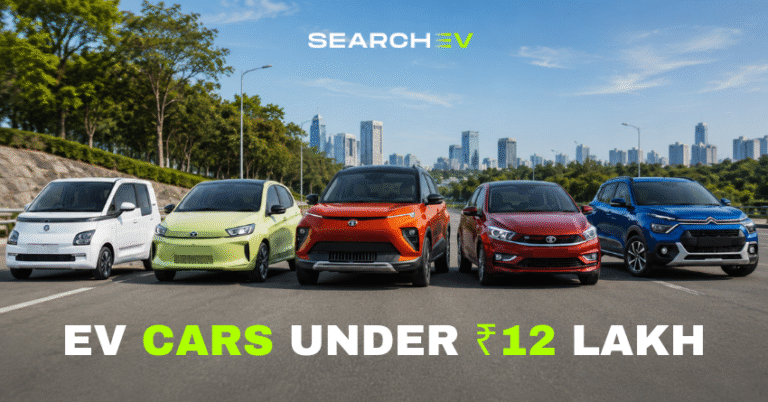
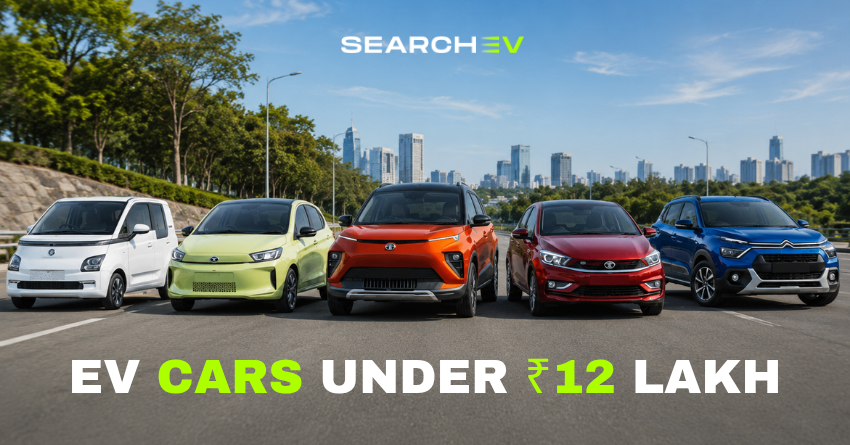
There was a time when the under ₹12 lakh EV bracket was a polite way of saying “here’s what you get when you can’t afford a real electric car.” One option, maybe two, and both came with enough compromises to send you straight back to a petrol hatchback.
That’s not where we are anymore.
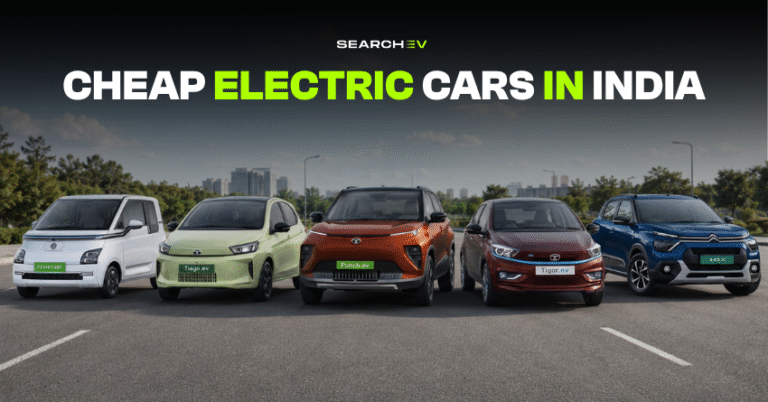
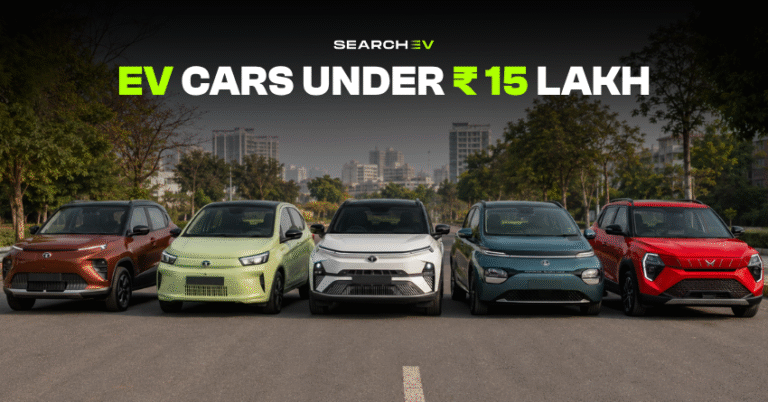
In 2026, the under ₹12 lakh segment is easily the most interesting place to buy an electric car in India. You’ve got a five-star safety-rated SUV from Tata that fits a family of four and charges 0–80% in 26 minutes. A microcar from MG that parks where no other car can. A French hatchback with suspension tuned specifically for Indian roads. The problem now isn’t a lack of options — it’s knowing which one is actually right for you.
This guide gives you that clarity. Real prices, real range, and a straight answer on who should buy what.
What’s Available: The Complete List
| Car | Starting Price | Real-World Range | Best For |
| MG Comet EV | ₹4.99 lakh | 140–190 km | Solo commuters, tight city parking |
| Tata Tiago EV | ₹6.99 lakh | 180–230 km | First-time EV buyers, city families |
| Tata Punch EV | ₹9.69 lakh (₹6.49L BaaS) | 250–300 km | Families, daily commuters, long-term ownership |
| Citroen eC3 X | ₹11.99 lakh | 220–250 km | Rough road commuters, comfort buyers |
| Tata Tigor EV | ₹12.49 lakh | 230–270 km | Sedan buyers, Tier 2 city owners |
Prices ex-showroom, Delhi. BaaS = Battery-as-a-Service pricing.
Stop Trusting the Brochure Range
Every car on this list will show you a shiny ARAI-certified range figure on the spec sheet. The Tiago EV says 315 km. The Punch EV says 421 km. The Comet says 230 km. These numbers are tested under ideal lab conditions — mild temperature, flat road, no AC, steady speed. That is not India.
Here’s the rule of thumb you should actually use: take any ARAI figure and apply 65–70% to get your real-world city range with air conditioning running in summer. That’s the number that decides whether a car gets you through the week on one charge or leaves you hunting for a public charger by Wednesday.
Run that filter across this list and you’ll find the Punch EV still clears 250+ km, the Tiago comfortably covers a 40–50 km daily commute four to five times over, and the Comet works well for anything under 30 km a day. It’s a useful lens before spending a rupee.
MG Comet EV — ₹4.99 Lakh To ₹10.06 Lakh
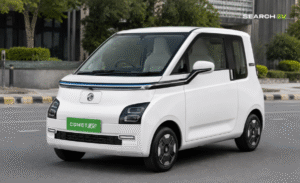
The MG Comet EV is genuinely polarising. Look at it in a parking lot and you’ll either think it’s adorable or you’ll wonder who it’s for. The answer is specific: it’s for the solo commuter who spends 45 minutes every morning looking for parking in Connaught Place, Koramangala, or Bandra, and would happily trade boot space for the ability to slot into a gap no other car can reach.
The 17.3 kWh battery gives 150–180 km of real-world city range, dual 10.25-inch screens, and a cabin that fits two adults without complaint. Four adults? That’s a different conversation. A family grocery run? You’ll need a second trip.
The feature-to-price ratio is surprisingly strong. The problems are equally clear: no back seat worth speaking of, no highway confidence above 80 kmph, and MG’s service network, while improving, is thinner than Tata’s in most Tier 2 cities.
If your use case is a second car for city commuting and you live in a metro, it earns every rupee. If you’re looking for one car that does everything, keep reading.
Tata Tiago EV — ₹6.99 Lakh to ₹9.99 Lakh
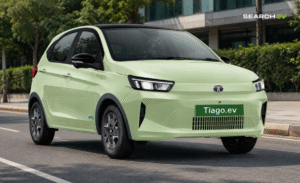
The Tata Tiago EV is what happens when a brand takes an already-trusted product and makes the switch to electric without breaking what worked. Same familiar five-seat Tiago body, same confidence in after-sales support, but with running costs that make a petrol Tiago look expensive by comparison.
The 24 kWh long-range variant is the one you want. Real-world city range comes in at 180–230 km — enough to run 4–5 days on a 40–50 km daily commute without touching a public charger. The 2026 update brought better interior quality, a 10.25-inch infotainment screen, and wireless Android Auto and Apple CarPlay.
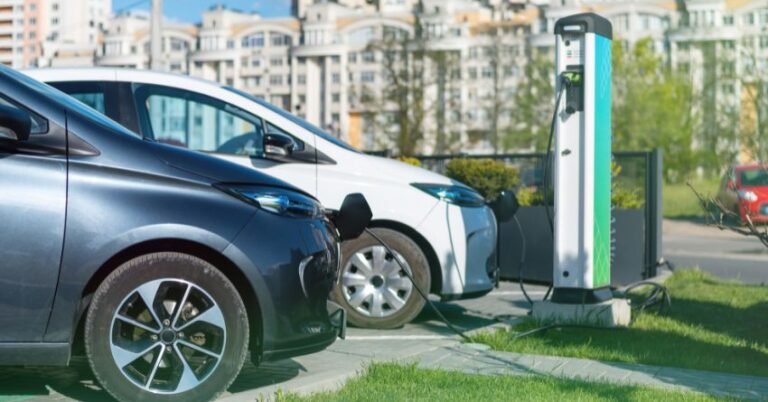
The one limitation worth being upfront about: the Tiago EV doesn’t support DC fast charging on most variants. If you’re relying on public infrastructure for daily charging, that matters. If you have a home charging point — and setting one up costs ₹10,000–₹15,000 as a one-time install — this becomes a complete non-issue.
For a first-time EV buyer who wants reliability, a proven service network, and a price that doesn’t feel like a leap of faith, this is still one of the most sensible decisions in the entire Indian EV market.
Tata Punch EV — ₹9.69 lakh to Rs. 12.79 Lakh (₹6.49L on BaaS)
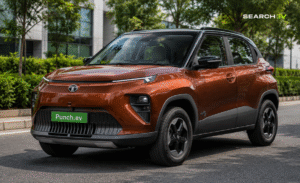
If there’s one car in the under ₹12 lakh segment that makes everything else here look like a compromise, it’s the Tata Punch EV. SUV body style, 5-star Global NCAP safety rating, a frunk, 250–300 km of real-world range, and DC fast charging that takes it from 0 to 80% in 26 minutes. At ₹9.69 lakh for the entry variant, that’s not just good for the money — that’s genuinely good.
The 40 kWh battery is standard across the 2026 range, which removed the anxiety around picking the “wrong” battery size. The Smart+ variant at ₹10.89 lakh is where most buyers end up, and for good reason — it adds connected car features and a better speaker setup without crossing ₹11 lakh.
Tata also offers a lifetime battery warranty on the Punch EV, which is the kind of long-term ownership assurance that no competitor in this segment comes close to matching. If you’re planning to own this car for five years or more, that alone is worth serious weight in your decision.
For a detailed look at which variant makes sense for your specific use case, our Punch EV variants guide breaks it all down.
Citroen eC3 X — ₹11.99 Lakh to ₹13.26 Lakh
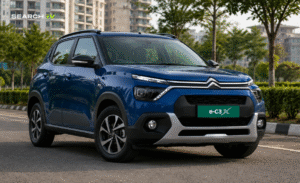
The Citroen eC3 X doesn’t get the attention it deserves, mostly because Citroen isn’t a brand Indians grew up with. That’s a shame, because it does one thing no other car in this list does as well: absorb bad roads.
Citroen’s Advanced Comfort suspension was designed specifically for markets where road surfaces are unpredictable — which, if you’ve driven on Indian roads in monsoon season, explains exactly why it feels different from everything else here. If your commute involves potholes, speed breakers, and poorly laid patches, this car will make your mornings noticeably less exhausting.
The 29.2 kWh battery gives a claimed 320 km; real-world city range settles around 220–250 km. It doesn’t support fast charging at high speeds, so daily charging needs to happen at home or at a standard AC point.
The catch we can’t overlook: Citroen’s service network in India is limited. Before you book, verify the nearest authorised service centre. In the major metros you’ll be fine. Outside them, this becomes a genuine ownership risk — not something to brush aside. For monsoon-specific EV ownership tips, this guide on protecting your EV during the rains is worth a read before the season hits.
Tata Tigor EV — ₹12.49 Lakh To ₹13.75 Lakh
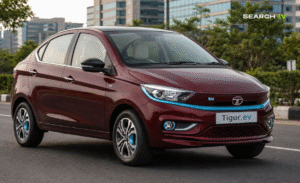
The Tata Tigor EV is the quiet achiever in this group. Nobody talks about it at EV meetups, it doesn’t appear on enthusiast YouTube channels, and yet it fills a space nothing else here does: a proper three-box sedan with a boot, five proper seats, and Tata’s full service network behind it.
The 26 kWh battery returns 230–270 km in real-world city use. It won’t win any feature comparisons against the Punch EV, and the interior feels a generation behind what Tata offers on newer platforms. But for sedan buyers — and there are still plenty of them, particularly in Tier 2 cities where sedan body style remains a considered choice — this is the only game in town under ₹12 lakh.
Fleet operators and cab aggregators running electric city taxis also find this one appealing, and with good reason. The running cost per kilometre with home or depot charging is low, and Tata’s service support means downtime is manageable.
Note: All the prices are ex-showroom *
Also Read
Cheap Electric Cars in India (2026)
BaaS vs Outright — Which Actually Saves You Money Under ₹12L?
The BaaS (Battery-as-a-Service) model from Tata brings the Punch EV down to ₹6.49 lakh on paper, which is the kind of number that makes you do a double-take. We’ve broken down exactly how BaaS works — but the short version is this: if you’re driving under 1,000–1,200 km a month, BaaS can work in your favour. If you’re above that, the per-km charge compounds and you’d have been better off buying outright.
Do your own monthly km calculation before you decide. It takes five minutes and can save you lakhs over a five-year ownership.
Who Should Buy What
- Under ₹7 lakh, solo city commuter, parking is the daily battle: MG Comet EV. Accept the two-seat limitation and it makes perfect sense.
- Under ₹10 lakh, family of four, first EV, home charging available: Tata Tiago EV 24 kWh. Proven platform, the safest first step.
- ₹10–12 lakh, want an SUV, planning 5+ years of ownership: Tata Punch EV Smart+ 40 kWh. The strongest all-round product in this entire bracket.
- ₹9–11 lakh, bad roads are your daily reality: Citroen eC3 X — but verify service network availability in your city first.
- ₹12 lakh, specifically need a sedan: Tata Tigor EV. Nothing else here fills this exact brief.
What Nobody Tells You Before Buying
- Home charging is the whole game. Without it, a budget EV becomes logistically annoying. With it, your per-km cost drops to around ₹1–1.5. Setting up a home charger is a one-time spend that pays back within months.
- Battery health is a long-term habit, not a one-time worry. The charging habits you build from day one determine what your battery looks like in year four. Understanding how to maintain your EV battery is worth 10 minutes of your time before you take delivery.
- Check state subsidies. Maharashtra, Delhi, and Gujarat offer additional purchase incentives on top of central government benefits. These can move the effective price by a meaningful amount — worth confirming before you fix your budget ceiling.
- Tata’s service network is a real competitive advantage. When comparing cars at similar prices, the density of authorised service centres in your area isn’t a footnote — it’s part of the ownership cost.
FAQs
1. Which is the best EV under 12 lakhs in India in 2026?
For most buyers, the Tata Punch EV at ₹9.69 lakh is the best overall package — SUV body, 5-star safety, fast charging, and a lifetime battery warranty. For strictly city use on a tight budget, the Tata Tiago EV at ₹6.99 lakh is the safest starting point.
2, What is the real-world range of EVs under ₹12 lakh?
Expect 150–180 km from the MG Comet EV, 180–230 km from the Tiago EV, and 250–300 km from the Punch EV in real Indian city conditions with AC. ARAI figures are always higher — apply a 65–70% factor for honest planning.
3. Is it worth buying an EV under ₹12 lakh in 2026?
Yes, especially if you have home charging. Running costs of ₹1–1.5 per km versus ₹6–8 per km for petrol make the economics strong over three to five years. Here’s a full running cost comparison if you want to run the numbers for your usage.
4. Can I do highway trips in an EV under ₹12 lakh?
The Tata Punch EV handles occasional highway runs well. The Tiago EV and Tigor EV can manage too, with some planning around charging stops. The MG Comet EV is best kept to city use. For the full picture on how fast charging and slow charging affect highway usability, it’s worth understanding the difference before you book.
5. Should I buy a new cheap EV or a used premium EV?
Both have genuine arguments. A new budget EV gives you warranty protection and fresh battery health. A used premium EV at the same price might offer more features, but battery condition becomes the critical unknown. Our used EV buying guide covers exactly what to check before going pre-owned.