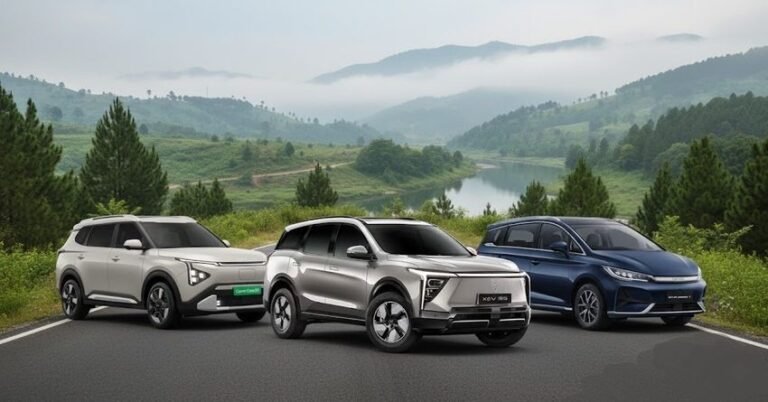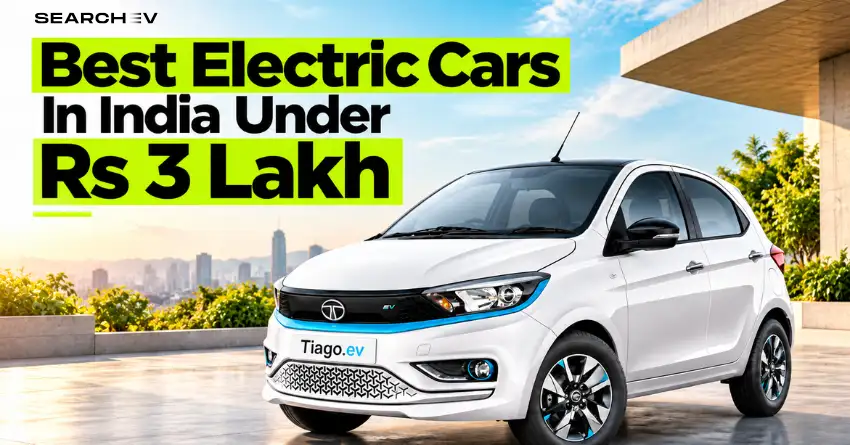
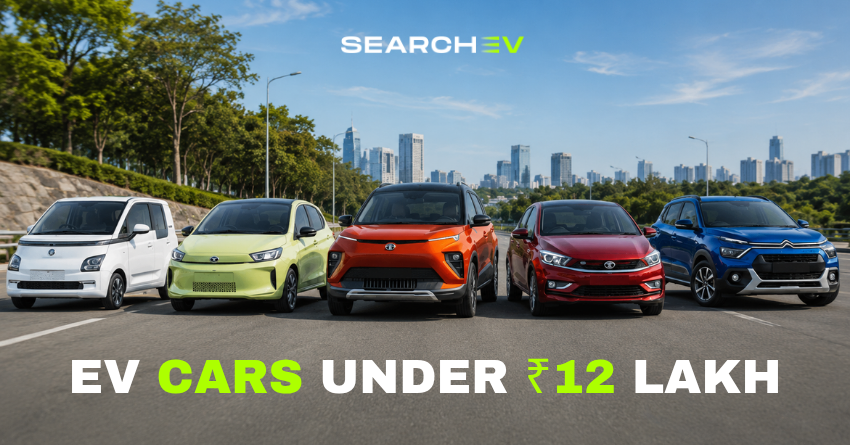
The short answer: The best electric car under Rs 12 lakh for most families is the Tata Punch EV (Rs 9.79 lakh and up at last report, up slightly from its Rs 9.69 lakh launch price). For a first EV used mostly in the city, the Tata Tiago EV (from Rs 6.99 lakh) is the safer, cheaper pick. If parking is your daily fight, the MG Comet EV (Rs 7.79 lakh and up) fits where nothing else does. The Citroen eC3X (from Rs 11.99 lakh) is the comfort pick for bad roads. Two cars that older lists include, the Tata Tigor EV and Nexon EV, now start at Rs 12.49 lakh, so they’re just over the line.
A lot changed in the first half of 2026, so here’s what’s new before we get to the cars.
What changed this year
- Three of these cars got updated. Tata facelifted the Punch EV (February 2026) and the Tiago EV (May 2026), and Citroen renamed and refreshed the eC3 as the eC3X (June 2026).
- Tata now sells a Battery-as-a-Service (BaaS) option. The Punch EV starts at Rs 6.49 lakh and the Tiago EV at Rs 4.69 lakh, both with a Rs 2.6 per km battery rental. MG’s Comet (Rs 3.2 per km) and the Citroen eC3X (Rs 2.26 per km) work the same way.
- The Tiago EV can now fast charge. Older guides, including an earlier version of this one, said most variants couldn’t. The 2026 car supports DC charging up to 30 kW.
- Prices crept up. MG raised Comet prices by up to Rs 17,000 in July, and Tata announced increases of up to 1.5% from 1 July.
The cars at a glance
| Car | Outright price (ex-showroom) | BaaS entry price | Battery | Claimed range | Realistic city range* |
|---|---|---|---|---|---|
| Tata Tiago EV | Rs 6.99 lakh to Rs 9.99 lakh | Rs 4.69 lakh + Rs 2.6/km | 19.2 or 24 kWh | 226 or 285 km (MIDC) | about 145 to 160 or 185 to 200 km |
| MG Comet EV | Rs 7.79 lakh to Rs 10.06 lakh | Rs 4.99 lakh + Rs 3.2/km | 17.3 kWh | 230 km (ARAI) | about 150 to 200 km |
| Tata Punch EV | Rs 9.79 lakh to Rs 12.59 lakh | Rs 6.49 lakh + Rs 2.6/km | 30 or 40 kWh | 365 or 468 km (MIDC) | about 240 to 255 or 305 to 330 km |
| Citroen eC3X | Rs 11.99 lakh to Rs 13.26 lakh | Rs 6.29 lakh + Rs 2.26/km | 29.2 kWh | 325 km (MIDC) | about 210 to 225 km |
Realistic range applies 65 to 70% to the claimed figure, a rule of thumb for Indian traffic, heat and AC use. Brands quote different test cycles (ARAI or MIDC), so compare like with like. The Punch EV’s top two variants (Empowered at Rs 12.29 lakh and Empowered+ S at Rs 12.59 lakh at launch) are over Rs 12 lakh, as is the eC3X Shine.
Stop trusting the brochure range
Every spec sheet shows a number measured in a lab: mild weather, flat road, no AC, steady speed. That isn’t a Bengaluru school run in May.
Use the 65 to 70% rule. A 285 km claim becomes roughly 185 to 200 km. That’s still plenty for a 40 km daily commute, with a charge every four or five days. The number that matters isn’t the brochure’s, it’s how many days you can go between charges.
One exception is worth knowing. Tata itself quotes real-world figures for the Punch EV (275 km for the 30 kWh and 355 km for the 40 kWh). Apply the rule to the MIDC figure and you get a bit lower, so treat Tata’s numbers as the optimistic end.
MG Comet EV — ₹4.99 Lakh To ₹10.06 Lakh
The MG Comet EV is genuinely polarising. Look at it in a parking lot and you’ll either think it’s adorable or you’ll wonder who it’s for. The answer is specific: it’s for the solo commuter who spends 45 minutes every morning looking for parking in Connaught Place, Koramangala, or Bandra, and would happily trade boot space for the ability to slot into a gap no other car can reach.
The 17.3 kWh battery gives 150–180 km of real-world city range, dual 10.25-inch screens, and a cabin that fits two adults without complaint. Four adults? That’s a different conversation. A family grocery run? You’ll need a second trip.
The feature-to-price ratio is surprisingly strong. The problems are equally clear: no back seat worth speaking of, no highway confidence above 80 kmph, and MG’s service network, while improving, is thinner than Tata’s in most Tier 2 cities.
If your use case is a second car for city commuting and you live in a metro, it earns every rupee. If you’re looking for one car that does everything, keep reading.
Tata Tiago EV — ₹6.99 Lakh to ₹9.99 Lakh
The Tata Tiago EV is what happens when a brand takes an already-trusted product and makes the switch to electric without breaking what worked. Same familiar five-seat Tiago body, same confidence in after-sales support, but with running costs that make a petrol Tiago look expensive by comparison.
The 24 kWh long-range variant is the one you want. Real-world city range comes in at 180–230 km — enough to run 4–5 days on a 40–50 km daily commute without touching a public charger. The 2026 update brought better interior quality, a 10.25-inch infotainment screen, and wireless Android Auto and Apple CarPlay.
The one limitation worth being upfront about: the Tiago EV doesn’t support DC fast charging on most variants. If you’re relying on public infrastructure for daily charging, that matters. If you have a home charging point — and setting one up costs ₹10,000–₹15,000 as a one-time install — this becomes a complete non-issue.
For a first-time EV buyer who wants reliability, a proven service network, and a price that doesn’t feel like a leap of faith, this is still one of the most sensible decisions in the entire Indian EV market.
Tata Punch EV — ₹9.69 lakh to Rs. 12.79 Lakh (₹6.49L on BaaS)
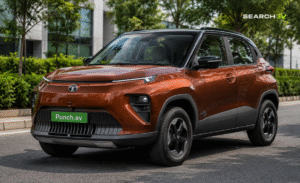
If there’s one car in the under ₹12 lakh segment that makes everything else here look like a compromise, it’s the Tata Punch EV. SUV body style, 5-star Global NCAP safety rating, a frunk, 250–300 km of real-world range, and DC fast charging that takes it from 0 to 80% in 26 minutes. At ₹9.69 lakh for the entry variant, that’s not just good for the money — that’s genuinely good.
The 40 kWh battery is standard across the 2026 range, which removed the anxiety around picking the “wrong” battery size. The Smart+ variant at ₹10.89 lakh is where most buyers end up, and for good reason — it adds connected car features and a better speaker setup without crossing ₹11 lakh.
Tata also offers a lifetime battery warranty on the Punch EV, which is the kind of long-term ownership assurance that no competitor in this segment comes close to matching. If you’re planning to own this car for five years or more, that alone is worth serious weight in your decision.
For a detailed look at which variant makes sense for your specific use case, our Punch EV variants guide breaks it all down.
Citroen eC3 X — ₹11.99 Lakh to ₹13.26 Lakh
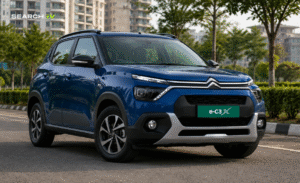
The Citroen eC3 X doesn’t get the attention it deserves, mostly because Citroen isn’t a brand Indians grew up with. That’s a shame, because it does one thing no other car in this list does as well: absorb bad roads.
Citroen’s Advanced Comfort suspension was designed specifically for markets where road surfaces are unpredictable — which, if you’ve driven on Indian roads in monsoon season, explains exactly why it feels different from everything else here. If your commute involves potholes, speed breakers, and poorly laid patches, this car will make your mornings noticeably less exhausting.
The 29.2 kWh battery gives a claimed 320 km; real-world city range settles around 220–250 km. It doesn’t support fast charging at high speeds, so daily charging needs to happen at home or at a standard AC point.
The catch we can’t overlook: Citroen’s service network in India is limited. Before you book, verify the nearest authorised service centre. In the major metros you’ll be fine. Outside them, this becomes a genuine ownership risk — not something to brush aside. For monsoon-specific EV ownership tips, this guide on protecting your EV during the rains is worth a read before the season hits.
Also Read
Cheap Electric Cars in India (2026)
BaaS vs outright: does it actually save money?
Battery-as-a-Service means you buy the car without the battery and pay a rental for every kilometre you drive. The sticker price looks great. Here’s how BaaS works in more detail.
The honest answer is that it saves you cash upfront, not necessarily money over the life of the car. Here’s the break-even point, where the rental you’ve paid equals the upfront saving:
| Car | Upfront saving | Battery rental | Break-even distance | Years at 12,000 km/year |
|---|---|---|---|---|
| Tata Punch EV (Smart 30 kWh) | Rs 3.20 lakh | Rs 2.6/km | about 1,23,000 km | about 10 years |
| Tata Tiago EV (base) | Rs 2.30 lakh | Rs 2.6/km | about 88,500 km | about 7.4 years |
| MG Comet EV (Executive) | Rs 2.80 lakh | Rs 3.2/km | about 87,500 km | about 7.3 years |
| Citroen eC3X | about Rs 5.26 lakh (as reported) | Rs 2.26/km | about 2,32,700 km | about 19 years |
That table ignores electricity (you pay it either way), loan interest saved on the smaller purchase price, the battery warranty and resale value. It does show that if you keep a car for five years and drive 12,000 km a year, BaaS usually costs you less in the first few years and more if you keep driving.
A word of caution on the Punch EV. One review says the Rs 2.6/km charge works out to Rs 2,600 for 1,000 km a month. Other reports say Tata assumes a minimum of about 60 km a day, which is a fixed Rs 4,680 a month (about 1,800 km). Those two readings give very different answers for a low-mileage driver, so ask the dealer for the minimum billing in writing.
BaaS can still make sense. Even with a rental of Rs 2.6/km plus roughly Rs 1 to Rs 1.2/km for home charging, you’re at about Rs 3.6/km, against roughly Rs 6 to Rs 8/km for an equivalent petrol car.
Who should buy what
- Solo commuter or couple, tight parking, city only: MG Comet EV.
- First EV, city family, home charging, tight budget: Tata Tiago EV, ideally the Pure+ 24 kWh.
- Family of four, longer commutes, keeping the car 5+ years: Tata Punch EV, 40 kWh.
- Rough roads every day and a service centre nearby: Citroen eC3X.
- Want a sedan: the Tata Tigor EV, but know that it starts at Rs 12.49 lakh, so it’s just over this budget.
- Lowest possible upfront cost: any of the four on BaaS, once you’ve checked the monthly maths for your own driving.
Just over the line, and what’s coming
The Tata Tigor EV and the Tata Nexon EV both start at Rs 12.49 lakh, so they miss this list by a small margin. If you can stretch, see our guide to EV cars under Rs 15 lakh.
The MG Windsor EV is a BaaS-first car. It launched at Rs 9.99 lakh on BaaS with a battery rental now at Rs 3.9/km for the 38 kWh, but its outright price starts around Rs 14.10 lakh. MG revised both prices in July, so ask for today’s BaaS quote.
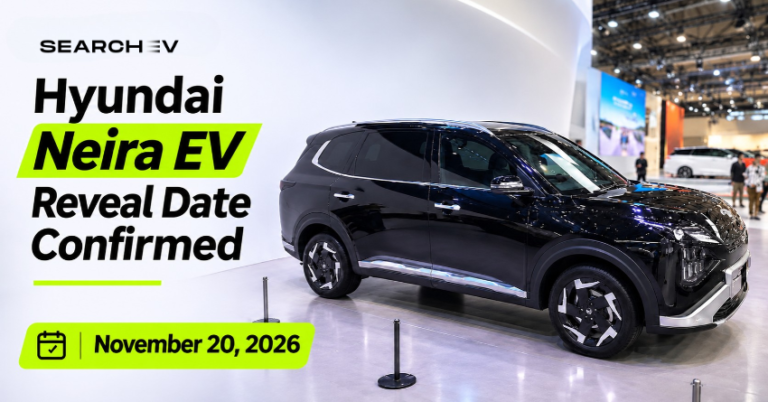
On the horizon, one listing site expects a Hyundai sub-compact electric SUV at around Rs 12 lakh as early as November 2026 (tentative). Treat that as unconfirmed. Our upcoming electric cars guide tracks launches.
Before you book: a short checklist
- Ask for the on-road price in writing. Insurance and registration add several thousand rupees, and some states waive or reduce road tax on EVs, so confirm yours.
- Read the BaaS terms. Is there a minimum monthly charge? What happens if you sell the car or stop driving?
- Sort out home charging. It’s what makes an EV cheap to run. See our guide to setting up a home charger and the real charging cost per km.
- Check the service centre near you, especially for Citroen and MG.
- Ask about discounts. Dealer offers on Tata EVs were reported in August 2026, and they vary by model and city.
- Test drive on your actual route, including the speed breakers.
- Look after the battery from day one. Our EV battery maintenance guide takes ten minutes to read.
FAQs
1. Which is the best EV under ₹12 lakh in India?
For most buyers, the Tata Punch EV, particularly the 40 kWh variants, thanks to its range, fast charging and lifetime battery warranty. For a cheaper first EV, the Tata Tiago EV is the safest choice.
2. What is the real-world range of EVs under ₹12 lakh?
Roughly 65 to 70% of the claimed figure. That’s about 145 to 200 km for the Tiago EV, 150 to 200 km for the Comet, 240 to 330 km for the Punch EV (depending on the battery) and 210 to 225 km for the eC3X.
3. Is the Tata Tigor EV under ₹12 lakh?
No. It starts at ₹12.49 lakh ex-showroom. The same goes for the Nexon EV.
4. Can the Tiago EV fast charge?
Yes. The 2026 facelift supports DC fast charging up to 30 kW, with 10 to 80% in around 35 minutes according to Tata’s figures.
5. Is BaaS worth it for a car?
It lowers the upfront price and the EMI, which helps if cash flow is tight. Over the long run, you pay the rental on every kilometre, so high-mileage drivers should work out their own break-even before signing.
6. Can I take these cars on the highway?
The Punch EV handles occasional highway trips comfortably. The Tiago EV and eC3X can do them with planning around charging. The Comet is best kept for the city. Read about fast vs slow charging before a long trip.
7. Should I buy a new budget EV or a used premium one?
A new car gives you a warranty and a healthy battery. A used premium EV may offer more features, but battery condition is the unknown. Our used EV buying guide covers what to check.