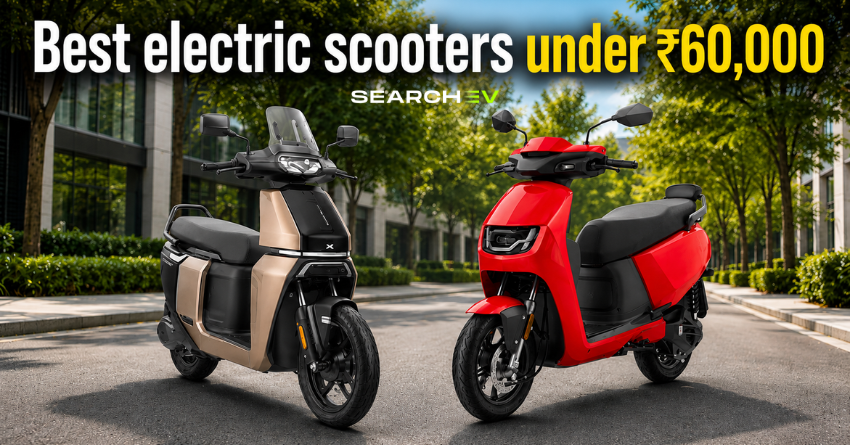
Here’s something nobody tells you before you start searching for an electric scooter under ₹60,000 in India.
Most of the “under ₹60K” scooters you’ll find listed across the internet aren’t actually under ₹60,000. They’re Battery-as-a-Service prices — where you’re buying the scooter without the battery and paying a monthly subscription on top. The outright purchase price of the same scooter is often ₹85,000 to ₹1 lakh. That’s not a minor asterisk. That’s a completely different financial decision.
We’ve looked at every confirmed electric scooter in this price bracket, cross-checked prices across multiple sources, and filtered out anything that’s postponed, discontinued, or from a brand with no meaningful service presence. What’s left is smaller than most lists you’ll find — and more honest.
The good news is that two of India’s most trusted two-wheeler names are genuinely playing in this bracket in 2026. Here’s exactly what’s available, what it actually costs, and who should buy what.
What’s Actually Available — Verified Prices Only
| Scooter | BaaS Price | Outright Price | IDC Range |
| TVS Orbiter V1 | ₹49,999 | ₹84,500 | 86 km |
| Hero Vida VX2 | ₹59,490 | ₹99,490 | 142 km |
| TVS Orbiter V2 | ₹59,664 | ₹99,900 | 158 km |
All prices ex-showroom Delhi, inclusive of PM e-Drive subsidy where applicable. BaaS = Battery-as-a-Service. Outright = full purchase including battery. On-road prices will be higher after registration and insurance.
One scooter conspicuously missing from this list: the Ola S1 Z, which was announced at ₹59,999 and generated enormous buzz. As of mid-2026, it remains postponed with no confirmed launch date. We’re not going to list a scooter you can’t actually buy.
The BaaS Reality — What “Under ₹60K” Actually Means in 2026
Before we get into individual scooters, this needs to be said plainly.
BaaS (Battery-as-a-Service) is a model where you purchase the scooter without its battery pack and instead pay a monthly subscription for battery access. TVS starts their Orbiter V1 BaaS plans at ₹862 per month. Hero Vida has its own subscription tiers. These aren’t bad deals — but they are fundamentally different from owning a scooter outright.
When you buy on BaaS, you don’t own the battery. You’re paying the scooter’s sticker price upfront and then paying every single month for the right to use the battery inside it. The advantages are real: lower upfront cost, battery replacement handled by the brand within the subscription, and in TVS’s case, a 5-year or 70,000 km battery warranty built into the plan. The disadvantage is equally real: you’re locked into a recurring cost that, depending on your usage, may or may not work out cheaper than buying outright.
We’ve broken down exactly how BaaS works and when it makes financial sense — but the short version is this: if you’re riding under 1,000–1,200 km a month, BaaS can genuinely work in your favour. Beyond that, the monthly cost starts compounding against you. Run your own monthly km number before you sign anything.
This context matters for everything that follows. Every major-brand scooter in this bracket is BaaS pricing. If you want outright ownership under ₹60,000 from a name you’ve heard of, we’ll address that separately below.
TVS Orbiter V1 — ₹49,999 (BaaS) / ₹84,500 (Outright)
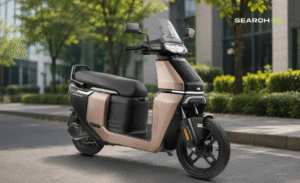
The TVS Orbiter V1 is the most significant thing to happen to the budget EV scooter segment in a while — not because of its specs, which are modest, but because of the name behind it.
TVS Motor Company has over 4,000 service touchpoints across India. When you buy a TVS product, you’re buying into a service network that exists in cities, towns, and places where most EV brands don’t have a single authorised centre. That matters enormously at this price point, where most of the competition comes from brands still building out their infrastructure.
The V1 runs on a 1.8 kWh battery, delivers 86 km of IDC-certified range, and charges from 0 to 80% in 2 hours and 20 minutes on the standard charger. Real-world city range — with the usual Indian traffic, stops, occasional pillion, and summer heat factored in — will likely settle between 55 and 70 km. That’s enough for a 25–30 km daily commute with a nightly charge. It’s not enough for someone doing 50 km a day who can’t charge at work.
The design is deliberately practical rather than stylish — flat-form seat at 845 mm, 34 litres of under-seat storage (enough for two helmets), and a straightforward upright riding position. It’s not the scooter you buy because it turns heads. It’s the one you buy because it starts every morning and someone answers the phone when it doesn’t.
For a rider whose daily commute is under 30 km and who wants the security of TVS’s after-sales network at the lowest possible entry point, the V1 on BaaS is a compelling case. Just go in knowing you’re not owning the battery — and calculate the monthly plan into your total cost before you book.
Hero Vida VX2 — ₹59,490 (BaaS) / ₹99,490 (Outright)
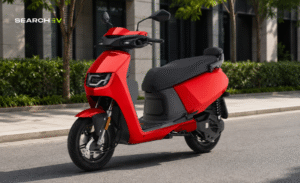
The Hero Vida VX2 is backed by Hero MotoCorp, which makes it the product in this guide with the deepest service reach in India — over 6,000 touchpoints, including in Tier 2 and Tier 3 cities where the Vida brand is still building awareness but the Hero network already exists.
At ₹59,490 under BaaS, it’s the most feature-complete scooter in this bracket by a clear margin. The 3.4 kWh battery delivers 142 km of IDC range — apply the 65–70% India city reality filter and you’re looking at 90–100 km of practical range, which is meaningfully more than the TVS Orbiter V1. It supports fast charging, reaches 80 kmph, and comes with connected features including OTA updates that actually improve the scooter’s behaviour over time.
The removable battery is one of the most practical features on any scooter at any price right now. If you live in an apartment without a dedicated charging point in the parking lot, you can physically lift the battery out, carry it upstairs, and charge it from a standard 5-amp socket overnight. That’s a real-world problem solver for a large chunk of Indian urban riders who would otherwise be dependent on public charging infrastructure.
Hero Vida also ran a limited-period introductory price bringing the BaaS entry down to ₹44,990 — worth checking whether this is still active at your nearest Vida showroom, as it occasionally resurfaces with dealership-level offers.
The honest catch: Vida as a brand — separate from Hero MotoCorp’s main dealer network — has a more limited footprint in smaller cities. Hero MotoCorp’s own dealers are everywhere; dedicated Vida showrooms are fewer. Confirm availability in your city specifically before making the trip.
For a buyer who needs more range than the V1 offers, wants a removable battery, and values Hero MotoCorp’s backing, the Vida VX2 at ₹59,490 BaaS is the best overall product in this bracket. Understanding how to keep that battery healthy from day one will matter here more than it does on a scooter with simpler chemistry.
TVS Orbiter V2 — ₹59,664 (BaaS) / ₹99,900 (Outright)
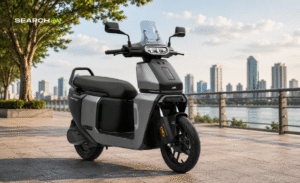
The TVS Orbiter V2 is the older sibling that launched before the V1 and offers a more substantial real-world proposition. The 3.1 kWh battery delivers a claimed 158 km IDC range — real-world city riding will bring you into the 105–120 km band, which covers most dual-use buyers who commute daily and occasionally run errands on weekends.
At ₹59,664 BaaS, it’s essentially the same entry bracket as the Hero Vida VX2. The choice between them comes down to priorities: TVS’s denser service network and proven reliability record versus Vida’s removable battery and slightly more feature-forward tech package.
If service network density matters most, Orbiter V2. If removable battery and connected features matter more, Vida VX2. Both are from brands that will actually answer when something goes wrong.
What If You Want to Buy Outright Under ₹60K?
This is the section most articles skip — because the answer is less exciting than the BaaS comparison.
If you want to own an electric scooter outright for under ₹60,000 in 2026, you’re mostly shopping from brands that aren’t TVS, Hero, Ola, Ather, or Bajaj. Names like Ampere, Hero Electric (separate from Hero MotoCorp), iVOOMi, Komaki, and others occupy this space, with prices starting as low as ₹35,000–₹50,000.
These aren’t fraudulent products. Some of them — particularly Ampere, which is backed by Greaves Cotton — are genuine commuter EVs with a reasonable track record. But they come with service networks that are a fraction of what TVS or Hero MotoCorp offers, spare part availability that varies significantly by city, and battery quality that’s harder to verify than on a brand running large-scale BaaS programs with formal warranty terms.
If you’re considering this route, check three things specifically: the location of the nearest authorised service centre, owner reviews from your city specifically (not general star ratings), and whether the brand has been around long enough for actual long-term ownership data to exist. Our used EV buying guide covers the diagnostic checklist even if you’re buying new from a smaller brand — the questions to ask are similar.
BaaS Math — Does the Monthly Subscription Actually Save You Money?
Let’s run a quick example with the TVS Orbiter V1.
BaaS price: ₹49,999 upfront. Subscription from ₹862 per month. Outright price: ₹84,500 upfront. Battery replacement eventually at your own cost.
The difference in upfront cost is ₹34,501. At ₹862 per month, the BaaS subscription costs that same ₹34,501 in roughly 40 months — just over three years. If you plan to keep the scooter beyond three years, buying outright begins to look cheaper in total. Under three years, BaaS wins on cash outflow.
There’s a variable the maths doesn’t automatically capture: the included battery warranty. Under TVS’s BaaS plan, battery replacement for degradation is covered for 5 years or 70,000 km. Buying outright and replacing a degraded battery out of pocket at year four is a different conversation. How you charge and store the battery daily affects how soon that conversation happens.
For the Hero Vida VX2 the same logic applies at slightly different numbers. The full BaaS breakdown on our site walks through each scenario with actual figures.
Who Should Buy What ?
- Daily commute under 30 km, want TVS’s service network, tightest budget: TVS Orbiter V1 at ₹49,999 BaaS. Modest but dependable.
- Daily commute of 40–60 km, live in an apartment, want removable battery: Hero Vida VX2 at ₹59,490 BaaS. Best range and most practical charging flexibility in the bracket.
- Daily commute of 40–60 km, want TVS reliability over connected features: TVS Orbiter V2 at ₹59,664 BaaS. Solid, no-drama choice.
- Want outright ownership, smaller brand is acceptable: Ampere is the most established option at this price outright — but verify service centres in your city before committing.
- Waiting for Ola S1 Z: Keep waiting if you want, but don’t delay your decision indefinitely on a scooter with no confirmed launch date.
FAQs
Which is the best electric scooter under ₹60,000 in India in 2026?
For most buyers, the Hero Vida VX2 at ₹59,490 (BaaS) offers the best overall package — longest range, removable battery, Hero MotoCorp’s backing, and fast charging. If budget is the primary driver and a shorter commute is all you need, the TVS Orbiter V1 at ₹49,999 BaaS is the most accessible entry from a major brand.
Is the Ola S1 Z available under ₹60,000?
No. The Ola S1 Z was announced at ₹59,999 but has been postponed indefinitely as of mid-2026. It’s not available for purchase. Check Ola’s official website for any launch update.
Are these really under ₹60,000 or is that just a BaaS price?
Every major-brand scooter listed here under ₹60,000 is a BaaS price. The outright purchase price of the same scooters ranges from ₹84,500 to ₹99,900. Both options are valid, but they’re different financial commitments — make sure you know which one you’re signing up for before you visit a showroom.
What is the real-world range of these scooters?
Apply a 65–70% factor to IDC range figures for Indian city conditions with AC usage and mixed traffic. TVS Orbiter V1: expect 55–70 km real-world. Hero Vida VX2 and Orbiter V2: expect 95–110 km. For more on how temperature and riding habits affect range, this explainer on whether AC affects EV range is worth a read.
Do I need a licence to ride these scooters?
Yes. All three scooters covered here have motor outputs above 250W and top speeds above 25 kmph, which means they require a valid driving licence and RTO registration. Low-speed exemptions don’t apply to these models.
Should I wait for prices to drop further?
The current wave of BaaS pricing suggests brands are actively trying to bring entry costs down — but outright prices have held relatively steady. If you need a scooter now, don’t wait. If you can manage for six more months, monitor whether the Ola S1 Z or other announcements materialise. Waiting indefinitely for a cheaper price in any product category usually costs more than the money you save.