Registration numbers for passenger electric vehicles in India finished at 36,710 units in October 2026. After what was a rather quiet first half, showroom deliveries did pick up the pace during the festive second half of the month, bringing the final tally to within 4.27 % of 38,348 units logged in September.
While the overall market recorded a mid pullback, the broader dynamics of the market haven’t changed much, as Tata Motors, Mahindra, and JSW MG Motor together accounted for 78.8 % of all electric car deliveries in October, taking cumulative electric car registrations for the first ten months of 2026 to 2,95,444 units.
| Rank | Manufacturer | October Registrations | September Registrations | Change | Jan to Oct 2026 Total |
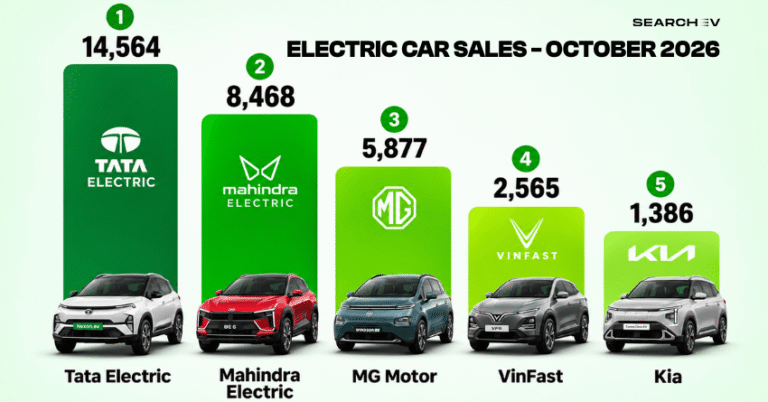
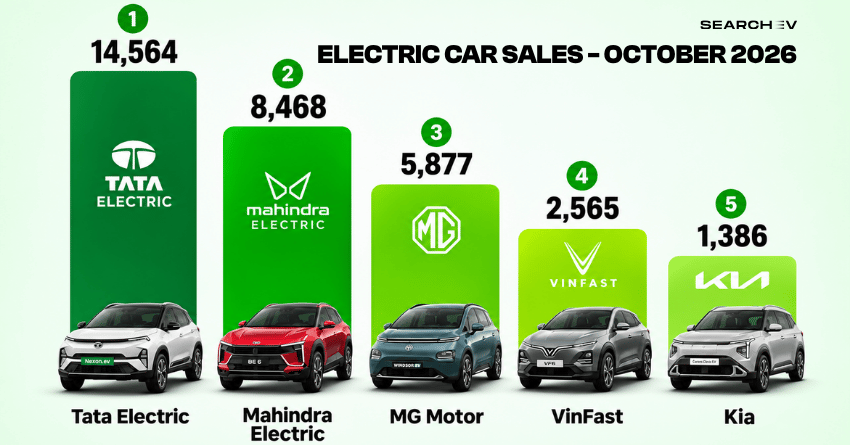
| 1 | Tata Motors | 14,564 | 15,624 | -6.78% | 1,16,590 |
| 2 | Mahindra | 8,468 | 8,176 | 0.0357 | 66,080 |
| 3 | JSW MG Motor | 5,877 | 5,507 | 0.0672 | 55,002 |
| 4 | VinFast | 2,565 | 3,304 | -22.37% | 15,462 |
| 5 | Kia | 1,386 | 1,433 | -3.28% | 7,016 |
| 6 | Maruti Suzuki | 1,188 | 1,172 | 0.0137 | 12,037 |
| 7 | Hyundai Motor | 753 | 840 | -10.36% | 5,783 |
| 8 | BYD | 735 | 877 | -16.19% | 6,355 |
| 9 | BMW | 459 | 535 | -14.21% | 4,128 |
| 10 | Tesla | 282 | 299 | -5.69% | 1,052 |
| Total | All Manufacturers | 36,710 | 38,348 | -4.27% | 2,95,444 |
Key Takeaways from October EV Sales in 2026
- Retail electric car registrations totalled 36,710 units in October 2026, which is 1,638 units lower than the 38,348 vehicles registered in September.
- Tata Motors stayed at the top of the table with 14,564 registrations and accounted for nearly 40% of total monthly volume.
- Mahindra held second place with 8,468 units, posting a 3.57 per cent monthly gain and lifting its share of the national market to 23.1 per cent.
- JSW MG Motor recorded the strongest growth among the top ten carmakers, rising 6.72 per cent from September to take third place with 5,877 units.
- Combined, Mahindra and JSW MG Motor registered 14,345 electric vehicles in October, finishing just 219 units short of Tata Motors.
- VinFast kept fourth place at 2,565 units despite a 22.37 per cent pullback from its September high.
- Maruti Suzuki was the only other automaker in the top ten to grow month on month, edging up 1.37% to 1,188 units in sixth place.
- Eighteen cars separated seventh and eighth place, with Hyundai Motor registering 753 units to overtake BYD at 735 units.
- Tesla moved past the 1,000-unit mark for calendar year 2026 after finishing tenth in October with 282 deliveries.
The Battle for Market Dominance in October
Unlike the broader industry trend, two of the top three automakers managed to beat their September numbers during the October festive window. Tata Motors still led the field by a wide margin with 14,564 registrations, though its volume fell 6.78% from 15,624 units in September and its market share eased from 40.7% to 39.7%. Mahindra came in second with 8,468 units, adding 292 registrations over September for a 3.57% monthly gain. That uptick pushed Mahindra’s share of the national market from 21.3% in September to 23.1% in October.
Third place went to JSW MG Motor with 5,877 units. Adding 370 registrations over its September tally, the performance helped the company lift its market share from 14.4% to 16 %. Put together, Mahindra and JSW MG Motor delivered 14,345 vehicles in October, closing to within 219 units of Tata Motors’ solo tally. Meanwhile, Vietnamese automaker VinFast continued to hold fourth place with 2,565 registrations, even though it witnessed a 22.37% month-on-month decline from 3,304 units in September.
Mid Tier Contenders and Luxury Performance
Kia held onto fifth place with 1,386 units in October, representing a minor 3.28% dip of 47 cars from the 1,433 units it registered a month earlier. Right behind it sat Maruti Suzuki in sixth place with 1,188 registrations of its sole electric car offering in India, the e-Vitara. Maruti Suzuki grew 1.37% over its 1,172-unit September figure. Looking at the ten-month picture, Maruti Suzuki has already put 12,037 electric cars on the road in 2026, well ahead of Kia’s cumulative tally of 7,016 units despite Kia having multiple electric offerings in its India portfolio.
Seventh place saw a change of guard between September and October. Hyundai Motor climbed one spot to seventh by registering 753 electric vehicles, beating BYD by 18 units as the Chinese carmaker closed the month in eighth place at 735 registrations. It was a reversal from September, when BYD finished ahead of Hyundai Motor by 877 units to 840 units. Over the full January to October period, BYD still stays ahead with 6,355 registrations compared to 5,783 units for Hyundai Motor.
Among luxury brands, BMW claimed ninth place by registering 459 electric cars against 535 units in September, a 14.21% decline, bringing its ten-month total to 4,128 units. Tesla took the tenth spot with 282 registrations, down 5.69% from 299 units the month before. Those October deliveries took Tesla to 1,052 units between January and October, pushing the American carmaker past the 1,000 unit milestone for the year.
The Consolidation of Market Power Among the Top Five
Five companies control almost the entire electric passenger vehicle sector in India. Put together, Tata Motors, Mahindra, JSW MG Motor, VinFast, and Kia registered 32,860 vehicles in October. That works out to 89.5% of all electric cars delivered nationwide during the month.
Shoppers clearly prefer sticking with manufacturers that offer established service networks, flexible battery rental structures, or assured buyback plans. Every other brand outside the top five had to split the remaining 3,850 registrations across the country.
What SearchEV Thinks
A strong late-month festive rush helped October registrations recover to 36,710 units, leaving the market just 4.27% shy of September’s 38,348-unit peak. Putting nearly 37,000 electric cars on Indian roads in a single month and crossing 2.95 lakh units in ten months shows that buyer demand has settled into a high baseline. The real story in October was how Mahindra and JSW MG Motor defied the broader monthly dip. Both carmakers posted positive month on month growth to come within 219 units of Tata Motors’ combined tally, while an 18 car gap between Hyundai Motor and BYD for seventh place shows how tight the midfield race remains heading into the final two months of 2026.