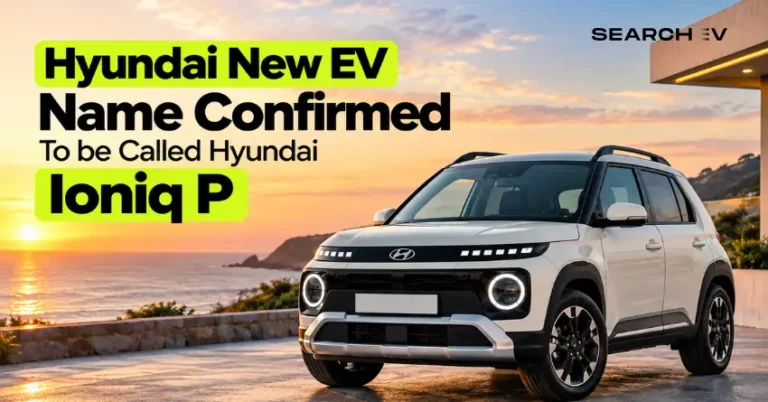
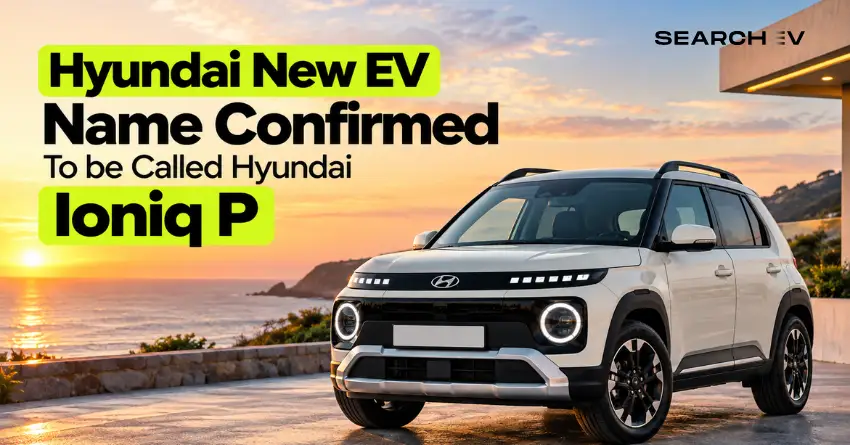
Hyundai’s upcoming, made-for-India, compact electric SUV, internally codenamed HE1i, is expected to be called ‘Ioniq P’. The name surfaced on October 29 during Hyundai Motor Company’s third quarter 2026 global earnings call with analysts, where management stated that the Ioniq P would launch in India following the recently introduced Bayon crossover. While Hyundai Motor India has not yet officially announced the production name or formally linked the Ioniq P title to the HE1i project, the disclosure points to a clear strategy. The South Korean automaker plans to extend its global Ioniq electric sub-brand into India’s accessible mass market segment when the SUV debuts in January 2027.
Bringing the Ioniq Badge to the Mass Market
Until now, the Ioniq nameplate in India belonged exclusively to the flagship Hyundai Ioniq 5 crossover, which has been on sale since 2023 alongside the more recent midsize Creta Electric. Slotting the Ioniq P below the Creta Electric as Hyundai’s third battery-powered model gives budget buyers immediate brand recall in a crowded showroom environment.
This compact SUV carries heavy strategic weight for the manufacturer. Electric passenger vehicle sales in India have grown nearly 90 percent so far in the 2027 fiscal year, yet electric models accounted for roughly 1 percent of Hyundai’s domestic volumes in the previous fiscal year. With this new entry-level SUV, Hyundai wants to push its electric sales share past 7 percent within the next year. Hyundai has also applied for PLI certification for the upcoming compact electric SUV and expects clearance soon.
Localisation Plans and Battery Cell Sourcing
Manufactured at Hyundai’s Sriperumbudur plant in Tamil Nadu, the Ioniq P sits at the center of the company’s investment roadmap for India. Management aims to raise overall local component sourcing across its Indian lineup.
However, the compact electric SUV will initially roll off the assembly line with imported battery cells supplied by Svolt. Hyundai had originally partnered with Exide Industries to source locally manufactured cells, but production delays at Exide mean domestic cell supplies under the joint Hyundai and Kia program will not begin this year. Moving to local cell assembly at a later stage will be crucial for Hyundai to control manufacturing costs and protect its margins as monthly volumes scale up.
Platform, Powertrain, and Cabin Technology
Beneath its tall, boxy exterior, the Ioniq P is built on the localised E GMP K platform that underpins both the global Hyundai Inster EV and the recently launched Kia Syros EV. Buyers can expect two battery pack options at launch. While the global Inster offers 42 kWh and 49 kWh units, the Indian specification can also mirror the Kia Syros EV. That means a 42 kWh battery on lower trims and a 51.4 kWh pack on higher variants, paired with a front axle mounted electric motor producing 133 bhp and 255 Nm of torque. In the Syros EV, these two batteries deliver claimed MIDC ranges of 443 kilometres and 526 kilometres on a single charge.
Recent test prototypes spotted at public charging stations in Chennai reveal pixel-themed LED lighting elements, upright pillars, functional roof rails, and a front bumper radar module. Inside the cabin, spy shots and investor presentations confirm that the SUV will debut Hyundai’s new Pleos Connect infotainment system featuring a large central touchscreen. The equipment list is also expected to include Level 2 advanced driver assistance systems, six standard airbags, ventilated front seats, automatic climate control, and over-the-air software updates.
Conclusion (What SearchEV Thinks)
Putting the Ioniq badge on a sub-four-metre SUV is a smart branding decision by Hyundai. Indian car buyers already associate the Ioniq name with modern electric engineering, and bringing that identity down to an expected starting price between Rs 10 lakh and Rs 12 lakh ex-showroom can immediately draw footfall. Relying on imported battery cells at launch could tighten Hyundai’s initial profit margins, especially when going up against heavily localised rivals like the Tata Nexon EV, Mahindra XUV 3XO EV, Kia Syros EV, and the future Renault Bridger EV. Still, if Hyundai prices the Ioniq P aggressively when it debuts in the fourth quarter of FY2027, its combination of a 500-plus-kilometre claimed range and next-generation cabin tech should make it the brand’s primary electric volume driver in India.