India doesn’t do mild summers. Depending on where you live, you’re dealing with anywhere between 38°C and 48°C through April, May, and June — and in cities like Delhi, Jaipur, Nagpur, and Ahmedabad, that heat doesn’t just make your commute uncomfortable. It quietly goes to work on your EV battery.
The good news is that most modern EVs are engineered to handle heat. The bad news is that “handle” doesn’t mean “immune.” And a few careless habits repeated across a summer can take a real toll on your battery’s long-term health.
Here’s what actually matters — no fluff, no generic tips that were written for someone in Sweden.
What Heat Actually Does to Your EV Battery
Before the tips, the science — because understanding the problem makes the solution stick.
Your EV’s battery pack is made up of hundreds or thousands of lithium-ion cells. These cells have a sweet spot temperature range, typically between 15°C and 35°C, where they work most efficiently and age the slowest. Push them above that consistently, and two things happen.
First, the chemical reactions inside the cells accelerate — which sounds good but isn’t. Faster reactions mean faster degradation. The battery loses a small amount of its capacity each time it’s stressed by heat. Do that repeatedly across months and years, and your range quietly shrinks.
Second, if the battery gets hot enough — through a combination of ambient heat, heavy use, and charging — the thermal management system kicks in hard. Charging slows. Performance is limited. In extreme cases, charging stops entirely until the battery cools down.
Exposure to temperatures above 30°C can shorten the life of a lithium-ion battery, sometimes by more than 20% compared to normal conditions. In a country where 30°C is a cool morning in May, that’s not a footnote — it’s a real concern.
1. Where You Park Matters More Than You Think
This is the single highest-impact habit change any Indian EV owner can make.
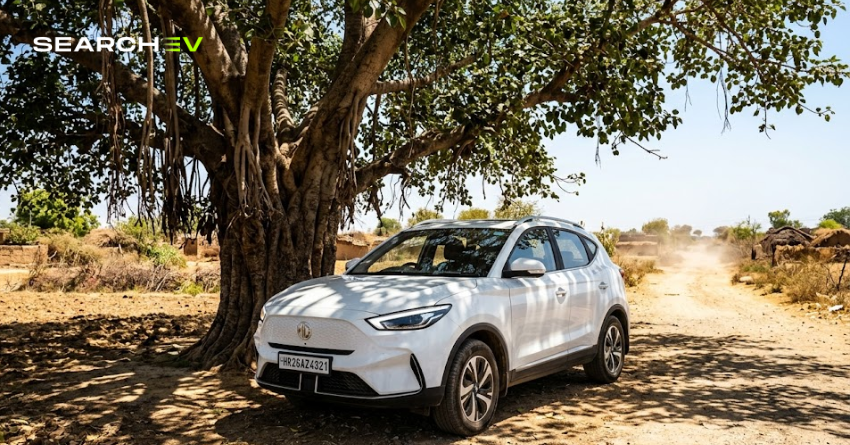
Leaving your EV parked under direct sunlight for hours doesn’t just heat the cabin — it raises the battery temperature even when the car is off. A car parked in open sun in Pune in May can have a battery pack running significantly hotter than one parked in a covered basement or under a tree, purely from radiant heat through the body.
Prioritise shaded parking wherever possible. If you park at home on an open terrace or driveway, a good quality car cover makes a measurable difference. Windshield sunshades help too — they reduce cabin heat, which means the cooling system works less when you start the car.
If your apartment society has basement parking, use it. The temperature difference between a basement and a rooftop in peak summer can be 10–15°C, and your battery notices every degree.
2. Time Your Charging Right
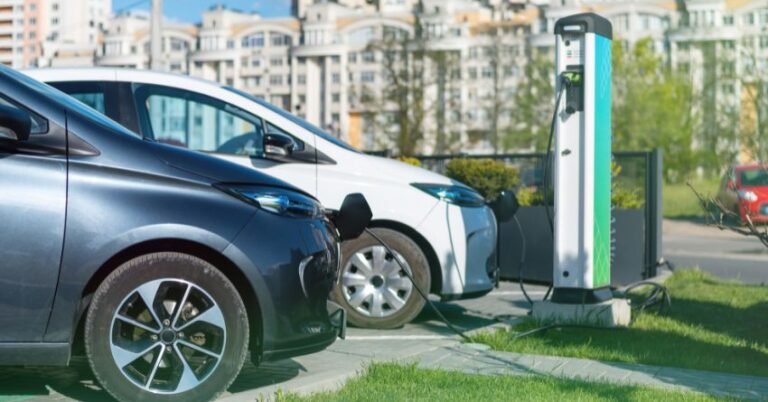
Charging generates heat. Driving generates heat. Doing both back-to-back in peak afternoon sun is the worst thing you can do to a battery in an Indian summer.
Three rules that genuinely protect your battery:
- Don’t charge immediately after a long drive. Let the battery cool for 30–45 minutes first. Charging a hot battery accelerates degradation significantly faster than charging a cool one.
- Charge at night. Ambient temperatures are lower, the battery stays cooler during the charge cycle, and in many states, off-peak electricity tariffs apply. It’s better for the battery and your electricity bill simultaneously.
- Don’t park fully discharged in heat. A battery sitting at 5% charge in 42°C heat degrades faster than one sitting at 30–40%. If you’re not using the car for a few days, leave it at a comfortable charge level — not empty, not full.
3. Follow the 20–80 Rule Through Summer
You may have heard of the 20–80 rule — keeping your battery between 20% and 80% charge rather than running it to empty or topping it to 100%. In cooler months, this is good practice. In Indian summer, it becomes essential.
Lithium-ion batteries kept within this range retain their capacity significantly longer. Studies suggest that following this consistently can extend battery life by up to 40% compared to regularly charging to 100%. Most EVs let you set a charge limit in the app or settings — if yours does, set it to 80% for daily use and only go to 100% when you genuinely need the full range for a long trip.
4. Use Preconditioning — That’s What It’s There For
Most modern EVs — Tata Nexon EV, MG ZS EV, Hyundai Ioniq 5, BYD Atto 3 — have a preconditioning feature. It lets you cool the cabin while the car is still plugged in, using grid power rather than battery power to run the air conditioning.
This is particularly useful in Indian summers for two reasons. One, you step into a cool car instead of a 50°C oven. Two, the battery hasn’t been drained by the AC before you’ve even moved. Activate it through your car’s app about 10–15 minutes before you leave, and make sure the windows are closed so the cool air stays in.
5. Check Tyre Pressure More Often
Tyre pressure rises in heat. Air expands, and on a 45°C day, a tyre that was correctly inflated in the morning can be meaningfully over-inflated by afternoon. Over-inflated tyres reduce the contact patch with the road, which affects both handling and range.
Check tyre pressure at least twice a month through summer, and always check when the tyres are cold — before you’ve driven, not after. EVs are heavier than equivalent petrol cars, which means tyre wear is already faster; incorrect pressure accelerates it further.
6. Keep the Coolant Level Checked
Unlike petrol cars, your EV doesn’t have engine coolant. But it does have a thermal management system that uses liquid cooling to regulate battery temperature — and that system has its own coolant circuit.
Most EVs only need the coolant checked or replaced every few years, but it’s worth verifying the level is correct before the summer sets in. If the coolant is low, the thermal management system can’t do its job properly, and the battery will run hotter than it should. A quick check during your next service visit is all it takes.
The Bottom Line
Indian summers are legitimately tough on EV batteries — tougher than almost anywhere else most EV advice is written for. But none of these habits are complicated or expensive. Park smart, charge at night, follow the 20–80 rule, use preconditioning, and check the basics before the heat peaks.
Your battery is the most valuable component in your EV. Treat it accordingly through summer, and it will hold its health — and its range — for years longer than one that’s been neglected through four or five brutal Indian summers.
Stay on top of every EV ownership tip and technology update — SearchEV covers what actually matters for Indian EV owners.