Let’s start with the truth, because most articles on this topic don’t bother with it.
The under ₹80,000 electric scooter bracket in India is the most overhyped, most misleading price segment in the entire EV market right now. Aggregator sites list 20–30 models. Half of them are from brands you’ve never heard of, with service centres that exist only on paper. A few are straight-up postponed, yet still showing up with shiny spec sheets and “coming soon” price tags. And the scooters you actually want — the Ola S1, TVS iQube, Bajaj Chetak, Ather 450 — start above this bracket.
That doesn’t mean there’s nothing worth buying here. There is. But you need to go in knowing what the market actually looks like, not what listicles want you to think it looks like.
This article only covers scooters that are confirmed available, from brands with real service infrastructure, with prices verified from multiple sources. If it’s postponed, unconfirmed, or from a brand with no meaningful after-sales presence, it’s not in here.
What’s Confirmed Available Under ₹80,000
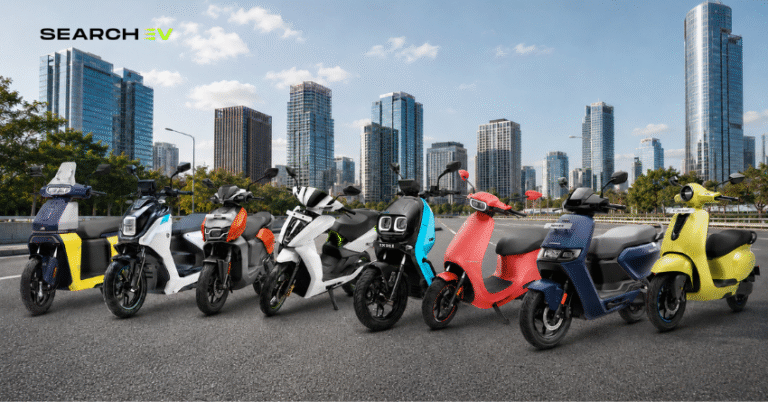
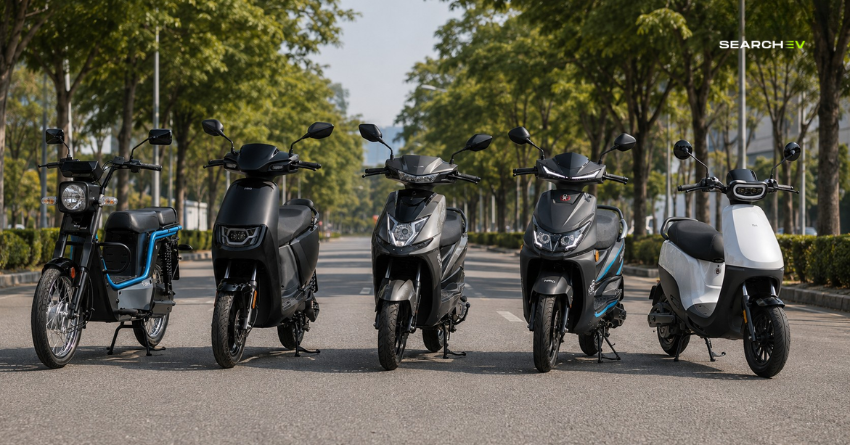
| Scooter | Ex-Showroom Price | Claimed Range | Best For |
| Kinetic E-Luna | ₹69,990 | 110 km | Light daily commuters, nostalgic buyers |
| Hero Vida VX2 Go | ₹74,000 | 92 km | First EV, Hero service network priority |
| Okaya Freedum | ₹74,899 | 120 km | Budget-conscious city riders |
| Hero Electric Atria | ₹77,690 | 108 km | Short commutes, urban-only use |
| Ola S1 X 2kWh | ~₹79,999 | 108 km | Tech-first buyers, Ola service city |
All prices ex-showroom, Delhi. On-road will be higher. Verify current price in your city before visiting a showroom — this segment sees frequent revision.
One model you’ll notice is missing: the Ola S1 Z, which has been postponed indefinitely as of mid-2026. It had strong buzz when announced, but it hasn’t launched, and including a scooter you can’t actually buy would be doing you a disservice. If it launches, we’ll update this guide.
Why This Price Point Needs Extra Caution
Here’s what nobody else will tell you in a “best electric scooters under ₹80K” article: the brands that dominate this bracket are mostly not the ones dominating the EV conversation.
Ola, Ather, TVS, Bajaj — the names people trust in Indian EVs — mostly play above ₹1 lakh. What fills the under ₹80,000 space is a mix of legacy two-wheeler brands making a belated EV entry, smaller regional manufacturers, and a handful of genuinely interesting products from new-age companies that are still building out their service infrastructure.
This matters more for a scooter than it does for a car. A car parked at a service centre for two weeks is inconvenient. Your only commute vehicle stuck at a service centre for two weeks because a spare part has to come from a warehouse in another state is a different kind of problem entirely.
So before you shortlist any scooter here, check two things: how many authorised service centres exist within a reasonable distance from where you live, and what actual owners in your city are saying about post-sales support. Our EV battery maintenance guide is relevant here too — at this price point, good daily habits matter even more because the thermal management systems are simpler than on premium scooters.
Kinetic E-Luna — ₹69,990
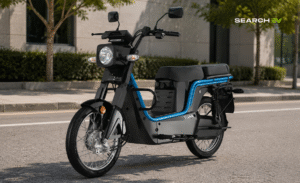
If you grew up in the 90s, the Luna name means something. Kinetic Green has revived it as an electric scooter, and to their credit, it’s not just a nostalgia play. The E-Luna is a practical, lightweight commuter with a 1.5 kWh removable battery, a claimed range of 110 km, and a top speed of around 50 kmph.
The removable battery is genuinely useful if you live in an apartment without a dedicated parking-with-charging setup — you can carry the battery upstairs and charge it from a regular 5-amp socket. That’s a real-world problem solver for a lot of urban buyers.
What it isn’t: a scooter for anyone who needs to regularly hit 60–70 kmph traffic or cover more than 50–60 km in a day. Real-world range in city conditions with consistent AC usage will be lower than the claimed figure, and the 50 kmph top speed means it’ll feel underpowered the moment you’re on a highway feeder road with trucks around you.
Kinetic Green’s service network is improving but still thin compared to the big names. If your city has an authorised Kinetic service centre close by, this is a solid budget pick. If not, think twice.
Hero Vida VX2 Go — ₹74,000
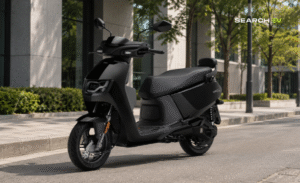
The Hero Vida VX2 is backed by Hero MotoCorp — and that one fact changes the ownership calculation significantly. Hero’s service network spans over 6,000 touchpoints across India, which means if something goes wrong, you’re not waiting for a courier from a central warehouse.
The base Go variant at ₹74,000 offers a 2.2 kWh battery, a claimed range of 92 km, and a 6 kW motor that delivers a top speed of around 80 kmph. That top speed matters — it means you can keep pace with city traffic without being a hazard to yourself.
The 92 km claimed range needs the usual reality check: in real-world city riding with AC (yes, some scooters now have heated grips and cooling provisions; the Vida doesn’t, but the principle applies broadly — read our piece on whether temperature affects range), expect 65–75 km of usable range. For a commute of 25–30 km each way, you’re charging every night, which is fine if you have a home point.
The catch with the Go variant specifically: it doesn’t have fast charging. The standard charger takes around 5–6 hours for a full charge. If your life needs something topped up in an hour, look at the higher variants — but those push above ₹80,000. For the buyer with home charging and a predictable daily commute, this is the most trust-worthy product in the bracket.
Okaya Freedum — ₹74,899
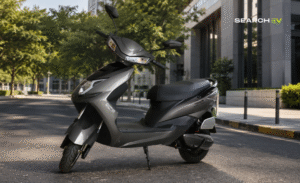
Okaya is a name most Indian buyers haven’t heard of unless they’ve been actively shopping EVs, which is itself a useful data point. The brand is Noida-based and has been making electric two-wheelers for a few years, but its service network is concentrated in North India and a handful of metros.
The Freedum offers a 2.5 kWh battery, 120 km claimed range, and a design that looks considerably more premium than its price suggests. Disc brakes front and rear, a digital instrument cluster, and a comfortable riding position are all present.
If you’re in Delhi, NCR, Jaipur, Lucknow, or the surrounding belt where Okaya’s service presence is reasonable, this is worth a test ride. Outside that geography, the service network becomes the reason to look elsewhere first.
Also Read
Cheap Electric Cars in India (2026)
Hero Electric Atria — ₹77,690
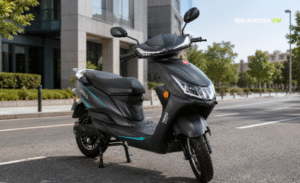
A quick but important clarification: Hero Electric is not the same company as Hero MotoCorp (which makes the Vida VX2). They’re separate entities, and Hero Electric’s service and quality track record is different — and more variable — than Hero MotoCorp’s.
With that said, the Atria is a practical urban commuter with a 2.5 kWh battery, 108 km claimed range, and a top speed of around 55 kmph. It targets the rider who needs a simple, low-cost daily commuter and doesn’t need high speed or long range.
The honest truth: the Atria competes in a space where the Vida VX2 Go (at ₹74,000) offers better brand backing, better top speed, and comparable range for less money. Unless there are specific deals, EMI structures, or local service advantages in your city that make the Atria more practical for you personally, the Vida VX2 Go is the stronger pick between these two.
Ola S1 X 2kWh — Around ₹79,999
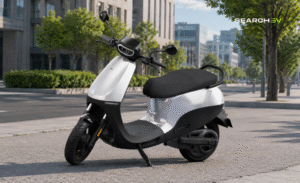
The Ola S1 X is the only scooter in this list that comes from a brand sitting at the centre of India’s electric two-wheeler conversation. The 2kWh base variant is the entry point into the S1 X ecosystem, and it’s worth discussing with a clear-eyed view of both the opportunity and the baggage.
The opportunity: 108 km claimed range, 101 kmph top speed, OTA software updates, a large touchscreen, and connected features that nothing else at this price comes close to matching on paper. If you want technology, the S1 X delivers it in a way no other under-₹80K scooter does. Understanding how fast vs slow charging works is especially relevant here — the S1 X 2kWh supports fast charging on select variants, which is unusual for this bracket.
The baggage: Ola’s service experience is inconsistent. In cities where Ola has a strong, uncongested service hub — Bengaluru, Pune, parts of Delhi — owners report reasonable turnaround times. In cities where their infrastructure is thinner or overloaded, wait times for parts and service can be frustrating. Before you book, specifically check Ola service reviews in your city on forums and owner groups, not just the company website.
Also worth noting: pricing across different platforms shows slight variation — some list this at ₹79,999, others at ₹84,999 depending on state subsidy application and variant. Verify the final ex-showroom price at your nearest Ola Experience Centre before making a decision.
Honest Advice: Should You Buy Under ₹80K or Stretch Your Budget?
This is the section most articles skip because it’s not great for page views — but it’s the most useful thing we can tell you.
If your budget genuinely caps at ₹80,000 and home charging is available, the Hero Vida VX2 Go is the soundest pick in this list. Hero MotoCorp’s service network is the single biggest advantage any scooter can have in this price bracket.
But if you have even ₹10,000–₹20,000 more room — or can manage a modest EMI — the case for stretching is strong. The Ola S1 X 3kWh at ₹89,999 gives you 176 km of claimed range and fast charging. The TVS Orbiter sits just above ₹90,000 and brings TVS’s 4,000+ service touchpoints. The Bajaj Chetak starts around ₹1.07 lakh and brings one of the most robust build qualities in the Indian EV scooter market.
For most Indian buyers, the difference between a ₹75,000 EV scooter and a ₹95,000 one isn’t just ₹20,000. It’s often the difference between a scooter from a brand still building its service infrastructure and one from a name that’s been servicing two-wheelers for decades.
That said, we understand budgets are real. If ₹80,000 is where you are, go with a brand that has demonstrable service presence in your city, verify the on-road price carefully after subsidies, and read up on daily charging habits before you take delivery. At this price point, how you treat the battery from day one matters more than it does on a premium scooter with more sophisticated thermal management.
FAQs
Which is the best electric scooter under ₹80,000 in India in 2026?
For most buyers, the Hero Vida VX2 Go at ₹74,000 is the most reliable choice — it has Hero MotoCorp’s nationwide service network behind it, a decent 80 kmph top speed, and enough range for a 25–30 km daily commute. If you prioritise technology and features over service certainty, the Ola S1 X 2kWh is the most feature-rich option in the bracket.
Is the Ola S1 Z available under ₹80,000?
The Ola S1 Z was announced at ₹59,999 ex-showroom but has been postponed indefinitely as of mid-2026. It hasn’t launched yet, so we haven’t included it in this guide. Check Ola’s official website for launch updates.
What is the real-world range of electric scooters under ₹80,000?
Apply a 65–70% factor to any claimed ARAI figure for Indian city conditions. A scooter claiming 110 km will realistically give you 70–80 km with a mix of traffic, occasional higher speeds, and daily use. Plan your purchase around your actual daily distance, not the brochure number.
Do electric scooters under ₹80,000 require a licence?
Most scooters in this list — including the Vida VX2, Ola S1 X, and Okaya Freedum — have motor outputs that require a valid driving licence and registration. Only low-speed scooters with motors under 250W and a top speed under 25 kmph are exempt. All the practical options covered here need a licence.
Are state subsidies available on these scooters?
Yes, depending on your state. Delhi, Maharashtra, Gujarat, and several other states offer additional purchase subsidies under their respective EV policies, over and above the central PM e-DRIVE scheme. The effective on-road price can shift meaningfully after subsidies — always calculate the post-subsidy price before finalising. For more on how EV ownership costs work out over time, this running cost breakdown is worth reading even though it covers cars — the per-km economics are comparable for scooters.
Should I consider a used electric scooter instead?
At the under ₹80,000 price point, a used premium EV scooter — say, an older Ola S1 Pro or Ather 450 — can be a genuinely interesting option. Battery health becomes the critical question though. Our used EV buying guide covers what to check before going pre-owned.