Table Of Contents
- Types Of Electric Cars
- BEV
- HEV
- PHEV
- MHEV
- FCEV
As of today, there’s a lot of uncertainty in the market regarding the future of ICE, or Internal Combustion Engine powered vehicles, due to rising pollution, as well as the fuel blends we could get in the future. We have already established that the older vehicles can’t run on newer blends with a significant amount of modifications to their engines.
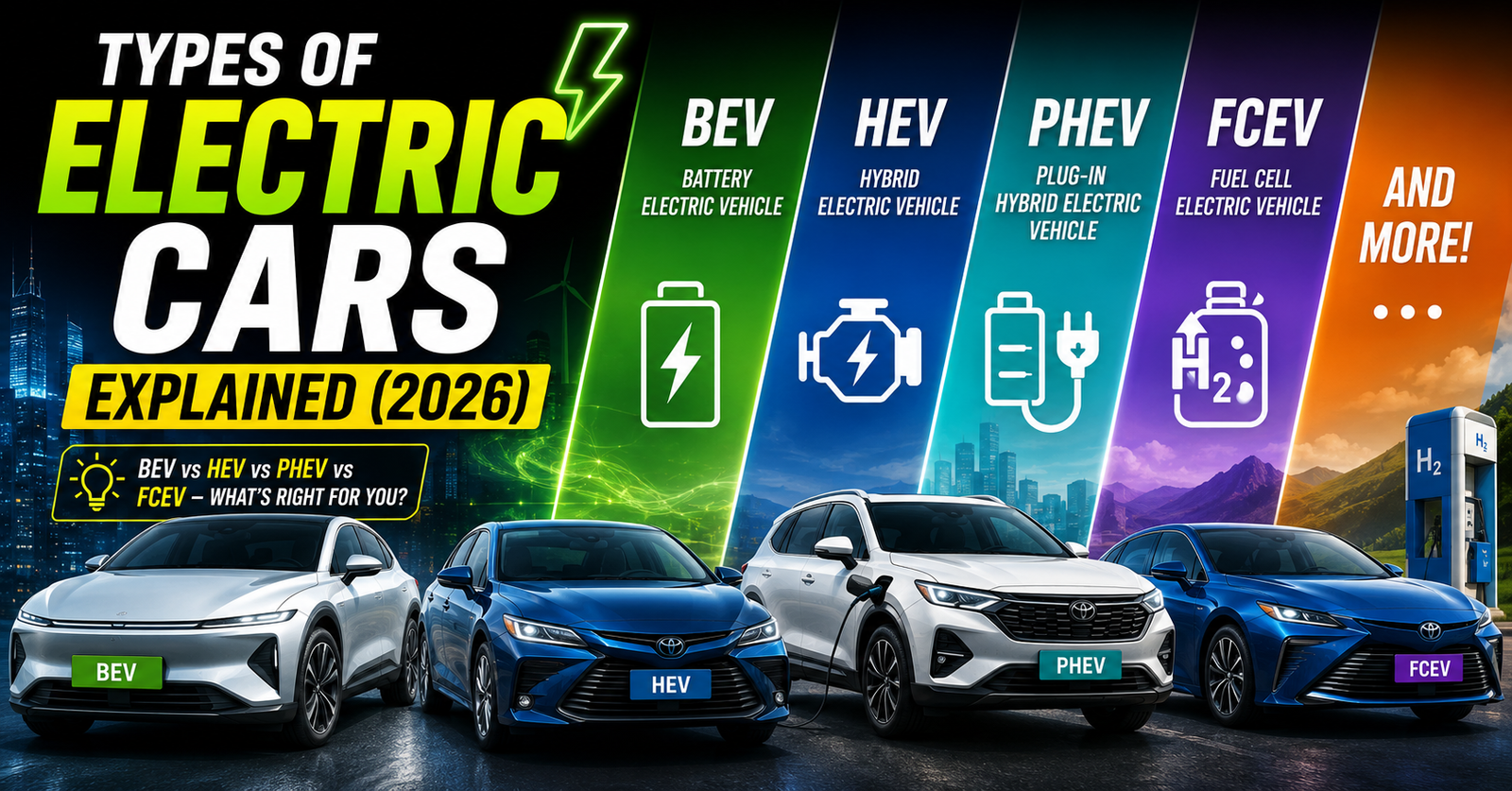
So, for buyers, the only option remaining is to find alternative technologies. These include terms like BEV, HEV, PHEV, MHEV and FCEV, which often confuse the layman. All of these vehicles use electricity in some form or the other, but they differ significantly in how they generate power, charge their batteries and drive their wheels. So, to make your decision easier, and to give you a detailed explanation of these technologies, here’s everything you need to know about the different types of electric cars:
Types Of Electric Cars
| Type | Full Form | External Charging | Runs On Petrol/Diesel | Tailpipe Emissions |
| BEV | Battery Electric Vehicle | Yes | No | Zero |
| HEV | Hybrid Electric Vehicle | No | Yes | Low |
| PHEV | Plug-in Hybrid Electric Vehicle | Yes | Yes | Very Low |
| MHEV | Mild Hybrid Electric Vehicle | No | Yes | Reduced |
| FCEV | Fuel Cell Electric Vehicle | Hydrogen Refuelling | No | Water Vapour |
Battery Electric Vehicle (BEV):
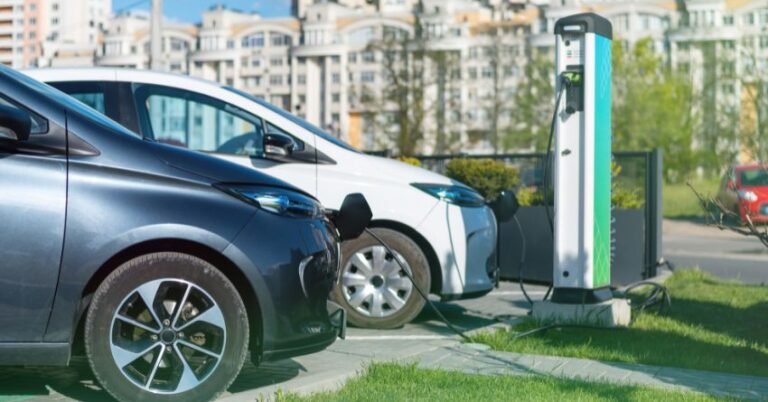
A Battery Electric Vehicle (BEV) is what most people would know as a ‘normal’ electric car. It is powered entirely by a rechargeable battery pack, and. Since there is no engine, these vehicles don’t give out any emissions. Furthermore, these vehicles also have a lot fewer moving parts that are bound to wear and tear out with time, thus reducing your maintenance costs. Here are the pros and cons of BEVs:
Battery Electric Vehicle (BEV) Advantages And Disadvantages
| Pros | Cons |
| Zero emissions | Charging takes longer than refuelling |
| Low running cost | Public charging infrastructure is still not fully developed |
| Instant acceleration from the electric motor | Long-distance travel requires a lot of planning |
| Lower maintenance required | |
| Government incentives in many states of India | |
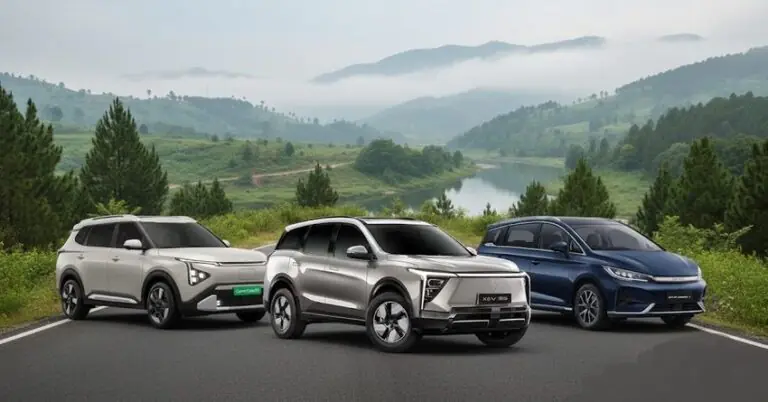
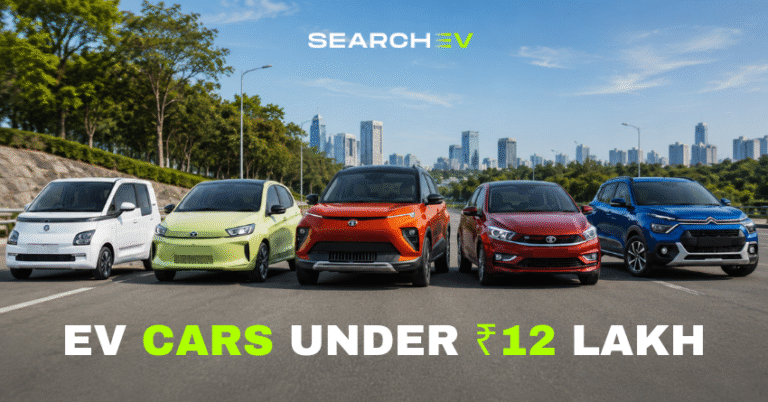
To make your decision even easier, we have also compiled a list of the popular Battery Electric Vehicles in India:
Popular BEVs In India
Hybrid Electric Vehicle (HEV)
An HEV, or a Hybrid Electric Vehicle, comes equipped with both an electric motor and a petrol or diesel engine. The primary role of the electric motor here is to assist the engine and improve fuel economy. The most important thing to note here is that the battery is charged by the engine and regenerative braking itself. You don’t have to plug it in. The typical pure EV range is also limited in these cars, and only lasts for a few kilometres, after which the engine takes over.
Hybrid Electric Vehicle (HEV) Advantages And Disadvantages
| Pros | Cons |
| Better Mileage | Still runs on petrol |
| No charging required | Higher maintenance than a BEV |
| Longer driving range | Limited electric-only driving of just a few kilometres |
| Ideal for buyers who are skeptical about getting a BEV | |
Popular Hybrid Electric Vehicles (HEV) In India
| Model |
| Toyota Innova HyCross Hybrid |
| Toyota Camry Hybrid |
| Toyota Urban Cruiser Hyryder Hybrid |
| Maruti Suzuki Grand Vitara Hybrid |
| Honda City e:HEV |
Plug-in Hybrid Electric Vehicle (PHEV)
The Plug-in Hybrid Electric Vehicle is just a more mature and upgraded version of the hybrid car. It builds on the basic principles of a hybrid car, with an ICE engine paired to a much more powerful motor and a much larger battery pack.
These PHEVs can run for much longer on electric power, and only when the battery is completely depleted, or you need a lot of power, does the engine take over directly. driving the wheels. What we achieve from this setup is immensely efficient cars. Also, the emissions from these are lowered significantly when compared to the ICE ones. Another interesting thing about these vehicles is that you can charge the battery externally, and when combined with the fuel tank, these vehicles generally have substantial driving ranges. But, as every coin has two sides, these also come with a bunch of cons that we have listed below.
Plug-in Hybrid Electric Vehicle (PHEV) Advantages And Disadvantages
| Pros | Cons |
| Electric-only driving for daily commutes | More expensive than HEVs |
| No range anxiety | Quite heavier due to two powertrains in a single vehicle |
| Lower fuel consumption | Requires external charging for maximum efficiency |
Popular Hybrid Electric Vehicles (HEV) In India
| Model |
| BYD Sealion 6 (Upcoming) |
| MG PHEV (Expected to be launched soon) |
| BMW XM |
| Volvo XC90 Recharge |
| Mercedes-Benz C-Class |
Mild Hybrid Electric Vehicles (MHEV) In India
In hybrid vehicles, there’s a third category as well – the MHEVs, or Mild Hybrid Electric Vehicles. These are cars with very small battery packs connected to an electric motor which is mounted on the engine. The primary function of the electric motor is not to drive the wheels but to assist the engine when accelerating and to provide a very seamless ignition and start-stop system that will save fuel during those dreaded traffic hours. This not only makes the driving experience smoother, but also increases fuel efficiency. These cars are generally found in the budget segment.
Mild Hybrid Electric Vehicle (PHEV) Advantages And Disadvantages
| Pros | Cons |
| Better mileage | Cannot run on electricity alone |
| Less emissions | Fuel savings are relatively small |
| Cost-effective than HEVs | If driven under load, the savings become negligible |
Popular Mild Hybrid Cars In India
| Model |
| Maruti Suzuki Brezza |
| Maruti Suzuki Ertiga |
| Maruti Suzuki XL6 |
| Kia Sonet |
| Hyundai Venue |
Fuel Cell Electric Vehicle (FCEV)
The Fuel Cell Electric Vehicles are by far the most advanced ones among this list. These vehicles use hydrogen as a fuel, which is passed through a fuel stack. The only emission from these vehicles is water vapour, which makes them immensely environment-friendly. But this comes at a cost. The hydrogen used in these vehicles is hard to store and unstable, which makes it very risky and expensive to maintain them. Also, the lack of efficient refuelling infrastructure for the fuel cells is a challenge.
Fuel Cell Electric Vehicle (FCEV) Advantages And Disadvantages
| Pros | Cons |
| No emissions | Very limited hydrogen stations |
| Fast refuelling | Expensive technology |
| Good driving range | Hydrogen is very unstable |
Popular Fuel Cell Electric Vehicles (FCEV)
| Model |
| Toyota Mirai |
| Hyundai Nexo |
| Honda CR-V e:FCEV |
Do note that these vehicles are not yet released in the Indian market, and as of now you cannot buy them.
Key Differences Between The Types Of Electric Cars
| Feature | BEV | HEV | PHEV | MHEV | FCEV |
| Uses Battery | Yes | Yes | Yes | Yes | Yes |
| Uses Fossil Fuel | No | Yes | Yes | Yes | No |
| External Charging | Yes | No | Yes | No | No |
| Zero Emissions | Yes | No | No | No | Yes |
| Electric-only Mode | Yes | Limited | Yes | No | Yes |
BEV vs HEV vs PHEV: Which One Should You Buy?
| Parameter | BEV | HEV | PHEV |
| Fuel Required | No | Yes | Yes |
| Charging Required | Yes | No | Yes |
| Electric-only Driving | Yes | Limited | Yes |
| Running Cost | Lowest | Moderate | Low |
| Best For | Depends on the model you get | Both City and highway use | Long-distance travel |
For city use, you can also get the MHEV, which will assist you with the low-end torque necessary for the stop-go traffic driving.
There is no single “best” type of electric car, as each one of them serves a different purpose. BEVs are the ideal choice for buyers who want low running costs, while HEVs are perfect for buyers who want better fuel efficiency without changing their driving habits. PHEVs bridge the gap by combining the best of both worlds – electric commuting and the convenience of an ICE engine for longer trips. We currently can’t comment on FCEVs, as they are not available in our market and are in their pilot phase. But we are hopeful that we might get to see them soon.
Also Read: