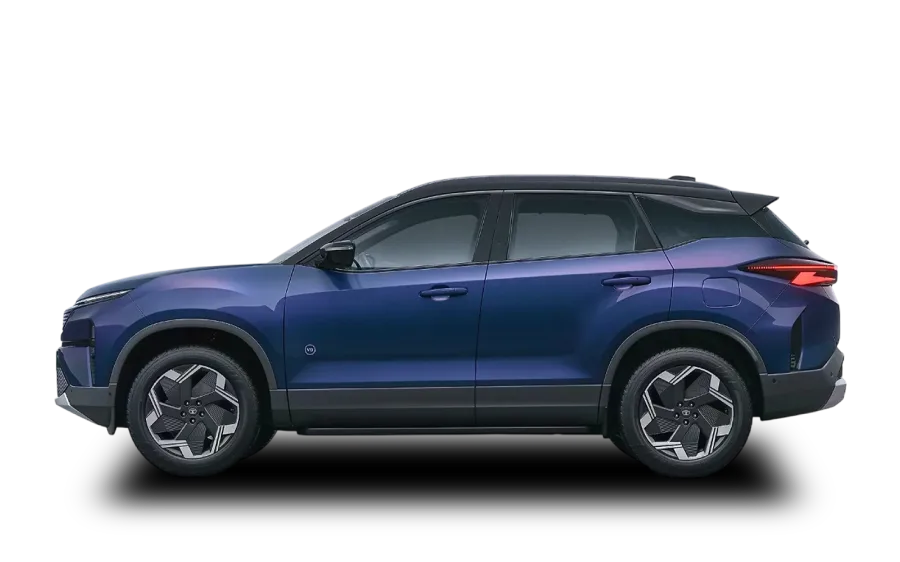
Tata Harrier EV Expert Review
- Electric
- Car
- 5 Seater
What's good
-
Good road presence with muscular proportions
-
Blistering performance with the dual-motor setup
-
QWD capability for better traction
-
Excellent driving dynamics
-
Top-tier safety features
What's not so good
-
Fit and finish inconsistencies
-
Inconsistent service quality
-
Too bulky to be used as a city car
-
Might be too powerful for beginner drivers
The Tata Harrier EV scored an 8/10 SearchEV score in our real-world tests. When tested for parameters like performance (8/10), safety (10/10), comfort (8/10) and more, the Tata Harrier EV succeeded in topping the chart with more than enough points in all of these aspects. When compared to its competitors in the premium SUV segment, the Harrier EV has emerged as a strong contender with frantic performance, and good practicality on offer.
What's good
-
Good road presence with muscular proportions
-
Blistering performance with the dual-motor setup
-
QWD capability for better traction
-
Excellent driving dynamics
-
Top-tier safety features
What's not so good
-
Fit and finish inconsistencies
-
Inconsistent service quality
-
Too bulky to be used as a city car
-
Might be too powerful for beginner drivers
The Tata Harrier EV scored an 8/10 SearchEV score in our real-world tests. When tested for parameters like performance (8/10), safety (10/10), comfort (8/10) and more, the Tata Harrier EV succeeded in topping the chart with more than enough points in all of these aspects. When compared to its competitors in the premium SUV segment, the Harrier EV has emerged as a strong contender with frantic performance, and good practicality on offer.
Tata Harrier EV Expert Review
SEV Score

Prashanth Jagadeesh
Tested and reviewed by SEV Experts on 8 parameters
SEV Score

Prashanth Jagadeesh
Tested and reviewed by SEV Experts on 8 parameters
Expert Verdict
The Tata Harrier EV delivers strongly on design, tech, comfort, and overall performance, backed by solid charging capability and a rugged, well-built feel. Beyond few ergonomic challenges, and Tata’s after-sales service consistency, the Harrier EV is an easy recommendation.
Tata Harrier EV Design
Exterior
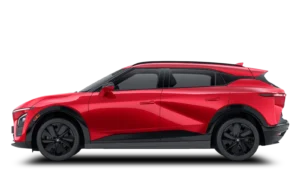
There’s a clear segment of buyers who want an electric SUV but don’t necessarily want something entirely outlandish or spaceship-like. The Tata Harrier EV is a perfect fit for them. The ICE Harrier has always been a handsome looker, and the Harrier EV, while built on a completely re-engineered architecture to accommodate the battery pack, retains that familiar, imposing styling. It does, however, bring EV-specific elements to the table, including a neatly blanked-off grille and aero-optimized 19-inch alloys.
Interior
Step inside, and the interior of the Harrier EV doesn’t feel quite as lavish or futuristic as the Mahindra XEV 9e. Instead, what you get is a highly familiar cabin borrowed heavily from the ICE Harrier, infused with Tata’s EV-specific color schemes.
The dual-tone black and white upholstery does an excellent job of enhancing the sense of space. The glossy piano black trims lend a certain richness to the dash, though they are absolute magnets for scratches and smudges over time.
Below the infotainment screen, the climate-control panel sits in a gloss-black slab using backlit, touch-sensitive areas with physical toggles for temperature adjustments. It looks modern, but you can’t really use them on the go without taking your eyes off the road.
Build Quality
Built on a heavily re-engineered floor utilising Tata’s new acti.ev electrical architecture, the build quality feels reassuringly robust. To account for the added weight of the battery, Tata has made 62% improvement in torsional stiffness compared to the ICE model.
Tata Harrier EV Features
The cabin is a tech powerhouse, anchored by a crisp 14.5-inch Samsung Neo QLED touchscreen. Its intuitive interface seamlessly integrates wireless smartphone connectivity alongside in-built Mappls navigation and Alexa. What also stands out is the 10-speaker JBL Dolby Atmos system, delivering a sound experience that definitely feels like an upgrade over the ICE version.
The perfectly sized, illuminated steering wheel frames a sharp 10.25-inch digital display that brilliantly mirrors Google Maps in full-screen.
On the equipment front, the Harrier EV features an expansive voice-assisted panoramic sunroof, dual-zone climate control, and wireless charging. Both front seats are powered; the passenger gets a 4-way adjustment while there’s an 8-way for the driver. The front seats are also ventilated, though the passenger’s ventilation switch placement is quite quirky, forcing the driver to awkwardly reach across the cabin to turn it off if left on.
The Harrier gets an e-IRVM that projects the front and rear camera’s feed, while there’s also a 360-degree camera setup including an additional 180-degree transparent view, especially useful for off-roading.
The Harrier EV gets the full suite of ADAS features. It also includes a party-trick ‘Summon Mode’ to remotely move the car via the key fob, alongside an Auto-Park Assist that autonomously handles tight spots.
Tata Harrier EV Performance & Range
The Harrier.ev is offered with two battery pack options. The entry-level variant gets a 64.7 kWh pack (538 km claimed), while the larger 74.61 kWh pack is available in both RWD and QWD options. RWD variants produce 238 hp and 315 Nm, while the dual-motor QWD delivers 313 hp and 504 Nm. The bigger battery is rated at up to 627 km (RWD) and 622 km (QWD), though real-world range is closer to 400 km. Expect it to drop faster with spirited driving or higher speeds, which in this car, is easy to indulge in.
Despite weighing nearly 2.3 tonnes, performance is undeniably strong. The QWD Harrier EV offers Eco, City, Sport, and an exclusive Boost mode that enables 0–100 km/h in just over 6 seconds. But what really stands out is Tata’s refined power delivery. The Harrier EV doesn’t feel like it’s lurching all the time. The EV gets off the line smoothly from a standstill, and as long as you are gentle with the throttle, your passengers won’t be thrown back in their seats.
Do note that the motor on the front axle is an induction motor, not a Permanent Magnet Synchronous Motor (PMSM), and is meant purely to assist the rear motor. Under light throttle, the car runs in RWD for efficiency, engaging the front motor only during hard acceleration or low-traction situations.
Below 10% battery, a ‘limp home’ mode kicks in, which limits speed to 50 km/h, and critically, disables the air conditioning to help you squeeze out those final kilometers to a charger.
Tata Harrier EV Ride & Handling
Unlike the diesel Harrier, which uses a simpler torsion beam setup at the back, the Harrier.ev gets a more advanced multi-link rear suspension paired with frequency-selective dampers. This effectively eliminates that harsh, brittle stiffness you usually get when a traditional combustion-engine car is converted into an EV.
Out on the road, the Harrier EV gobbles up bumps and potholes competently, exuding that signature rugged toughness we’ve come to expect from the Harrier badge. However, large undulations can make the ride feel slightly floaty for rear-seat passengers.
When it comes to handling, the car feels incredibly planted. Its corners flat and feels significantly tighter than its rivals. Add the dual motors of the QWD variant into the mix, and the resulting all-wheel-drive grip inspires tremendous confidence through the bends. Still, never forget that you are piloting a nearly 2.3-tonne SUV; while the grip is phenomenal, physics eventually wins, so you don’t want to try anything too silly.
Interestingly, the QWD version features a ‘Drift Mode’ that shunts the bulk of the power to the rear wheels. It’s a fun party trick, but keep your expectations in check. Beyond that, the Harrier.ev offers the option to tailor the drive modes, regen levels, alongside six distinct Terrain Modes (Normal, Snow/Grass, Mud-Ruts, Sand, Rock Crawl, and Custom) to manage traction across different environments.
Inside, the cabin is brilliantly insulated, keeping passengers isolated from ambient sounds with barely any wind or tyre noise creeping in at speed.
Tata Harrier EV Safety
On the safety front, Tata has brought its A-game. To make up for the added weight of the battery, Tata has made a 62 percent improvement in torsional stiffness of the Harrier EV’s platform. In the real world, the Harrier EV proudly backs up its bulk with a flawless 5-star Bharat NCAP crash test rating.
Moreover, beneath the 5-star Bharat NCAP-rated structure lies a comprehensive Level 2 ADAS suite with 22 active functions. Visibility is also heavily prioritised with a 360-degree camera with a transparent off-roading view, live blind-spot monitoring, and a brilliant e-IRVM that cleverly doubles as a 64GB inbuilt, impact-sensing dashcam that records even when parked.
Tata Harrier EV Space & Comfort
Frunk Space, Boot Space, Cabin Space
Storage is a bit of a mixed bag. Because of the rear motor, the boot floor is noticeably raised. While Tata claims a total boot capacity of 502 litres up to the roof (compared to XEV 9e’s 663 litres), the usable space underneath the parcel tray is slightly less than the diesel Harrier’s 445 litres. On the plus side, the EV architecture brings a frunk into play: you get a very usable 67 litres (with a 35 kg weight limit) on the RWD versions, which shrinks to 35 litres (17 kg limit) on the AWD variants due to the front motor.
Inside the cabin, storage is generous and well-thought-out. You get large bottle holders in the doors, a spacious glove box, a cooled centre console box, and strategically placed cup holders. Rear passengers are equally well catered to with ample knee room and legroom, manual window shades, USB-C ports, and a very convenient ‘boss mode’ lever to slide the front passenger seat forward.
Headroom, Sitting Posture, Under-thigh support
The front seats are wide, well-bolstered, and comfortable for larger occupants. The driver gets 8-way electric adjustment with memory and a welcome function, though lumbar support is manual.
However, the raised floor (about 20 mm higher due to the battery) does reduce under-thigh support and limits seat travel, especially for drivers around 6 feet. Moreover, the dashboard may still intrude on the driver’s left knee if they sit close.
At the rear, three passengers can sit comfortably thanks to the flat floor. The winged headrests are very comfortable, though the missing middle headrest is a drawback and the rear under-thigh support is again slightly compromised by the raised floor.
Tata Harrier EV Charging & Warranty
If you opt for the larger 75 kWh battery, it supports up to 120 kW DC fast charging, which practically means you can juice up from 20% to 80% in a brisk 25 minutes. The smaller 65 kWh pack, on the other hand, supports up to 100 kW DC speeds.
For home use, you’ll want to opt for the 7.2 kW AC wallbox charger. This unit will top up the 75 kWh pack from 10% to 100% overnight in about 10.7 hours (or 9.3 hours for the smaller battery).
The Harrier EV boasts Vehicle-to-Load (V2L) capability allowing you to power camping gear, or appliances, and even features Vehicle-to-Vehicle (V2V) charging, meaning you can pass on some charge to help out a stranded fellow EV owner.
The tech suite sees a major step up with the updated iRA.ev app. It’s a comprehensive hub offering vehicle health, remote commands, charging patterns, and an EV-specific driving score. TIt also integrates multiple charging networks with smart filters, though the route planner needs improvement as it only shows chargers directly on your route. DrivePay is a neat addition, enabling seamless autopay UPI payments at supported chargers.
On the warranty front, Tata offers a “lifetime” (15-year) battery warranty for the first owner, along with 8 years/1.6 lakh km for the motors and 3 years/1.25 lakh km for the vehicle.
Tata Harrier EV Service & Network
When it comes to pure geographical footprint, Tata Motors holds a massive advantage. With over 3,500 touchpoints across the country, their service network is one of the most extensive in India. Tata has also actively been rolling out their dedicated Tata.ev showrooms and specialised EV-only service centers in major tier-1 and tier-2 cities.
However, while Tata handles mechanical fixes and routine check-ups effortlessly, the consistency of specialised EV service remains a bit of a mixed bag.
If you encounter a complex software glitch, or an issue with the charging architecture, your experience will heavily depend on the specific dealership. While the dedicated Tata.ev centers are well-equipped, owners taking their EVs to mixed-use or smaller regional service centers have occasionally reported long wait times for specialised parts and technicians who are still climbing the EV learning curve.
What's good
-
Good road presence with muscular proportions
-
Blistering performance with the dual-motor setup
-
QWD capability for better traction
-
Excellent driving dynamics
-
Top-tier safety features
What's not so good
-
Fit and finish inconsistencies
-
Inconsistent service quality
-
Too bulky to be used as a city car
-
Might be too powerful for beginner drivers
Tata Harrier EV Price
What's good
-
Good road presence with muscular proportions
-
Blistering performance with the dual-motor setup
-
QWD capability for better traction
-
Excellent driving dynamics
-
Top-tier safety features
What's not so good
-
Fit and finish inconsistencies
-
Inconsistent service quality
-
Too bulky to be used as a city car
-
Might be too powerful for beginner drivers
Connect Now