Before anything else, let’s clear up the thing most people get wrong when they search for this.
FAME-II — the scheme you’ve probably read about in every electric scooter article published before 2024 — ended on March 31, 2024. It’s gone. The EMPS scheme that replaced it briefly also ended in September 2024. What’s active right now, and what determines how much you can save on an electric scooter or bike purchased in 2026, is something called PM E-DRIVE. If you’re quoting FAME-II subsidy figures to yourself at a showroom, you’re working from outdated numbers.
This guide covers what’s actually live, what you’re actually eligible for, how the claim works, and — critically — why waiting even a few weeks to buy might cost you the subsidy entirely.
The Timeline Every Buyer Needs to Know
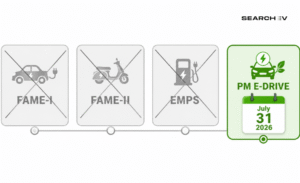
Understanding the current scheme means understanding where it came from:
| Scheme | Period | Status |
| FAME-I | 2015–2019 | Ended |
| FAME-II | 2019–March 2024 | Ended |
| EMPS | April–September 2024 | Ended |
| PM E-DRIVE | October 2024–July 31, 2026 | Active |
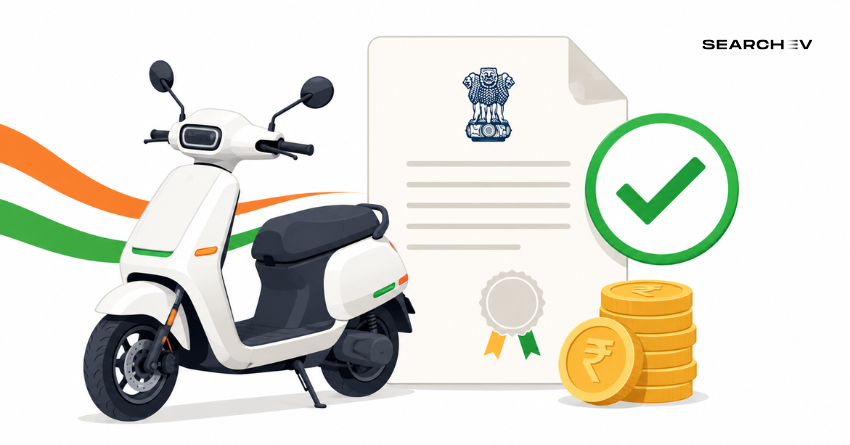
PM E-DRIVE (Prime Minister Electric Drive Revolution in Innovative Vehicle Enhancement) launched on October 1, 2024 — the day after EMPS ended — with a total government outlay of ₹10,900 crore. It’s India’s active central EV subsidy programme and the one that applies to any electric two-wheeler you buy today.
The subsidy deadline for electric two-wheelers was originally March 31, 2026. It has since been extended to July 31, 2026. No further extension has been announced, and the government has signalled that its focus is shifting away from demand incentives for two-wheelers toward supply-side policies and charging infrastructure. In plain terms: this is likely the last subsidised window for buying an electric scooter at the central government level for the foreseeable future.
How Much Can You Actually Save — Central Subsidy
The PM E-DRIVE subsidy for electric two-wheelers is calculated at ₹2,500 per kWh of battery capacity, capped at ₹5,000 per vehicle.
A quick example: a scooter with a 2 kWh battery gets 2 × ₹2,500 = ₹5,000 off. A scooter with a 3.4 kWh battery would mathematically calculate to ₹8,500 but the scheme caps it at ₹5,000, so the effective benefit is ₹5,000 regardless of battery size above 2 kWh.
One important note: the subsidy rate was ₹5,000 per kWh (up to ₹10,000 max) in the first year of the scheme. It was halved to the current ₹2,500 per kWh in April 2025. Anything you read quoting a ₹10,000 central subsidy is referring to the old rate. The current maximum for most buyers is ₹5,000.
To be eligible under PM E-DRIVE, your scooter must:
- Have an ex-factory price under ₹1.5 lakh
- Use a lithium-ion battery (no lead-acid)
- Have a range of at least 80 km and top speed of at least 40 kmph
- Be sold by a manufacturer registered with the Ministry of Heavy Industries (MHI)
- Be registered at an RTO in your name
All major brands — Ola, Ather, TVS, Bajaj, Hero Vida — are confirmed registered under PM E-DRIVE. If you’re buying from a smaller or regional brand, ask the dealer specifically to confirm their MHI registration before booking.
The Risk Nobody Mentions: The Quota Can Run Out Before July 31
Here’s the part that makes this subsidy genuinely time-sensitive in a way the deadline alone doesn’t capture.
PM E-DRIVE is not an open-ended scheme. It’s allocated a fixed budget of ₹10,900 crore and a target of 24.79 lakh subsidised electric two-wheelers. Once that quota is exhausted, the subsidy closes — regardless of whether it’s June 15 or July 30.
India registered 1.91 lakh electric two-wheelers in March 2026 alone. At that monthly rate, the remaining quota in the two-wheeler segment fills up faster than most buyers expect. Historically with FAME-II, the fund was exhausted months ahead of its announced deadline in several vehicle segments.
If the fund runs dry before you register, you don’t get the subsidy — even if you had already started the paperwork.
The practical implication: don’t treat July 31, 2026 as a comfortable buffer. If you’re planning to buy an electric scooter in the next few months, the right move is to book and register as soon as you’ve decided, not to wait until July. There’s one more thing worth knowing: eligibility is typically locked at the date of booking (advance payment), not delivery. If you pay and confirm your order before the fund exhausts or the deadline hits, you retain the subsidy benefit even if physical delivery happens after. Get this confirmed in writing from your dealer before paying.
State Subsidies — Where the Real Savings Stack Up
The central ₹5,000 is just the floor. Depending on which state you’re registering the vehicle in, you can stack significant additional savings on top. This is where buyers in some states end up with a very different effective price from buyers in others — sometimes by ₹20,000–₹30,000 or more.
Here’s what the major states offer as of mid-2026:
| State | Purchase Subsidy | Road Tax | Registration | Notes |
| Delhi | Up to ₹30,000 (Year 1) | Exempt | Exempt | Apply on Delhi EV portal; separate from central |
| Maharashtra | 10–15% of base cost + ₹7,000 scrapping bonus | Exempt | Exempt | Capped at 1,00,000 EVs — check availability |
| Tamil Nadu | None confirmed | 100% exempt until 2027 | Exempt | Road tax saving is meaningful |
| Rajasthan | Capital subsidy | Exempt | — | Verify current status at RTO |
| Telangana | — | Exempt | Exempt | Full registration and tax waiver |
| Kerala | — | 50% off for 5 years | — | Not full exemption |
| Andhra Pradesh | — | Exempt | Exempt | Registration and road tax waiver |
| Karnataka | — | 5–10% tiered (revised April 2026) | — | Exemption rolled back; verify current rate |
| Gujarat | — | Partial | — | Purchase subsidy may have lapsed; verify at RTO |
A few honest caveats on this table: State EV policies change frequently and without much fanfare. Karnataka’s road tax exemption, for example, was revised in April 2026, and the earlier full exemption no longer applies. Gujarat’s purchase subsidy component appears to have lapsed for new buyers as of recent reporting. Before assuming any state subsidy applies to you, call your nearest RTO or ask the dealership to pull up the current applicable scheme. Don’t rely on a chart from a website (including this one) as your final confirmation.
Delhi is the standout. A Delhi buyer in Year 1 of the current EV policy can save up to ₹30,000 through state incentives, plus ₹5,000 through PM E-DRIVE, plus the full road tax and registration waiver — putting total savings in the ₹35,000–₹40,000+ range depending on the vehicle. The state subsidy for Delhi requires a separate application on the Delhi EV portal, unlike the central subsidy which the dealer handles. Some dealers process both; others will only handle the central portion and leave the state application to you. Ask explicitly.
How to Claim — The Actual Process
The PM E-DRIVE subsidy is designed to require zero effort from the buyer. Here’s how it works in practice:
Step 1: Choose an eligible scooter from a registered brand. Confirm with the dealer that the specific model is on MHI’s approved list. This is usually automatic for any major brand, but worth a 30-second confirmation.
Step 2: Bring your Aadhaar card to the dealership. The dealer completes Aadhaar e-KYC linkage during the purchase process. This links your identity to the subsidy claim and prevents duplicate claims. One Aadhaar equals one PM E-DRIVE subsidy claim per scheme period.
Step 3: The dealer registers the sale on MHI’s VAHAN portal. The system calculates your central subsidy automatically based on the battery capacity and deducts it from your invoice. You should see the ₹5,000 deduction reflected on your bill before you pay the final amount. If you don’t see it, ask for it explicitly before completing the transaction.
Step 4: State subsidy (if applicable) — varies by state. In Maharashtra and Tamil Nadu, the dealer typically handles this. In Delhi, you may need to apply separately on the Delhi EV portal with your purchase documents. In Gujarat and other states, confirm the current process at the dealership or RTO.
Step 5: Road tax and registration. If your state offers exemption or reduction, this reflects in the on-road price calculation at registration. The RTO handles this — bring a copy of your purchase invoice and Aadhaar.
One practical tip that saves frustration: ask the dealer to show you the final invoice before you transfer any money, and confirm that the subsidy deduction is already applied. Dealers occasionally process the full sticker price and disburse the subsidy separately — which isn’t necessarily wrong, but is a different cash flow than what most buyers expect.
What Happens After July 31, 2026?
Honestly — nobody knows yet, and anyone who tells you otherwise is guessing.
The government’s stated position is that the two-wheeler EV market has matured enough that it no longer needs demand subsidies at the scale FAME-II provided. Electric two-wheelers are now nearly 7% of all two-wheeler registrations in India, up from under 1% five years ago. The argument from the government’s side is that further growth should come through market competition, better infrastructure, and supply-side support — not buyer subsidies.
That may well be right. But from a buyer’s perspective, the practical consequence is that a scooter you buy before July 31 costs ₹5,000–₹40,000 less (depending on your state) than the same scooter bought in August. That’s a real number, and it argues for not leaving the purchase decision until the last week of July.
Understanding how battery health and maintenance work is equally important once you’ve made the purchase — the long-term economics of EV ownership depend as much on how you charge and use the scooter as on the upfront price you paid.
Who Should Act Now vs Who Can Wait
- Buying in Delhi, Maharashtra, or Rajasthan: Act sooner rather than later — the state subsidy caps are real and quota-limited.
- Buying in Tamil Nadu or Telangana: Road tax savings are still available and likely to continue beyond July 2026, so the urgency is more about the central ₹5,000 than anything state-level.
- Still deciding between models: Lock in your booking with an advance payment once you’ve shortlisted — this preserves your subsidy eligibility even if final delivery slips. Just get confirmation in writing from the dealer.
- Planning to buy after August 2026: You’re likely buying without the central subsidy. State road tax benefits may continue, but the central ₹5,000 is almost certainly gone. Factor this into your budget planning now.
For scooter-specific comparisons to go alongside this subsidy guide, our electric scooters under ₹80,000 and electric scooter 100 km range price guides cover what’s worth buying at each price point after subsidies are factored in. And if you’re also considering BaaS vs outright purchase, the subsidy calculation changes depending on which route you take — the guide explains how.
FAQs
1. Is FAME-II subsidy still available in 2026?
No. FAME-II ended on March 31, 2024. It was followed by EMPS (April–September 2024), which has also ended. The active scheme right now is PM E-DRIVE, valid for electric two-wheelers until July 31, 2026.
2. How much subsidy do I get on an electric scooter in 2026?
Under PM E-DRIVE, you get ₹2,500 per kWh of battery capacity, capped at ₹5,000 per vehicle. This is the central government subsidy. State subsidies stack on top — Delhi offers up to ₹30,000 additionally in Year 1. Total savings range from ₹5,000 (states with no additional scheme) to ₹35,000–₹40,000+ (Delhi buyers in Year 1).
3. Do I need to apply for the subsidy separately?
For the central PM E-DRIVE subsidy — no. The dealer handles it at the point of sale through the VAHAN portal. For state subsidies, the process varies. In Delhi, a separate application on the Delhi EV portal is required. In Maharashtra and Tamil Nadu, the dealer typically processes it. Always confirm the state process with your dealer before assuming it’s automatic.
4. Which electric scooters qualify for the PM E-DRIVE subsidy?
Any electric two-wheeler priced under ₹1.5 lakh ex-factory, with a lithium-ion battery, minimum 80 km range, and minimum 40 kmph top speed, sold by an MHI-registered manufacturer. All major brands — Ola, Ather, TVS, Bajaj, Hero Vida — qualify on their main models. Confirm with your dealer for specific variants.
5. What if the subsidy fund runs out before July 31?
The PM E-DRIVE scheme is quota-limited. Once the ₹10,900 crore outlay is exhausted, the scheme closes regardless of the date. Subsidies will not be available after that point. Book and register as early as you practically can to avoid missing the window. If your delivery may be delayed, confirm with your dealer that your booking date locks in your eligibility.
6. Can I claim the subsidy on a used electric scooter?
No. PM E-DRIVE applies only to new electric vehicle purchases from authorised dealers. Pre-owned or second-hand scooters don’t qualify, though buying a used EV may still make financial sense at the right price.