Walk into any EV showroom and ask the salesperson what battery the vehicle uses—chances are you’ll get a name like “lithium-ion” and not much else. That’s technically correct, but it’s a bit like saying a car runs on “fuel” without mentioning whether it’s petrol, diesel, or CNG. The chemistry inside the pack changes everything: how long it lasts, how safe it is, how well it handles heat, and ultimately how much you’ll spend on a replacement down the road.
So let’s actually break it down by vehicle type, because a car battery and a scooter battery are very different things even if they’re both called “lithium.”
Why Battery Chemistry Matters More Than You Think
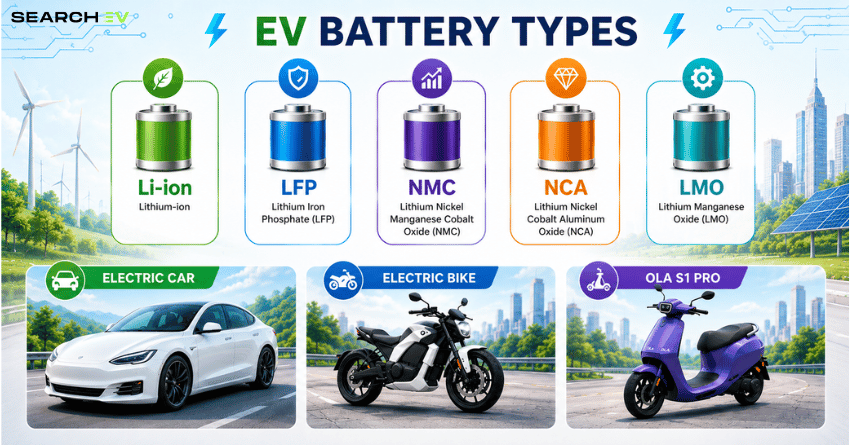
Before jumping into the types, here’s the thing most buyers miss. Not all lithium-ion batteries are the same. The term “lithium-ion” describes a family of battery technologies, each with different materials in the cathode, and that single difference changes how the battery performs in the real world.
Some chemistries store more energy per kilogram but degrade faster. Others are heavier but last for thousands of charge cycles without flinching. Some get nervous in the heat. Others don’t care if you leave them in the sun all afternoon.
Once you understand what chemistry is inside your EV, you’ll know how to charge it, how long it’ll last, and what to watch out for.
Battery Used in Electric Cars
Electric cars need large packs — sometimes 40 kWh to 100+ kWh — so manufacturers spend a lot of time picking the right chemistry for the job.
NMC (Nickel Manganese Cobalt)
This is the most widely used chemistry in electric cars globally. NMC packs a lot of energy into a relatively small and light package, which directly translates to better range. That’s why most mainstream and premium EVs — think Tesla Model 3, Hyundai Ioniq 6, Kia EV6 — use some version of NMC.
The trade-off? It doesn’t love being kept at 100% charge for extended periods, and it’s somewhat sensitive to high temperatures. Most NMC batteries last around 1,000 to 2,000 full charge cycles before capacity starts dropping meaningfully.
LFP (Lithium Iron Phosphate)
LFP has become the battery that manufacturers reach for when they want something reliable, safe, and affordable. It uses iron instead of nickel and cobalt in the cathode, which makes it much more thermally stable — it won’t overheat as easily, it’s far less likely to catch fire, and it can handle being charged to 100% every day without the same degradation concerns.
The downside is energy density. An LFP pack is slightly heavier for the same range. But here’s why it’s taking over anyway: it can last 3,000 to 5,000 charge cycles. That’s potentially double or triple the lifespan of NMC.
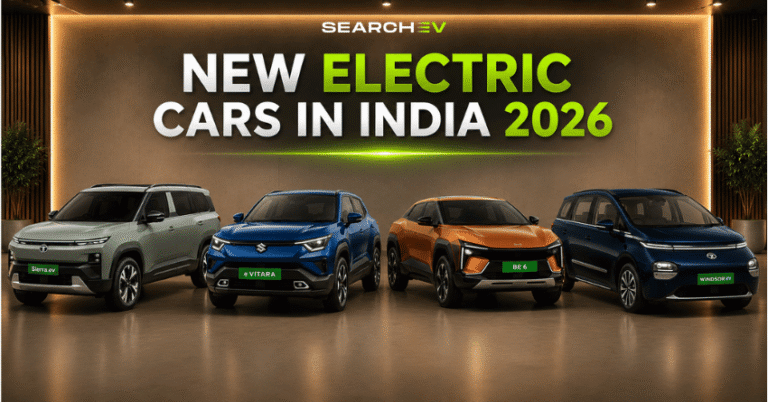
You’ll find LFP in the Tesla Model 3 Standard Range, the entire BYD lineup, the Tata Nexon EV, and the MG Windsor. If you’re buying an EV for daily commuting in a warm climate, LFP is almost always the smarter long-term choice.
NCA (Nickel Cobalt Aluminium)
NCA delivers the highest energy density of the three and was Tesla’s original chemistry of choice in the Model S and Model X. It gives you exceptional range — but it also costs more to produce and degrades faster with heavy use.
Today, it’s largely reserved for flagship performance vehicles where maximum range and power matter more than long-term cycle life.
Battery Used in Electric Bikes
Electric bikes have a unique challenge: the battery needs to be light enough to carry comfortably, small enough to fit inside or on the frame, and capable of handling thousands of charge cycles over the bike’s lifetime.
NMC / NCA Lithium-Ion (18650 or 21700 Cells)
Most quality e-bikes — especially those powered by Bosch, Shimano STEPS, or Yamaha motor systems — use cylindrical lithium-ion cells in the NMC format. These are the same-shaped cells as laptop batteries, just assembled into packs.
They’re lightweight, deliver a good range, and fit neatly into frame-integrated designs. Brands like Specialised, Trek, and Giant all use NMC-based packs for this reason. The main limitation is lifespan — most last 500 to 1,000 cycles before the battery needs attention.
LFP for Cargo and Heavy-Duty E-Bikes
Where weight is less of a concern—cargo e-bikes, family e-bikes, delivery bikes—LFP is gaining ground fast. Riders doing high daily mileage and charging every night benefit enormously from LFP’s 3,000+ cycle lifespan. Brands like Rad Power Bikes and Tern use LFP in their heavier-duty models for exactly this reason.
Battery Used in Electric Scooters
Electric scooters — particularly in India — have their own battery story, shaped by the realities of hot weather, heavy urban use, and cost sensitivity.
LFP — The Indian Scooter Standard
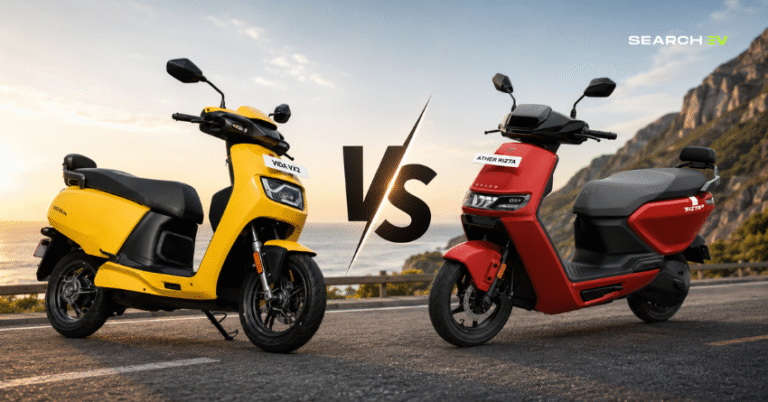
Walk into any Ola, TVS, or Bajaj showroom, and you’re almost certainly looking at an LFP battery. The logic is straightforward: Indian summers are brutal, urban riding involves constant stop-start cycles, and most owners charge every single night. LFP handles all three of those conditions better than anything else.
Ola S1, TVS iQube, and Bajaj Chetak all use LFP chemistry. It’s not glamorous, but it’s exactly right for the use case.
NMC for Performance Scooters
When a two-wheeler brand wants to offer serious performance—higher top speed, longer range, quicker acceleration—they tend to reach for NMC. Ather’s 450 Apex and Ultraviolette’s F77 use NMC packs to deliver sports-bike energy in a commuter-friendly package.
The trade-off is the same as in cars: slightly more care is needed around charging habits and heat management.
Lead-Acid — Avoid If You Can
Older and budget scooters under ₹60,000 often still come with sealed lead-acid batteries. Heavy, slow to charge, prone to dying in heat, and good for maybe 300 cycles. They’re being phased out fast as lithium prices drop, but they’re still out there. If you’re buying at that price point, always ask about the battery chemistry before signing anything.
Final Word
Here’s a simple way to remember it all: NMC gives you range, LFP gives you longevity, and NCA gives you performance. Lead-acid gives you regret.
For most everyday riders and drivers — especially in India’s climate — LFP is the practical winner. It might not have the headline range numbers of NMC, but it’ll outlast it, stay cooler, and cost less to live with over a five-year ownership period.
Before you buy any electric vehicle, ask one question: what battery chemistry does it use? The answer tells you more about long-term ownership than any brochure ever will.