Something rather interesting has happened in India’s electric car market in November 2026 No, Tata hasn’t lost first place. Mahindra hasn’t overtaken Tata either, and MG continues to sit comfortably in third place. The interesting bit is happening just below them.
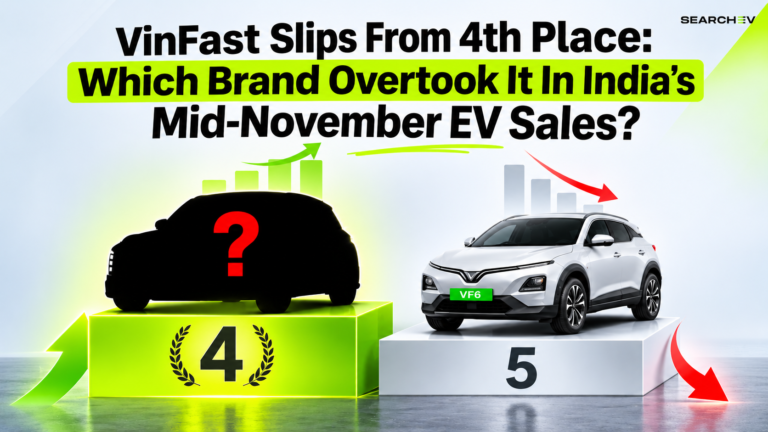
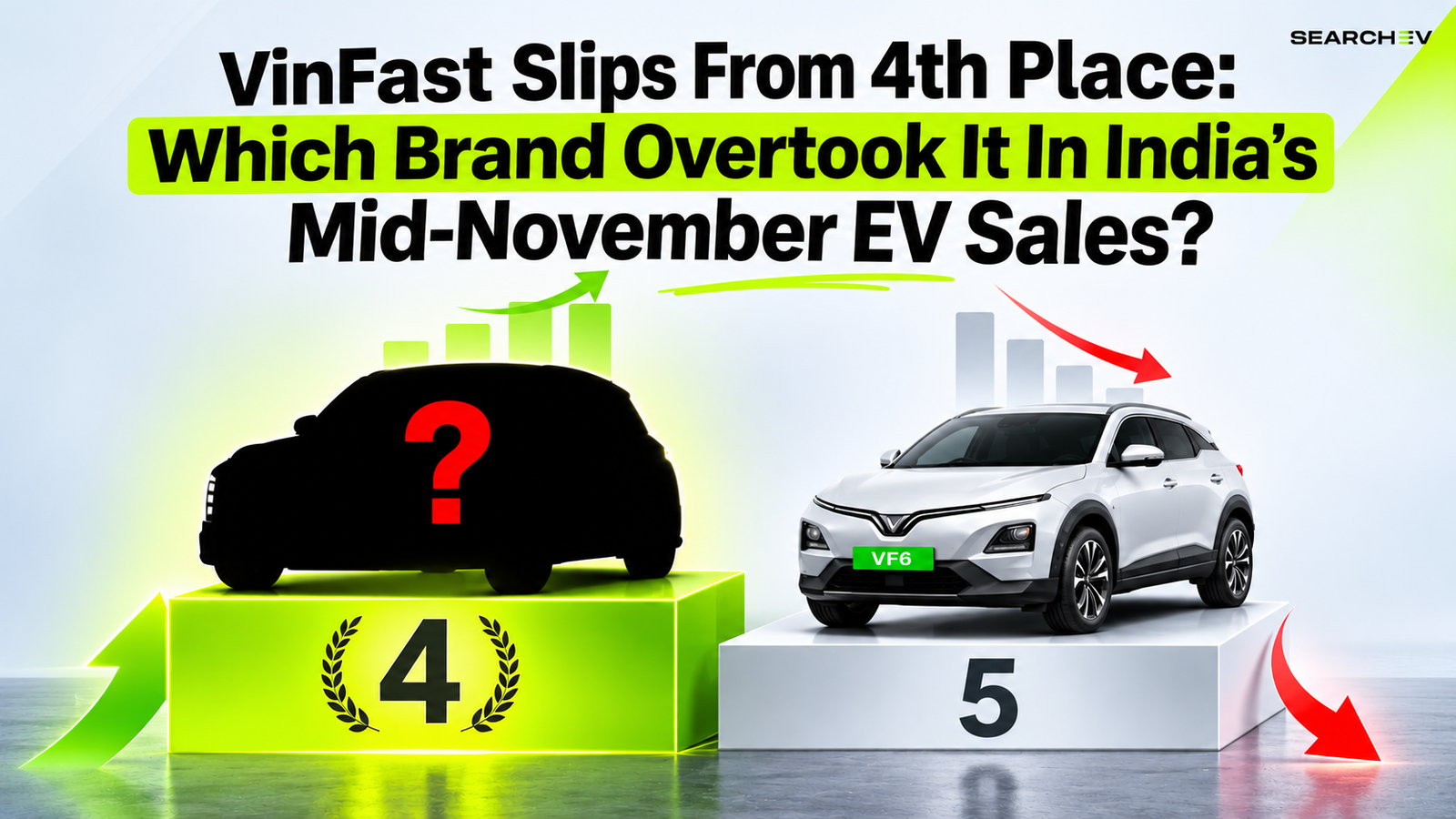
KIA HAS OVERTAKEN VINFAST.
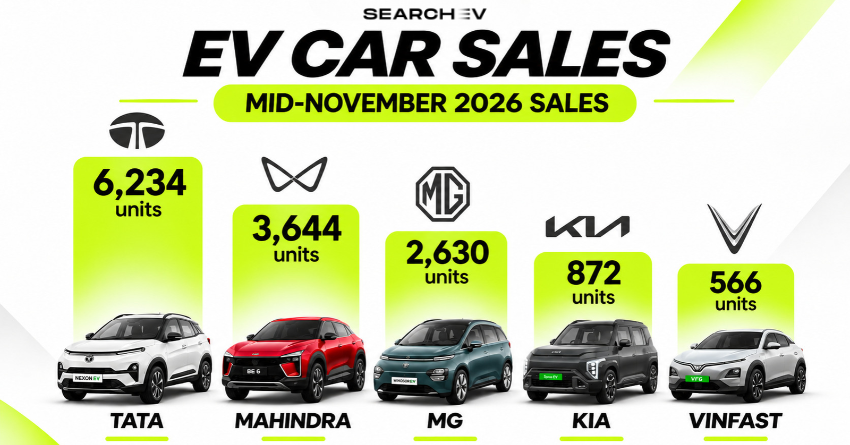
According to the November 2026 Vahan registration data available so far, Kia has registered 872 electric cars, while VinFast stands at 566 units. That puts Kia 306 registrations ahead of VinFast and, more importantly, pushes the Korean manufacturer into fourth place in India’s electric car market. On its own, a 306-unit advantage might not sound massive. But look at where these two companies were just a few weeks ago, and the result becomes much more significant.
Kia Vs VinFast EV Sales
| Brand | September 2026 | October 2026 | November 2026 So Far |
| Kia | 1,441 | 1,449 | 872 |
| VinFast | 3,305 | 2,627 | 566 |
VinFast had a 1,864-unit advantage over Kia in September. Even in October, it finished 1,178 units ahead. Now, Kia is leading. That’s not a minor position swap. That’s a pretty dramatic reversal.
VinFast Was Supposed To Be The One Pulling Away
VinFast’s rise in India has been one of the more interesting developments in the EV market this year. The Vietnamese manufacturer went from being a relatively unknown name among Indian buyers to becoming the country’s fourth-largest electric car manufacturer in a very short span of time. In fact, in our October 2026 electric car sales report, VinFast was still sitting comfortably in fourth place, ahead of Kia.
And unlike some new EV manufacturers that entered India with just one product, VinFast hasn’t exactly been conservative with its portfolio. The brand has built up a fairly broad lineup, covering different price points and body types, catering to a wide range of buyers. It has also been willing to adjust its strategy quickly. Most recently, VinFast slashed the price of its electric MPV substantially, with the VinFast VF MPV 7 receiving a Rs 4.10 lakh price cut. So, seeing Kia move ahead despite VinFast’s aggressive India push is quite noteworthy.
Kia Might Have Finally Found Its Volume-Driver
Kia’s situation is almost the opposite. For the longest time, Kia catered the premium-end of the market. Cars like the Kia EV6 and Kia EV9 were excellent highlights of what Kia could build, but they were never going to generate the mass-market volumes Kia needed. That started changing when Kia moved its EV strategy closer to the heart of the Indian car market. The biggest piece of that puzzle was the Kia Syros EV, launched at Rs 13.49 lakh, a few months earlier. It gave Kia a genuinely accessible electric SUV rather than another premium EV carrying a hefty price tag.
And the impact was visible fairly quickly. We had already pointed out in our September Kia EV sales analysis that Kia had overtaken Maruti Suzuki, with the recently launched Syros EV appearing to provide the additional volume the brand needed. Now, Kia has moved past VinFast as well. That progression is difficult to ignore.
It’s Not Just About Launching More EVs
Kia has also been doing something else rather cleverly. It has started tackling some of the concerns that make mainstream car buyers hesitant about buying an EV.
Battery life? Kia introduced a lifetime battery warranty for the Carens Clavis EV.
Resale value? The company subsequently extended its assured buyback programme to locally manufactured EVs, including the Syros EV and Carens Clavis EV. These things aren’t as exciting as a new motor with 500 horsepower or a gigantic touchscreen. But for someone spending Rs 15-25 lakh on their first electric family car, they matter. And they matter a LOT.
And that is where Kia currently has an advantage. Kia already has a well-established dealer and service network, strong brand recognition among Indian buyers and products positioned in familiar segments. The Kia Syros EV is a compact SUV. The Kia Carens Clavis EV is a practical three-row family vehicle. Neither requires buyers to completely rethink what a family car should be simply because it happens to run on electricity.
November’s Top Electric Car Manufacturers
| Rank | Manufacturer | November 2026 Registrations So Far |
| 1 | Tata Motors | 6,234 |
| 2 | Mahindra | 3,834 |
| 3 | JSW MG Motor | 2,630 |
| 4 | Kia | 872 |
| 5 | VinFast | 566 |
| 6 | Maruti Suzuki | 499 |
| 7 | BYD | 362 |
| 8 | Hyundai | 304 |
| 9 | BMW | 190 |
| 10 | Tesla | 154 |
The top three are still playing an entirely different game. Tata’s 6,234 registrations are close to 8 times Kia’s current sales figure, while Mahindra and MG also have substantial advantages.
But fourth place is important because this is where the next group of challengers is beginning to form. Kia, VinFast, Maruti Suzuki, BYD and Hyundai are all trying to establish themselves behind the three dominant manufacturers. And right now, Kia is winning that particular fight.
But It’s Too Early To Call VinFast Beaten
There is one very important caveat.
November isn’t over yet.
These are partial-month registration figures, which means Kia hasn’t officially beaten VinFast for the full month. A 306-unit gap isn’t impossible to overcome either. VinFast could still have a strong second half and reclaim fourth position before November closes.
VinFast wasn’t marginally ahead of Kia before this. It had more than twice the registrations of Kia in September. Two months later, Kia is ahead.
SearchEV Says
Kia overtaking VinFast might actually be one of the more important developments in India’s electric car market this month. Not because 872 registrations suddenly make Kia a threat to Tata or Mahindra. It isn’t on that level yet. What makes this interesting is how quickly the gap between Kia and VinFast disappeared.
VinFast has shown that an aggressive EV-only manufacturer can enter India and quickly build substantial volumes. But Kia is showing the other side of the argument: an established manufacturer with the right products, pricing, ownership packages and existing consumer trust can catch up remarkably quickly.
The Syros EV, Carens Clavis EV, lifetime battery warranty and assured buyback programme all point towards a strategy designed around making EV ownership feel less risky to a conventional car buyer. And that might ultimately matter more than simply having the biggest EV lineup. VinFast still has plenty of time to respond, and November isn’t finished yet.