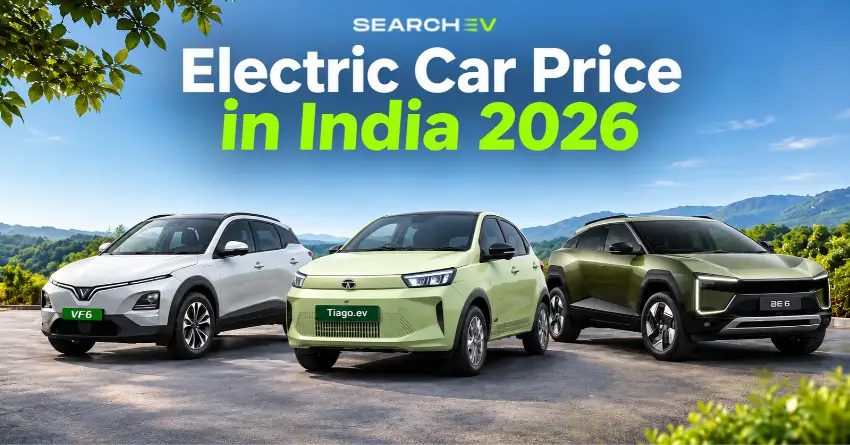
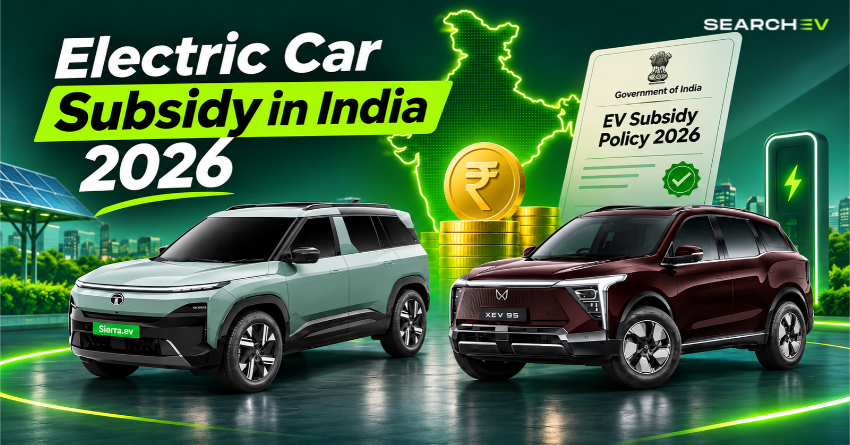
If you’re planning to buy an EV, you’ve probably searched for the electric car subsidy in India and found mixed answers. Some pages still talk about old schemes, and others mix up scooter and car benefits. So here’s the plain truth for 2026. There is no direct cash subsidy from the central government on private electric cars right now. But you still save a lot through lower GST, free registration, and state benefits like road tax waivers and, in a few states, cash incentives. In this guide, we explain every benefit, state by state, using the latest government notices.
- Central cash subsidy: None for private electric cars. PM E-DRIVE covers two-wheelers, three-wheelers, buses, trucks and ambulances, not private cars.
- GST: Electric cars pay only 5% GST, while petrol and diesel cars pay 18% or 40%.
- Registration: Registration fees are waived for battery-operated vehicles across India.
- Road tax: Fully waived in states like Delhi, Maharashtra, Tamil Nadu, Telangana and Haryana (with price limits in some). Karnataka now charges road tax on electric cars.
- Cash subsidy: Odisha gives up to ₹1.5 lakh. Delhi gives ₹1 lakh if you scrap an old car and buy an EV.
Is There a Central Subsidy on Electric Cars in 2026?
No. The main central EV scheme today is PM E-DRIVE, and it does not give any subsidy to private electric cars. When it was launched in October 2024, the government kept cars out on purpose. Instead, the money goes to electric two-wheelers, three-wheelers, e-buses, e-trucks, e-ambulances and public charging. The scheme now runs till 31 March 2028, but there’s still no car subsidy in it.
So if a dealer or website promises you a “central subsidy” on a private electric car, ask for details. In most cases, they are talking about the GST benefit, which is already part of the car’s price.
Central Tax Benefits on Electric Cars
Even without a cash subsidy, the central government still makes electric cars cheaper in three ways.
Lower GST on Electric Cars
This is the biggest saving. Electric cars pay just 5% GST. In comparison, petrol and diesel cars pay much more after the GST changes of 22 September 2025.
| Car Type | GST Rate |
| Electric cars | 5% |
| Small petrol car (up to 1,200 cc and 4 metres) | 18% |
| Small diesel car (up to 1,500 cc and 4 metres) | 18% |
| Bigger cars and SUVs | 40% |
Take a simple example. On a car with a base price of ₹10 lakh, 5% GST adds ₹50,000. At 40% GST, the tax would be ₹4 lakh. You don’t see this as a separate discount, because it’s already built into the ex-showroom price.
Free Registration for Electric Cars
Under central transport rules, battery-operated vehicles don’t pay fees for issuing or renewing a registration certificate, or for assigning a registration number. Your electric car also gets a green number plate.
Income Tax Benefit (Section 80EEB)
This one has ended for new buyers. Section 80EEB let you claim up to ₹1.5 lakh a year on the interest of a car loan for an EV. However, it only applies to loans sanctioned between 1 April 2019 and 31 March 2023. If you take an EV loan today, you can’t claim this deduction.
State-Wise Electric Car Subsidy in India 2026
This is where most of your savings come from. States decide road tax, and a few also give cash. Here’s the current state-wise list for private electric cars.
| State | Cash Subsidy | Road Tax | Valid Till |
| Delhi | ₹1 lakh scrapping incentive (first 1 lakh applicants) | 100% exempt up to ₹30 lakh | 31 March 2030 |
| Odisha | ₹10,000 per kWh, up to ₹1.5 lakh | 100% exempt | 31 December 2026 |
| Maharashtra | None for private cars | 100% exempt, plus toll-free on 3 highways | 31 March 2030 |
| Telangana | None | 100% exempt, no price limit | 31 December 2026 |
| Tamil Nadu | None | 100% exempt | 31 December 2027 |
| Haryana | None | 100% exempt up to ₹30 lakh, 50% above | Approved July 2026 |
| Gujarat | None | 5% rebate, so you pay about 1% | 31 March 2027 |
| Uttar Pradesh | None | Exempt only for Made-in-UP EVs | 13 October 2027 |
| Karnataka | None | 5% to 10% of price (no longer exempt) | Since April 2026 |
Rules can change with little notice, so confirm with your RTO or dealer before you book.
Delhi Electric Car Subsidy
The Delhi EV Policy 2026 started on 1 July 2026 and runs till 31 March 2030. It doesn’t give a direct purchase subsidy on electric cars. But electric cars priced up to ₹30 lakh get 100% road tax and registration fee exemption till March 2030. Cars above ₹30 lakh get no exemption.
Delhi also gives a ₹1 lakh scrapping incentive. To get it, you must scrap a Delhi-registered BS-IV or older car and buy a new electric car (ex-showroom price up to ₹30 lakh) within six months of getting the Certificate of Deposit. Only the first 1 lakh eligible applicants get this, and the money comes by direct benefit transfer. You must live in Delhi and register the car there.
Odisha Electric Car Subsidy
Odisha is one of the few states that still gives cash on private electric cars. You get ₹10,000 per kWh, up to ₹1.5 lakh, which the RTO credits after registration. So any car with a 15 kWh or bigger battery gets the full ₹1.5 lakh. Road tax and registration are also fully waived. The state has extended its EV policy till 31 December 2026, so this is a good time to buy if you live in Odisha.
Maharashtra Electric Car Subsidy
The Maharashtra EV Policy 2025 doesn’t give a cash subsidy to private car buyers. The ₹2 lakh subsidy in the policy is only for electric cars used for transport, like taxis. Private buyers still get full road tax and registration exemption. On top of that, private electric cars travel toll-free on the Mumbai-Pune Expressway, the Samruddhi Mahamarg and the Atal Setu.
Telangana Electric Car Subsidy
Telangana gives 100% road tax and registration fee exemption on electric cars till 31 December 2026. Unlike Delhi and Haryana, there’s no price limit, so even premium electric cars get the full waiver.
Tamil Nadu Electric Car Subsidy
Tamil Nadu has extended its 100% road tax exemption on electric vehicles till 31 December 2027. There’s no separate cash subsidy for private cars.
Haryana Electric Car Subsidy
In July 2026, Haryana approved a full road tax waiver on electric cars priced up to ₹30 lakh. Earlier, buyers got only a 20% concession. Electric cars above ₹30 lakh get a 50% waiver. If the car is registered in a woman’s name and priced up to ₹20 lakh, there’s an extra 1% tax rebate.
Karnataka (Bengaluru) Electric Car Subsidy
Karnataka has no purchase subsidy, and from 10 April 2026 it also ended the road tax exemption on electric cars. Now you pay a one-time lifetime tax based on the car’s price: 5% up to ₹10 lakh, 8% from ₹10 lakh to ₹25 lakh, and 10% above ₹25 lakh. Electric two-wheelers are still exempt, but cars are not.
Gujarat and Uttar Pradesh
Gujarat gives a 5% rebate on road tax for EVs, so you pay about 1%. The state extended this till 31 March 2027. In Uttar Pradesh, the road tax and registration waiver now applies only to EVs made, sold and registered in UP, from 14 October 2025 to 13 October 2027. If your car is made in another state, you may have to pay normal road tax, so check with your dealer.
How Much Can You Save on a ₹15 Lakh Electric Car?
To make this easy, here’s what a buyer of a ₹15 lakh electric car with a 30 kWh battery pays or saves in different states.
| State | Road Tax on the EV | Cash Benefit | What It Means for You |
| Odisha | ₹0 | ₹1.5 lakh | Biggest saving in India |
| Delhi | ₹0 | ₹1 lakh (only if you scrap an old car) | Big saving for scrappers |
| Maharashtra | ₹0 | None | Plus free tolls on 3 highways |
| Telangana | ₹0 | None | No road tax at any price |
| Tamil Nadu | ₹0 | None | No road tax till 2027 |
| Haryana | ₹0 | None | No road tax up to ₹30 lakh |
| Karnataka | About ₹1.2 lakh (8%) | None | Road tax now applies |
In Odisha, the 30 kWh battery works out to ₹3 lakh at ₹10,000 per kWh, but the cap brings it down to ₹1.5 lakh. In Karnataka, a ₹15 lakh car falls in the 8% slab, which is why road tax comes to about ₹1.2 lakh. And in every state, you also save on GST, since an electric car pays 5% against 18% or 40% for petrol and diesel cars.
The savings don’t end at the showroom. Charging at home costs far less than petrol, so the running cost also stays low. Our guide on EV running costs shows what you’ll spend each month.
How to Claim Electric Car Benefits
Most electric car benefits don’t need a separate application:
- GST: Already included in the ex-showroom price. Nothing to claim.
- Registration and road tax waiver: Applied by the RTO when your dealer registers the car. Check that the on-road price shows ₹0 road tax in waiver states.
- Odisha cash subsidy: Credited by the RTO after registration. Ask the dealer to submit your bank details along with the registration papers.
- Delhi scrapping incentive: First, scrap your old car at an authorised facility and get the Certificate of Deposit. Then buy the new electric car within six months and apply through the Delhi Transport Department’s portal. The money comes to you by direct benefit transfer.
- Maharashtra toll waiver: Applies to private electric cars on the Mumbai-Pune Expressway, Samruddhi Mahamarg and Atal Setu. Ask your dealer how it works with your FASTag.
Documents Needed
- Aadhaar card and PAN card
- Address proof for the state where you register the car
- Bank account details, for any cash subsidy
- Certificate of Deposit from a scrapping centre, for Delhi’s scrapping incentive
- Old car’s RC, if you’re scrapping it
Common Mistakes to Avoid
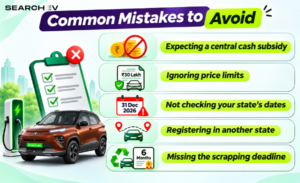
- Expecting a central cash subsidy: There isn’t one for private electric cars. Don’t let anyone count it in your on-road price.
- Ignoring price limits: In Delhi and Haryana, the full road tax waiver works only up to ₹30 lakh. Above that, you pay road tax in Delhi and get only half off in Haryana.
- Not checking your state’s dates: Odisha’s and Telangana’s benefits end on 31 December 2026 unless extended.
- Registering in another state: State benefits apply only where the car is registered. In Delhi, you must also live there.
- Missing the scrapping deadline: For Delhi’s ₹1 lakh, you must buy the EV within six months of getting the Certificate of Deposit.
Final Word
The electric car subsidy in India looks different in 2026. There’s no central cash subsidy for private cars anymore, but the 5% GST and free registration still make EVs cheaper. Your state then decides the rest. Odisha buyers get the most, with up to ₹1.5 lakh in cash. Delhi, Maharashtra, Telangana, Tamil Nadu and Haryana skip road tax, while Karnataka buyers now have to pay it.
Popular models like the Tata Nexon EV, Tata Punch EV and MG Windsor EV all sit well under Delhi’s and Haryana’s ₹30 lakh limit. In fact, most electric cars in India qualify, including every model in the ₹5 lakh to ₹15 lakh range. Since the battery is the costliest part of an EV, what an EV battery warranty covers matters as much as the subsidy itself.
Frequently Asked Questions
1. Is there a subsidy on electric cars in India in 2026?
There is no central cash subsidy on private electric cars in 2026, as PM E-DRIVE does not cover them. However, electric cars get 5% GST, free registration, and state benefits like road tax waivers and, in Odisha, a cash subsidy of up to ₹1.5 lakh.
2. Does PM E-DRIVE give a subsidy on electric cars?
No. PM E-DRIVE gives subsidies on electric two-wheelers, three-wheelers, buses, trucks and ambulances, but not on private electric cars. The scheme runs till 31 March 2028.
3. Which state gives the highest subsidy on electric cars?
Odisha gives the highest cash subsidy on electric cars, at ₹10,000 per kWh, up to ₹1.5 lakh, along with full road tax exemption. Delhi gives ₹1 lakh, but only if you scrap an old BS-IV or older car.
4. What is the GST on electric cars in India?
Electric cars in India pay 5% GST. Petrol and diesel cars pay 18% (small cars) or 40% (bigger cars and SUVs) after the GST changes of September 2025.
5. Is road tax free for electric cars in Delhi?
Yes, electric cars priced up to ₹30 lakh get 100% road tax and registration fee exemption in Delhi till 31 March 2030. Electric cars above ₹30 lakh get no exemption under the Delhi EV Policy 2026.
6. Do electric cars pay road tax in Karnataka?
Yes. Since 10 April 2026, electric cars in Karnataka pay a one-time lifetime tax of 5%, 8% or 10% based on price. Electric two-wheelers are still exempt.
7. Can I claim income tax benefit on an electric car loan?
Not on a new loan. Section 80EEB gave a deduction of up to ₹1.5 lakh on EV loan interest, but only for loans sanctioned between April 2019 and March 2023.
8. Is there an electric car subsidy in Maharashtra for private buyers?
No, the Maharashtra EV Policy 2025 gives cash subsidy only to electric cars used for transport. Private buyers still get full road tax and registration exemption and toll-free travel on the Mumbai-Pune Expressway, Samruddhi Mahamarg and Atal Setu.