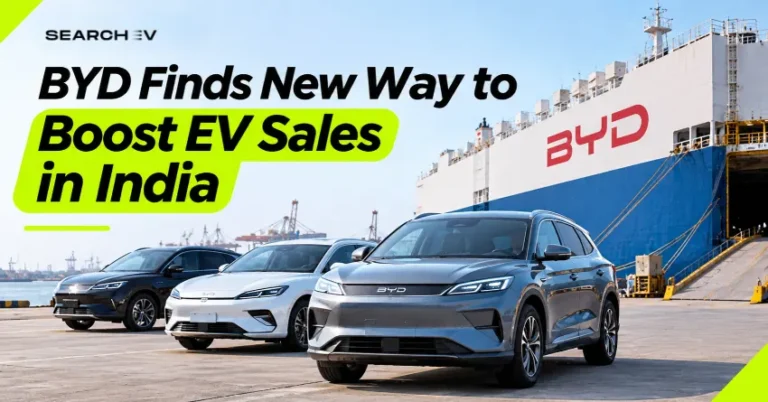
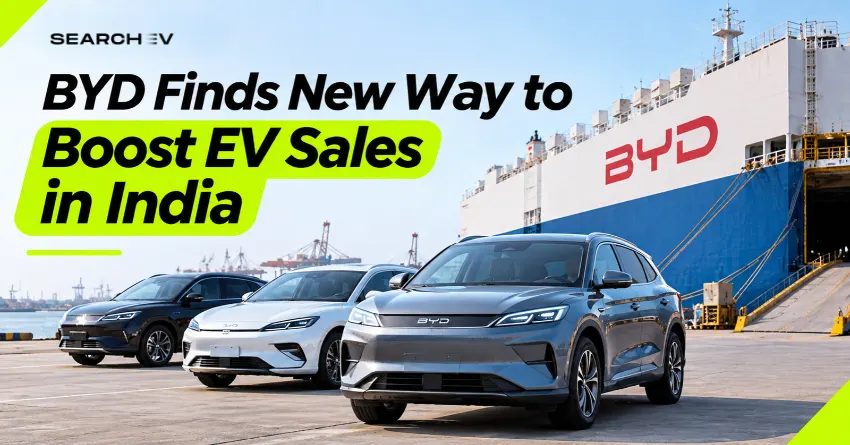
BYD India has cleared a major regulatory bottleneck that previously restricted how many electric cars it could bring into the country each year. Three of the four models in BYD’s mainstream Indian portfolio, namely the Sealion 7 electric SUV, the Atto 3 compact crossover, and the eMAX 7 three-row MPV, have now received local homologation certificates from the Automotive Research Association of India (ARAI). Only the BYD Seal electric sedan remains outside the local certification net for now.
For a brand that has spent the past two years dealing with supply caps and long customer waiting lists, this change means BYD can now import as many units of the Sealion 7, Atto 3, and eMAX 7 as Indian buyers want to order.
The 2,500 Unit Import Cap Explained
To understand why ARAI homologation matters so much for an import-reliant brand, you have to look at Rule 126 of India’s Central Motor Vehicles Rules, 1989. Normally, every car sold in India must undergo physical testing by an Indian agency like ARAI or ICAT to verify that its brakes, lighting, crash structure, and battery safety meet local standards.
However, the Indian government provides a shortcut for low-volume imports. Under the relaxed import norms, an automaker can bring in up to 2,500 units of a specific model per year using international type approval certificates from Europe or Japan, skipping local ARAI testing.
That 2,500-unit quota works fine when you are testing the waters with a niche car. But once a vehicle catches on with Indian families, a 2,500 unit annual ceiling becomes a hard cap of roughly 208 cars a month. Once an automaker hits 2,500 imports of that model in a year, it cannot legally register unit number 2,501 unless it puts the vehicle through full Indian homologation.
| BYD / Denza Model | Body Style | Ex Showroom Price | ARAI Homologated? | 2,500 Unit Cap |
| BYD Sealion 7 | Coupe SUV | Rs 41.90L to Rs 55.90L | Yes | Removed |
| BYD Atto 3 | Compact SUV | Rs 24.99L to Rs 34.49L | Yes | Removed |
| BYD eMAX 7 | 3 Row MPV | Rs 26.90L to Rs 29.90L | Yes | Removed |
| BYD Seal | Saloon | Rs 41.50L to Rs 53.65L | No | Still Applies |
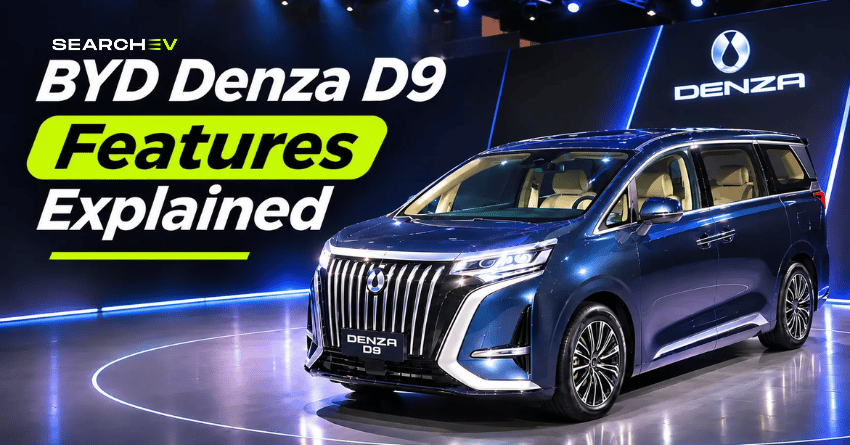
| Denza D9 & Z9 GT | MPV & Estate | Rs 90.00L to Rs 1.57 Cr | No | Still Applies |
Why the Sealion 7 Needed This Clearance Most
BYD began its Indian passenger car journey in 2021 with the e6 MPV before launching the Atto 3, then the Seal and eMAX in 2024, and finally the Sealion 7 in 2025. While the Atto 3 received ARAI homologation in 2024 itself and the eMAX 7 followed suit, the newer Sealion 7 quickly ran into supply headaches after its debut.
Featuring up to 82.56 kWh Blade battery and up to 530 bhp in the Performance AWD trim, the Sealion 7 turned into BYD’s hottest showroom draw across metro cities. Over 5,000 units are already running on Indian roads, and strong bookings meant the SUV was constantly bumping up against shipment allocations. In the Rs 50 lakh luxury crossover bracket, asking a buyer to wait four to six months because of an import quota is the fastest way to lose a sale to a locally assembled BMW iX1 LWB, Volvo EX40, or Hyundai Ioniq 5.
With the Sealion 7 now homologated alongside the Atto 3 and eMAX 7, that artificial supply ceiling is gone. Meanwhile, the low-slung BYD Seal sedan remains the sole exception in the four-car lineup. Because electric sedans sell in smaller numbers than SUVs and MPVs in India, the 2,500 unit annual cap under international certification is still enough to cover demand for the Seal. As for the newly launched Rs 90 lakh Denza D9 MPV and Rs 1.56 crore Denza Z9 GT, BYD plans to gauge initial orders before deciding whether either luxury model needs local homologation.
What Homologation Does Not Change: Why a Local Factory Is Still Off the Table
Clearing ARAI homologation is not local manufacturing or local assembly, and it does not trigger a price cut on any BYD car. Every vehicle BYD sells in India today, including its Denza lineup, is still imported, attracting customs duties of up to 100 per cent depending on the import route and value. Homologation grants uncapped import volume permission, but it does not reduce customs duty.
Why has the world’s largest electric vehicle maker not built a car factory in India yet to slash those prices? The hurdle is regulatory rather than financial, as under India’s Press Note 3 (2020) Foreign Direct Investment (FDI) rules, any investment from a country sharing a land border with India requires strict prior government and security clearance.
Back in 2023, BYD proposed a 1 billion dollar joint venture with Hyderabad-based Megha Engineering and Infrastructures Limited (MEIL) to build a local electric car and battery plant, which central authorities rejected over security concerns. While SAIC Motor localised MG Motor India by selling a majority stake to the JSW Group, BYD has preferred to keep full ownership of its operations. Until the Indian government relaxes cross-border investment clearances or BYD structures a government-approved local partnership, an Indian car factory remains off the cards.
What SearchEV Thinks
If you were hoping that ARAI homologation meant a Rs 10 lakh price drop on the BYD Sealion 7 tomorrow morning, you are going to be disappointed. Customs duties have not changed, and Press Note 3 FDI rules still keep a local BYD car factory locked behind government red tape. What this move actually means is that by putting the Sealion 7, Atto 3, and eMAX 7 through Indian ARAI certification, BYD has removed the 2,500 unit import ceiling on its core volume sellers. For Indian buyers, that should translate into shorter waiting periods, better choice of colours and variants at dealerships, and far fewer stockouts.