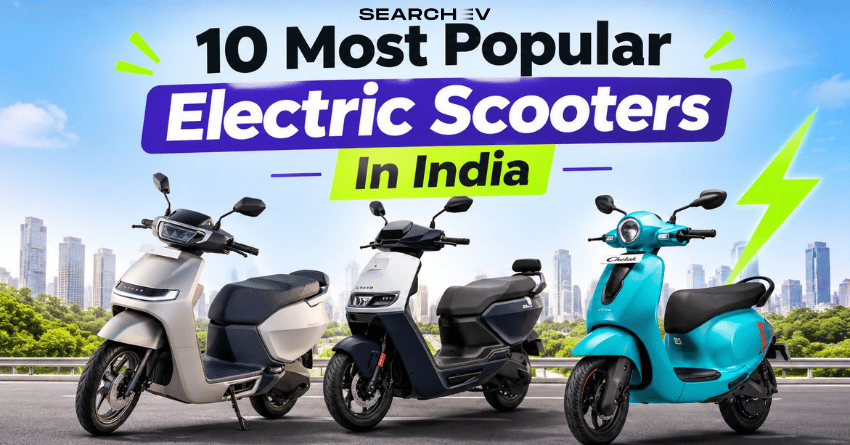
While a few years ago, buying an electric scooter in India felt much like an experiment where early adopters had to deal with erratic software updates, range anxiety, small service networks, and reliability concerns, in 2026 the market has matured considerably where monthly registrations even cross the 2 lakh mark. Traditional two-wheeler giants like TVS, Bajaj, and Hero MotoCorp now command the top of the sales charts, though startups like Ather, Ola, River, and Simple Energy are also right up there with product innovation.
In this guide we cover the 10 most popular electric scooters in India for 2026, while also explaining their key features, real-world range, pros and cons, and more, in order for you to make an informed buying decision.
Quick Summary: Top 10 Popular Electric Scooters in India
| Model | Ex-Showroom Price Range (Without Subsidies) | Battery Options | Claimed Range (IDC) |
| 1. TVS iQube | ₹1.20 lakh to ₹1.75 lakh | 2.3 kWh / 3.1 kWh / 3.5 kWh / 5.3 kWh | 114 km to 212 km |
| 2. Bajaj Chetak | ₹1.04 lakh to ₹1.58 Lakh | 2.5 kWh / 3.0 kWh / 3.5 kWh | 113 km to 153 km |
| 3. Hero Vida VX2 / V2 | ₹1.09 lakh to ₹1.6 lakh (or ₹44,990 with BaaS) | 2.2 kWh / 3.1 kWh /3.4 kWh / 3.94 kWh / 4.4 kWh | 92 km to 187 km |
| 4. Ather Rizta | ₹1.21 lakh to ₹1.61 lakh | 2.9 kWh / 3.5 kWh | 123 km to 161 km |
| 5. TVS Orbiter | ₹1 lakh to ₹1.19 lakh | 1.8 kWh / 3.1 kWh | 86 km – 158 km |
| 6. Ola S1 Pro / S1 X | ₹89,999 to ₹1.79 lakh | 2 kWh / 3 kWh / 4 kWh / 5.2 kWh | 108 km to 320 km |
| 7. Ather 450X / 450 Apex | ₹1.51 lakh to ₹1.95 lakh | 2.9 kWh / 3.5 kWh | 126 km to 165 km |
| 8. River Indie | ₹1.62 lakh | 4.0 kWh | 160 km |
| 9. Simple One | ₹2.05 lakh to ₹2.08 lakh | 5.0 kWh | 265 km |
| 10. Ather Konarc | ₹1.02 lakh to ₹1.46 lakh | 2.1 kWh / 2.7 kWh / 3.5 kWh | 100 km to 161 km |
| Special Mention: Ultraviolette Tesseract | ₹1.45 Lakh to ₹2 Lakh (Est.) | 3.5 kWh / 5.0 kWh / 6.0 kWh | 162 km to 261 km (Est.) |
*Note that prices and range figures vary by variant, state subsidies, and city-specific dealership levies.
1. TVS iQube
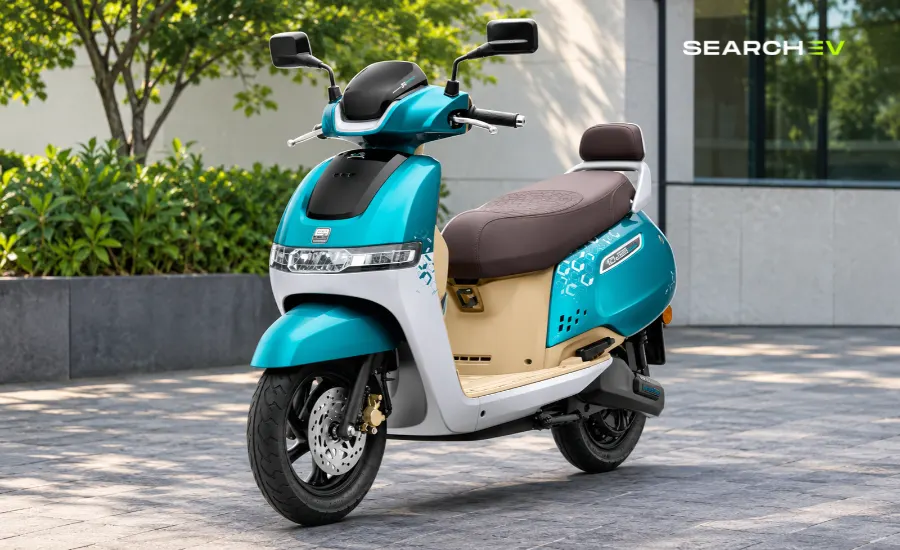
- What Makes It Popular: Amongst India’s highest-selling electric two-wheelers thanks to its widespread dealership reach and fuss-free family ergonomics.
- Battery & Range: Multiple fixed Lithium-ion options ranging from 2.3 kWh to 5.3 kWh on the ST trim (expect 75 km to 160 km in real-world city conditions depending on the battery).
- Motor & Top Speed: Whisper-quiet 4.4 kW BLDC hub motor with top speeds between 75 km/h and 82 km/h across standard trims.
- Hardware & Features:, Up to 32 litres of underseat storage, TFT display with turn-by-turn navigation, and rapid 950W portable charging options.
- Pros & Cons: Plush suspension over broken tarmac, quiet hub motor, and dependable service backing; held back by conservative styling and a modest real-world range on the base 2.3 kWh pack.
The TVS iQube sits at the top of the sales chart because it refuses to intimidate buyers switching from a petrol Jupiter or Activa. Instead of forcing riders to learn complex touchscreen menus or deal with jerky throttle responses, TVS calibrated the iQube to feel natural from the first twist of the wrist. Its suspension soaks up mid-corner potholes well, and the wide variant spread lets buyers pick the exact battery size their daily commute demands. While the base model needs daily plugging in, the 3.1 kWh and 3.5 kWh trims are effortless everyday companions.
2. Bajaj Chetak
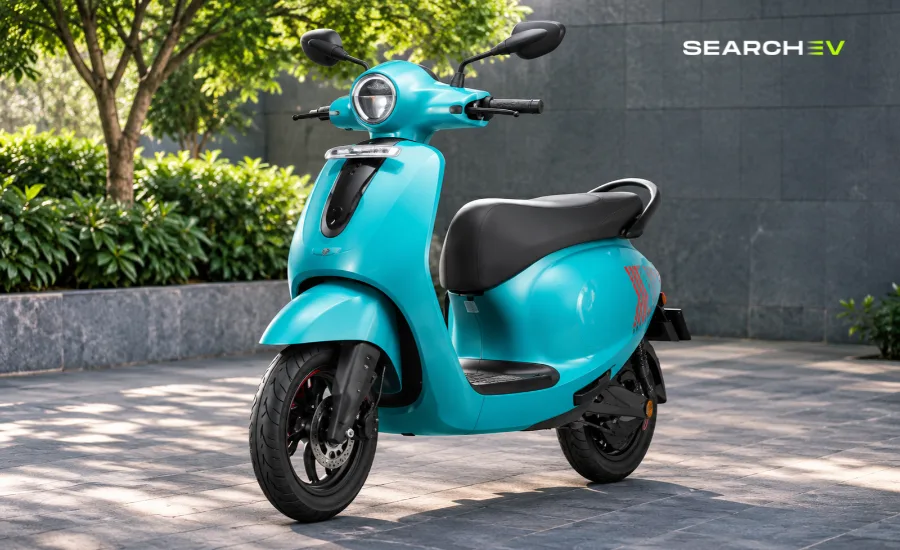
- What Makes It Popular: Crossed the milestone of 10 lakh cumulative sales thanks to its pleasing design, no-nonsense controls, and Bajaj’s trust and network presence.
- Battery & Range: 2.5 kWh, 3.0 kWh, and the new 35-series 3.5 kWh battery (yielding around 100 to 115 km in real-world riding).
- Motor & Charging: 2.2 kW to 4.8 kW motor options; fast charging on the 3501 trim goes from 0 to 80% in just under 3 hours.
- Hardware Highlights: Metal body panels, 35-litre underseat boot on the 35-series, front disc brake, and colour TFT display with integrated maps on premium trims.
- Pros & Cons: Unmatched build quality, huge 35L boot on the 35-series, and retro charm; compromised by a 60 km/h speed cap on the entry C2501 and key software features locked behind the paid TecPac subscription.
Bajaj turned the Chetak into a runaway success by listening to household buyers. Moving the 3.5 kWh battery pack into the floorboard on the 35-series freed up a massive 35-litre underseat boot while lowering the scooter’s centre of gravity. Although the entry C2501 feels slow on open roads, the mid-spec 3502 and top-spec 3501 combine classic styling with modern practicality.
3. Hero Vida VX2 / V2
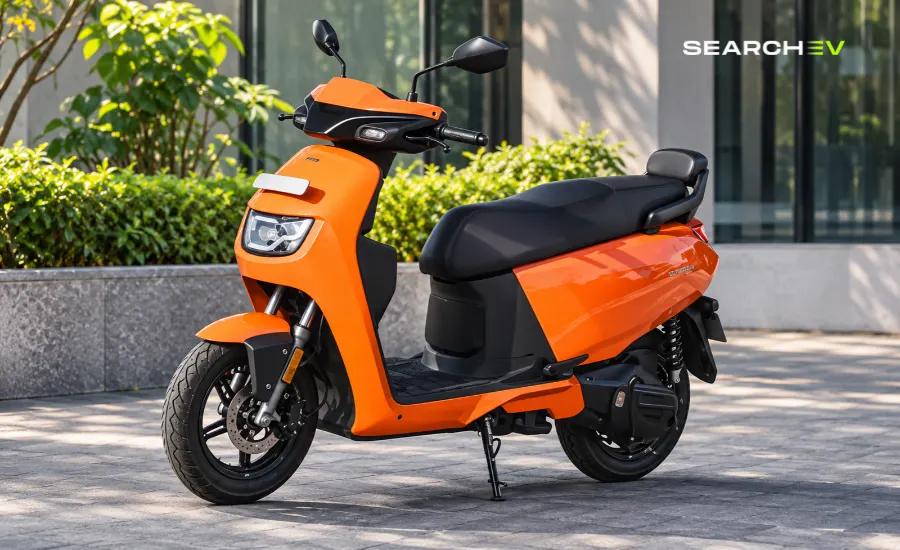
- What Makes It Popular: Aggressive price, removable battery setup, and flexible Battery-as-a-Service (BaaS) financing puts Vida Electric in the top 4 electric two wheeler brands in India.
- Battery & Range: Dual removable Lithium-ion battery packs offered in 2.2 kWh, 3.4 kWh, 3.94 kWh and 4.4 kWh capacities (real world range of about 60 to 140 km depending on the battery option)
- Motor & Performance: 6 kW peak PMSM motor, and a top speed of up to 90 km/h on higher trims.
- Features: Keyless entry, 7-inch TFT touchscreen, cruise control, regenerative braking, and access to the shared Vida / Ather fast-charging grid.
- Pros & Cons: Convenient removable batteries for apartment dwellers, brisk top-end speed, and low entry cost via BaaS; let down by a firm rear suspension setup and heavy individual battery packs when carrying them up stairs.
Hero MotoCorp cracked the volume game by solving two major hurdles for urban buyers: apartment charging and high upfront purchase prices. Because the Vida V2 and VX2 use removable battery packs, riders residing in apartments with restricted measures for charging setup in the parking lot really benefit. Add in the BaaS pay-per-kilometre scheme and Hero’s rapidly expanding retail footprint, and it is easy to see why monthly sales have grown so fast.
4. Ather Rizta
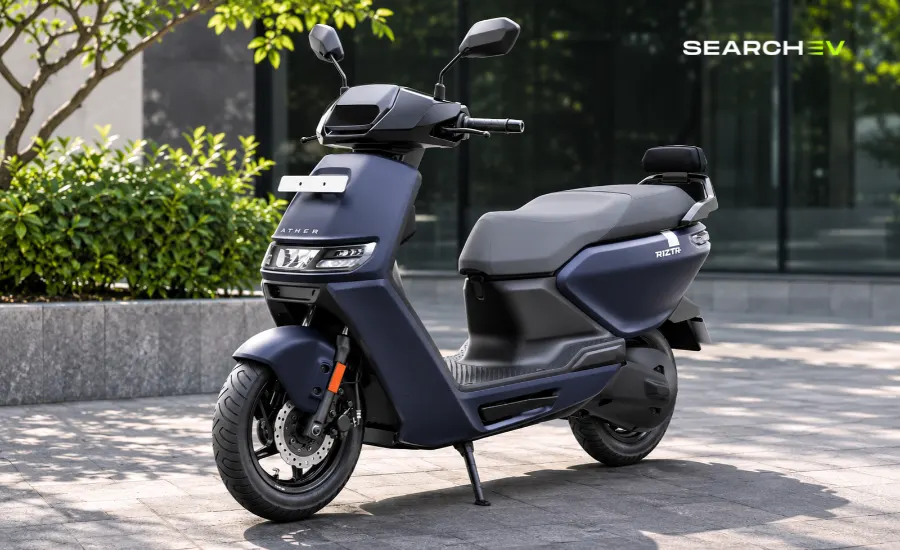
- What Makes It Popular: Transformed Ather from a niche enthusiast brand into a mainstream family contender, accounting for the bulk of Ather’s showroom walk-ins.
- Battery & Range: 2.9 kWh and 3.5 kWh pack ((95 km to 120 km real-world).
- Motor & Speed: 4.3 kW PMSM mid-drive motor, and an 80 km/h top speed.
- Practicality & Safety: Huge 900 mm long flat seat, 34-litre underseat storage (plus an optional 22-litre front frunk accessory), SkidControl traction control, FallSafe, and WhatsApp integration on the 7-inch TFT dashboard.
- Pros & Cons: Amongst the most comfortable seats in the segment, clever traction control for wet roads, and massive storage; compromised by a noisy belt drive under hard load, and essential tech locked behind the Pro Pack add-on.
For years, families walked into Ather showrooms, sat on the compact 450X, and walked out to buy a TVS or Bajaj because the pillion seat felt too cramped. The Ather Rizta fixed that. It boasts an accommodating seat for even two large adults plus a schoolbag. Underneath, it shares its main frame and reliable battery management system with the 450 series, meaning it still handles corners with far more poise than a typical family scooter.
5. TVS Orbiter
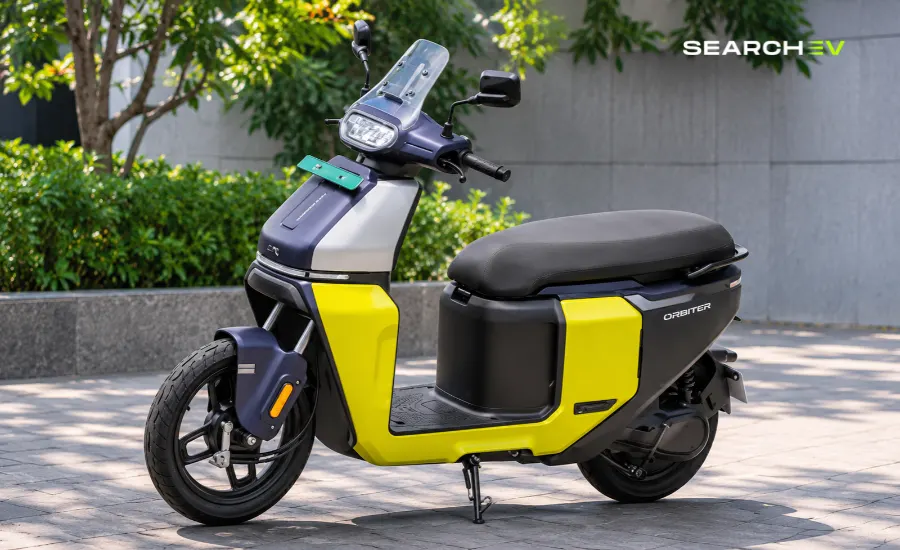
- What Makes It Popular: Surged into the top five best-selling electric scooters in India, winning over pragmatic commuters who want a 14-inch front wheel and high range around the ₹1 lakh mark.
- Battery & Range: 1.8 kWh and 3.1 kWh fixed Lithium-ion battery pack (up to 115 km in everyday city riding with the larger pack).
- Motor & Speed: Efficiency-tuned 2.8 kW BLDC hub motor, 0 to 40 km/h in 6.8 seconds, and a 68 km/h top speed.
- Hardware & Features: 165 mm ground clearance, 845 mm seat length, 34-litre underseat boot, and a 5.5-inch digital console with navigation assist.
- Pros & Cons: Pothole-swallowing 14-inch front wheel, light 112 kg kerb weight, and generous 34L boot; held back by drum brakes at both ends and gentle acceleration on steep flyovers.
While the iQube caters to tech-focused urban families, the TVS Orbiter was engineered as a no-nonsense high-mileage workhorse. By pairing a large 3.1 kWh battery or a smaller 1.8 kWh battery for a more accessible price, TVS extracted up to 158 km of certified range. Its standout hardware trait is the tall 14-inch front wheel, which rolls over broken municipality patches and unpaved colony lanes with much greater stability than standard 12-inch scooter wheels.
6. Ola S1 Pro / S1 X
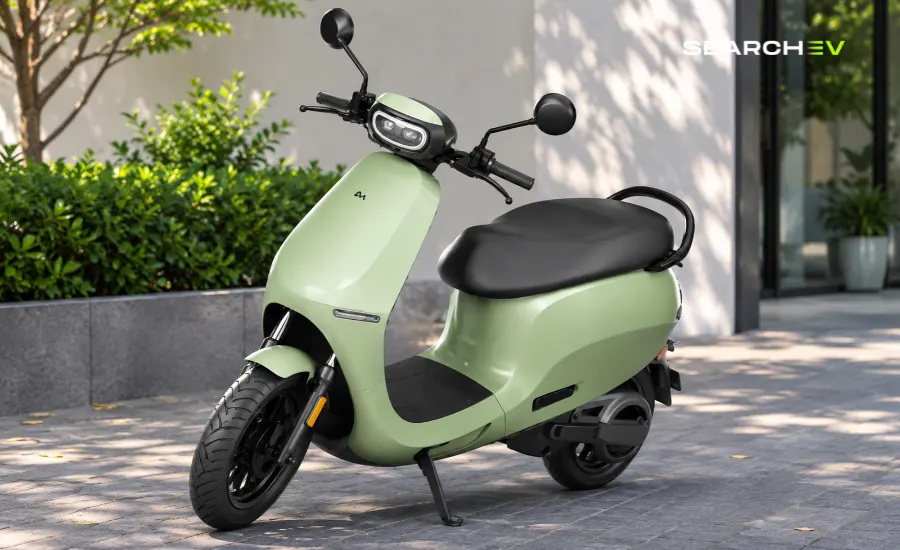
- What Makes It Popular: Unmatched street recognition, futuristic silhouette, and solid price to spec ratio; Ola played a foundational role in popularising high-speed electric scooters across Indian towns.
- Battery & Range: 2 kW, 3 kWh, 4 kWh, and 5.2 kWh option, translating to up to 200 km of real world range depending on the trim.
- Motor & Performance: Mid-drive IPM motor delivering up to 13 kW peak output on the S1 Pro+, and top speeds of up to 141 km/h.
- Features: 34-litre underseat storage, MoveOS software suite with party mode, cruise control, hill hold, and a 7-inch touchscreen onon the Pro and Pro+ trims. The S1 X and S1 X+ get a 4.3-inch segmented colour LCD instead.
- Pros & Cons: Benchmark acceleration, massive range figures per rupee, and roomy boot space; let down by inconsistent service centre turnaround times and occasional software glitches.
No list of popular Indian EVs is complete without the scooter lineup that turned electric mobility into a household conversation. Whether you look at the affordable physical-key S1 X or the feature-packed S1 Pro+, Ola gives buyers specifications that embarrass 125cc petrol scooters at traffic lights. The newer Gen 3 models also move to a conventional twin telescopic front fork on a tubular and sheet-metal frame, though it is too early to call the earlier durability complaints fully resolved. If you have a well-rated Ola service centre in your neighbourhood, the value proposition remains tough to ignore.
7. Ather 450X / 450 Apex
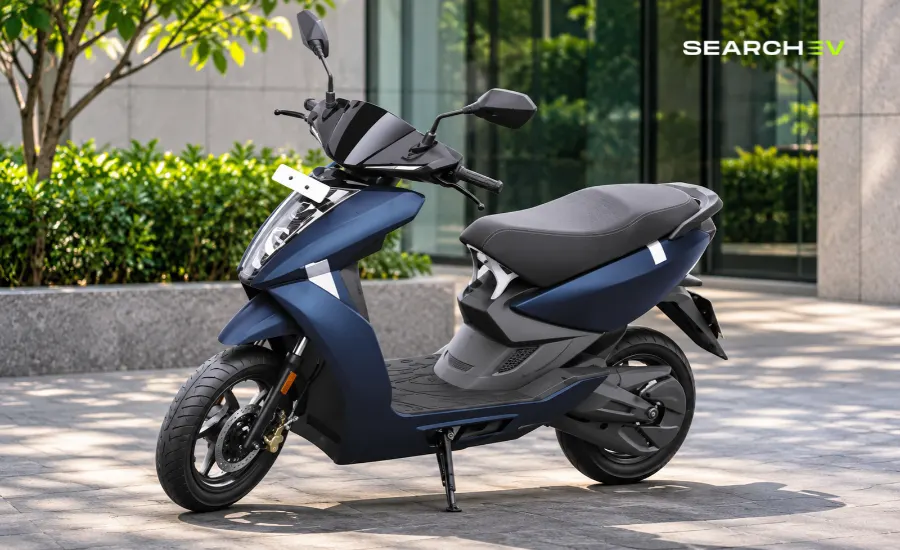
- What Makes It Popular: The gold standard for enthusiast handling and software polish in India, maintaining a steady cult following for riders who prioritise riding fun.
- Battery & Range: 2.9 kWh (126 km IDC) and 3.5 kWh (161 km IDC on 450X; the pack was earlier badged 3.7 kWh with the same range). The Apex gets 165 km IDC. Ather’s TrueRange runs from 85 to 105 km in Ride mode and up to 130 km in SmartEco on the 3.5 kWh pack.
- Motor & Speed: 6.4 kW PMSM motor on the 450X (90 km/h top speed, 0 to 40 km/h in 3.3s) and a 7.0 kW motor on the 450 Apex with Warp+ mode (100 km/h top speed, 0 to 40 km/h in 2.9s).
- Hardware & Tech: Precision hybrid aluminium chassis, 200 mm front and 190 mm rear disc brakes, multi-mode traction control, Magic Twist throttle regeneration, and transparent Indium Blue panels on the Apex.
- Pros & Cons: Razor-sharp cornering, intuitive Magic Twist one-pedal riding, and rock-solid reliability; expensive upfront pricing, firm sporty suspension, and a compact 22-litre boot.
If you view your daily office commute as something to enjoy rather than endure, the Ather 450 series is built for you. While other manufacturers chase softer seats and larger boots, the 450X and 450 Apex focus on weight distribution, stiff chassis feedback, and instantaneous throttle response. Features like Magic Twist let you slow the scooter down to a complete halt simply by rolling the throttle forward, barely touching the brake levers in bumper-to-bumper traffic. It is, however, pricey and compact for three-member family errands.
8. River Indie
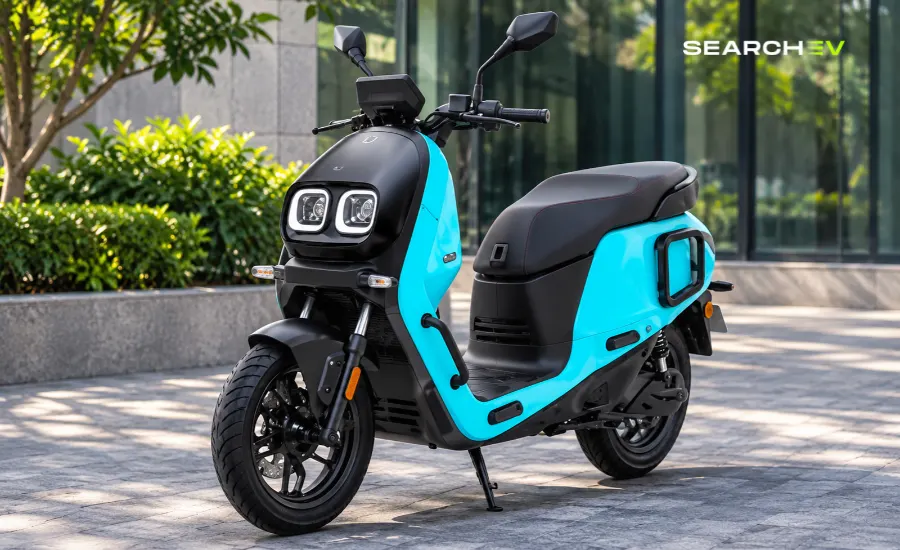
- What Makes It Popular: Dubbed the “SUV of Scooters”, its quirky twin-beam utility design and massive cargo capacity helped nearly quadruple its sales over the past year.
- Battery & Range: 4.0 kWh fixed Lithium-ion battery offering 160 km IDC range (roughly 70 to 110 km in real-world riding).
- Motor & Performance: 6.7 kW peak mid-drive PMSM motor, 90 km/h top speed, and 0 to 40 km/h in 3.7 seconds.
- Utility & Hardware: Enormous 43-litre underseat boot plus a 12-litre lockable front glovebox (55 litres total), 14-inch alloy wheels at both ends, dual 200 mm disc brakes, crash guards, and fold-out front footpegs.
- Pros & Cons: Unmatched 55-litre combined storage, stable 14-inch wheels front and rear, and rugged crash protection; heavy 135 kg kerb weight and a smaller dealership footprint compared to legacy brands.
The River Indie looks like nothing else on Indian roads, and every piece of its boxy bodywork serves a practical purpose. Its 43-litre underseat bay easily swallows two helmets or a week’s worth of supermarket bags. Riding on chunky 14-inch tyres at both ends gives it motorcycle-like composure over cratered roads. River crossed 100 stores in late October 2026 and is still opening more across Tier-1 and Tier-2 cities, so its sales numbers are catching up to its street appeal.
9. Simple One
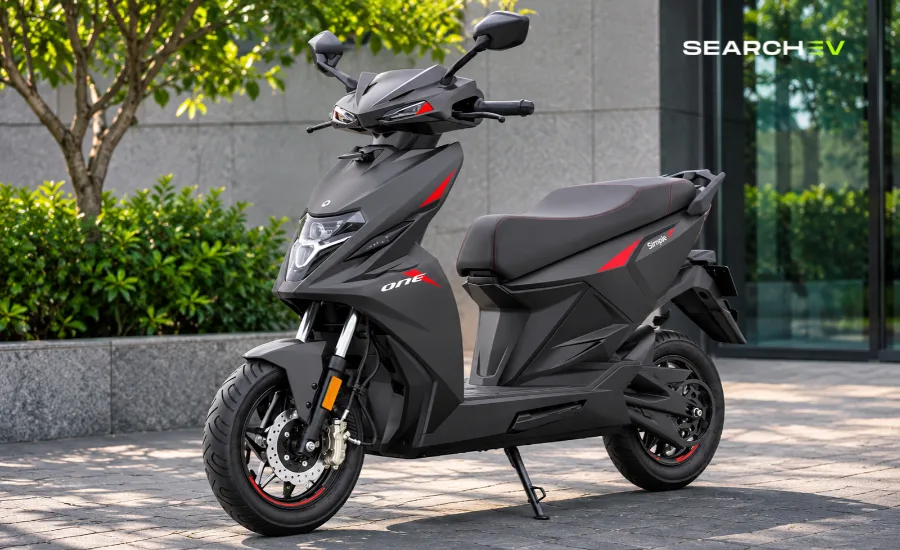
- What Makes It Popular: Famous among EV enthusiasts for packing a 5.0 kWh battery and a 265 km claimed range into the One line alongside superbike-inspired sharp bodywork.
- Battery & Range: 5.0 kWh Lithium-ion battery pack with a certified 265 km ARAI range (delivering roughly 160 to 180 km in mixed real-world riding).
- Motor & Performance: 8.8 kW peak PMSM motor, 0 to 40 km/h in 2.55 seconds, and a 115 km/h top speed across six ride modes.
- Features & Hardware: Updated Gen 2 platform with a 35-litre underseat boot, front and rear disc brakes, 7-inch Android TFT touchscreen, four-mode traction control, TPMS, and hill assist.
- Pros & Cons: Thrilling 2.55-second acceleration, genuine inter-city battery range; held back by a steep asking price, slow AC home charging, and a limited retail network.
After a slow start with its first-generation rollout, Bengaluru-based Simple Energy overhauled the Simple One into its Gen 2 avatar in 2026. The denser 5.0 kWh pack is about 4 kg lighter than before, and the Gen 2 offers 35 litres of underseat storage, four traction-control modes and four levels of regeneration. Twist the throttle in Sonic X mode, and the 8.8 kW motor lunges forward with fierce urgency. It remains an expensive buy, best suited to riders who have a dedicated home socket and want maximum single-charge range
10. Ather Konarc
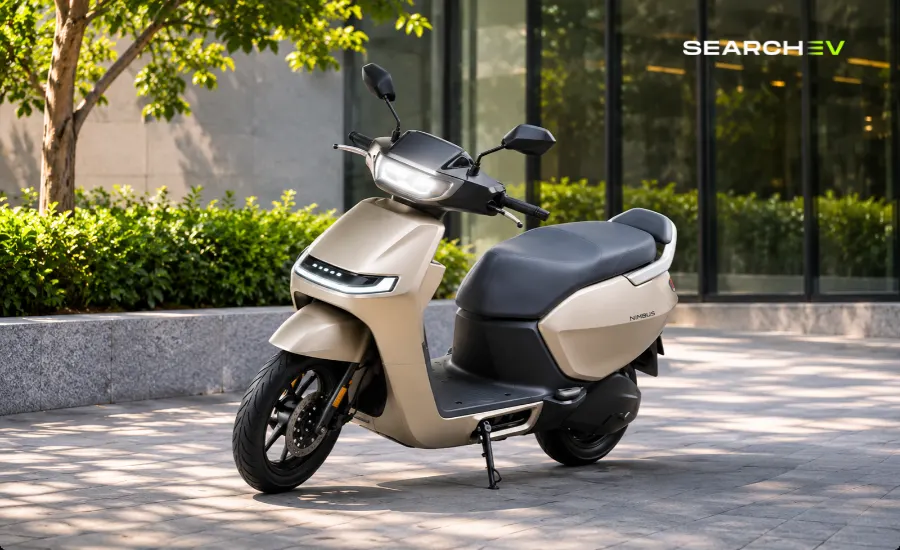
- What Makes It Popular: Ather’s most affordable entry point (starting right at ₹1 lakh) featuring a durable metal body and a 14-inch front wheel.
- Battery & Range: 2.1 kWh (100 km IDC / 80 km TrueRange), 2.7 kWh (125 km / 100 km) and 3.5 kWh (161 km / 130 km)
- Motor & Speed: 4.7 kW IP67-rated PMSM motor, 0 to 40 km/h in 4.7 seconds, and a 70 km/h top speed.
- Hardware & Practicality: Metal exterior body panels, 14-inch front and 12-inch rear tubeless alloy wheels, 220 mm front disc brake (on 2.7 kWh and 3.5 kWh trims), and 31 litres of underseat storage.
- Pros & Cons: Brings Ather’s software reliability down to ₹1 lakh, sturdy metal body panels, and confident ride and handling; the cheapest trim is delayed and feels slightly heavy.
The Ather Konarc was built specifically to challenge the Bajaj Chetak and TVS Orbiter in the heart of the ₹1 lakh to ₹1.30 lakh commuter segment. To keep the entry price aggressive, Ather fitted the base trim with drum brakes and a smaller 4.2-inch display, made fast charging optional there, and capped the top speed at a sensible 70 km/h. For daily commuters who want Ather’s build quality and a 220 mm front disc brake without spending ₹1.50 lakh, the 2.7 kWh and 3.5 kWh Konarc trims hit the bullseye.
Special Mention: Ultraviolette Tesseract
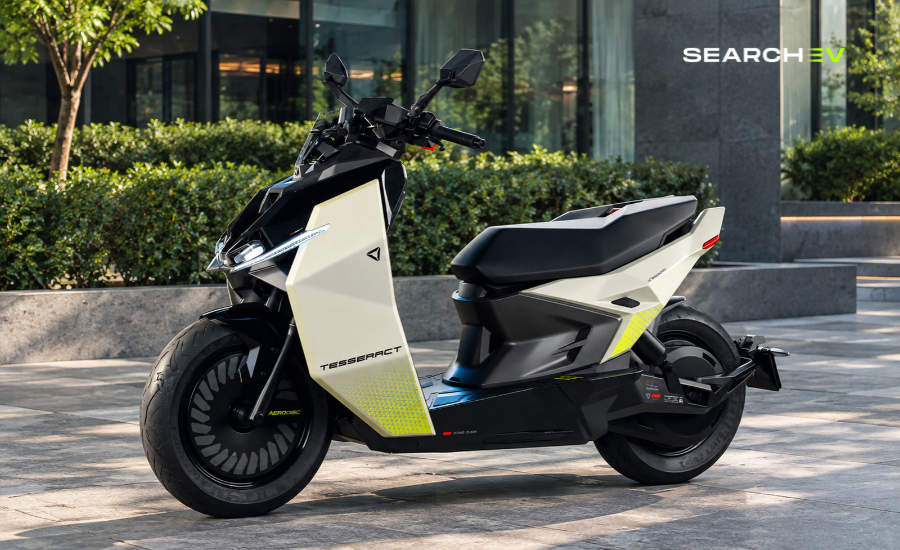
- What Makes It Popular: Generated massive industry buzz by racking up over 60,000 pre-bookings within months of its reveal, thanks to its combat-helicopter styling, radar-assisted safety tech, and a 20 bhp motor.
- Battery & Range: Expected in 3.5 kWh (162 km IDC), 5.0 kWh (220 km IDC), and 6.0 kWh (261 km IDC) configurations.
- Motor & Performance: Up to 15 kW (about 20 bhp) on the 5.0 and 6.0 kWh versions, with a claimed 125 km/h top speed and 0 to 60 km/h in 2.9 seconds.
- Segment-First Tech: Front and rear millimeter-wave radar with blind-spot detection and collision alerts, integrated dashcams, haptic feedback handlebars, and dual-channel ABS.
Even before reaching customers, the Ultraviolette Tesseract has reshaped expectations of what an electric scooter can be. Ultraviolette planned to reuse the F77 superbike’s powertrain, but thermal-management problems in a scooter chassis forced a re-engineering around a new 100V architecture, which pushed deliveries to Q1 2027.