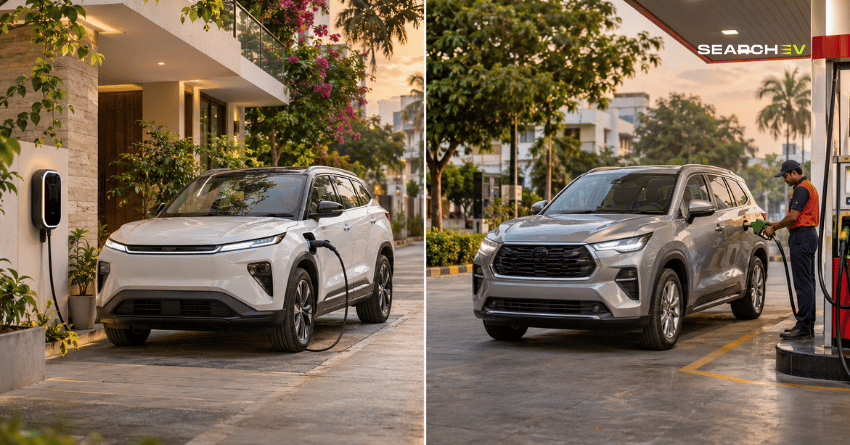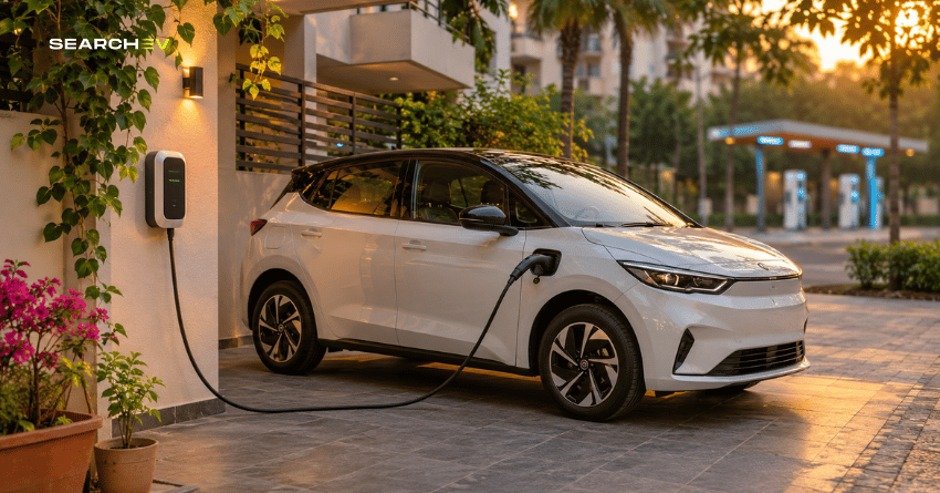

Quick answer: Most electric cars cost roughly ₹10,000 to ₹50,000 a year to insure, depending on the car, your city and the add-ons you pick. The own-damage part is often 20% to 40% higher than for a similar petrol car, because the battery makes the car’s insured value so much larger. Third-party cover gets a 15% EV discount. The add-on worth the most attention is battery protection.
Nobody enjoys thinking about insurance, but with an EV it deserves a closer look. The battery is the single most expensive part of the car, and a standard policy doesn’t always cover the ways it can be damaged. Here is what you pay, why, and where you can sensibly save.
Why EV insurance costs more
There are three main reasons.
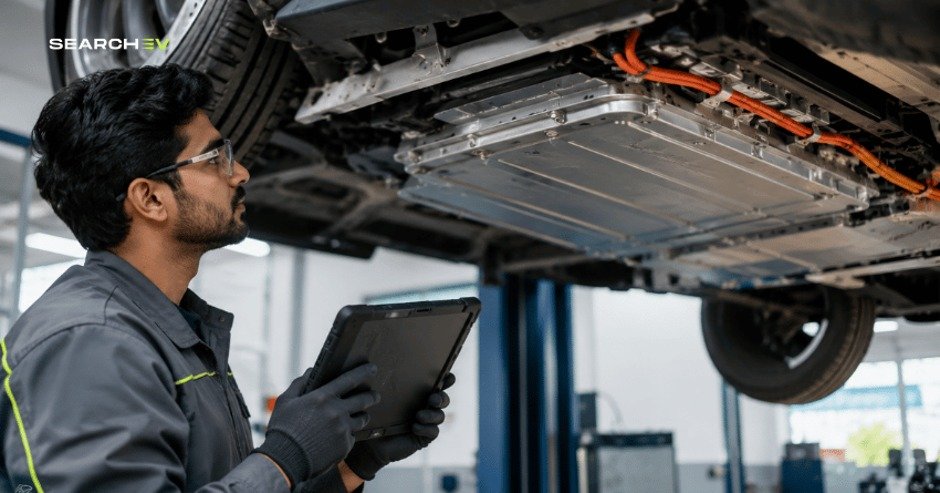
- The battery inflates the car’s value. One insurer guide puts the battery at 40% to 50% of the insured declared value (IDV), and repairing or replacing it can run from ₹1 lakh to ₹5 lakh. A higher IDV means a higher own-damage premium.
- Repairs are pricier. Estimates suggest EV repair bills run around 30% to 50% above petrol equivalents, as certified technicians are scarce and genuine parts can take a while to arrive.
- Fewer garages can do the work. A thinner repair network adds cost and waiting time, and insurers price that in.
Third-party cover, the legal minimum, is set by the regulator rather than by the car’s value. EVs get a flat 15% discount on it compared with petrol cars in the same power band.
What you actually pay
As a rough example, the own-damage premium on a Tata Nexon EV is quoted at about ₹28,000 to ₹29,000 a year, against ₹18,000 to ₹19,000 for the petrol Nexon. These are indicative figures, and your own quote will differ with your city, claim history and add-ons. GST of 18% is charged on top of the combined premium.
The price of the car matters too. If you haven’t chosen yet, it can help to compare insurance quotes alongside the sticker price. Our guides to the most affordable EV cars in India and the best electric cars under ₹20 lakh are a good place to start, and the top 5 electric cars under ₹30 lakh covers the next step up.
The add-ons that matter for EVs
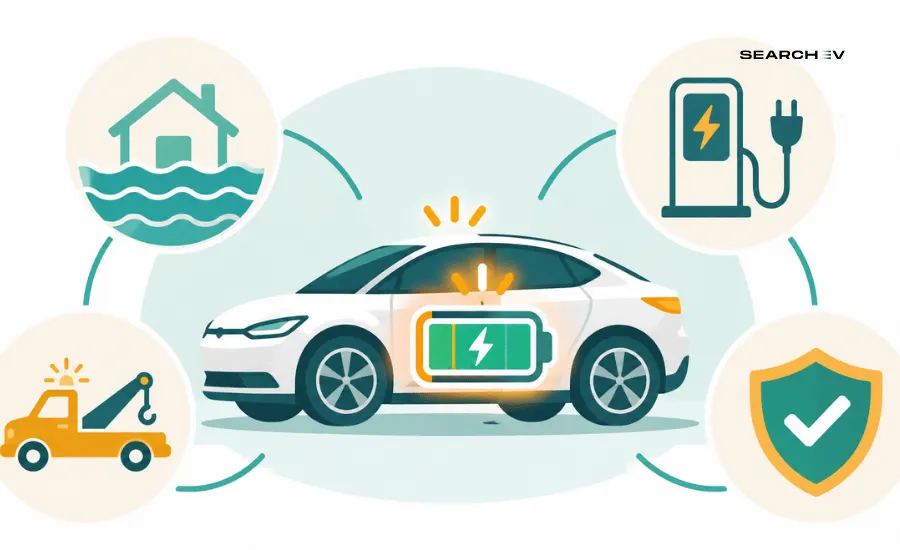
Not every add-on earns its place. These are the ones relevant to electric cars, with indicative yearly costs.
| Add-on | What it does | Typical cost per year |
| Battery protection | Covers battery damage from events a base policy can exclude, such as water ingress, short circuits and charging surges | ₹1,500–4,000 |
| Zero depreciation | Pays for replaced parts without deducting for age | ₹2,500–6,000 |
| Charger cover | Covers your wall charger and cable | ₹500–1,500 |
| Roadside assistance | Flatbed towing and help if you run out of charge | ₹300–800 |
Taken together, a sensible bundle costs roughly ₹4,800 to ₹12,300 a year. Some insurers also offer return-to-invoice cover, which pays the invoice price rather than the depreciated value if the car is written off.
Why battery protection is worth a look
A base policy may not pay for certain water-ingress damage to the battery, which matters if you live somewhere that floods in the monsoon. Battery protection is designed to fill that gap, and it also removes depreciation on the battery for those claims.
It isn’t a blank cheque, though. Read the small print for these points.
- Warranty overlap: it won’t cover anything your manufacturer’s battery warranty already covers, and it won’t pay for normal capacity loss.
- Payout caps: some plans cap the battery payout at around 30% of the manufacturer’s listed battery price.
- Claim limits: often one battery claim per policy year, and a vehicle age limit of around six years.
- Charger conditions: non-approved chargers or parts can weaken a claim.
- Reporting window: late reporting can lead to rejection, and some insurers expect you to tell them within days.
- Approval first: repairs done without the insurer’s prior approval may not be paid.
The warranty and the insurance do different jobs. The warranty deals with defects and excess capacity loss. Insurance deals with accidents, floods and other damage.
Six ways to pay less
- Compare quotes every year. Don’t let the policy auto-renew. Prices and add-on terms vary a lot between insurers.
- Set a realistic IDV. An inflated value pushes the premium up without giving you anything useful in return.
- Choose add-ons deliberately. Battery protection and charger cover usually justify their price. Add the rest only if they suit how you drive.
- Protect your no-claim bonus. It can grow to as much as 50% over claim-free years, so paying a small repair yourself can save money in the long run.
- Raise your voluntary deductible. Agreeing to pay more on each claim lowers the premium.
- Compare add-ons on terms, not just price. Look at the claim cap, the number of claims per year, the reporting window and whether the charger is included.
Frequently asked questions
1. Is EV insurance more expensive than petrol car insurance?
Usually, yes, for the own-damage part, because the battery raises the car’s insured value. Third-party cover is cheaper thanks to the 15% EV discount.
2. Does car insurance cover EV battery damage?
A standard policy covers accidental damage, but some water-ingress and electrical battery damage can be excluded. A battery protection add-on is meant to cover that.
3. Do I need zero depreciation cover on an EV?
It is useful on newer cars, where parts are costly. Check how it treats the battery, as some plans cap it at 50% like tyres.
4. Can I insure my EV’s home charger?
Many insurers offer charger and cable cover as a small add-on, usually under ₹1,500 a year.
The bottom line: budget ₹10,000 to ₹50,000 a year, make sure the battery is protected against water and electrical damage, and compare quotes at every renewal.