


| Specification | 49 kWh | 61 kWh |
|---|---|---|
| Claimed range | 440 km | 543 km |
| Power | 142 bhp (106 kW) | 172 bhp (128 kW) |
| Torque | 193 Nm | 193 Nm |
| Drive type | Front-wheel drive | Front-wheel drive |
| AC charging (7.4 kW, 10 to 100%) | About 6.5 hours | About 9 hours |
| DC fast charging (10 to 80%) | About 45 minutes | About 45 minutes |
| Variants | Delta | Zeta, Alpha |
Maruti eVitara Dimensions
| Dimension | Value |
|---|---|
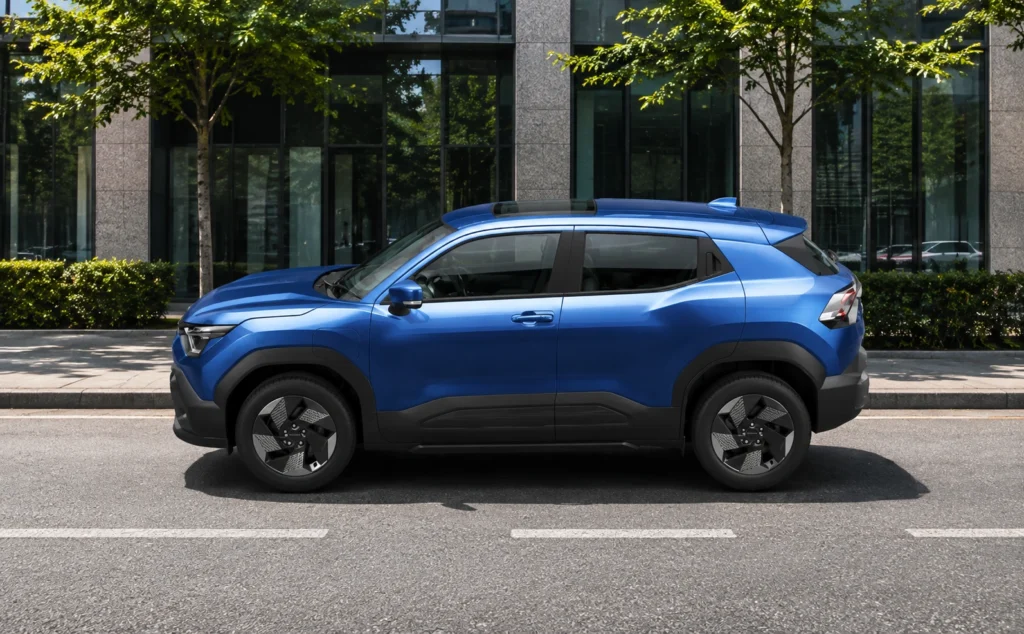
| Length x Width x Height | 4,275 x 1,800 x 1,640 mm |
| Wheelbase | 2,700 mm |
| Boot space | About 310 litres |
| Turning radius | 5.2 m |
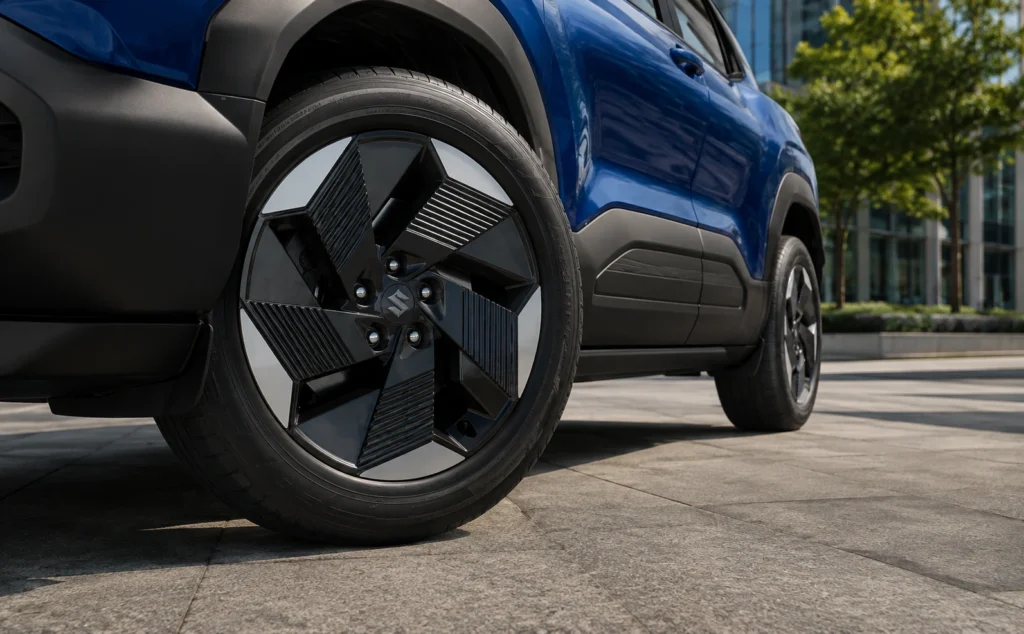
| Tyres | 225/55 R18 |
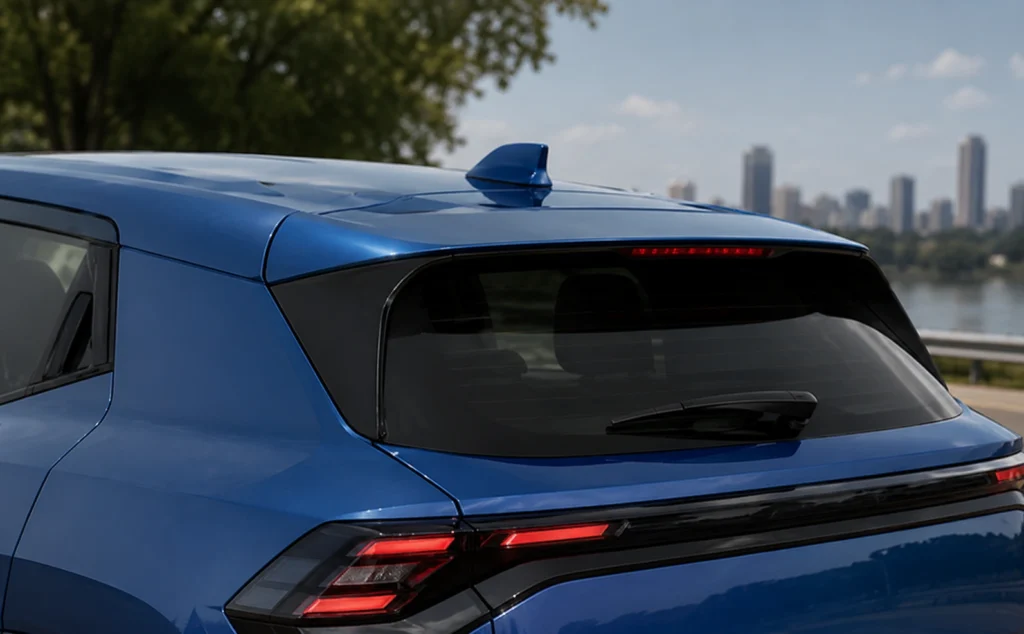
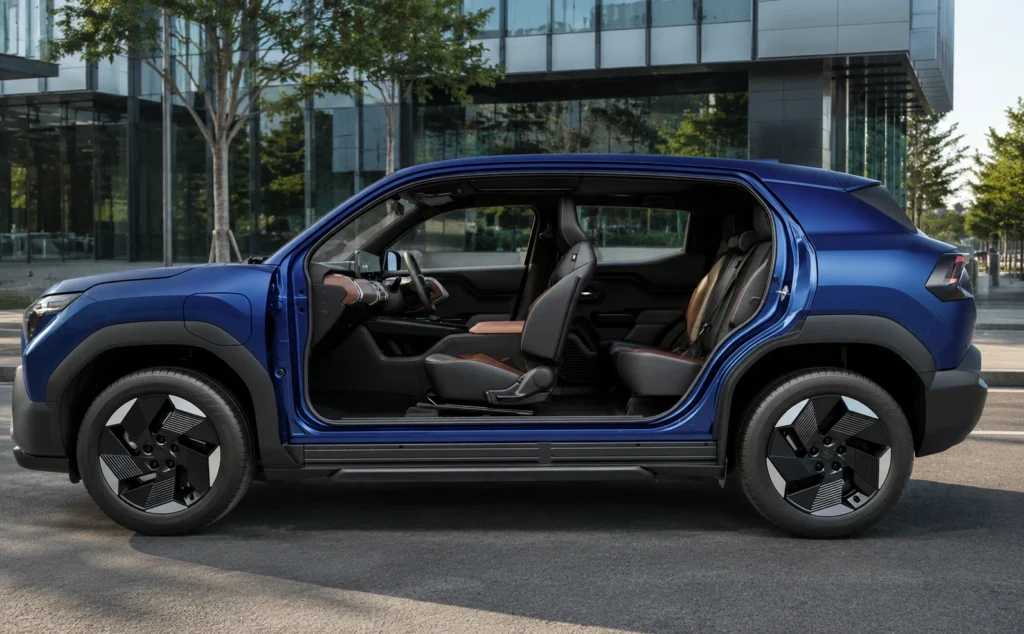
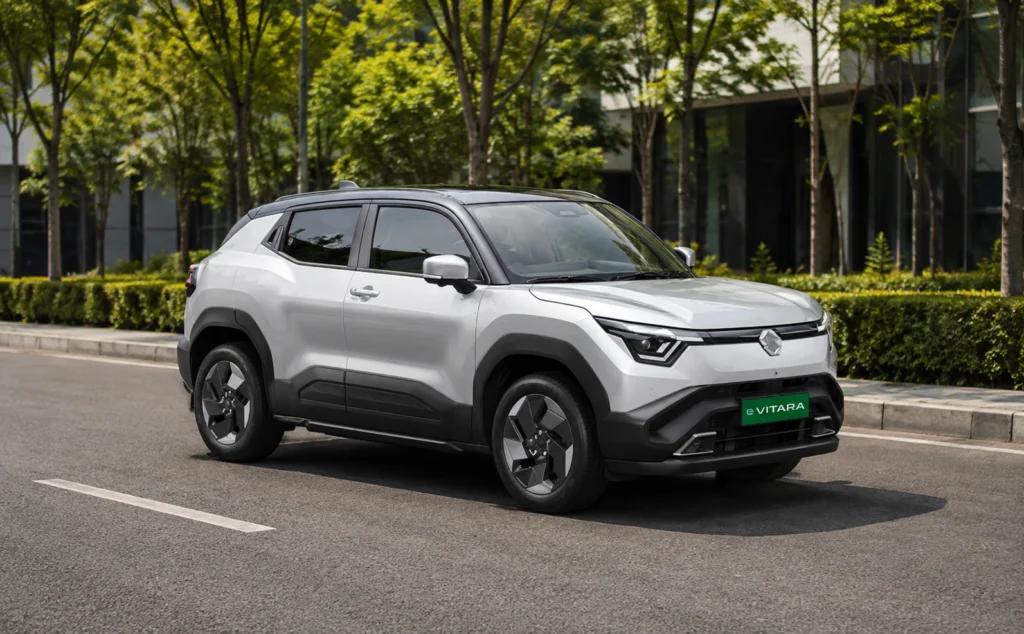
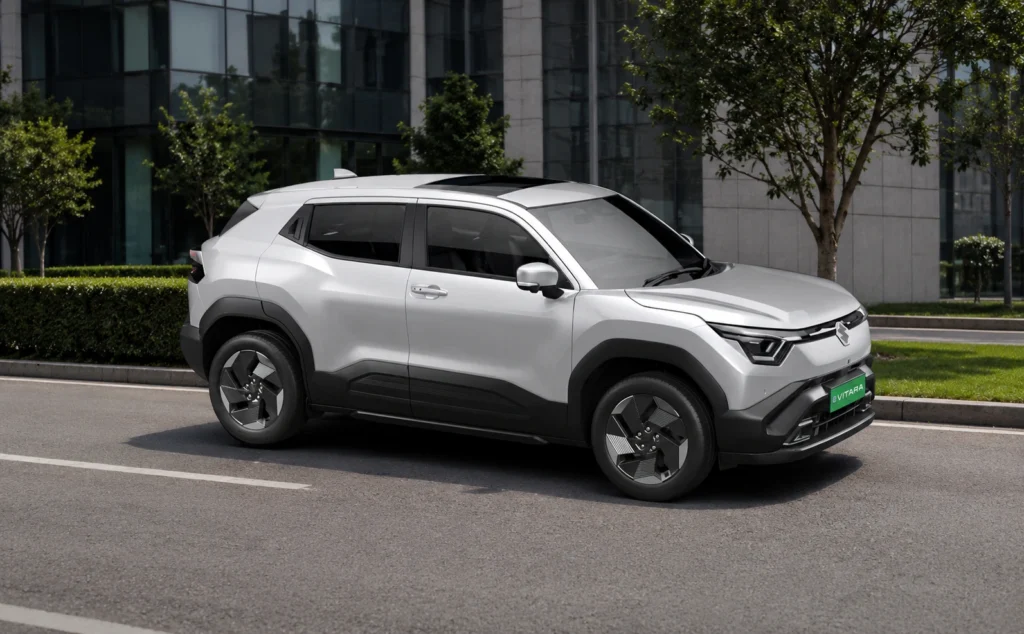
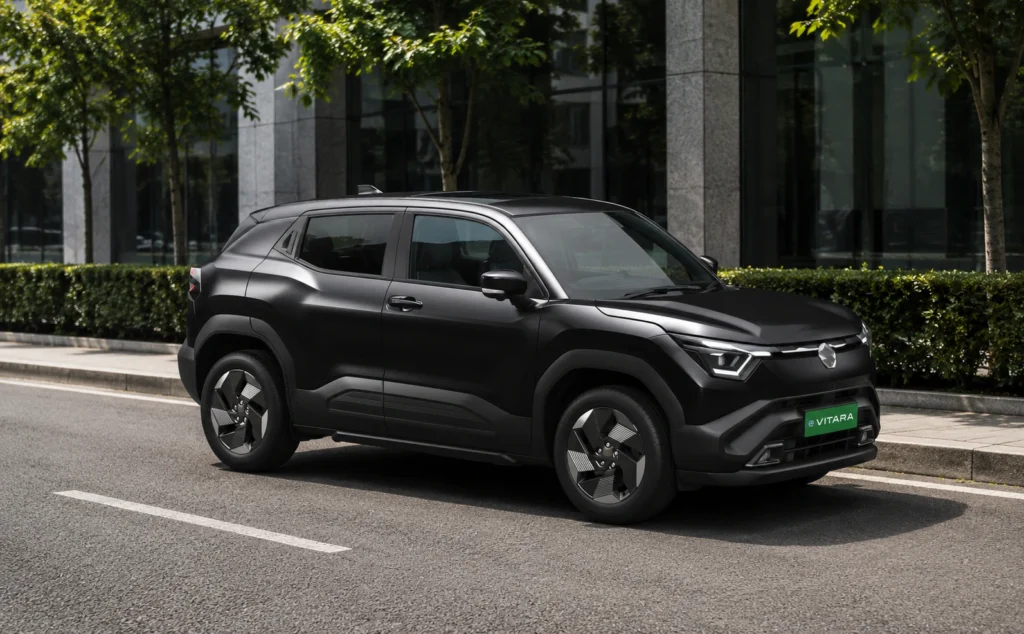
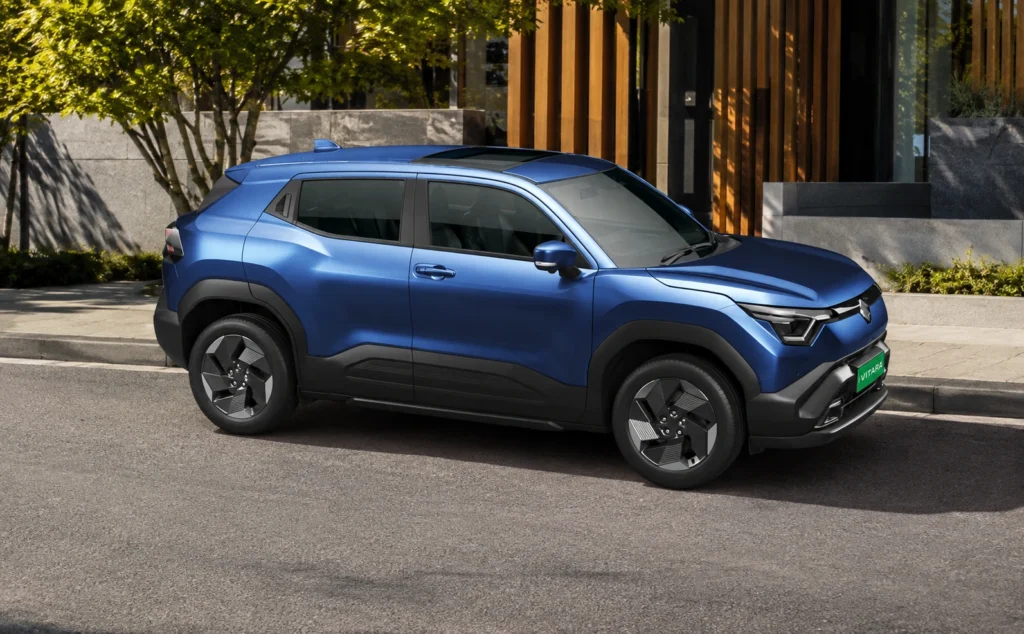
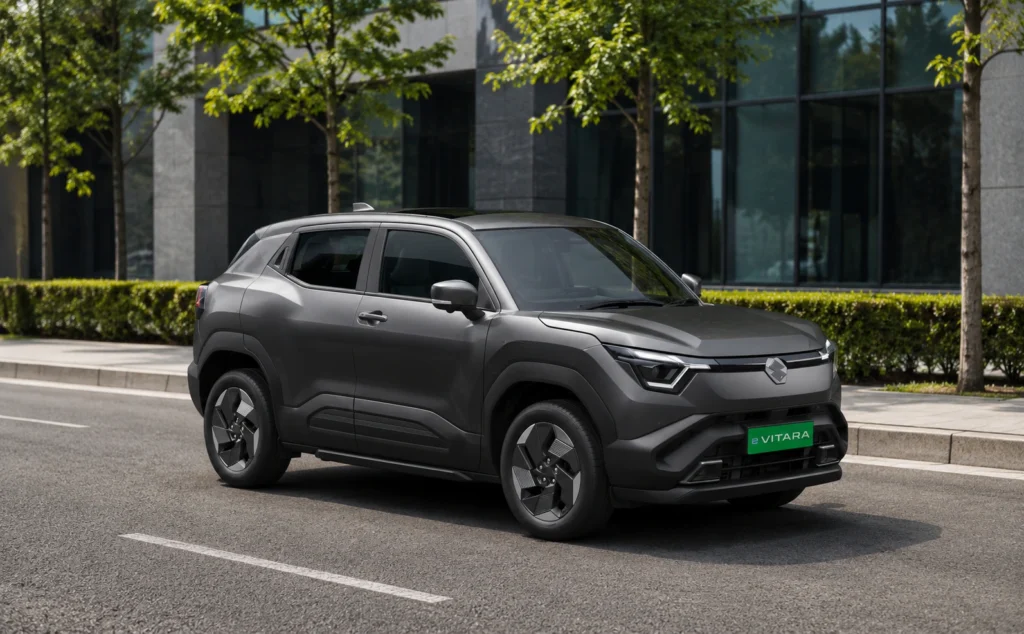
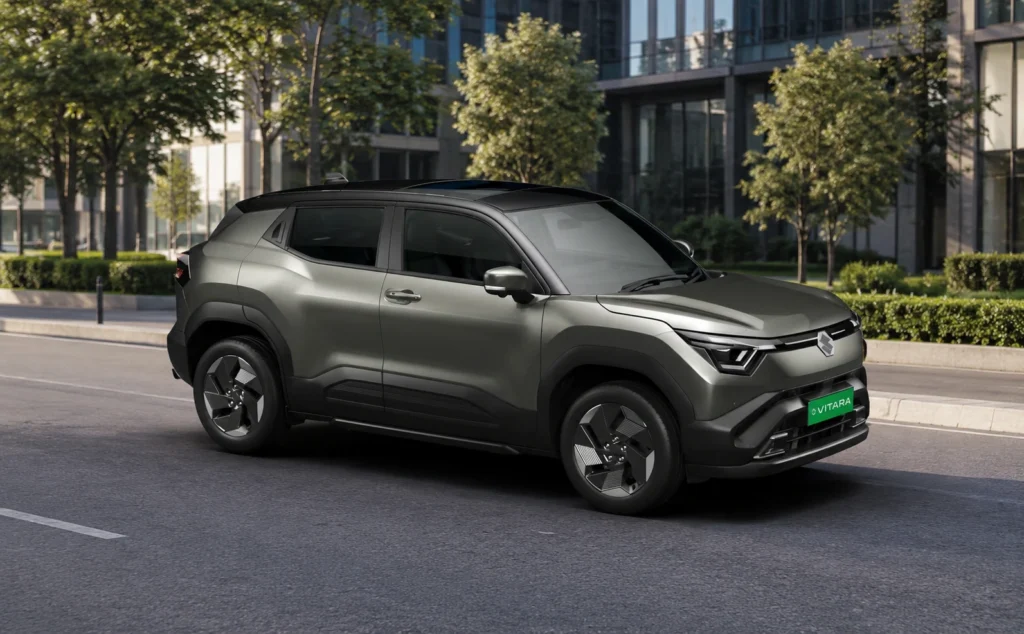
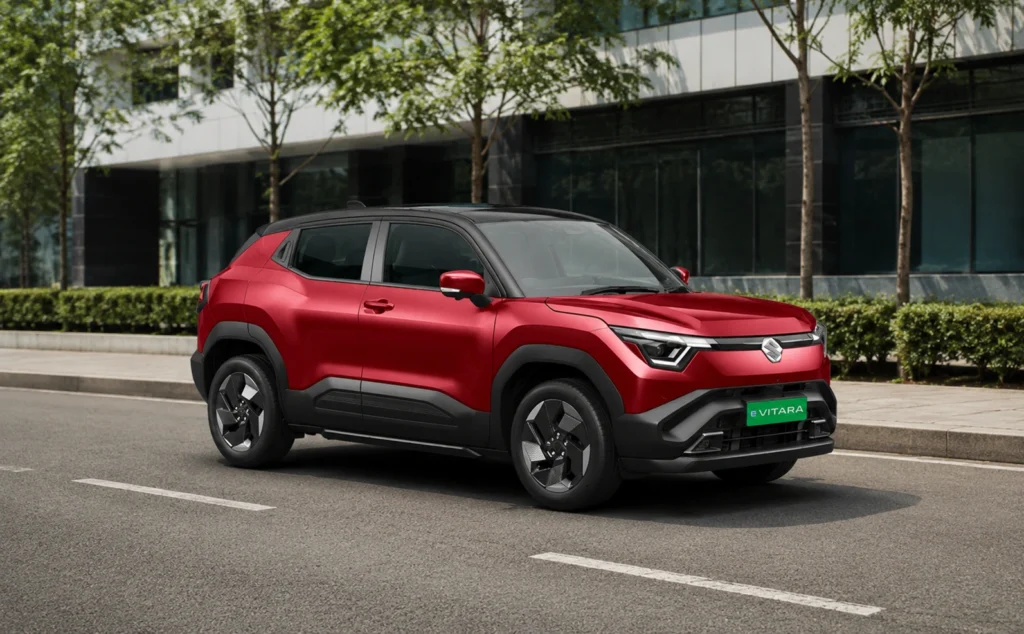
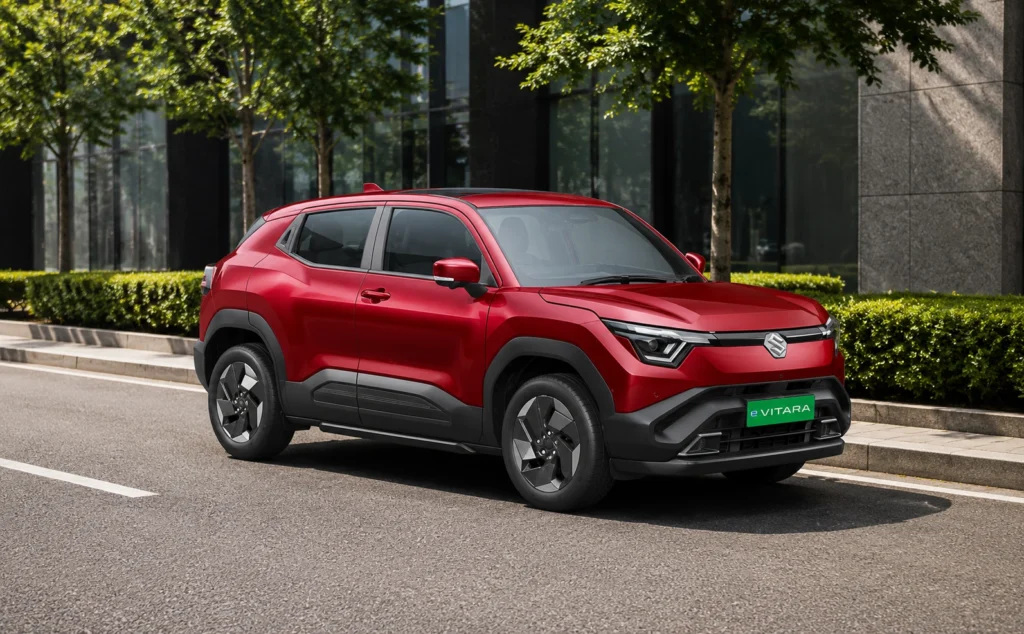
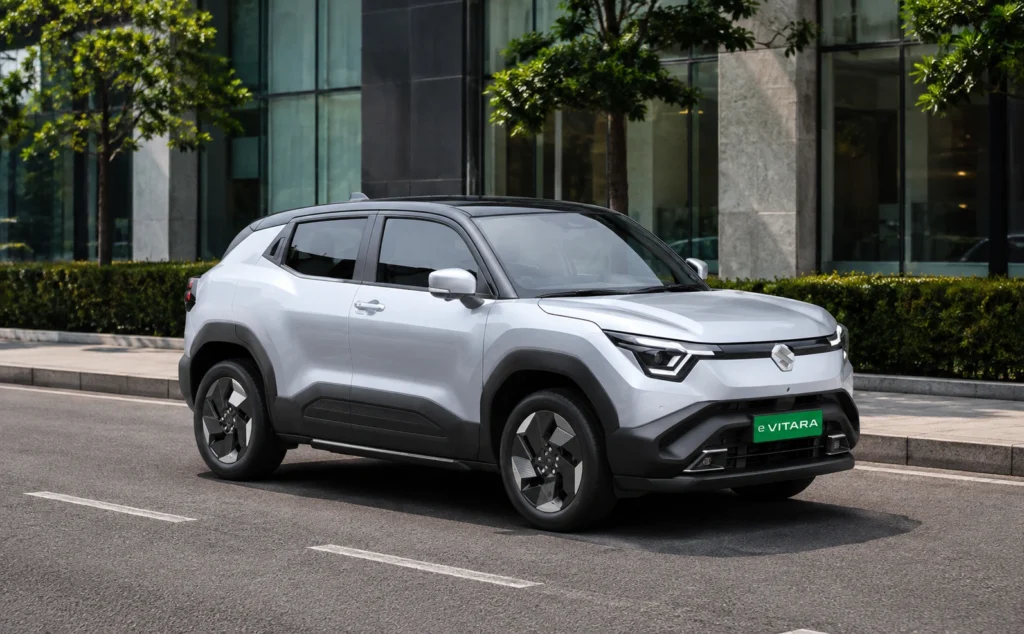
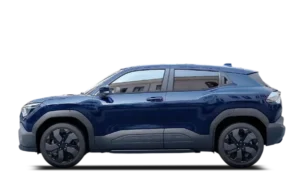
At 4,275 mm long, the eVitara sits in the same size class as the Hyundai Creta Electric. However, its 2,700 mm wheelbase is notably long for its size, which helps cabin space. On the other hand, the boot holds about 310 litres, which is smaller than some rivals. Still, a tight 5.2 m turning radius makes it easy to park and U-turn in city traffic.
Battery and Range
The eVitara uses two battery sizes built on Maruti’s dedicated HEARTECT-e electric platform. First, the 49 kWh pack in the Delta offers 440 km of claimed range, which suits daily city use. Next, the 61 kWh pack in the Zeta and Alpha extends that to 543 km. In real-world driving, expect roughly 330 to 350 km from the smaller pack and 400 to 430 km from the larger one. So, the 61 kWh version makes more sense if you travel between cities often.
Motor and Performance
Both versions use a single front-mounted motor. With the 49 kWh battery, it produces 142 bhp, while the 61 kWh version makes 172 bhp. Both share the same 193 Nm of torque, so acceleration feels smooth and linear rather than sporty. Moreover, drivers can pick from Eco, Normal and Sport modes, along with three levels of regenerative braking. Overall, the setup focuses on easy, relaxed driving.
Charging Times
Charging the eVitara is straightforward. At home, a 7.4 kW wall box takes about 6.5 hours for the 49 kWh pack and 9 hours for the 61 kWh pack (10 to 100%). Meanwhile, a DC fast charger takes both versions from 10 to 80% in about 45 minutes. Notably, Maruti also offers complimentary home charger installation and a growing network of charging points across its dealerships.
Suspension, Brakes and Safety
Up front, the eVitara uses MacPherson strut suspension, and it gets disc brakes on all four wheels. For safety, it comes with 7 airbags, and it has scored 5 stars in the Bharat NCAP crash test. Higher variants also add Level 2 ADAS and a 360-degree camera. As a result, it ranks among the safest electric SUVs in its segment.
Warranty
Maruti offers an 8-year battery warranty, which gives long-term peace of mind. The vehicle gets a 3-year standard warranty, and buyers can extend it. For variant-wise prices, check the Maruti eVitara price page, or compare trims on the eVitara variants page.

What's good
-
 Rock-Solid Safety: 5-star B-NCAP rating and 7 airbags as standard.
-
Effortless Drive: Smooth, linear power delivery that’s perfect for city commuting.
-
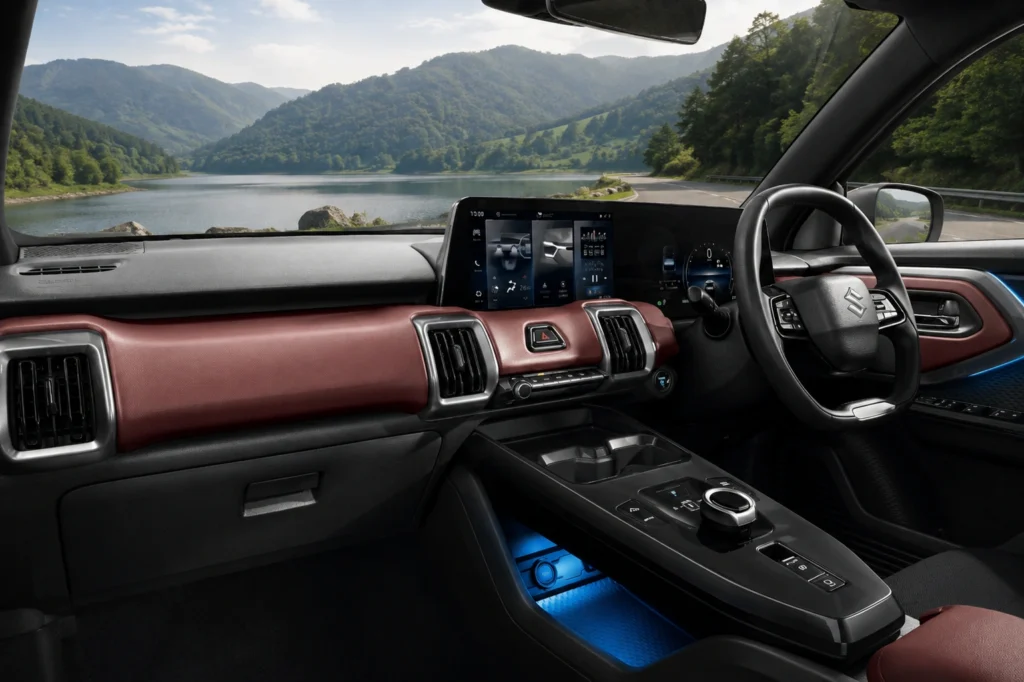
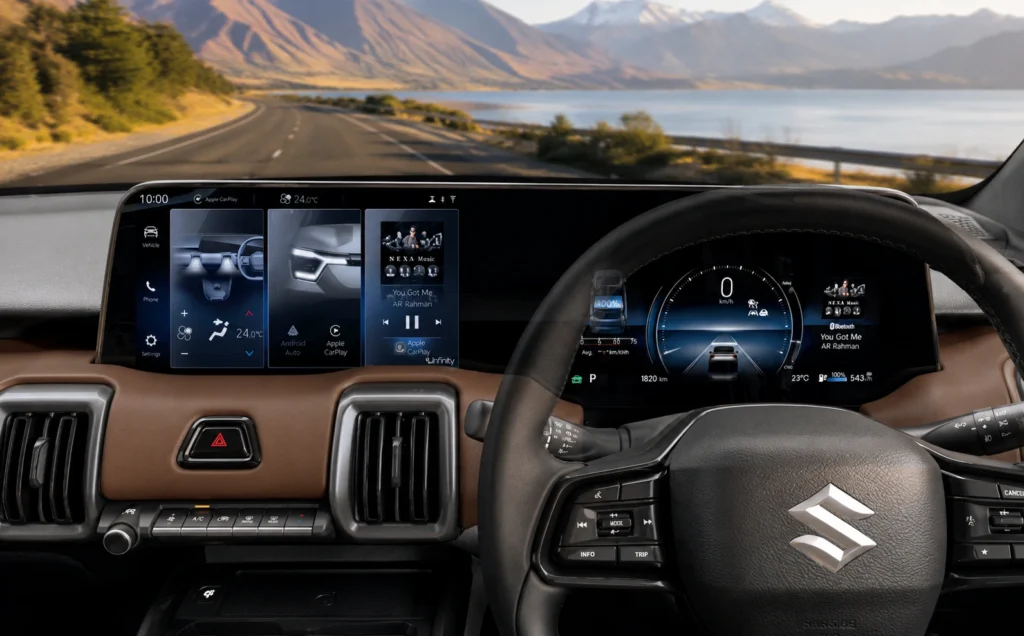
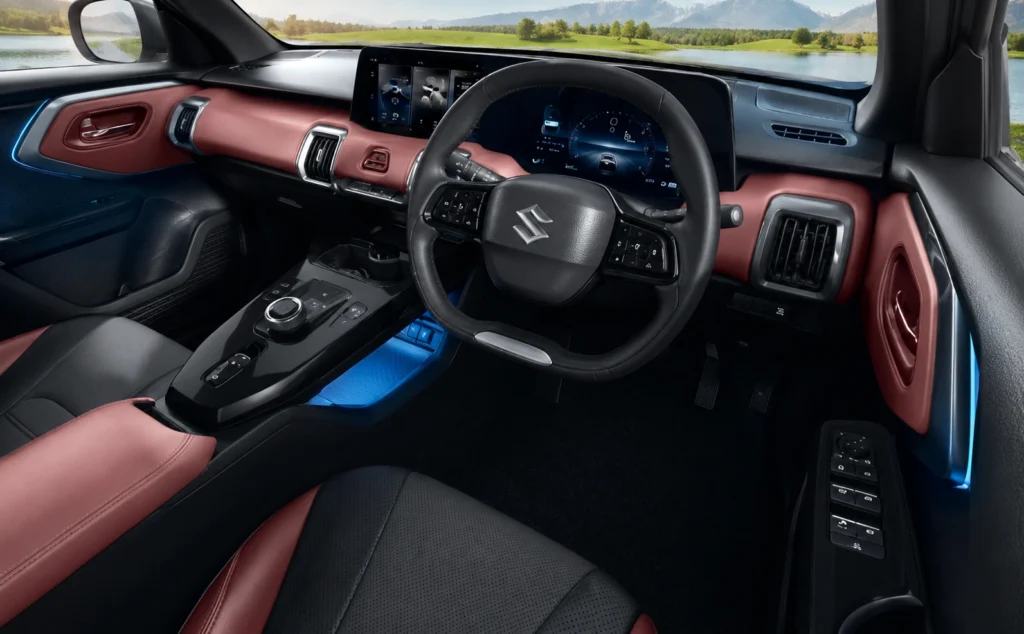
Modern Interior: A massive step up in quality and tech for Maruti.
-
Peace of Mind: The massive service network and long battery warranty.

What's not so good
-
 Rear Seat Ergonomics: High floor leads to poor under-thigh support and limited headroom for tall adults.
-
Boot Space: 310 liters is underwhelming for this segment.
-
Firm Ride: Can feel a bit too “jumpy” on bad city roads.
-
NVH Levels: Road and wind noise are more prominent than they should be.
 543Km/c
 160Kmph
 85Mins
 Connect Now