
You’ve probably seen it — someone walking out of their apartment, pulling a battery out of their scooter like it’s a laptop bag, and heading upstairs to charge it. No charging point needed. No parking near a socket. Just plug it in like any regular appliance.
But how exactly does this work? What’s going on inside that battery, and why do some scooters have this feature while others don’t? Let’s break it down properly.
What Is a Removable Battery ?
Before the steps, here’s the basic idea. A removable battery in an electric scooter is a self-contained lithium-ion battery pack that sits in a dedicated slot — usually under the seat or integrated into the frame — and can be physically pulled out without tools.
It connects to the scooter through a set of high-current terminals (think thick metal contacts), a data connector for communication, and in some cases a locking latch to keep it secure while riding. The moment you slide it out, the scooter shuts off. Slide it back in, and everything powers up again.
Simple in concept. Quite clever in execution.
Step-by-Step: How It Actually Works
Step 1 — You Open the Battery Compartment
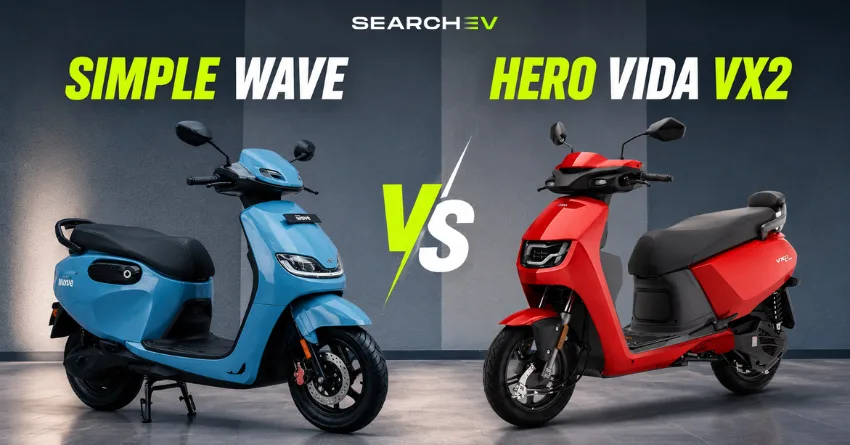
Most scooters with removable batteries have a dedicated compartment, usually accessed with a key or a release button. On scooters like the Hero Vida V2, it’s a neat pull-out slot. On the Bounce Infinity E1, the battery sits prominently and is designed to be grabbed and carried easily.
Once you open the latch or turn the key, the battery is exposed and ready to be taken out.
Step 2 — The Battery Disconnects From the Scooter’s Electrical System
The moment you begin pulling the battery out, a disconnect happens. The battery terminals (positive and negative contacts) separate from the scooter’s internal bus. A BMS — Battery Management System — inside the battery pack detects this and essentially powers down, stopping any current flow.
This is why you don’t get a spark or shock when removing the battery. The BMS handles that safely.
Step 3 — You Carry It Indoors and Plug It In
The battery pack usually has a built-in handle or a carry strap. You take it home, plug the charger into the battery’s dedicated port (not the scooter), and charging begins. Most removable batteries charge on standard 5-amp home sockets, which is why you don’t need any special installation at home.
Charging time varies — typically 4 to 6 hours depending on the capacity and the charger amperage.
Step 4 — The BMS Manages the Entire Charging Process
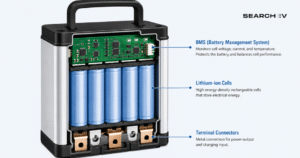
This is where the real intelligence lives. As the battery charges, the BMS monitors individual cell voltages, temperature, and state of charge. It balances the cells, prevents overcharging, and cuts power when the battery hits 100%.
You don’t need to manage any of this. It happens automatically inside the pack. Think of the BMS as the battery’s brain — without it, lithium cells would degrade or worse, overheat.
Step 5 — You Slide the Charged Battery Back In
Once fully charged, you carry it back to the scooter, slide it into the compartment, and the terminals reconnect. The scooter reads the battery’s state of charge through the data connector, the dashboard lights up, and you’re ready to go.
The whole process is not very different from charging a power bank — except this one powers your daily commute.
Why Not All Scooters Have This
A removable battery sounds like an obvious win, so why don’t all scooters offer it?
The main trade-off is battery capacity. When a battery needs to be portable enough for a person to carry, it can’t be too heavy. Most removable battery packs weigh between 7 to 12 kg, which limits the energy they can store. This means shorter range — typically 60 to 100 km per charge on most models.
Fixed batteries, on the other hand, can be larger and heavier because they don’t need to be lifted by hand. Scooters like the Ola S1 Pro and Ather 450X use fixed batteries that sit low in the frame, giving them better range and a lower centre of gravity.
There’s also the connector reliability factor. Every time you plug and unplug a battery, those terminals experience wear. Manufacturers have to design connectors that last thousands of cycles without degrading.
The Charging Convenience Factor
Here’s where removable batteries genuinely shine in the Indian context. A huge number of riders live in apartments or areas without dedicated EV charging infrastructure. Pulling the battery out and charging it at home removes that barrier completely.
You don’t need a garage. You don’t need a charging station nearby. You just need a power socket.
If you’re someone who parks on the street or in a shared basement with no power access, a scooter with a removable battery practically changes your ownership experience. That’s exactly what makes options like the ones covered in our top electric scooters with removable battery guide so relevant for everyday buyers.
What Happens If the Battery Is Damaged?
With a fixed battery, a damaged or degraded pack means a workshop visit and a potentially expensive repair locked into the scooter. With a removable pack, you can replace just the battery, and in theory, you could even own a spare for extended range on long days.
The battery is the most expensive component in any EV, and being able to service or replace it independently is a significant practical advantage over the long run.
Is It Safe to Remove and Charge at Home?
Yes — provided you use the original charger and don’t charge on a damaged surface or leave it unattended for extended periods. The BMS handles most safety functions, but common sense applies here just as it does with any lithium-ion device.
Avoid charging in direct sunlight or in a hot closed space. If the battery ever feels unusually warm or shows physical damage, get it checked before using it again.
Final Thoughts
A removable battery is not just a convenience feature — for many riders, it’s the deciding factor. It solves the real-world charging problem that fixed-battery scooters leave open, especially in urban India where charging infrastructure is still catching up.
Understanding how it works — from the terminal disconnect to the BMS managing every charge cycle — makes it easier to use and maintain well. And once you’ve used one, going back to hunting for a charging point every night feels unnecessarily complicated.