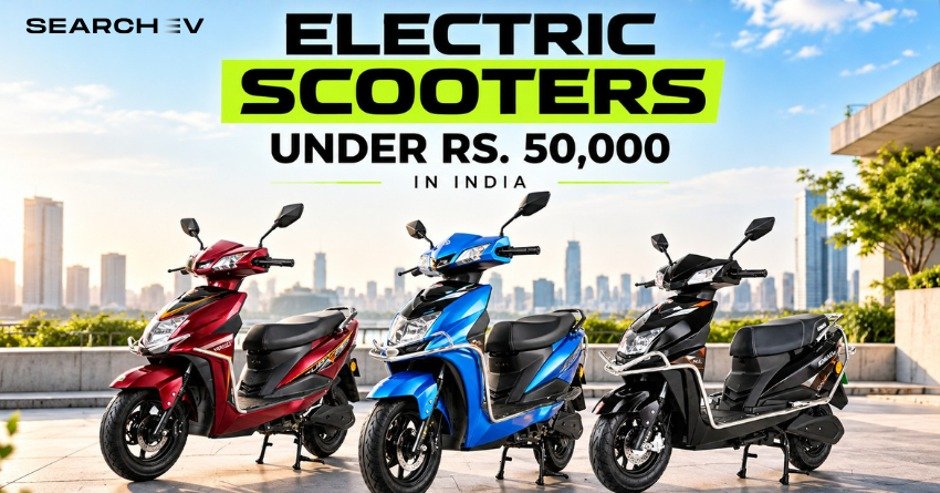

The short answer: The best electric scooter with a removable battery in India right now is the Hero Vida VX2 Plus, especially the new 4.4 kWh version (claimed 187 km, 90 km/h, about Rs 1.44 to Rs 1.51 lakh). On a tight budget, the Ampere Magnus Neo (from about Rs 80,000 to Rs 87,000) is the safe pick. For the longest claimed range, look at the new VLF Strada Max (250 km, Rs 1.55 lakh). If you want to swap batteries at a station instead of charging, only the Honda Activa e: and Bounce Infinity E1 do that for private buyers, and only in a few cities.
This guide has been rebuilt from scratch for October 2026. Since the last version, several scooters launched, prices moved after the central subsidy was reported to have ended on 31 July, and one scooter we had listed as discontinued, the Honda Activa e:, turned out to still be on sale. Here’s everything that matters before you buy.
Removable, swappable, or fixed: what’s the difference?
These three words get mixed up all the time, and it changes what you’re actually buying.
- Removable (portable) battery: you lift the pack out and charge it indoors from a normal wall socket. Hero Vida, Ampere, BGauss, VLF and Yamaha work this way. It solves the problem of parking with no charging point nearby.
- Swappable battery: you drop a low pack at a station and take a charged one. This needs a network that holds your exact pack. Honda (Activa e:) and Bounce are the only retail scooters built around this.
- Fixed battery: the pack stays bolted in and you plug the scooter in. Honda’s QC1 and QC3 and Ola’s S1 Z are examples.
One point trips up many buyers: a removable battery isn’t automatically swappable. India has no binding national interoperability standard for swappable batteries yet, so a Vida pack can’t be exchanged at a Honda or Bounce station. NITI Aayog published a draft Battery Swapping Policy in 2022, but a final policy hasn’t been notified, and the large swap networks (Battery Smart, Sun Mobility and others) serve e-rickshaws and gig fleets, not private scooters.
In practice, for most buyers a removable battery means one thing: you can carry it upstairs to charge.
Removable-battery electric scooters in India: full comparison (Oct 2026)
Prices are ex-showroom figures reported by launch coverage and listing sites. They differ between sources, cities and dates, and several launch prices included a subsidy that has since been reported to have ended, so treat these as a guide and ask for a written on-road quote.
| Scooter | Removable battery | Claimed range | Top speed | Price (ex-showroom, reported) |
|---|---|---|---|---|
| Hero Vida VX2 Go 2.2 kWh | 1 pack, 2.2 kWh | 93 km (IDC) | 70 km/h | about Rs 1.10 lakh (BaaS from Rs 59,490) |
| Hero Vida VX2 Go 3.4 kWh | 2 packs, 3.4 kWh | 146 km | 70 km/h | Rs 1.21 to Rs 1.31 lakh |
| Hero Vida VX2 Plus 3.4 kWh | 2 packs, 3.4 kWh | 146 km | 80 km/h | Rs 1.31 to Rs 1.41 lakh |
| Hero Vida VX2 Plus 4.4 kWh | 2 x 2.2 kWh | 187 km | 90 km/h | Rs 1.44 to Rs 1.51 lakh |
| Hero Vida V2 Plus | 2 x 1.72 kWh (3.44) | 143 km | 85 km/h | about Rs 1.5 lakh |
| Hero Vida V2 Pro | 2 x 1.97 kWh (3.94) | 165 km | 90 km/h | about Rs 1.55 lakh |
| Ampere Magnus Neo | 2.3 kWh LFP | 118 to 125 km | 65 km/h | Rs 79,999 to Rs 86,999 |
| Ampere Magnus Grand | 2.3 kWh LFP | 118 km | 65 km/h | Rs 89,999 |
| Ampere Magnus G Max | 3 kWh LFP | 142 km | 65 km/h | about Rs 1.09 to Rs 1.10 lakh |
| BGauss OoWah MAX Plus | 3 kWh LFP | 145 km (ARAI) | 60 km/h | Rs 1.23 lakh |
| BGauss Max C12 | 2 or 2.7 kWh | 85 to 123 km | 60 km/h | Rs 1.00 to Rs 1.25 lakh |
| VLF Strada City | 2.16 kWh LFP | 130 km | 85 km/h | Rs 1.20 lakh |
| VLF Strada Max | 2 x 2.16 kWh (4.32) | 250 km | 85 km/h | Rs 1.55 lakh |
| Yamaha Aerox-E | 2 x 1.5 kWh | 117 km | 95.5 km/h | Rs 2.81 lakh |
| Honda Activa e: | 2 x 1.5 kWh, swap only | 102 km | 80 km/h | from about Rs 1.20 lakh |
| Bounce Infinity E1 | 2 kWh, swappable | 85 km | 65 km/h | reports vary, confirm with Bounce |
| Pure EV ePluto 7G Pro | 3 kWh | up to about 120 km | 60 km/h | Rs 94,999 to Rs 1.03 lakh |
Every scooter above tops 25 km/h, so you need a valid driving licence and registration to ride any of them.
Our picks, by what you need
- Best overall: Hero Vida VX2 Plus 4.4 kWh. Big range, 90 km/h, a 1 kW portable charger and the biggest service and fast-charging network of any brand here.
- Best budget buy: Ampere Magnus Neo, with an LFP battery and a 5-year/75,000 km battery warranty.
- Best value mid-range: BGauss OoWah MAX Plus, a 145 km ARAI-rated range for Rs 1.23 lakh (but a slow 60 km/h top speed).
- Longest range: VLF Strada Max, 250 km claimed. It launched in October 2026, so it’s unproven.
- Best premium pick: Hero Vida V2 Pro for refinement, or the Yamaha Aerox-E if you want performance and money is no object.
- If you truly want swapping: Honda Activa e: in Bengaluru, Delhi or Mumbai, with eyes open about the cost.
1. Hero Vida VX2: the best all-rounder
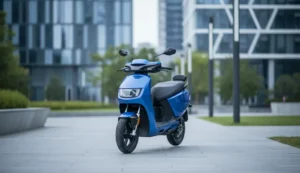
The Vida VX2 is Hero’s mass-market electric scooter, and it’s the easiest removable-battery scooter to recommend because of the ecosystem around it. Hero says it runs over 6,000 fast-charging stations and more than 700 service touchpoints, and that matters more than any spec when you’re choosing a scooter you’ll rely on daily.
There are several versions, and they aren’t all alike:
- VX2 Go 2.2 kWh: one removable pack, 93 km claimed, cheapest way in.
- VX2 Go 3.4 kWh: two removable packs and a bigger underseat compromise (27.2 litres), 146 km claimed.
- VX2 Plus 3.4 kWh: two packs, a front disc brake, a 4.3-inch TFT display and an 80 km/h top speed.
- VX2 Plus 4.4 kWh: two 2.2 kWh packs, 187 km claimed, 90 km/h, and a 1 kW portable charger that takes 0 to 80% in about 3 hours 17 minutes. DC fast charging takes it from 0 to 80% in about 65 minutes.
One warning: Hero also sells a VX2 Go FB 3.1 kWh with a fixed battery, so check that the exact variant you’re being quoted is the removable one.
What’s good
- Both batteries lift out and charge from a normal socket, so no home charging point is needed
- Battery-as-a-Service is available, which lowers the upfront price (Go from Rs 59,490, Plus from Rs 64,990, plus a per-km battery rental)
- Hero says it replaces the battery free on BaaS plans if health drops below 70%
- The 4.4 kWh Plus finally gives a removable scooter a real long-range option
What’s not so good
- Prices vary a lot between sources (the Plus 4.4 kWh shows from Rs 1.44 lakh to Rs 1.51 lakh), so get a written quote
- Real-world range is lower than the claim: expect roughly 95 to 110 km from the 3.4 kWh and about 120 to 140 km from the 4.4 kWh (our estimate at 65 to 75% of IDC)
- Drum brakes at the rear and CBS only on the lower variants
If you’re choosing between this and a newer rival, our Simple Wave vs Vida VX2 comparison is worth reading.
2. Hero Vida V2: the premium one
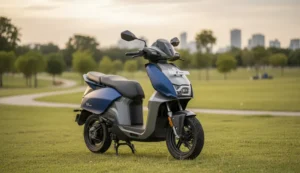
The Vida V2 is the more refined sibling, with a 7-inch TFT touchscreen, cruise control, keyless start and a 26-litre boot even with the batteries fitted. It comes as the V2 Plus (3.44 kWh, 143 km claimed) and V2 Pro (3.94 kWh, 165 km claimed, 90 km/h, 0 to 40 km/h in 2.9 seconds). The entry-level V2 Lite has been dropped from Hero’s website.
The batteries come as two packs (1.72 kWh each on the Plus, 1.97 kWh each on the Pro), which makes each one easier to carry than a single large pack. Charging 0 to 80% takes about 5 hours 15 minutes to 5 hours 55 minutes.
What’s good: the best build quality and feature list of any removable-battery scooter on sale, and the same Hero service network as the VX2.
What’s not so good: it costs more, with current listings at about Rs 1.5 lakh to Rs 1.55 lakh against Rs 1.15 lakh to Rs 1.35 lakh at launch, and real-world range is closer to 100 to 115 km on the Pro. At 124 to 125 kg it’s also heavier than the VX2.
3. Ampere Magnus: the budget LFP choice
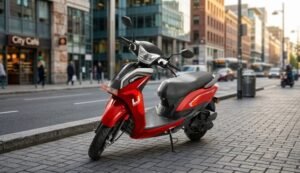
Ampere’s Magnus range is the cheapest credible way to get a removable battery. The line-up now has three versions:
- Magnus Neo: 2.3 kWh LFP, 118 to 125 km claimed, 65 km/h, about Rs 80,000 to Rs 87,000. It replaced the older Magnus EX.
- Magnus Grand: the same battery with a new LCD console, a revised seat and a stronger grab rail, Rs 89,999.
- Magnus G Max: 3 kWh LFP, 142 km certified, with Ampere’s new NxG.io connected platform and OTA updates, about Rs 1.09 lakh to Rs 1.10 lakh.
All use LFP batteries with a 5-year/75,000 km battery warranty, which is the strongest battery cover in this price band. Ampere says real-world range is 80 to 95 km on the Neo and over 100 km on the G Max.
What’s good: low price, LFP chemistry (safer and longer-lived than most), easy charging at home, and a light, easy-to-ride scooter.
What’s not so good: a 65 km/h top speed, drum brakes, a slow 5 to 7.5 hour charge, and basic features on the cheaper versions.
4. BGauss OoWah MAX Plus and Max C12: good range, heavy battery
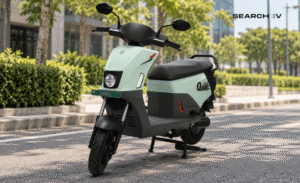
The OoWah MAX Plus (launched 13 August 2026) is BGauss’s youth-focused scooter with a 3 kWh CAN-enabled LFP battery, a 145 km ARAI range and a 60 km/h top speed for Rs 1.23 lakh. The cheaper OoWah EX (2.3 kWh, 105 km) is Rs 94,990. The older Max C12 (2 or 2.7 kWh, up to 123 km, Rs 1.00 lakh to Rs 1.25 lakh) is also removable, and BGauss’ D15 (3.1 kWh, Rs 1.46 lakh to Rs 1.59 lakh) lists a swappable pack too.
The catch is weight. The OoWah MAX Plus battery weighs about 26 kg, and the D15’s two packs are listed at about 32 kg of removable battery, so carrying one upstairs is a real effort. The battery is rated IP67 and BGauss gives a 3-year/50,000 km battery warranty.
What’s good: a big claimed range at a modest price, and an IP67 battery.
What’s not so good: the heavy single pack, a slow 6.5-hour full charge on the standard charger, drum brakes, and a service network that is smaller than Hero’s.
A note on the BGauss C12 MaxR (launched September 2026, Rs 1.46 lakh introductory, 178 km claimed): launch coverage describes its 3.8 kWh pack as fixed, while some listing sites show it as removable. Confirm with BGauss before counting on it.
5. VLF Strada: the newest, and the longest range
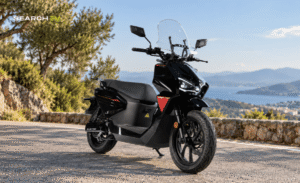
The VLF Strada launched this month (October 2026) and brings the longest range claim of any removable-battery scooter here. VLF is an Italian-heritage brand whose scooters are made in China and sold in India by Motohaus.
- Strada City: one removable 2.16 kWh LFP pack, 130 km claimed, Rs 1.20 lakh
- Strada Max: two removable 2.16 kWh packs (4.32 kWh), 250 km claimed, about Rs 1.55 lakh
Both share a 4.8 kW peak hub motor, an 85 km/h top speed (65 km/h in City mode, 45 km/h in Eco), disc brakes at both ends with CBS, a 5-inch TFT, reverse mode and IP67-rated motor and batteries. At about 98 kg it’s light. VLF says one pack charges from 20 to 100% in about 3 hours and both in about 6 hours.
What’s good: the best range-per-rupee on paper, light weight and two removable LFP packs.
What’s not so good: it’s brand new, so there’s no ownership track record, the dealer and service network is untested, and it’s unclear how it will perform in the real world. We’d wait for reviews before booking the Max.
6. Yamaha Aerox-E: the fast, expensive one
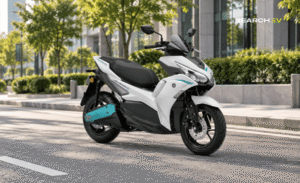
The Aerox-E (launched July 2026, about Rs 2.81 lakh) is the electric version of Yamaha’s sporty Aerox, with two removable 1.5 kWh batteries, a 9.4 kW motor and a 95.5 km/h top speed. Claimed range is 117 km (IDC) and 106 km (ARAI), and reported real-world range is 80 to 100 km. Each pack takes about 3 hours 10 minutes to charge, so about 6 hours 20 minutes for both.
It gets a 5-inch TFT, navigation, ABS and traction control. But it’s the most expensive electric scooter in India, over Rs 1 lakh more than rivals like the Ather 450 Apex, and it’s sold only in select cities through Yamaha Blue Square showrooms. The batteries are Yamaha’s own and don’t follow a shared swap standard. Warranty is 3 years or 30,000 km.
Pick it if performance and the Yamaha badge matter more than range and price.
7. Honda Activa e:: the swap-only scooter
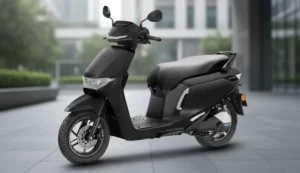
Correction to our earlier version: the Honda Activa e: is not discontinued. It’s still on sale from about Rs 1.20 lakh, but only in select cities, and it can only be charged by swapping at Honda e:Swap stations. There is no home charging.
It uses two removable 1.5 kWh packs for a claimed 102 km. As of August 2026, Honda e:Swap had about 231 stations in Bengaluru, 110 in Delhi and 28 in Mumbai. Honda’s cheaper Lite subscription plan includes 12 free swaps a month (6 full swaps), then charges Rs 180 per extra full swap. One report puts the cost of running it at four to five times more than charging a Vida at home.
Pick it if you live and ride entirely within a station-dense part of Bengaluru, Delhi or Mumbai and want zero charging effort. Skip it if you travel outside those areas or want to charge at home.
Honda’s other electric scooters, the QC1 and the new QC3 (Rs 1.35 lakh, 145 km), have fixed batteries, so they’re not on this list.
8. Bounce Infinity E1: swap-first, but a small network
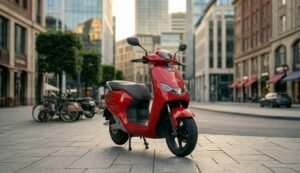
The Bounce Infinity E1 has a 2 kWh IP67 battery and a claimed 85 km range. It can be bought with the battery or without it on a Battery-as-a-Service plan, where you pay per swap. It’s the original swappable-battery retail scooter, but its swap network is small and concentrated in Bengaluru and a handful of other cities, and prices quoted online vary widely (from about Rs 69,000 to Rs 1.18 lakh depending on the source and variant), so confirm directly with Bounce.
Pick it if you live near a Bounce swap station and want a low entry price. Otherwise, a Vida VX2 or Ampere Magnus will be a lower-risk buy.
9. Pure EV ePluto 7G: cheap, with a service caveat
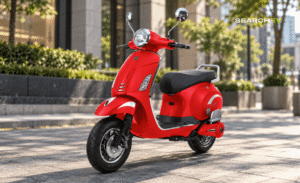
Pure EV’s ePluto 7G family offers portable batteries (2.4 kWh on the base model, 3 kWh on the Pro, 3.5 kWh on the Max) at prices from about Rs 78,000 to Rs 1.15 lakh and a 60 km/h top speed. The Pro lists up to 100 to 150 km depending on riding mode and has a 5-year battery warranty on some versions. Owner reviews on listing sites include complaints about battery faults and slow service, so check the service centre near you and read recent reviews before buying.
What removable batteries really cost you
Boot space. Removable packs eat into storage. The Vida V2’s boot is 26 litres, the VX2 Go 3.4 kWh is 27.2 litres and the Bounce E1 is tiny, so a full-face helmet may not fit.
Weight. Typical swap packs for scooters weigh 10 to 12 kg, but the big single packs on some BGauss models weigh 26 to 32 kg. Two smaller packs (Vida, VLF, Yamaha, Honda) are far easier to carry than one big one.
Price. Removable and BaaS options often cost more upfront than a fixed-battery rival, though BaaS can flip that. Our BaaS guide shows how the per-km maths works, and our guide to electric scooters under Rs 80,000 covers the cheapest options.
Running cost. Charging at home is cheap. At Rs 6 to Rs 8 per unit, a full 4.4 kWh charge costs roughly Rs 26 to Rs 35 (our estimate). Swapping or BaaS subscriptions cost more, so work out your monthly distance before choosing.
Replacement. If you keep the scooter long term, battery replacement can be expensive outside warranty. See our EV battery replacement cost guide for typical figures.
Buying checklist
- Confirm the variant is actually removable. Hero sells fixed-battery versions too, and listing sites sometimes mislabel scooters.
- Ask for the pack weight and try lifting it yourself at the dealer.
- Check the IP rating and battery warranty. IP67 is the figure to look for, and warranties range from 3 years to 5 years/75,000 km.
- Get an on-road quote in writing, because launch prices that included subsidies may have changed.
- Test the charger and charging spot. Make sure you can plug in near where you’ll park or carry the pack.
- Check the service network in your city, especially for newer brands like VLF and BGauss.
- If you want swapping, check how many stations are within your daily route, not just in your city.
For day-to-day habits that protect any battery, read our EV battery maintenance guide and our guide to setting up home charging. If you’re considering a second-hand one, start with our used EV buying guide.
Final verdict
If you want one scooter that does everything well and comes with a proper service and charging network behind it, buy the Hero Vida VX2 Plus, and pick the 4.4 kWh version if you ride more than about 40 km a day. If your budget is below Rs 1 lakh, the Ampere Magnus Neo is the one to beat. If you want to take a punt on a newer brand for the biggest range, keep an eye on the VLF Strada Max, but wait for real-world reviews first. And if you want genuine battery swapping, make sure a station is on your daily route before you consider the Honda Activa e: or Bounce Infinity E1.
FAQs
1. Which electric scooter has the best removable battery in India?
The Hero Vida VX2 Plus 4.4 kWh for most buyers, thanks to its 187 km claimed range, two lightweight packs, a 1 kW charger and Hero’s service and charging network. The Ampere Magnus range is best on a budget.
2. Is a removable battery the same as a swappable battery?
No. A removable battery can be carried indoors to charge. A swappable battery can be exchanged at a station, which needs a network that stocks your exact pack. There’s no common national standard yet, so only Honda and Bounce offer swapping for private scooters.
3. Can I charge a removable battery in my apartment?
Yes. That’s the main benefit. Vida says its packs charge from a standard 15A wall socket, and Ampere, BGauss and VLF packs also charge from a normal outlet.
4. How heavy is a removable scooter battery?
It depends on the design. Scooters with two packs split the weight (each pack is much lighter), while single big packs such as BGauss’s 3 kWh unit weigh about 26 kg and the D15’s removable packs are listed at about 32 kg.
5. Which scooter has the longest range with a removable battery?
The VLF Strada Max claims 250 km (IDC), followed by the Vida VX2 Plus 4.4 kWh at 187 km. Real-world range is typically 65 to 75% of the claimed figure.
6. Do I need a licence for these scooters?
Yes. All of these scooters exceed 25 km/h, so you need a valid driving licence and vehicle registration.
7. Are removable batteries safe in the rain?
Most pack and motor assemblies here are rated IP67 (dust-tight and protected against temporary immersion), including the BGauss, VLF and Bounce batteries. Check the rating on the exact model and avoid leaving open battery contacts exposed.
8 Is the Honda Activa e: discontinued?
No. It’s still on sale in select cities, from about Rs 1.20 lakh, but it can only be charged at Honda e:Swap stations, which exist in Bengaluru, Delhi and Mumbai.
9. Which removable-battery scooter is cheapest?
The Ampere Magnus Neo, from about Rs 79,999 to Rs 86,999, and the Pure EV ePluto 7G, from about Rs 78,000. With BaaS, the Vida VX2 Go can start from Rs 59,490, plus a per-km battery rental.