There was a time when buying an EV under 15 lakh meant you were settling. You’d pick something with a tiny battery, questionable range, and an interior that felt like an afterthought. That time is long gone
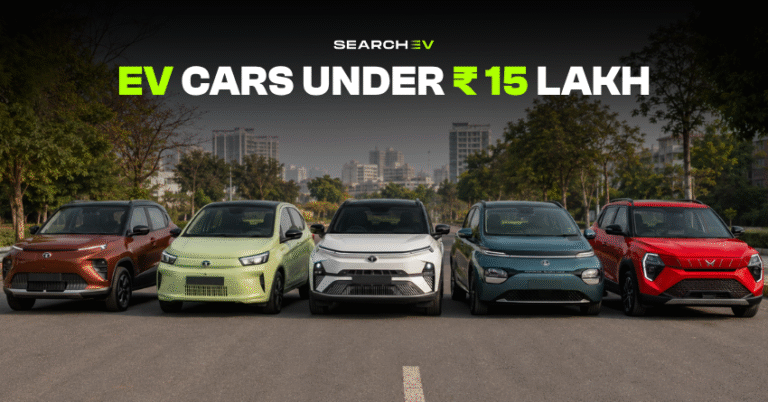
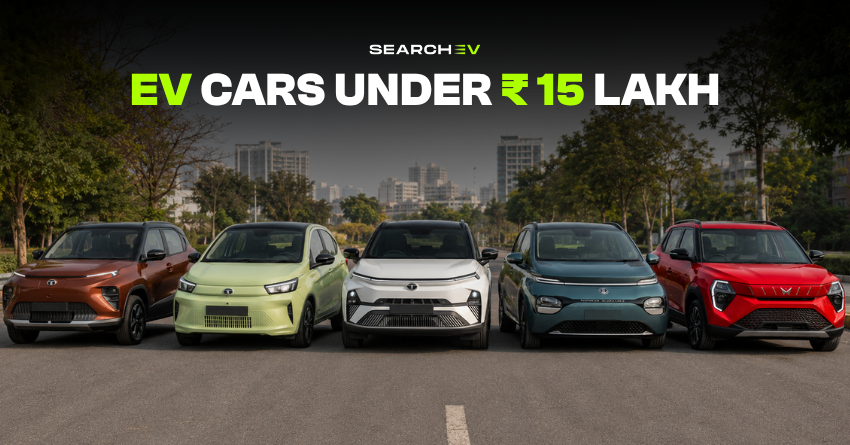
In 2026, the sub-₹ 15 lakh electric car segment has become the most competitive space in the Indian auto market. You’ve got a 5-star safety-rated SUV from Tata starting under 10 lakh, a Mahindra compact SUV with Level 2 ADAS at 13.89 lakh, and an MG crossover with a 15.6-inch screen and ventilated seats at roughly the same price. The problem now isn’t finding a good EV under ₹ 15 lakh — it’s choosing the perfect one between several very good ones.
This guide cuts through the noise. Real prices, honest range numbers, and a clear answer on who should buy what.
What’s Available: The Complete List
Before diving deep, here’s a quick snapshot of every EV car currently available under ₹15 lakh in India as of July 2026:
| Car | Starting Price | Real-World Range | Best For |
| Tata Tiago EV | ₹6.99 lakh | 180–230 km | First-time EV buyers, tight budgets |
| Tata Punch EV | ₹9.69 lakh (₹6.49L BaaS) | 250–300 km | City families wanting SUV + range |
| Citroen eC3 X | ₹9.45 lakh | 220–250 km | No-fuss urban commuters |
| Tata Nexon EV | ₹12.49 lakh | 275–350 km | Buyers wanting the full package |
| MG Windsor EV | ₹14.10 lakh (₹12.04L BaaS) | 330–400 km | Comfort and space as priority |
| Mahindra XUV 3XO EV | ₹13.89 lakh | 260–285 km | Performance and ADAS on a budget |
Prices ex-showroom, Delhi. BaaS = Battery-as-a-Service pricing.
The Real-World Range Question — Stop Trusting the Brochure
Every manufacturer claims impressive range figures. Here’s what actually happens when you’re sitting in Delhi or Bengaluru traffic at 38°C with the AC on full blast:
The Tata Tiago EV (24 kWh long range) delivers around 180–230 km in real-world city use — against a claimed 315 km. That’s still enough for 4–5 days of a typical 40–50 km daily commute without charging.
The Tata Punch EV (40 kWh) comfortably does 250–300 km in mixed conditions. Real-world testing confirms that for a 60–70 km daily Gurugram-Delhi-Gurugram commute, the Punch EV handles 4 to 6 days between charges without needing a public charger.
The Tata Nexon EV (45 kWh) returns around 275–350 km depending on conditions — its 25–30 km real-world advantage over the Punch EV only becomes meaningfully relevant on highway runs above 200 km.
The MG Windsor EV (38 kWh base, 52.9 kWh Pro) surprises on the highway. City range typically sits at 320–370 km, making it the most practical choice if you do occasional intercity drives.
The Mahindra XUV 3XO EV (39.4 kWh) is tuned for city driving — Mahindra themselves say “real-world range of around 285 km”, which is honest and matches what early owners are reporting.
Rule of thumb: Take any claimed ARAI range and apply a 65–70% factor for Indian city conditions with AC. That’s your working range number.
Tata Tiago EV — The Best Electric Entry-level Hatchback
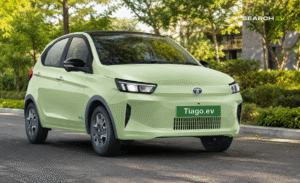
Price: ₹6.99 lakh – ₹9.99 lakh | BaaS from ₹4.69 lakh
If you’ve never owned an EV before, and the ₹10 lakh mark feels like a lot to risk on an unfamiliar technology, the Tata Tiago EV is the answer. It’s Tata’s most affordable electric car, and it carries the same trusted name that’s been selling ICE Tiago hatchbacks to Indian families for years.
The 24 kWh long-range variant is the one worth buying — the 19 kWh base variant is only suitable if your daily run is genuinely under 40 km. The ride quality handles Indian roads better than the segment average, and maintenance costs run close to nothing compared to a petrol hatchback.
What it won’t do: carry five adults comfortably, or get you from Mumbai to Pune on one charge. But for an apartment family with a daily commute under 60 km and a home-charging point, it’s perfect.
Tata Punch EV — Best Family Electric Car
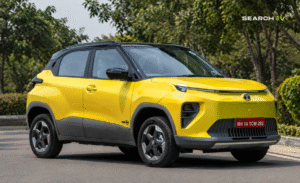
Price: ₹9.69 lakh – ₹12.59 lakh | BaaS from ₹6.49 lakh
The Punch EV 2026 facelift, launched in February 2026, is arguably the most complete product in this entire segment. You get SUV styling, a 5-star Global NCAP safety rating, a frunk (front storage boot — rare at this price), real-world range in the 250–300 km bracket, and a 0–80% DC fast charge in just 26 minutes via a 65 kW charger.
The Smart+ 40 kWh variant at ₹10.89 lakh is the entry point that makes the most sense for most buyers — enough range, enough features, and a lifetime battery warranty from Tata. For first-time EV buyers with a daily commute under 60 km, this is arguably the best first electric car in India under ₹11 lakh in 2026. For a more detailed breakdown of the Tata Punch EV variants, check out our variants explained story.
The BaaS pricing at ₹6.49 lakh makes it price-competitive with midrange petrol hatchbacks, though do the per-kilometre cost math before committing to that route.
Tata Nexon EV — Excellent Value For Money
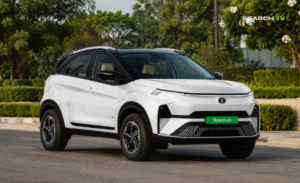
Price: ₹12.49 lakh – ₹14.14 lakh (under-15L variants)
The Nexon EV has been India’s best-selling electric car for over three years, and the 2026 iteration makes it harder to argue against than ever. You get a larger 45 kWh battery, a 12.3-inch touchscreen, a digital driver’s display, Vehicle-to-Load (V2L) charging that lets you power appliances from the car, and the confidence of Tata’s proven EV ownership network.
The only thing that holds it back in this bracket: its top variants with ADAS now breach ₹17 lakh, so if you want that technology, you’re stretching past 15. The entry-level Nexon EV at ₹12.49 lakh still gives you the core package — 45 kWh battery, 5-star safety, and Tata’s service backbone — which is a strong deal.
For buyers doing 70+ km daily or wanting extra headroom for weekend highway runs, the Nexon EV is the right step up from the Punch EV. Also, Tata is offering benefits of up to Rs 50,000 on the Nexon EV in July 2026. Check out all the latest Tata electric car offers here.
MG Windsor EV — The Space and Comfort King
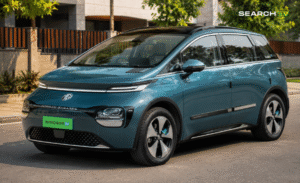
Price: ₹14.10 lakh (BaaS) – ₹16.30 lakh outright
The Windsor EV is not a typical compact car. It’s a crossover with rear-seat legroom that rivals cars costing significantly more, ventilated front seats, a 15.6-inch touchscreen, an Infinity-tuned sound system, and a BaaS model that MG pioneered in India, where you pay ₹3.5 per km for battery usage instead of owning it outright.
Real-world range on the 38 kWh base variant sits comfortably in the 330–400 km bracket — better than the Nexon EV in most conditions. If you need a car that comfortably carries five adults on longer drives without range anxiety, this is the one.
At ₹14.10 lakh (BaaS entry price), it just fits under the 15 lakh ceiling — but factor in the per-km cost if you drive more than 1,500 km a month, because the economics shift against BaaS at higher mileage.
Mahindra XUV 3XO EV — The Performance Surprise
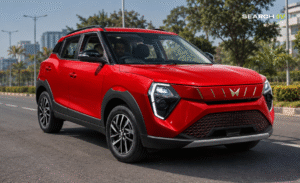
Price: ₹13.89 lakh – ₹14.96 lakh
Launched in January 2026, the XUV 3XO EV is the newest entrant in this segment and brings something none of the others do at this price: Level 2 ADAS as standard on both variants. That means Lane Keep Assist, Auto Emergency Braking, and a 360-degree camera — technology you’d typically pay ₹18–20 lakh for in a non-EV.
The 39.4 kWh battery and 310 Nm of torque make it the quickest car in this segment (0–100 in 8.3 seconds), and it also has the highest ground clearance of the pack — useful on broken Indian roads. Real-world range settles around 260–285 km, which is honest for the battery size.
The catch: the 7.2 kW home charger costs an extra ₹50,000 on top — something that should ideally have been included at this price point. Worth noting before you finalize on-road cost.
Who Should Buy What
- ₹7–10 lakh budget, first EV, city commute under 60 km: Tata Tiago EV (24 kWh) is all you need. Don’t overthink it.
- ₹10–12 lakh, wants an SUV, plans to use it for 5+ years: Tata Punch EV Smart+ 40 kWh. Strongest overall value in the segment.
- ₹12–14 lakh, daily run above 70 km or frequent highway use: Tata Nexon EV. Proven platform, longest service network, best long-term ownership confidence.
- ₹14 lakh range, family car with rear- seat priority and comfort features: MG Windsor EV on BaaS if you drive under 1,200 km/month, outright if you drive more.
- ₹14 lakh range, want performance and ADAS, don’t mind shorter range: Mahindra XUV 3XO EV AX5. Best in segment for safety technology and driving feel.
Things Nobody Tells You Before Buying
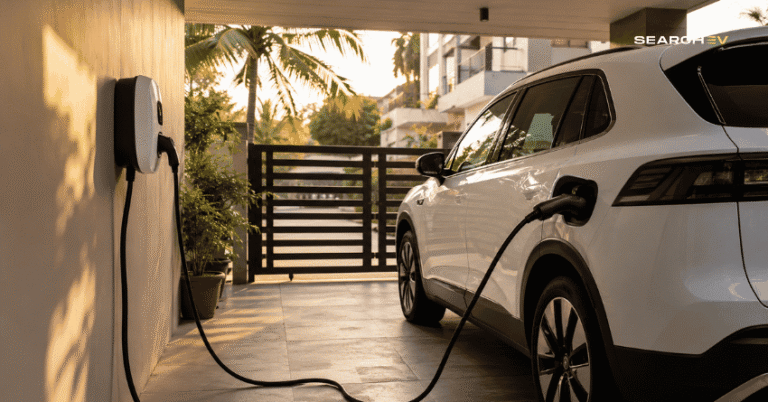
Charging at home changes everything. If you have a dedicated parking spot and can get a charging point installed (cost: ₹8,000–₹15,000 typically), your running cost drops to roughly ₹1–1.5 per km. Without home charging, EV ownership becomes inconvenient fast.
BaaS isn’t always cheaper in the long run. The lower sticker price is attractive, but at ₹3.5 per km, a buyer doing 1,500 km a month pays ₹5,250 monthly for battery usage alone — that’s ₹63,000 a year, every year. Run the numbers for your usage before choosing this model.
Service networks matter more than you think. Tata has the deepest EV service network in India by a significant margin. MG and Mahindra have been expanding, but if you’re in a Tier 2 city, verify the nearest authorised centre before committing to a brand.
Real-world range varies by season. Expect 10–15% range reduction in peak summer (April–June) due to battery thermal management and AC load. Factor this into your “can I get through the week on one charge” calculation.
What We Think
The EV cars under the ₹Rs 15 lakh segment in 2026 are genuinely competitive in a way they weren’t even two years ago. Tata still dominates in terms of volume, trust, and service backbone. MG wins on space and comfort. Mahindra wins on performance and ADAS. And the BaaS model — from both MG and Tata — has lowered the entry barrier further than most people realise.
Pick based on your actual daily km, your charging situation at home, and the city you live in. Those three factors will narrow the list to one right answer faster than any spec sheet comparison ever will.