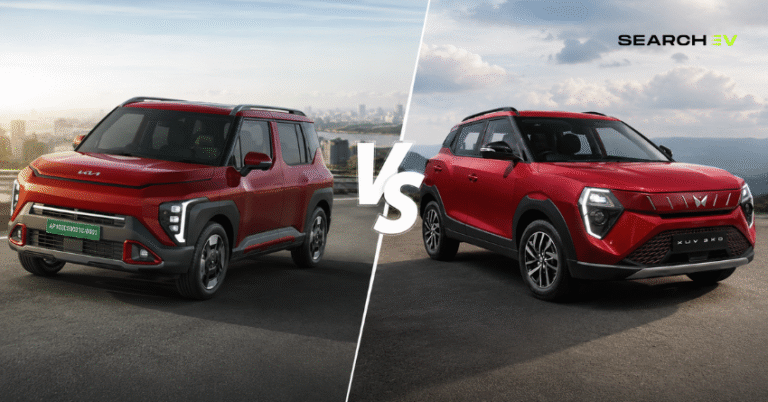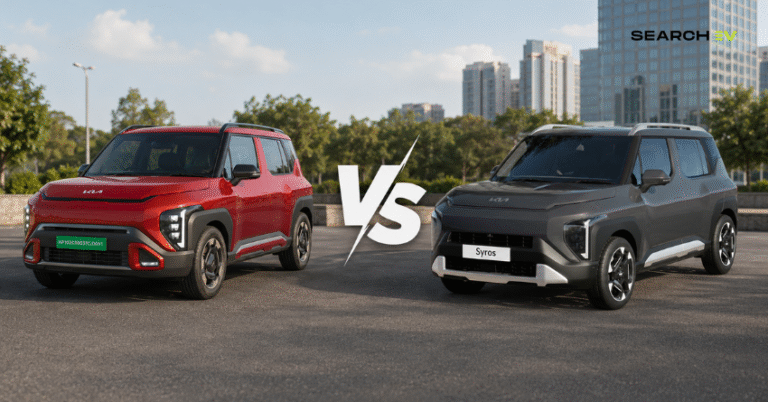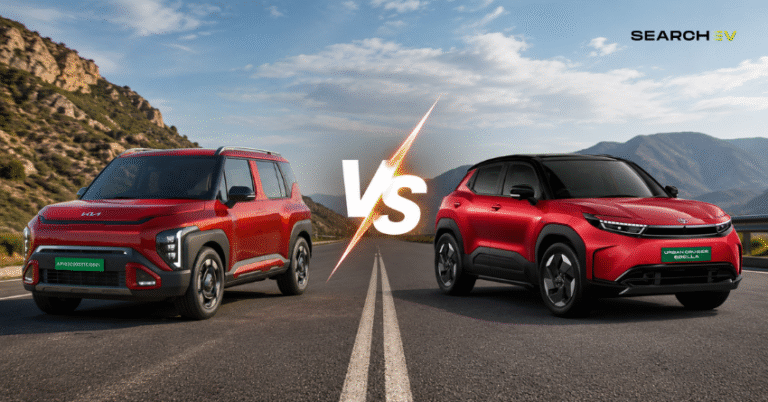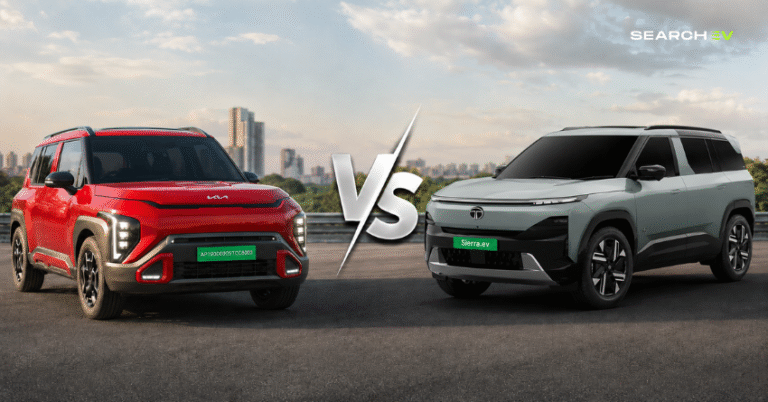
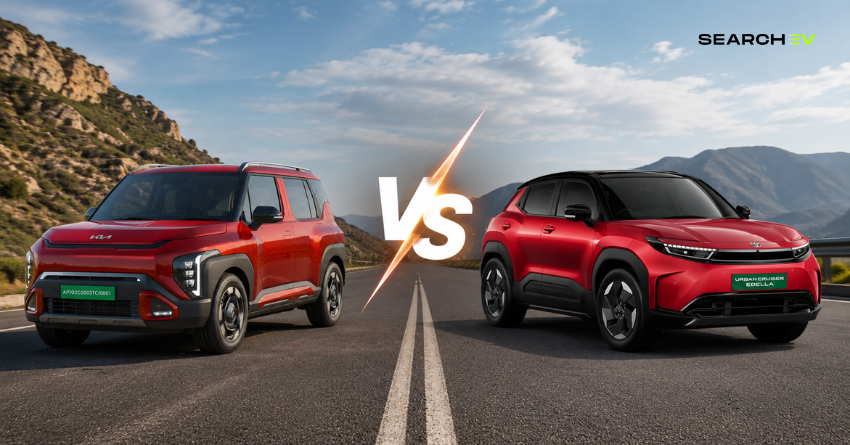
The Indian electric SUV market is scaling up, featuring distinctive sub-segment vehicles. On one end sits the latest Kia Syros EV designed on a sub-compact SUV architecture, leading with segment-best space and advanced feature integrations. On the other end sits the Toyota Urban Cruiser Ebella – a larger mid-size electric SUV developed on a high-performance EV architecture. While both these vehicles are impressive, choosing one can be difficult. So, let’s compare them:
Kia Syros EV vs Toyota Urban Cruiser Ebella | Exterior Design:
Let’s quickly compare the design attributes which make these two SUVs stand unique in their segments:
The Kia Syros EV | Futuristic Tall-Boy:
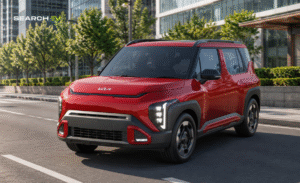
The Kia Syros EV is designed with a boxy design architecture, featuring an upright silhouette and advanced elements for an aesthetically appealing presence. Moreover, the following are the precise design attributes that provide this compact SUV with a strong and contemporary appeal:
The Fascia: The Kia Syros EV is built around a contoured design language, featuring boxy proportions without compromising on styling elements. For the same, it features a muscular, anchored bonnet line with a body-coloured proportion and fixed grille louvres for aerodynamic efficiency; these offer a more rugged appearance too. The vertical 3-pod headlight styling also offers the Syros EV a contemporary appeal. The lower black bumper design is an attribute of the same.
The Side Profile: The Syros EV from Kia gets a clean and seamless side profile, featuring flush door handles integrated into the side panelling and pillar-mounted door handles; these resonate with the Kia Syros EV’s modern but subtle design language. The addition of tall roof rails and a 17-inch aerodynamically efficient alloy design is an ode to the tiger-inspired upright design attributes.
The Rear Section: At the rear, the Syros EV’s most appealing point of view is the L-shaped integrated LED taillights, which seamlessly blend into the window architecture and hug the rear pillars for a smoother flow of design. This unmistakable element adds to its aesthetic appeal. Further, the rear portion of the bumper is aggressively designed to keep it close to a larger SUV-like appeal.
Toyota Urban Cruiser Ebella | Sleek And Premium:
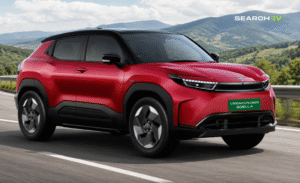
The Toyota Urban Cruiser Ebella has a much more sleek and seamless design language, with multiple elements incorporated that shout, from all angles, premium appeal. The Urban Cruiser Ebella also carries the classic mid-sized SUV proportions for a more aggressive stance. Moreover, the information below explains neatly what makes the Urban Cruiser Ebella a truly distinctive SUV:
The Fascia: Right off the bat, the Urban Cruiser Ebella from Toyota looks premium and aggressive, with the LED headlight incorporation that sets the tone for other elements and their integrations. This follows the butch-looking bonnet, which is angled perfectly to look rugged. Also, the bumper uses more body-coloured portions that fundamentally provide the SUV with a top-notch appeal. The textured skid-plate-like element in the bottom section of the bumper is also a neat touch.
The Side Profile: With broader shoulders and heavy use of angular body cladding, it dictates the rest of the side profile in terms of offering an aggressive appearance. The large 18-inch aerodynamic alloy wheel fitment also complements the aggressive posturing of the Urban Cruiser Ebella; it also offers sufficient ground clearance. Meanwhile, the C-pillar door handles are a trend followed.
The Rear Section: The rear portion boasts a clean line of LED lighting strips, a trend that comes with the new age of SUVs in India. Nevertheless, the ultra-modern integrations of LED taillight configuration, the aggressive roof spoiler hugging the windscreen with vertical elements, and chunky rear bumpers set the tone of a bold and muscular SUV that resonates with the people.
Kia Syros EV vs Toyota Urban Cruiser Ebella | Cabin Design:
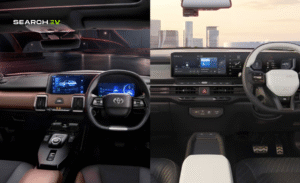
Now that we have explored the design attributes that make these SUVs stand out from the rest, let’s also delve into the information regarding the cabin space and feature integrations:
| Cabin Feature Highlights | |
| Kia Syros EV Features | Toyota Urban Cruiser Ebella Features |
| 31.24 m HD Touchscreen Navigation Cockpit With Harman Kardon Premium 8 Speakers Sound System | 10. 1″ Multimedia Screen With 4 Speakers, Tweeters, SubWoofer, IP Speaker And JBL Premium Audio |
| ADAS Level 2 With 16 Autonomous Features | ADAS Level 2 With 360-Degree Camera |
| Front Ventilated Seats | Front Ventilated Seats |
| Leatherette Wrapped Side Door Trims And Armrest | Fabric syn. Leather + fabric |
| Wireless Phone Charger | Wireless Phone Charger |
| Front Parking Sensors (4 Units) | Electronic Parking Brake |
| V2L – Vehicle to Load (Internal Fitment) | Acoustic Vehicle Alerting System |
| Shift-by-Wire (Column Type) Gear Selector | Battery Protection Frame |
| Dual Pane Panoramic Sunroof | Fixed Panoramic Glassroof |
The Kia Syros EV Cabin: Despite the compact length, the Kia Syros EV, featuring tall and wide dimensions, offers sufficient in-cabin space to seat occupants comfortably. The rear row, with reclining and sliding seats, is a neat touch for that tad bit more space to sit comfortably. The dimensions of the vehicle also provide sufficient headroom and legroom for occupants.
The Toyota Urban Cruiser Ebella Cabin: The Urban Cruiser Ebella electric SUV from Toyota comes with a more plush cabin than that of the Kia Syros EV, with textured material usage for premium appeal. The seats also feature a 40:20:40 split folding function for more luggage space. However, since it features an underbody battery pack housing, rear-seat occupants will experience a slightly higher positioning of the knees due to a higher floor, which is uncomfortable for longer trips.
Kia Syros EV vs Toyota Urban Cruiser Ebella Specifications Comparison:
| Performance Criteria | Kia Syros EV | Toyota Urban Cruiser Ebella | ||
| Battery Options | 51.4 kWh | 42kWh | 61 kWh | |
| Power | 126 kW | 99 kW | 128 kW | |
| Torque | 255 Nm | 193 Nm | ||
| Certified Driving Range | 526 Km | 443 Km | 543 Km | |
| AC Fast Charging (10-100 %) | 4 Hours And 50 Minutes | 4 Hours | __ | |
| DC Fast Charging (10-80%) | 39 Minutes | 45 Minutes | ||
The Driving Characteristics:
From the above table, you may have got the idea of the performance capacities of the vehicle; here’s more information on the two vehicles’ driving dynamics for making the right choice:
- The Kia Syros EV: The vehicle delivers a punchy 255 Nm torque output for tackling steep routes seamlessly without the feeling of inadequacy of power and torque delivery. With similar power output (with the 51.4 kWh variant), only slightly lower than the Urban Cruiser Ebella, the Kia SUV delivers adequate highway operating performance and city driving efficiency.
- The Toyota Urban Cruiser Ebella: Driven by an effective front-wheel motor and drivetrain, the Urban Cruiser Ebella can seamlessly accelerate (ensuring linear acceleration) for overtaking other vehicles quickly and for a refined city driving experience. With a higher-capacity battery pack, the Urban Cruiser Ebella offers more range than the Syros EV.
Overall, the Kia Syros EV has an advantage if primary use cases involve driving across urban environments seamlessly. Equipped with top-notch features such as level-2 ADAS, the Syros EV is also designed to enhance safety. That said, the Toyota Urban Cruiser Ebella is not a stranger to safety features; it too boasts level 2 ADAS for enhancing its safety profile. Confused now as to which SUV you need exactly for your unique requirements? The following can come in handy:
The Verdict | Which To Choose In 2026?
Choose The Kia Syros EV If: You are looking for a compact SUV with more legroom and headroom to seat occupants comfortably; you need a top-notch feature package that is appealing, and you need faster DC charging speeds to maximise uptime. The Syros EV, with a large boot space of 465 litres, is also perfect for you if you prefer carrying more luggage on occasional longer trips across cities.
Choose The Toyota Urban Cruiser Ebella If: You are looking to step into the larger mid-size SUV segment, seeking plush and premium feature integrations, need Toyota’s signature design, and want a high-range battery pack for seamless highway-based long-distance trips. Backed by an extensive service network, Toyota will also provide you with faster service and a seamless experience. With a price tag of Rs 23.60 Lakh (ex-showroom), this vehicle sits well with these needs.