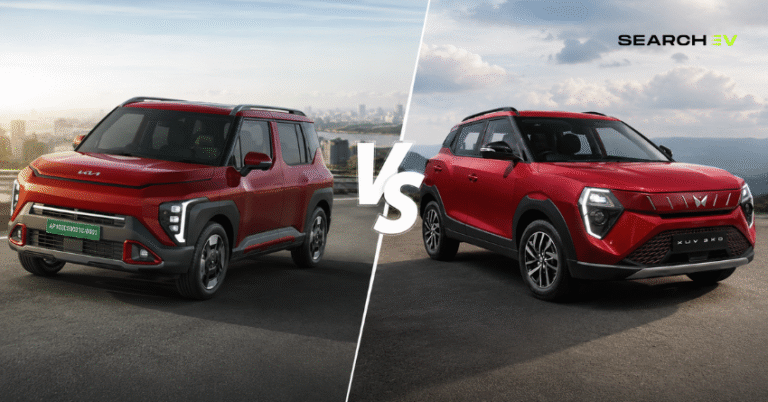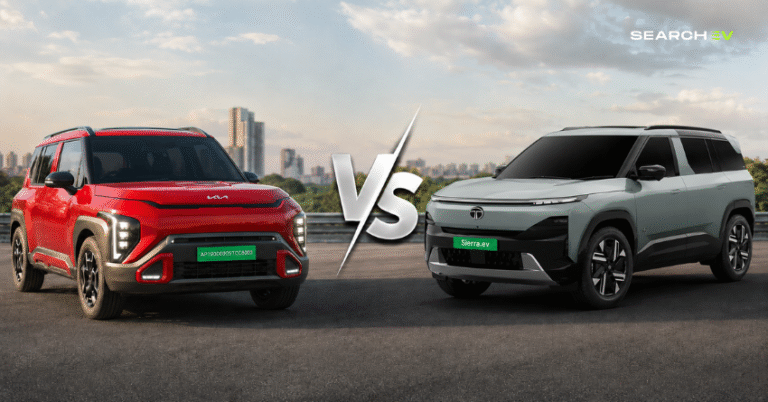
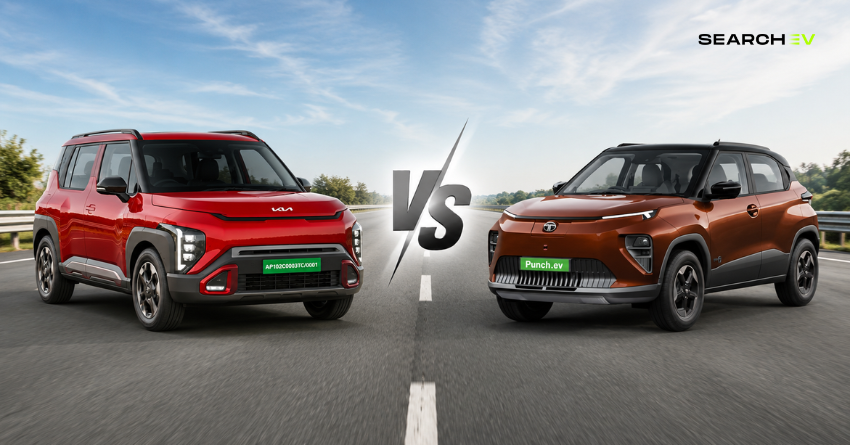
The compact electric SUV segment is rapidly evolving, featuring new-age platform architectures that deliver high-end technological advantage and top-notch powertrain performance. The latest Kia Syros EV is such a car that brings forth bold new design architecture, larger battery options and high-end features. Meanwhile, the Tata Punch EV is another such car that features high-end tech in a micro-SUV footprint. But which is better? Let’s stack them against each other for an answer:
Kia Syros EV vs Tata Punch EV: Exterior Design Comparison:
Let’s start with the comparison of design attributes of both these vehicles to understand what makes them distinctive compact SUVs in India:
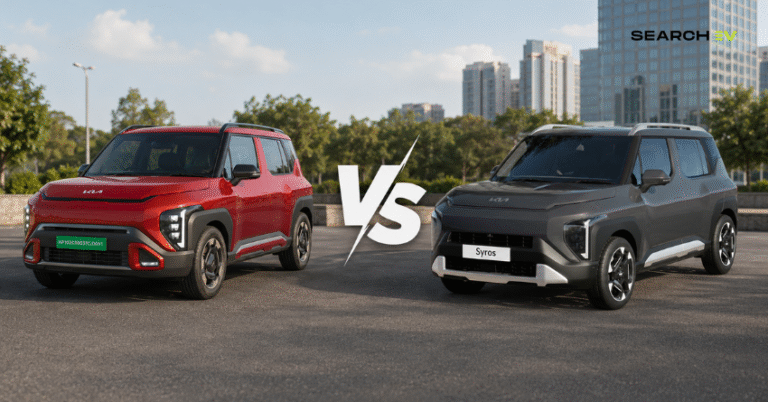
Kia Syros EV: Bold And Futuristic
Kia has taken a practical route, featuring an SUV-style upright silhouette, a tall-boy profile with contoured body elements, and a radically better cabin space. The following design configurations support the fundamental characterisation that offers it a bold, spacious and modern appeal:
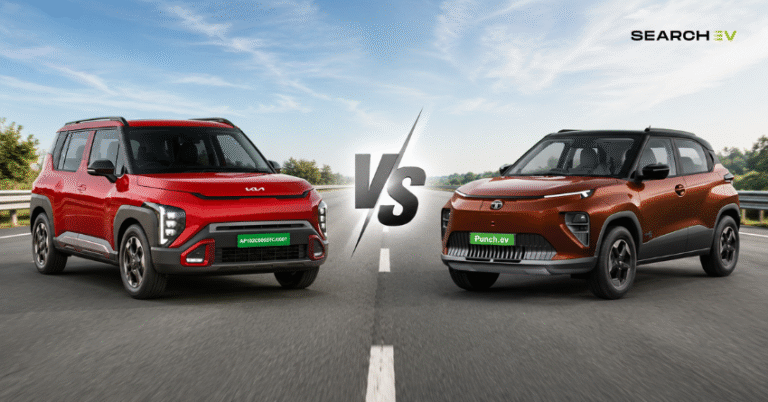
The Fascia: For the practical appeal of an SUV, the fascia features contemporary styling elements. This includes the fitment of vertical star map lighting headlight configurations, which complement the signature Tiger-face inspired design mapping; it boasts a sharpened bonnet line and blackened cladding on the bumper section, with a lower grille for aerodynamic efficiency. It most definitely lends the attributes of a wild tiger – elements that provide tough SUV styling.
The Side Profile: Characterised by the flush door handles on the sides, a B-pillar integrated door handle design and 17-inch aerodynamic alloy wheels, the Kia Syros EV looks to feature bigger SUV-like appeal but in a footprint of a compact SUV. The shark-fin antenna and panoramic sunroof also give the vehicle a premium design characterisation that customers are fond of.
The Rear Section: The high-mounted pillar-integrated L-shaped taillights are the major aesthetic appeal of the Syros EV in 2026, which is strikingly better than most compact SUVs in the market. The vertical lighting element towards the bottom section of the bumper with a multi-line design also gives the 2026 Kia Syros EV a more modern but unique design attribute in the compact SUV realm.
Tata Punch EV: Bold And Familiar
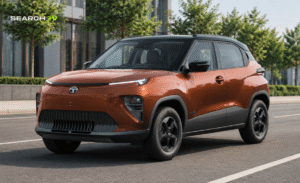
The 2026 Tata Punch EV stays true to the SUV design with attributes integrated from the larger sibling, the Nexon EV; it gives the vehicle a much more modern yet butch appearance. Nevertheless, the Punch EV has its own distinctive attributions which make it unique in the compact SUV or micro-SUV segment that is popularised by Tata Motors for the most part:
The Fascia: The contoured design language is well accentuated, featuring an end-to-end LED (DRL) daytime running light which gives it a sleek appearance. The split headlights featuring a pod-like design seemingly improve the muscular characteristics of the Punch EV. The minimal use of and well-textured cladding on the lower portion of the front bumper is a neat touch for appeal.
The Side Profile: While being shorter in length than the Kia Syros EV, the Punch EV retains a bold SUV stance with a bulky profile; the vehicle measures 3,880 mm vs the 3,995 mm size of the Syros EV. The chunky profile of the Punch EV provides it with a more structurally neat construction for a larger SUV appeal. The prominent body cladding on the sides provides it with a rugged stance too.
The Rear Portion: At first glance, the rear section seems busy with design integration; it actually gives a muscular and rugged appearance found on an off-road-capable SUV. This is said because the bumper section is mostly cladding incorporated, featuring a balanced proportion of silver elements that mimics a skid plate, and a largely angled structure, with red reflectors neatly placed. The connected LED taillights are the cherry on top, which gives the Punch EV a modern appeal.
Kia Syros EV vs Tata Punch EV | Cabin Layout | Features:
Now that we have delved into the exterior design attributes in the aforementioned section, let’s also dive deep into the interior design of the Kia Syros EV and Tata Punch EV to understand which is better:
| Cabin Feature Highlights | |
| Kia Syros EV Features | Tata Punch EV Features |
| 31.24 m HD Touchscreen Navigation Cockpit With Harman Kardon Premium 8 Speakers Sound System | 26.03 cm HD Infotainment By Harmam |
| ADAS Level 2 With 16 Autonomous Features | 360° Surround View Camera System |
| Front Ventilated Seats | Front Ventilated Seats |
| Leatherette Wrapped Side Door Trims And Armrest | Leatherette Seats |
| Wireless Phone Charger | Wireless Smartphone Charger |
| Front Parking Sensors (4 Units) | Front LED Fog Lamps With Cornering Function |
| V2L – Vehicle to Load (Internal Fitment) | USB Type ‑ A And C Fast Charging Port (65W) Rear USB Type – C Fast Charging Port (15W) |
| Shift-by-Wire (Column Type) Gear Selector | 2 Drive Modes – City and Sport |
| Dual Pane Panoramic Sunroof | Voice-Assisted Electric Single Pane Sunroof |
The Kia Syros EV Cabin: Thanks to the 1805 mm wide Kia Syros EV layout vs the 1742 mm wide measurement of the Tata Punch EV, the Syros EV can seat occupants more comfortably. In fact, the Syros EV offers more legroom and headroom for occupants, which is segment-leading too. The Syros EV also gets sliding and reclining rear seats for a tad bit of seating space advantage.
The Tata Punch EV Cabin: Meanwhile, the Tata Punch EV gets a well-appointed cabin space for comfort and convenience. The dashboard design is top-notch, featuring a futuristic two-spoke steering wheel and an illuminated logo too. The front seats are also ventilated and wider which makes seating two adults comfortable.
Kia Syros EV vs Tata Punch EV | Spec Sheet Overview:
| Performance Criteria | Kia Syros EV | Tata Punch EV | ||
| Battery Options | 51.4 kWh | 42kWh | 30 kWh | 40 kWh |
| Power | 126 kW | 99 kW | 65 kW | 95 kW |
| Torque | 255 Nm | 154 Nm | ||
| Certified Driving Range | 526 Km | 443 Km | 365-375 Km | 468 Km |
| AC Fast Charging (10-100 %) | 4 Hours And 50 Minutes | 4 Hours | 4 Hours And 30 Minutes | 5 Hours And 18 Minutes |
| DC Fast Charging (10-80%) | 39 Minutes | 30 Min | ||
The Driving Dynamics:
From the above table in this discussion, the following can be considered as the unique performance dynamics the Kia Syros EV and Tata Punch EV offer customers in India:
- The Kia Syros EV: With a powerful electric powertrain delivering a maximum of 126 kW and 255 Nm torque, the Syros EV is designed to tackle high-speed operations seamlessly. This power advantage makes the Syros EV ideal for city driving conditions as well.
- The Tata Punch EV: Featuring dynamic handling performance with a communicative steering system, supported by a sufficiently powerful EV powertrain, the Punch EV is ideal for taking tight turns and navigating highway routes seamlessly.
In terms of vehicle range performance, both the Syros EV and Punch EV offer top-notch range output, but the Kia Syros EV offers a better certified driving range than the Tata Punch EV. Nevertheless, featuring a slightly lower-capacity battery pack, the Punch EV’s recharging turnaround times are much better than the Syros EV’s (under DC charging conditions).
The Verdict | Which To Choose In 2026?
Choose The Kia Syros EV In 2026 If: You prioritise maximum rear row seating space, high ground clearance, better highway driving range and segment-best tech integrations. The Syros EV is truly a high-performance compact SUV for India, designed to suit customers’ performance requirements, while not compromising on ride comfort and feature integrations.
Choose The Punch EV In 2026 If: You want a compact and easy-to-park vehicle for urban conditions, with zippy accelerating performance and sufficient driving range output. With a price tag starting from Rs 9.69 Lakh (ex-showroom), the Punch EV is a much more affordable compact SUV.