Key Takeaways
- Pricing Advantage: The Sierra EV undercuts the Mahindra XEV 9e at the lower end, starting at Rs 18.79 lakh with a larger base battery pack.
- Drivetrain Choices: Tata offers a dual-motor Quad-Wheel Drive (QWD) option for those looking to head off-road, while the XEV 9e stays rear-wheel drive only.
- Real-World Ranges: Backed by 63 kWh and 75 kWh battery options, the Sierra EV delivers an estimated real-world range of up to 500 km, matching up well with Mahindra’s 59 kWh and 79 kWh options.
Tata Sierra EV vs Mahindra XEV 9e: Price and Value Comparison
The Sierra EV holds a notable price advantage at the entry-level, making a large-battery premium electric SUV much more accessible.
With the pricing officially announced and bookings open, Tata has positioned the Sierra EV aggressively. Deliveries are scheduled to begin on July 15, 2026. Instead of the usual Harrier-derived trims, the Sierra introduces an accessible entry point with its Pure and Pure S lines, moving up to the feature-heavy Adventure and Empowered variants.
Ex-Showroom Variant Price Breakdown
| Trim Level / Variant | Tata Sierra EV Price | Trim Level / Variant | Mahindra XEV 9e Price |
| Pure (63 kWh) | Rs 18.79 Lakh | Pack One (59 kWh) | Rs 21.90 Lakh |
| Pure S (63 kWh) | Rs 19.99 Lakh | Pack Two (59 kWh) | Rs 24.90 Lakh |
| Adventure (63 kWh) | Rs 20.99 Lakh | NA | N/A |
| Adventure (75 kWh) | Rs 22.19 Lakh | Pack Two (79 kWh) | Rs 26.50 Lakh |
| Empowered (63 kWh) | Rs 22.79 Lakh | NA | N/A |
| Empowered (75 kWh) | Rs 23.79 Lakh | NA | N/A |
| Empowered A (75 kWh) | Rs 24.79 Lakh | Pack Three (79 kWh) | Rs 30.50 Lakh |
| Empowered A with QWD (75 kWh) | Rs 25.99 Lakh | NA | NA |
The base Sierra EV Pure gives you a 63 kWh battery pack for Rs 18.79 lakh, which undercuts the base 59 kWh Mahindra XEV 9e by over Rs 3 lakh. Even at the absolute top end, the fully loaded Empowered A with QWD sits at Rs 25.99 lakh, making it highly competitive against Mahindra’s top-tier variants.
Road Presence, Dimensions, and Practicality Comparison
The XEV 9e occupies a larger physical footprint on the road, but the Sierra EV counters with its iconic tall stance and excellent cabin headroom.
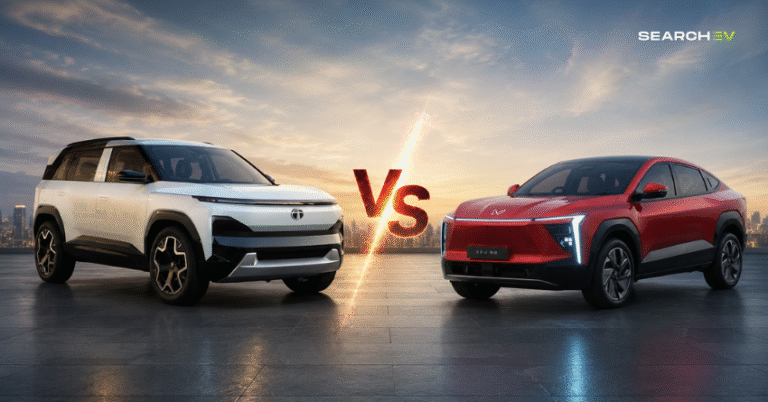
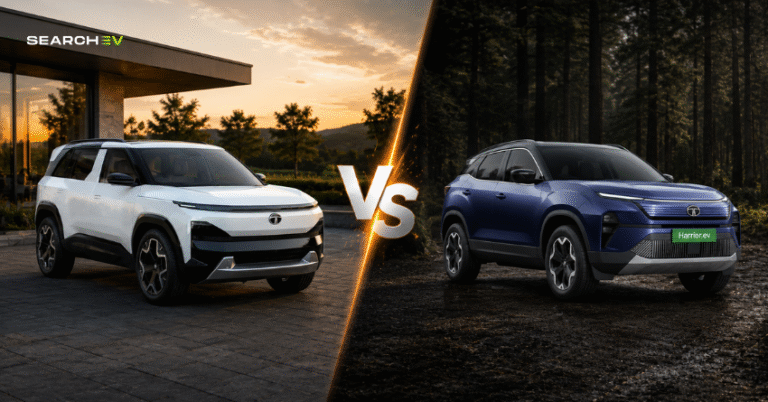
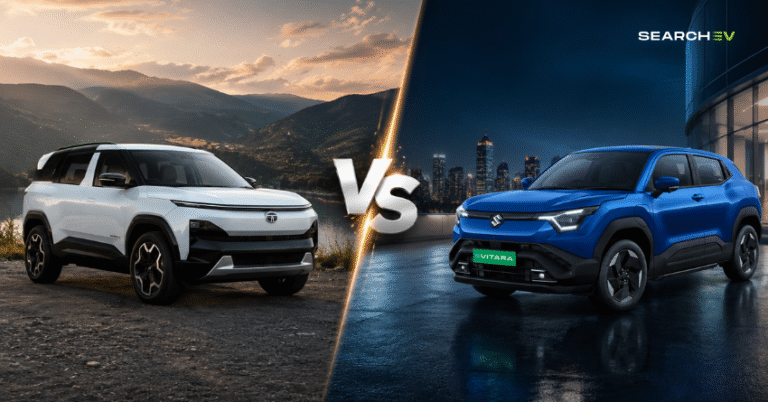
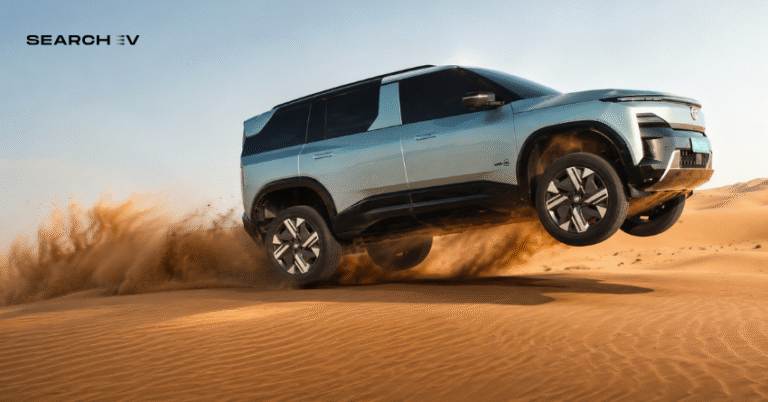
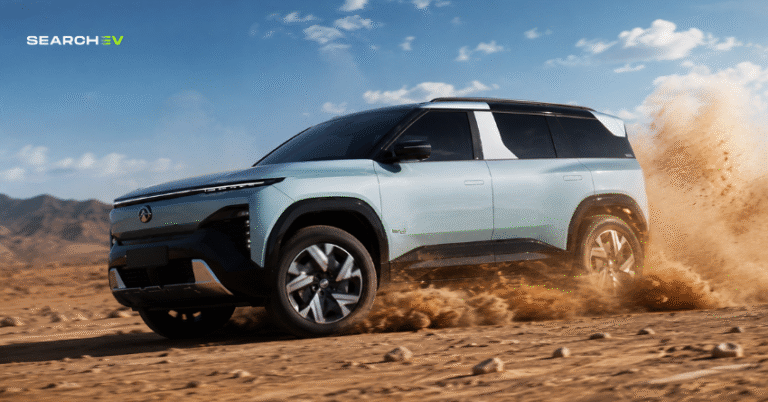
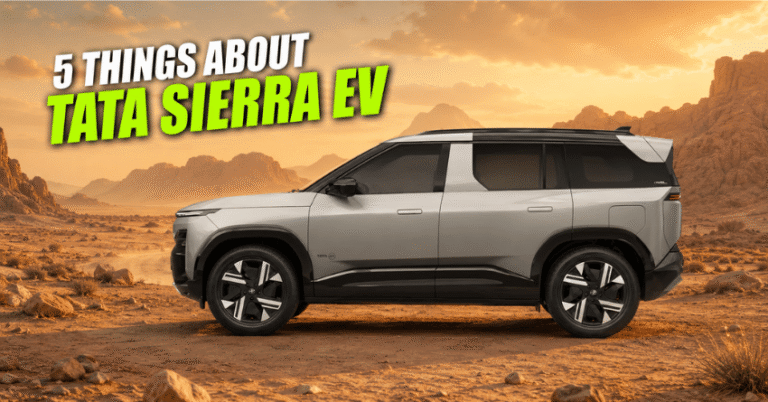
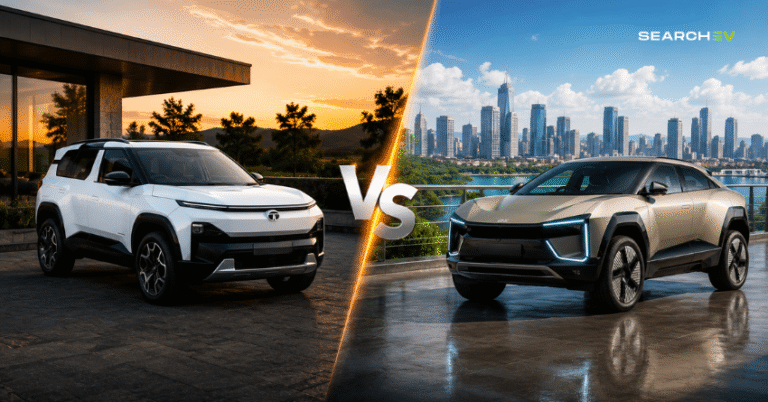
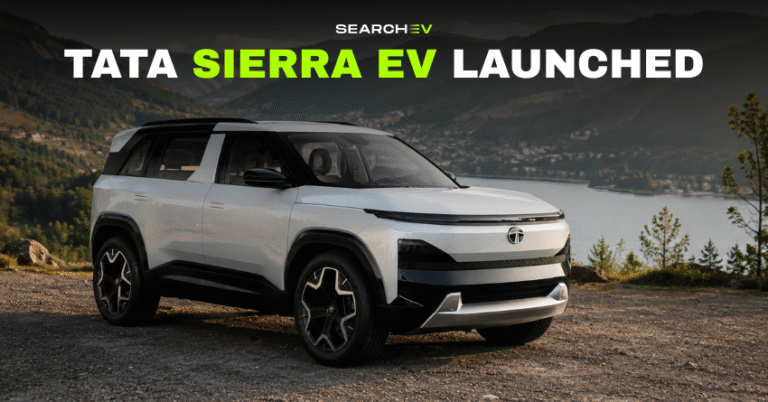
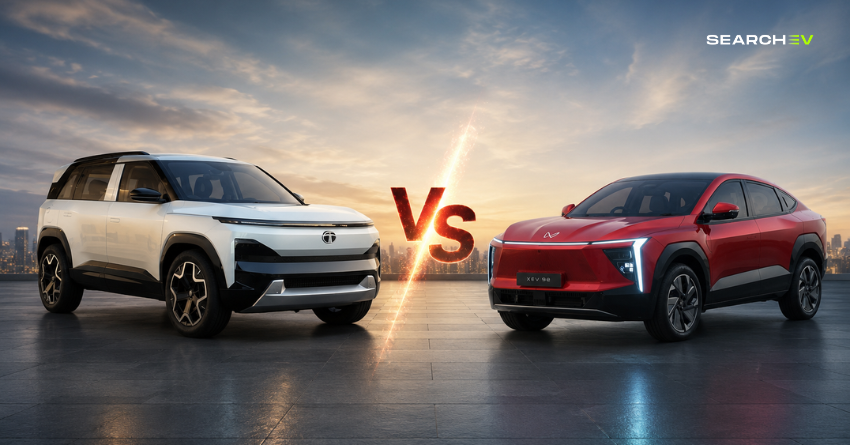
The visual differences between these two are clear. The Sierra EV embraces a clean heritage silhouette featuring a tall stance, a distinct flat clamshell tailgate, flush door handles, and large panoramic rear windows that wrap seamlessly over the sides. The front gets a unique face with connected LED DRLs that feature an elegant welcome and goodbye lighting sequence.
The Mahindra XEV 9e chooses a longer, broader coupe-crossover profile that emphasises sleek, futuristic aerodynamics.
Physical Footprint and Space
| Dimension / Capacity | Tata Sierra EV | Mahindra XEV 9e |
| Overall Length | 4,340 mm | 4,789 mm |
| Overall Width | 1,841 mm | 1,907 mm |
| Overall Height | 1,750 mm | 1,694 mm |
| Wheelbase | 2,730 mm | 2,775 mm |
| Alloy Wheel Size | 19-inch | 19-inch |
| Luggage Boot Space | 622 litres | 663 Litres |
While the XEV 9e offers a significantly larger boot and a longer wheelbase, the Sierra EV is easier to manoeuvre and park in daily urban traffic due to its shorter length. Furthermore, its upright roof ensures that rear passengers get plenty of headroom, avoiding the slightly sloped rear ceiling of the coupe-styled Mahindra.
Tata Sierra EV vs Mahindra XEV 9e: Which EV Offers More Features?
Both cabins drop physical buttons for screen layouts, but the Sierra EV introduces a deeper suite of daily lifestyle and view-assist features.
Tata and Mahindra have packed these vehicles with top-tier technology. The Sierra EV standardises a 12-inch central infotainment screen with wireless Apple CarPlay and Android Auto, along with a 10-inch digital instrument cluster right from its base variant.
Comfort and Technology Summary
| Feature Category | Tata Sierra EV | Mahindra XEV 9e |
| Infotainment Screen | 12.3-inch Touchscreen | 12.3-inch Touchscreen |
| Instrument Cluster | 10.25-inch Cluster | 12.3-inch Display |
| Co-Passenger Display | 12.3-inch Dedicated Screen | 12.3-inch screens |
| Panoramic Sunroof | Yes | Yes |
| Connected Car Tech | Yes | Yes |
| In-Car Entertainment | Arcade.ev (30+ Apps) | OTT App Integration |
| Climate Control | Dual-Zone Automatic | Dual-Zone Automatic |
| Driving Safety | ADAS Level 2+ | ADAS Level 2+ |
Unique Highlights of the Tata Sierra EV:
- DrivePay System: A smart voice-activated feature that allows the driver to pay tolls, manage FASTags, complete vehicle charging payments, or even order a coffee while on the move.
- Clear View Assist: Part of the 540-degree camera system that digitally removes the vehicle on screen, allowing drivers to see obstacles directly beneath the floorboard.
Unique Highlights of the Mahindra XEV 9E:
- State-of-the-Art Sound System: 16-speaker, 1400 W Harman Kardon sound system with Dolby Atmos
- Clever Driver and Occupant Monitoring system: Also tracks driver alertness and doubles up as a fun selfie camera with AI filters.
Performance, Range, and Charging Speed Comparison
The mechanical details outline two driving personalities. The XEV 9e relies exclusively on a rear-wheel-drive single-motor setup across a 59 kWh or 79 kWh battery. The Sierra EV offers 63 kWh and 75 kWh battery packs, with its top-tier Empowered A trim deploying a dual-motor Quad-Wheel Drive (QWD) format that makes up to 504 Nm of torque.
Power, Efficiency, and Charging Specifications
| Metric | Tata Sierra EV | Mahindra XEV 9e |
| Battery Sizes | 63 kWh & 75 kWh | 59 kWh & 79 kWh |
| Official Claimed Range | 565 km (63 kWh) / 665 km (75 kWh) | 542 km to 656 km |
| Real-World Range (C75) | 440–460 km (63) / 510–530 km (75) | ~380 km (59) / ~460 km (79) |
| Acceleration (0-100 km/h) | 5.8 seconds (QWD Variant) | 6.8 seconds |
| Peak Power Output | 238 bhp (RWD) / 390 bhp (QWD) | 228 bhp (59 kWh) / 282 bhp (79 kWh) |
| Peak Torque Output | 315 Nm (RWD) / 504 Nm (QWD) | 380 Nm |
| DC Fast Charging Capability | 120 kW Peak Capacity | Up to 175 kW |
| Fast Charge Time (Optimal) | 20% to 80% in 26 minutes | 20% to 80% in 20 minutes |
On the highway, the Sierra EV’s lower physical weight helps it stretch its real-world range efficiently. The 75 kWh battery delivers a reliable 510–530 km of actual driving range on a full charge.
The Sierra EV and XEV 9E both use suspension that uses Frequency Dependent Damping (FDD) to smoothly iron out broken road patches. When you need to head onto loose or slippery paths, the Sierra EV also gets an AWD system featuring 6 terrain modes, Off-Road Assist, and a dedicated Boost Mode. Both the Sierra EV and XEV 9E include Vehicle-to-Load (V2L) and Vehicle-to-Vehicle (V2V) bidirectional charging, meaning they can act as a mobile power bank to charge tools or back up another stranded electric car.
Tata Sierra EV vs Mahindra XEV 9e: Which Electric SUV is the Better Buy?
Tata Sierra EV Pros and Cons
- Pros: Highly attractive starting price of Rs 18.79 lakh; excellent real-world range figures; QWD capability with 504 Nm of torque; great equipment list for the price.
- Cons: A few ergonomic quirks still persistent
Mahindra XEV 9e Pros and Cons
- Pros: Massive 663-litre trunk capacity; sleek, modern crossover road presence; supports slightly faster DC charging speeds up to 175 kW.
- Cons: Costs notably more across identical entry and top-tier trim levels; lacks an all-wheel-drive version for rainy trails; sloping roofline slightly impacts rear passenger entry headroom.
Expert Take on the Best Electric SUV for You
The Mahindra XEV 9e remains an impressive choice for buyers who want maximum cargo room, a large physical footprint, and a low, sweeping coupe roofline designed for long highway runs.
However, the Tata Sierra EV presents a stronger, more well-rounded case for the typical Indian household. It gives you a larger base battery for a significantly lower price tag and a long list of features. Backed by a lifetime battery warranty and the option of dual-motor QWD versatility, the Sierra EV stands out as an incredibly smart, highly capable premium family vehicle.
Watch the First Look of The Tata Sierra EV below
Also Read: