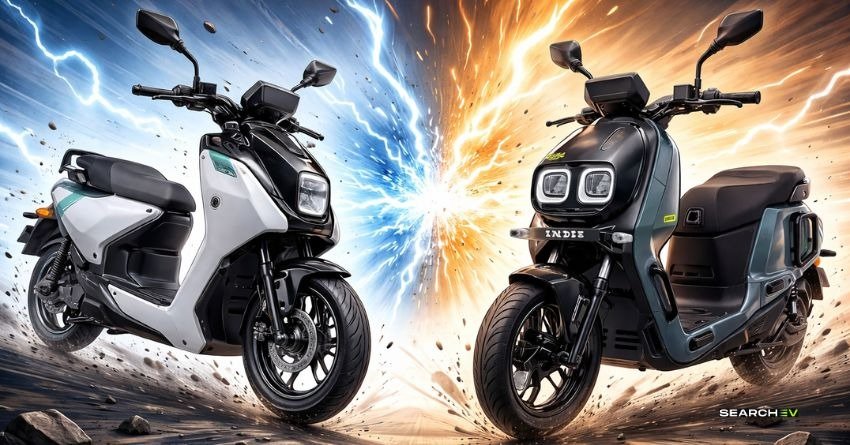
The Yamaha EC-06 and the River Indie are closely related electric scooters, as both are built on the same platform developed by River. They are also produced at River’s manufacturing facility in Karnataka. However, Yamaha has made several changes to the EC-06, especially in terms of styling, features, and positioning. As a result, the two scooters cater to slightly different priorities. Here’s a comparison that will show all their differences through price, design, practical use, performance evaluation, charging process, and complete user experience testing.
Price Comparison
The Yamaha EC-06 is priced at approximately ₹1.68 lakh (ex-showroom), whereas the River Indie is roughly ₹1.46 lakh (ex-showroom). This puts the EC-06 roughly ₹22,000 higher than the Indie, even though both scooters share the same core platform. The difference in pricing mainly comes from how the two scooters are positioned. The River Indie focuses more on practicality and everyday utility, whereas Yamaha has given the EC-06 a cleaner design and positioned it as a slightly more premium alternative for city riders.
Design And Practicality
Although the EC-06 is based on the Indie, the two scooters differ noticeably in design approach. The River Indie follows a more practical design approach. It includes features like pannier stays and multiple tether points that make it easier to carry luggage, giving the scooter a more rugged and utility-focused look. The Yamaha EC-06, on the other hand, takes a simpler route. Yamaha has removed most of those utility elements and gone for a cleaner and more streamlined design, which the brand says is aimed at younger riders.
The lighting setup also differs between the two. The EC-06 uses a vertically stacked headlamp, while the Indie features a twin-headlight layout that gives it a more distinctive appearance. The repositioned indicators on the EC-06 are placed higher up, which may reduce the risk of damage in crowded city traffic compared to the Indie’s lower-mounted units.
Storage And Everyday Usability
The differences in design philosophy directly affect practicality. The River Indie offers 43 litres of under-seat storage along with an additional 12 litres of covered storage in the front apron, giving it a clear advantage in terms of carrying capacity.
The Yamaha EC-06, because of its revised body design, provides 24.5 litres of under-seat storage and does not include the additional front storage compartment. Instead, the front apron houses the charging port and key slot. As a result, riders who prioritise cargo space and daily practicality may find the Indie more versatile, while the EC-06 focuses more on styling and simplicity.
Range And Battery Performance
In terms of range, the EC-06 holds a slight advantage on paper. Yamaha claims a 169 km IDC range, which exceeds the 163 km IDC range of the River Indie. The difference is small, but it shows that Yamaha made slight adjustments to the power delivery system and battery management system. The two scooters have similar range performance as both models use the same battery architecture and platform components.
Performance And Top Speed
The two scooters display different performance characteristics through the testing results, which show their performance results. The River Indie offers a higher claimed top speed of around 90 km/h, which makes it more suitable for riders who need to travel faster on city streets. The Yamaha EC-06 has a maximum speed of 79 kilometres per hour, which meets most urban travel requirements but does not match the Indie performance standard.
The difference shows that Yamaha engineers designed their product to give priority to both fuel efficiency and a comfortable riding experience instead of maximum speed capabilities.
Charging Setup And Convenience
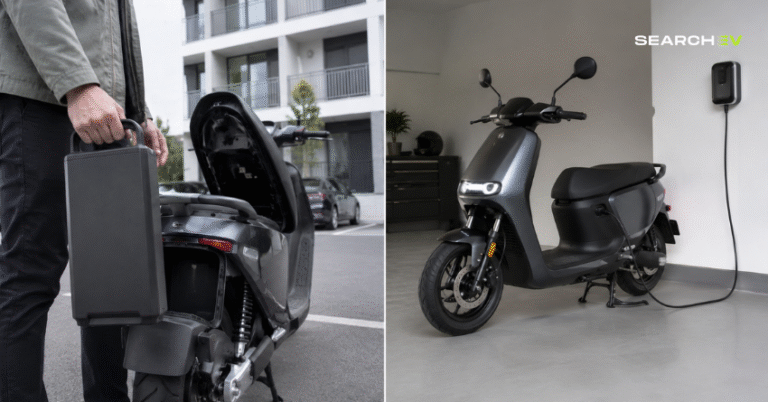
Both scooters have a similar charging time with the standard charger. The two models take about eight hours to charge between 0 and 80 per cent using a 480 W charger. The River Indie has another benefit: the optional 750 W fast charger can be combined with it, and thus the 0-80 per cent charging time can be shortened to approximately five hours. This faster rate of charging is not currently available in the EC-06. Position of the charging port also varies, with the EC-06 charging port being placed on the front apron and the Indie charging port on the side panel.
Weight And Platform
The Yamaha EC-06 has a little less weight, even though it is on a similar platform, as it has a less complex body structure and lacks certain utility features. The EC-06 weighs approximately 132 kg on the kerb, which is about 3 kg less than the River Indie. This weight loss, though marginal, might enhance city traffic manoeuvrability by a small margin, but the difference would not alter the riding experience much.
Manufacturing And Market Position
Although it carries Yamaha branding, the EC-06 is manufactured at River’s production facility in Hoskote, Karnataka. The collaboration between Yamaha and River allowed Yamaha to enter the electric scooter segment quickly by using River’s existing EV platform. While the two scooters share much of their engineering, the EC-06 is positioned as a more design-focused alternative, whereas the Indie remains the more practical and utility-oriented option in the lineup.