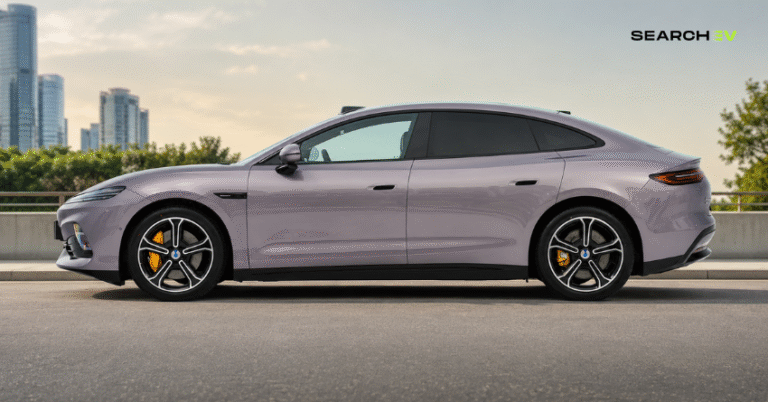
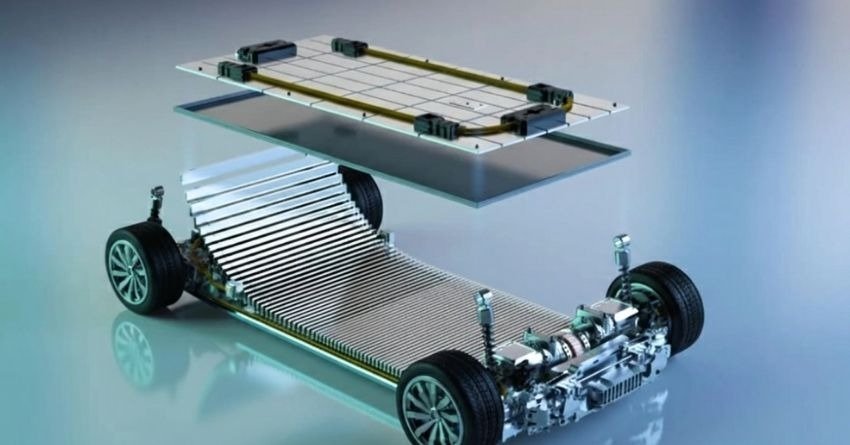
China is ramping up its push to get solid-state EV batteries on the road. Starting in 2026, the country plans to kick off pilot production, and several carmakers are already eyeing demo vehicles for 2027. It’s not just another lab announcement, but a real shift toward actually building next-gen batteries at scale. Right now, China’s looking to grab the lead in this technology.
So, what makes a solid-state battery such a big deal? Instead of the usual flammable liquid you’ll find in regular lithium-ion batteries, these use a solid material. That means they’re safer, and experts think they’ll pack more power too. This move offers increased safety, thermal stability, and much higher energy density, which is an essential factor that defines how much power a battery can hold in relation to its weight.
Higher Energy Density Targets
Several Chinese battery manufacturers are aiming for energy densities of 350 Wh/kg to 500 Wh/kg, which is much greater than the 250-300 Wh/kg typical of today’s mainstream EV batteries. Some prototype designs seem to be aiming for more than 500 Wh/kg, a number that could allow electric vehicles to travel over 1,000 kilometres on one charge.
With estimated capacities of about 140 kWh, the pilot battery packs under development rank among the highest-capacity EV batteries in the world. Road testing of the first demonstration cars with semi-solid or hybrid solid-state architecture is anticipated to start in 2027.
Production Starts in 2026
By 2026, Chinese battery manufacturers will begin establishing small-scale production lines, moving beyond just laboratory testing. Although their current output is still limited compared to traditional lithium-ion batteries, these pilot facilities are expected to produce several gigawatt-hours (GWh) of solid-state batteries. This represents a significant advancement toward real-world manufacturing, signifying a transition from experimental cells to batteries that can be utilised in actual vehicles.
In 2026, China plans to implement a national standard for solid-state electric vehicle (EV) batteries. This new framework will include various types of batteries, such as sulfide-based, oxide-based, and hybrid designs, while also establishing safety regulations, performance standards, and testing requirements.
Industry experts believe that this standardisation will accelerate commercial adoption by ensuring consistency among companies, reducing confusion, and facilitating increased production scalability.
What’s Next?
The transition toward solid-state batteries definitely has the potential to change the global electric vehicle adoption. Higher energy density means lighter battery packs, longer driving ranges, and potentially faster charging times – all of which have a direct impact on customer adoption.
However, the commercial installation will be gradual. Manufacturing complexity, cost control, and long-term durability testing remain significant challenges before solid-state batteries can replace conventional lithium-ion cells on a large scale. The majority of industry timelines predict that widespread adoption will take place in the late 2020s or early 2030s, with limited commercial use or premium EV integration taking place around 2027.
The rise in production in 2026 indicates China’s strategic plan to continue to lead both in the production of EVs and in the upcoming battery development. Solid-state technologies could be vital in the upcoming stage of the competition for electric mobility as automakers strive for safer battery systems and longer range.