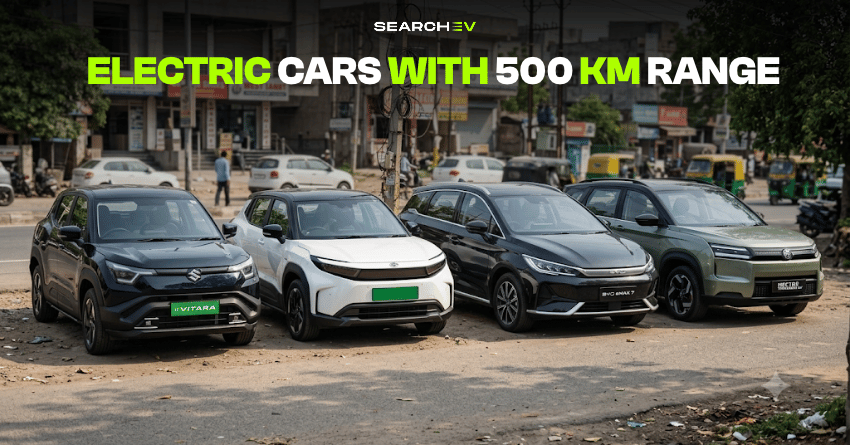
Range anxiety is slowly becoming less of a concern for people planning to buy an electric car in India. Earlier, finding an EV that could comfortably cover 300 to 400 km on a single charge was difficult. Now, manufacturers are pushing battery technology further, and several electric cars in the Indian market claim a driving range of over 500 km.
Whether you regularly travel between cities or simply don’t want to charge your car every other day, a 500 km range electric car can make ownership considerably more convenient. The good part is that buyers no longer have to spend a crore on a premium electric vehicle to get this kind of claimed range. Models from Maruti Suzuki, Hyundai, Tata, MG, BYD and Toyota are bringing longer-range options to different price segments.
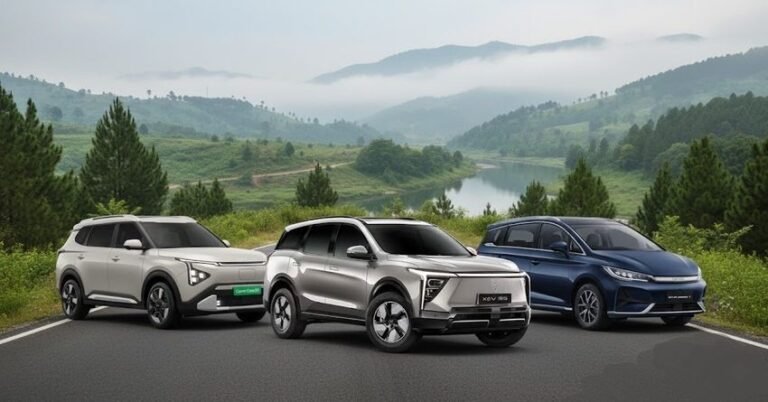
Some interesting options include the Maruti Suzuki e Vitara, Toyota Urban Cruiser Ebella, BYD Atto 3, BYD eMAX 7, Hyundai Creta Electric, Tata Curvv EV and MG Hector Tomahawk EV.
In this article, we look at the best 500 km range electric cars in India, covering their battery capacities, claimed driving ranges, important specifications and what makes each one worth considering. We have also included a look at the difference between claimed and real-world range, because the number advertised by a manufacturer isn’t always what you will get on Indian roads.
Best 500 km Range Electric Cars in India
Before getting into the details, here is a quick comparison of electric cars that offer a claimed range of 500 km or more.
| Electric Car | Battery Capacity | Claimed Range |
| Maruti Suzuki e Vitara | 61 kWh | 543 km |
| Toyota Urban Cruiser Ebella | 61 kWh | 543 km |
| BYD eMAX 7 | 71.8 kWh | 530 km |
| BYD Atto 3 | 60.48 kWh | 521 km |
| MG Hector Tomahawk EV | 69.2 kWh | 517 km |
| Hyundai Creta Electric | 51.4 kWh | Up to 510 km |
| Tata Curvv EV | 55 kWh | 502 km |
Note: The above figures are manufacturer-claimed or published certification figures. Always check the applicable variant and testing cycle before comparing. Real-world range will vary.
1. Maruti Suzuki e Vitara | 543 km Range
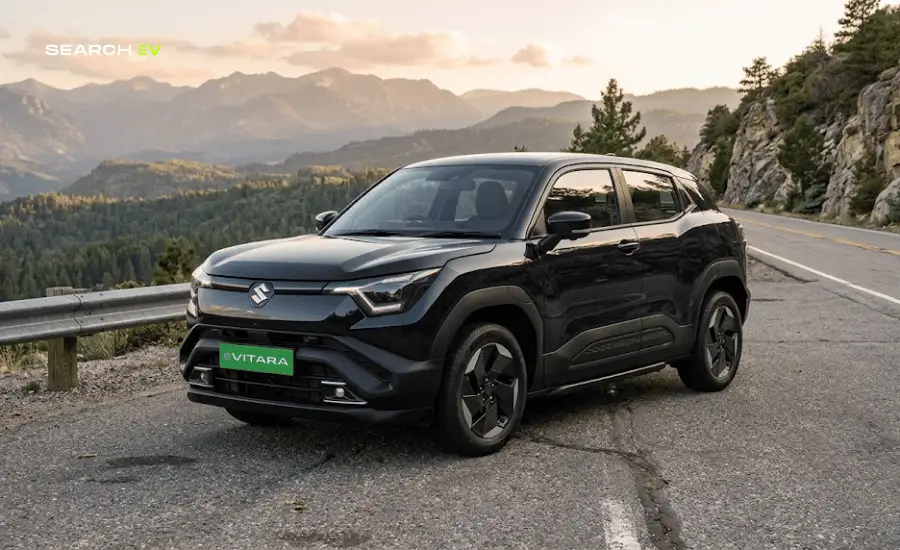
Maruti Suzuki has entered the electric car market with the e Vitara, and one of its biggest highlights is its claimed driving range of up to 543 km. For a brand that has traditionally focused on affordable and practical cars, the e Vitara represents an important step into the electric vehicle segment.
The electric SUV is available with two battery options, a 49 kWh pack and a larger 61 kWh pack. While the smaller battery is suitable for buyers with relatively shorter daily commutes, the 61 kWh version is the one to consider if maximum range is your priority.
The e Vitara is built on Suzuki’s dedicated HEARTECT-e platform and features a modern SUV design with a relatively spacious cabin. It also gets a range of technology and safety features, including a digital instrument cluster, touchscreen infotainment system and advanced driver assistance features, depending on the variant.
For buyers who want a familiar brand, a practical SUV body style and a claimed range above 500 km, the e Vitara is one of the more interesting options in this segment.
Maruti Suzuki e Vitara Specifications
| Specification | Details |
| Battery Capacity | 49 kWh / 61 kWh |
| Claimed Range | Up to 543 km |
| Range Certification | MIDC |
| Body Style | Electric SUV |
| Drive Options | 2WD / AllGrip-e AWD, depending on variant |
| Seating Capacity | 5 |
The e Vitara makes sense for buyers who want to move to an electric SUV without compromising too much on everyday practicality. Its 543 km claimed range also puts it among the longest-range electric cars in its price category.
2. Toyota Urban Cruiser Ebella | 543 km Range
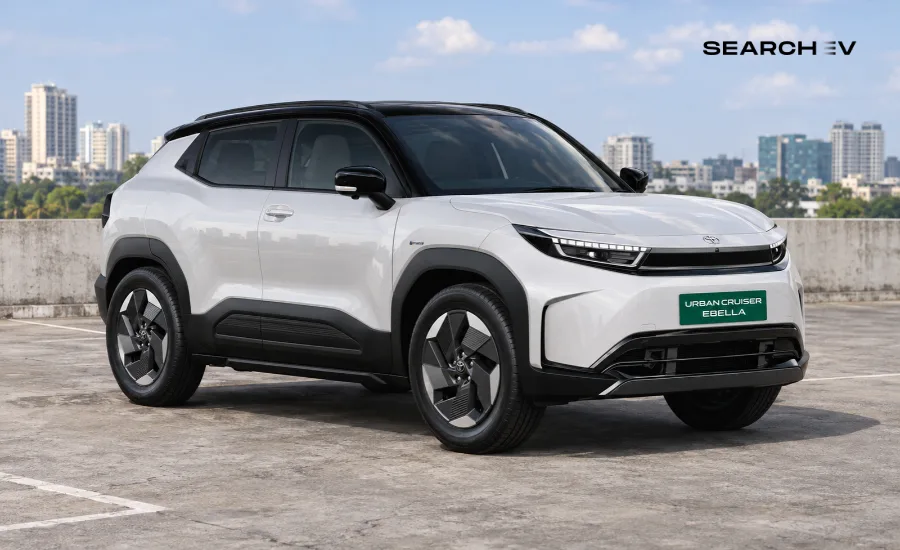
Toyota’s entry into the long-range electric SUV space is another interesting development. The Urban Cruiser Ebella shares its underlying electric vehicle architecture with the Maruti Suzuki e Vitara, bringing a similar battery and range proposition under the Toyota brand.
The SUV offers a 61 kWh battery option with a claimed range of up to 543 km. There is also a smaller battery configuration for buyers who don’t need the maximum available range.
The Ebella follows Toyota’s familiar design language while retaining the proportions of a modern compact electric SUV. Buyers can expect a practical five-seat layout, connected technology and a range of comfort and safety features.
One of the biggest reasons to consider the Ebella is Toyota’s established service network and ownership experience. For people who are planning to switch from a petrol or diesel SUV to an electric one, brand familiarity and after-sales support can be important deciding factors.
Toyota Urban Cruiser Ebella Specifications
| Specification | Details |
| Battery Capacity | 49 kWh / 61 kWh |
| Claimed Range | Up to 543 km |
| Range Certification | MIDC |
| Body Style | Electric SUV |
| Seating Capacity | 5 |
| Platform | Dedicated electric vehicle architecture |
The Toyota Urban Cruiser Ebella and Maruti Suzuki e Vitara are closely related, so buyers should compare their variant-wise features, pricing, warranty and ownership benefits before deciding between the two.
3. BYD eMAX 7 | 530 km Range
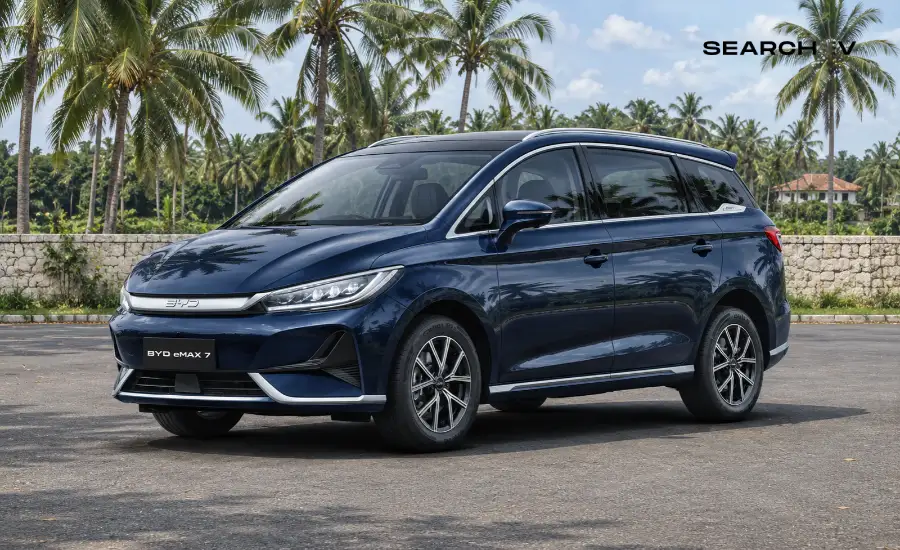
If you are looking for an electric car with a claimed range above 500 km and enough space for a larger family, the BYD eMAX 7 is worth considering.
Unlike most of the electric SUVs in this list, the eMAX 7 is an electric MPV with three rows of seating. This makes it a suitable option for families who need additional passenger space without moving back to a conventional petrol or diesel vehicle.
The eMAX 7 gets a 71.8 kWh battery pack in its larger battery configuration and offers a claimed range of up to 530 km. It also uses BYD’s Blade Battery technology, which is one of the brand’s key selling points.
The MPV is designed around comfort and practicality. It gets a spacious cabin, a large infotainment display, connected features and a range of convenience features. Depending on the variant, buyers can choose between six-seat and seven-seat configurations.
BYD eMAX 7 Specifications
| Specification | Details |
| Battery Capacity | 55.4 kWh / 71.8 kWh |
| Claimed Range | Up to 530 km |
| Body Style | Electric MPV |
| Seating Capacity | 6 / 7 |
| Battery Technology | BYD Blade Battery |
| Drive Type | Front-Wheel Drive |
The BYD eMAX 7 is a good option for buyers who prioritise cabin space and family comfort. If you regularly travel with multiple passengers, its MPV layout could be more useful than choosing a five-seat electric SUV purely for its range.
4. BYD Atto 3 | 521 km Range
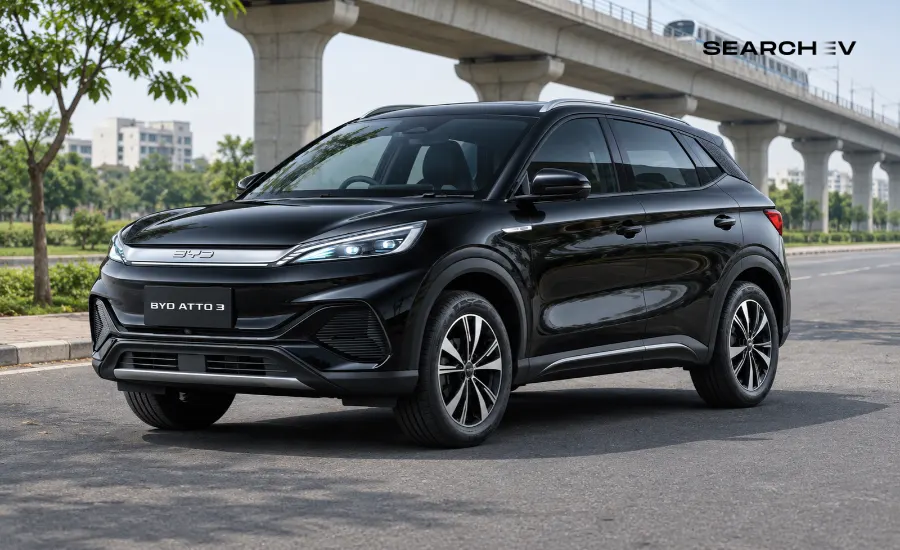
The BYD Atto 3 has been one of the more recognisable premium electric SUVs in India. It combines a distinctive exterior design with BYD’s battery technology and a feature-rich cabin.
The Atto 3 is offered with two battery configurations, a 49.92 kWh battery and a larger 60.48 kWh battery. The latter offers a claimed range of up to 521 km, making it a suitable option for buyers searching for a 500 km range electric car in India.
One of its major highlights is the Blade Battery, which uses lithium iron phosphate chemistry. BYD has focused heavily on battery safety and durability, making this an important part of its electric vehicle offering.
Inside, the Atto 3 gets a rotating touchscreen infotainment system, a digital instrument cluster, connected features and a modern dashboard layout. It also offers a spacious cabin and a good amount of technology for everyday driving.
BYD Atto 3 Specifications
| Specification | Details |
| Battery Capacity | 49.92 kWh / 60.48 kWh |
| Claimed Range | Up to 521 km |
| Range Certification | ARAI |
| Maximum Power | 150 kW (larger battery version) |
| Maximum Torque | 310 Nm |
| Drive Type | Front-Wheel Drive |
| Battery Technology | Blade Battery |
The Atto 3 is worth considering if you want a premium electric SUV with a long claimed range and a technology-focused cabin. However, its pricing is higher than several Indian-made alternatives, so it is important to compare the overall package rather than range alone.
5. MG Hector Tomahawk EV | 517 km Range
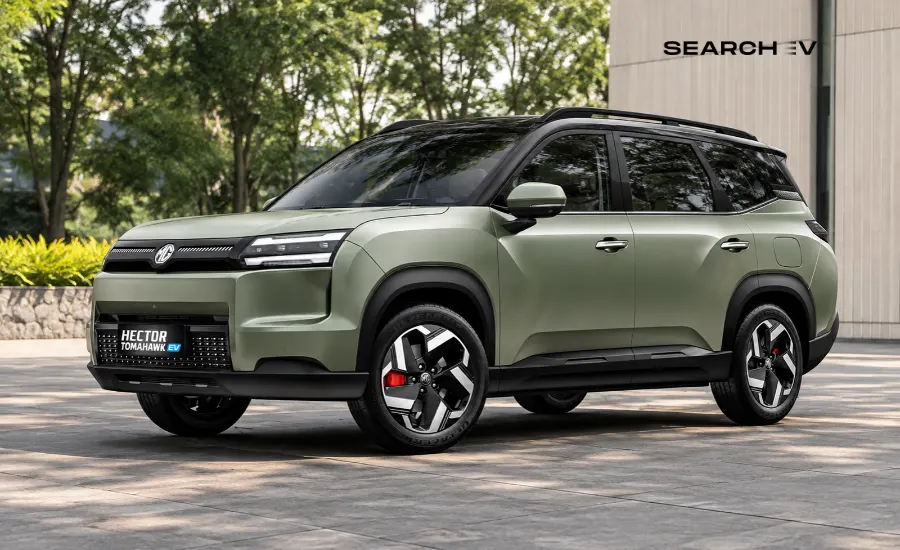
MG has been expanding its electric vehicle portfolio in India, and the Hector Tomahawk EV brings a larger electric SUV proposition to the market.
The electric SUV is offered with a 69.2 kWh battery pack and a claimed MIDC range of up to 517 km. It is positioned for buyers who want a spacious family vehicle with a longer driving range.
One of the interesting aspects of the Tomahawk EV is its seating configuration. The model is offered in five-seat and seven-seat versions, depending on the variant, making it relevant for buyers who need additional cabin space.
The electric powertrain produces 204 hp and 310 Nm of torque. This gives the SUV enough performance for everyday city driving as well as highway use.
MG Hector Tomahawk EV Specifications
| Specification | Details |
| Battery Capacity | 69.2 kWh |
| Claimed Range | Up to 517 km |
| Range Certification | MIDC |
| Maximum Power | 204 hp |
| Maximum Torque | 310 Nm |
| Seating Capacity | 5 / 7, depending on variant |
| Body Style | Electric SUV |
For buyers who need a larger electric vehicle with a claimed range above 500 km, the Hector Tomahawk EV is an interesting alternative. Its battery capacity and seating options make it worth comparing with other family-focused electric vehicles.
6. Hyundai Creta Electric | Up to 510 km Range
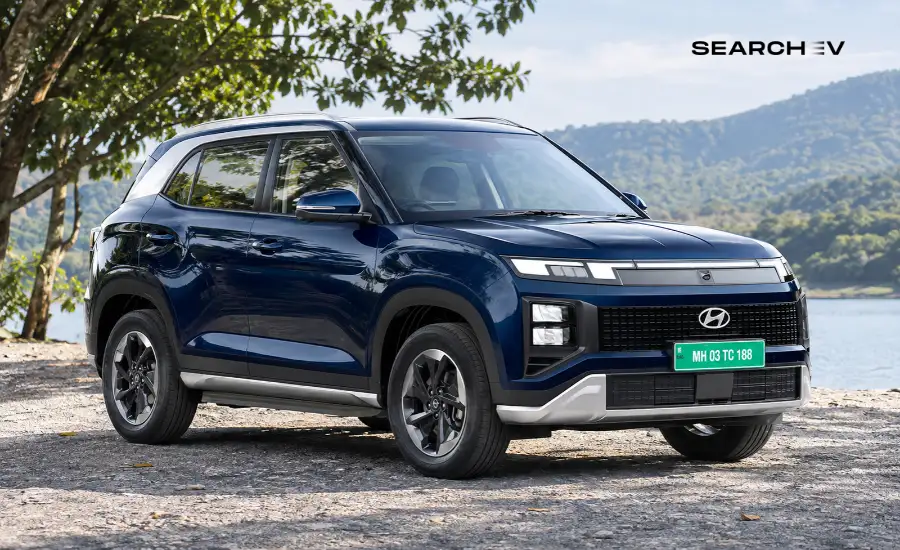
The Hyundai Creta Electric brings one of India’s most familiar SUV nameplates into the electric vehicle segment. It retains the general practicality of the Creta while introducing an electric powertrain, a redesigned front section and a feature-rich cabin.
The Creta Electric is available with two battery options, 42 kWh and 51.4 kWh. The larger battery version offers a claimed range of up to 510 km, making it one of the more accessible ways to enter the 500 km claimed-range category.
It produces up to 171 PS of power and 255 Nm of torque in the larger battery configuration. Hyundai has also equipped the electric SUV with a range of features, including dual displays, ventilated seats, connected-car technology and advanced driver assistance systems in selected variants.
One of the more useful things about the Creta Electric is that it doesn’t feel like a completely different vehicle for someone already familiar with the regular Creta. The cabin layout, overall proportions and everyday usability make the transition to electric mobility relatively straightforward.
Hyundai Creta Electric Specifications
| Specification | Details |
| Battery Capacity | 42 kWh / 51.4 kWh |
| Claimed Range | Up to 510 km |
| Range Certification | ARAI |
| Maximum Power | Up to 171 PS |
| Maximum Torque | 255 Nm |
| Seating Capacity | 5 |
| DC Fast Charging | 10–80% in approximately 58 minutes with a compatible 50 kW charger |
In independent testing, the larger-battery Creta Electric has also demonstrated a combined driving range of around 432 km. This makes it an interesting choice for buyers who want a balance between claimed range and tested everyday usability.
7. Tata Curvv EV | 502 km Range
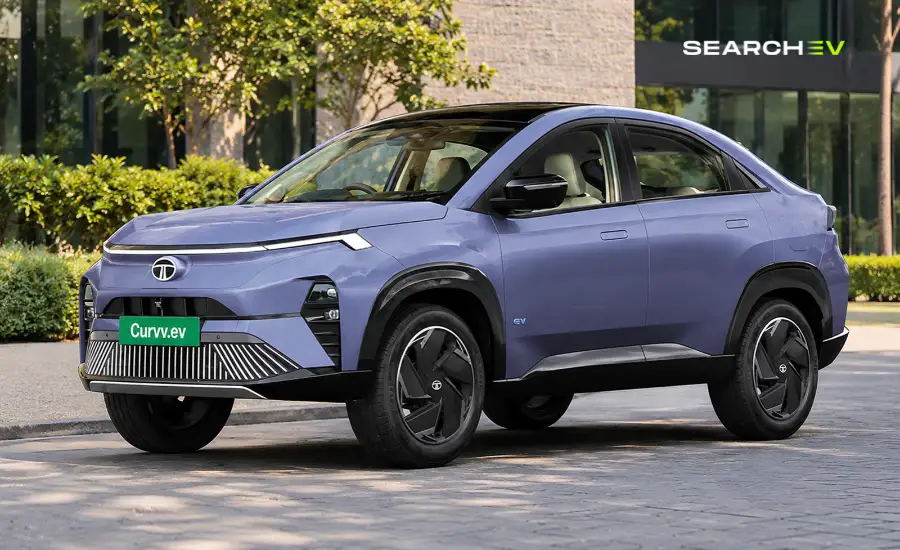
Tata Motors has been one of the most active manufacturers in India’s electric car market, and the Curvv EV is another example of the company’s efforts to offer different body styles and battery configurations.
The Curvv EV stands out because of its coupe-SUV design. Instead of following the conventional SUV shape, Tata has given it a sloping roofline and a more distinctive exterior profile.
It comes with two battery options, a 45 kWh pack and a larger 55 kWh pack. The 55 kWh version offers a claimed MIDC range of up to 502 km, placing it just above the 500 km mark.
The Curvv EV also offers a spacious cabin, a large touchscreen infotainment system, a digital instrument cluster and several comfort and safety features. Its larger battery version is the one to consider if range is your main priority.
Tata Curvv EV Specifications
| Specification | Details |
| Battery Capacity | 45 kWh / 55 kWh |
| Claimed Range | Up to 502 km |
| Range Certification | MIDC |
| Maximum Power | Up to 167 hp (55 kWh version) |
| Maximum Torque | 215 Nm |
| Seating Capacity | 5 |
| Body Style | Electric Coupe-SUV |
The Curvv EV is worth considering if you want a stylish electric SUV with a claimed range of more than 500 km. However, buyers should compare its actual driving range, cabin practicality and pricing with the Nexon EV and other electric SUVs before making a decision.
Claimed Range vs Real-World Range: How Much Can You Actually Drive?
A claimed range of 500 km sounds impressive, but it is important to understand what that number means in everyday driving.
Electric cars are tested under controlled conditions to arrive at their certified range figures. On actual roads, the distance covered on a full charge depends on several factors, including driving speed, traffic, air-conditioning, road conditions and the number of passengers.
For example, the Hyundai Creta Electric has a claimed range of up to 510 km, but an independent combined-range test has recorded approximately 432 km. Similarly, a car with a claimed range of 521 km may deliver a lower figure when driven continuously at highway speeds.
Here are a few factors that can affect the range of an electric car:
- Driving speed: Consistently driving at high highway speeds increases energy consumption and reduces the distance covered.
- Air-conditioning: Running the AC, particularly during hot weather, can affect battery efficiency.
- Driving style: Hard acceleration and frequent braking can reduce overall efficiency.
- Vehicle load: Carrying additional passengers and luggage can increase energy consumption.
- Road conditions: Uphill routes, uneven surfaces and changing terrain can affect the available range.
- Tyre pressure: Incorrect tyre pressure increases rolling resistance and can reduce efficiency.
As a general planning guideline, a 500 km claimed-range electric car may deliver approximately 350–425 km in everyday conditions. However, this is only an indicative estimate, not a guaranteed figure for every model.
If you regularly travel long distances, it is better to plan your journey around the expected real-world range rather than relying entirely on the manufacturer’s advertised number.
Which 500 km Range Electric Car Should You Buy?
Choosing a long-range electric car isn’t just about finding the vehicle with the highest claimed range. Your budget, family requirements, charging access and driving habits matter just as much.
If you want a compact electric SUV with a high claimed range, the Maruti Suzuki e Vitara and Toyota Urban Cruiser Ebella are two options worth comparing. Both offer up to 543 km of claimed range with their larger battery configurations.
For buyers who need a spacious family vehicle, the BYD eMAX 7 offers a three-row layout and a claimed range of up to 530 km. The MG Hector Tomahawk EV is another option if you want a larger SUV with five- or seven-seat configurations.
The BYD Atto 3 is worth considering if you prefer a more premium electric SUV, while the Hyundai Creta Electric offers a familiar SUV experience with a good balance of features and driving range.
Finally, the Tata Curvv EV is an interesting choice for buyers who prefer a coupe-SUV design and want a claimed range just above 500 km.
If your budget is an important factor, compare the battery variants and overall ownership costs before making a decision. You should also consider home charging availability, warranty coverage and service support.
A 500 km claimed range is certainly useful, but the best electric car is ultimately the one that fits your daily requirements without making charging or ownership unnecessarily complicated.
Frequently Asked Questions
1. Which electric car has a 500 km range in India?
Several electric cars in India offer a claimed range of 500 km or more. These include the Maruti Suzuki e Vitara (543 km), Toyota Urban Cruiser Ebella (543 km), BYD eMAX 7 (530 km), BYD Atto 3 (521 km), MG Hector Tomahawk EV (517 km), Hyundai Creta Electric (510 km) and Tata Curvv EV (502 km).
2. Which is the cheapest 500 km range electric car in India?
The Tata Curvv EV, Hyundai Creta Electric and Maruti Suzuki e Vitara are among the more accessible options in this range category. The cheapest option depends on the battery variant, current ex-showroom price and available offers.
3. Is a 500 km claimed range enough for highway driving?
Yes. A 500 km claimed range can be sufficient for many intercity journeys. However, actual highway range is generally lower because of higher speeds, air-conditioning and road conditions. It is advisable to plan charging stops with a sufficient battery reserve.
4. How much real-world range can I expect from a 500 km electric car?
Depending on the vehicle and driving conditions, a 500 km claimed-range electric car may deliver approximately 350–425 km in everyday use. Highway driving at higher speeds can reduce this further.
5. Which electric SUV offers the highest range under this category?
The Maruti Suzuki e Vitara and Toyota Urban Cruiser Ebella offer up to 543 km of claimed range with their larger 61 kWh battery configurations, making them some of the longest-range options in this category.
6. Which 500 km range electric car is best for a family?
The BYD eMAX 7 is a good option for larger families because it offers six- and seven-seat configurations. The MG Hector Tomahawk EV is another option with different seating configurations, while the e Vitara and Creta Electric are suitable for families looking for five-seat SUVs.
7. Does a bigger battery always mean a longer driving range?
Not necessarily. Battery capacity is an important factor, but vehicle weight, aerodynamics, motor efficiency, tyre setup and driving conditions also influence range. A more efficient electric car can sometimes travel farther with a smaller battery than a heavier, less efficient model with a larger battery.
8. Are 500 km range electric cars suitable for long-distance travel?
Yes. These electric cars can be suitable for long-distance journeys, provided you plan charging stops in advance. Check the availability of compatible DC fast chargers along your route and consider the vehicle’s real-world highway range before starting the journey.