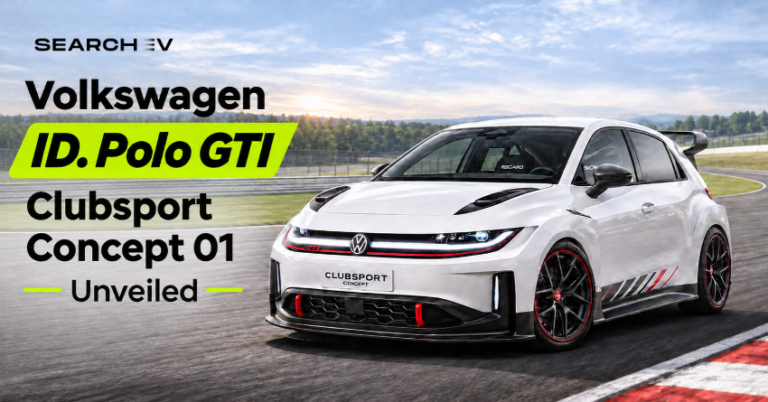
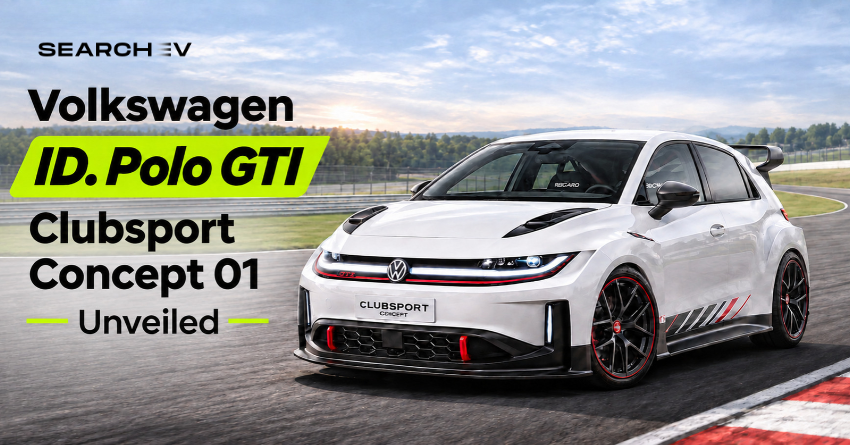
Volkswagen has unveiled the ID. Polo GTI Clubsport Concept, a stripped-out, track-focused electric hatchback built to mark 50 years of the GTI nameplate. Set for its public debut at the Essen Motor Show, this one-off prototype pushes the Front Wheel Drive MEB+ architecture well past the limits of the production ID. Polo GTI. By taking an electric motor originally engineered for the rear axle of larger vehicles and packaging it into the nose of a widened two-door Polo shell, Volkswagen has created a front-drive electric hot hatch producing 367 PS and 550 Nm of torque.
50 Years of GTI and Where the Clubsport Concept Sits Globally
Few performance badges in the car industry match the commercial track record of GTI. Since the first Golf GTI arrived in 1976, Volkswagen has sold more than 2.5 million GTI models worldwide. To mark the sub-brand’s 50th anniversary, Volkswagen scheduled four GTI debuts across 2026: the petrol Golf GTI Edition 50, the rear-wheel-drive ID.3 GTIs are going on sale in early 2027, the production ID. Polo GTI, and now this circuit-bred ID. Polo GTI Clubsport Concept.
Volkswagen pairs the Clubsport conceptually with its frugal Mission Efficiency prototype, which also sits on the ID. Polo platform, to show both extremes of its compact electric architecture. For now, though, the Clubsport stays a concept car. The company has not announced a production plan yet.
Rear-Drive Motor Reengineered for the Front Axle
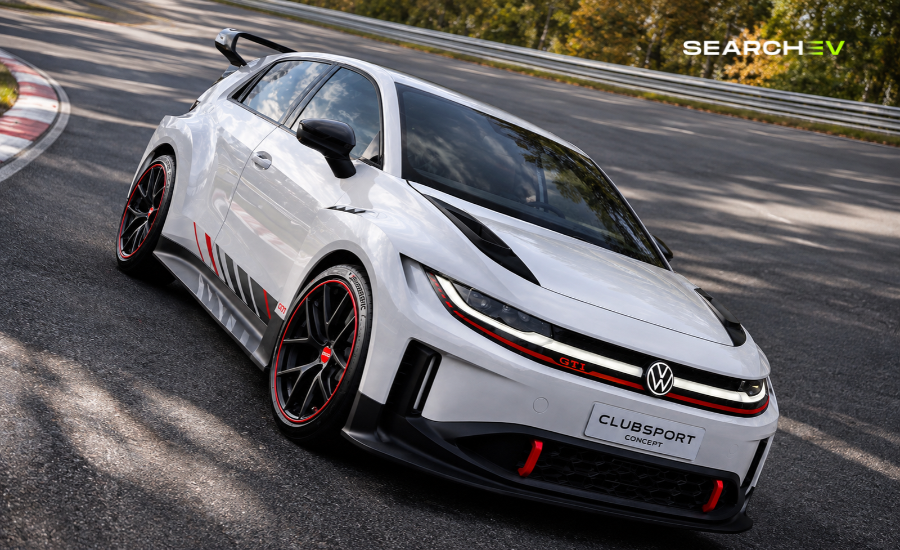
The biggest technical change hides under the bonnet. While the regular production ID. Polo GTI relies on the compact APP290 front electric motor making 166 kW (226 PS) and 290 Nm; engineers swapped in the much larger APP550 drive unit for the Clubsport Concept. Built more than one million times at Volkswagen Group Components’ Kassel factory, the APP550 was originally designed for the rear axle of bigger models such as the ID. Tiguan and ID.7 saloons. The more powerful motors make the output climb to 270 kW (367 PS) alongside 550 Nm of torque, marking an increase of 104 kW (141 PS) and 260 Nm over the standard ID. Polo GTI.
For brief bursts under Launch Control, revised battery software opens the discharge window to 290 kW (394 PS or 389 bPS). The result is a claimed 0 to 100 kmph sprint timing of 4.7 seconds, which is 2.1 seconds quicker than the standard ID. Polo GTI’s 6.8-second time. Top speed increases by 50 kmph as well, topping out at an electronically capped 240 kmph.
Same 52 kWh Battery, Track-Tuned Chassis, and Ceramic Brakes
Volkswagen did not fit a larger battery pack to feed the upgraded motor. The Clubsport Concept retains the exact same 52 kWh Nickel Manganese Cobalt (NMC) pack mounted under the floor of the standard ID. Polo GTI. To handle repeated circuit laps without thermal derating, engineers installed a higher-capacity heat exchanger and revised thermal management calibration. Between track stints, the pack supports up to 105 kW DC fast charging.
Channelling 550 Nm of instant electric torque exclusively through the front tyres can easily overwhelm front grip. Volkswagen addressed that challenge with three key hardware changes:
- Electronic Front Differential Lock: Recalibrated for circuit speeds, the differential uses torque vectoring to send drive to the outside front tyre under heavy cornering loads.
- Lowered DCC Sports Chassis: Retaining MacPherson front struts and a rear torsion beam, the Clubsport sits 15 millimetres lower than the production ID. Polo GTI (and 30 millimetres lower than the regular ID. Polo), paired with track-focused Dynamic Chassis Control adaptive dampers.
- One Box Ceramic Brakes: A ceramic brake setup sits behind black 19-inch BBS alloy wheels with red outer lip detailing, wrapped in Bridgestone Potenza tyres to resist heat fade during sustained track braking.
Two Door Widebody Kit and Stripped-Out Racing Cockpit
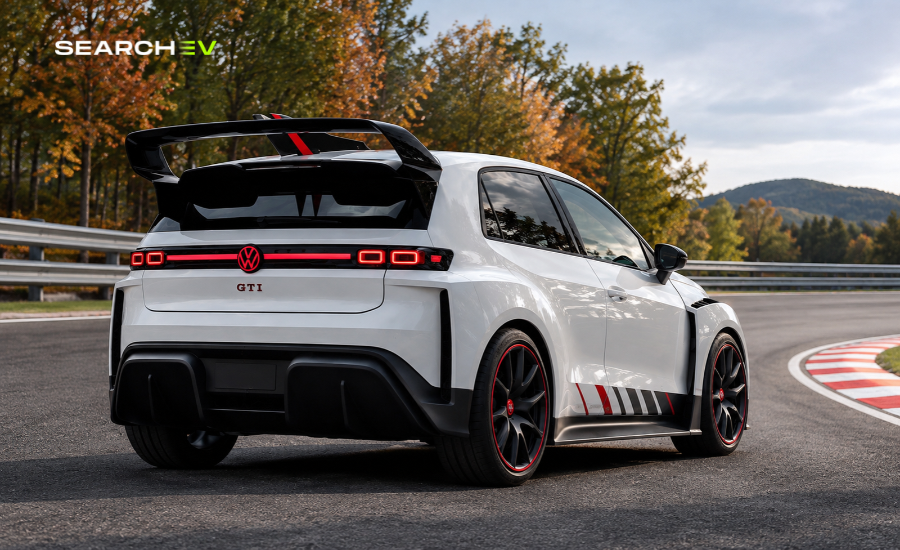
There is no mistaking the Clubsport Concept for a regular road car. Volkswagen dropped the rear doors altogether, converting the four-door ID. Polo GTI shell into a two-door layout while keeping the familiar rear window line blended into smooth quarter panels. Flared wheel arches push the body out by 50 millimetres on each side, front and rear, adding 100 millimetres of total width to clear the wider track and 19-inch BBS wheels.
Every external panel change serves airflow or cooling. Up front sit a deep motorsport splitter, reworked bumper intakes, vents beside the headlamps, and vented bonnet elements. Side skirts, wheel arch vents, black mirror caps, and lower door decals lead back to a wider rear bumper housing a pronounced diffuser. Above the carried-over connected LED taillight strip stands a large roof-mounted carbon fibre rear wing built to add rear axle downforce at high speeds.
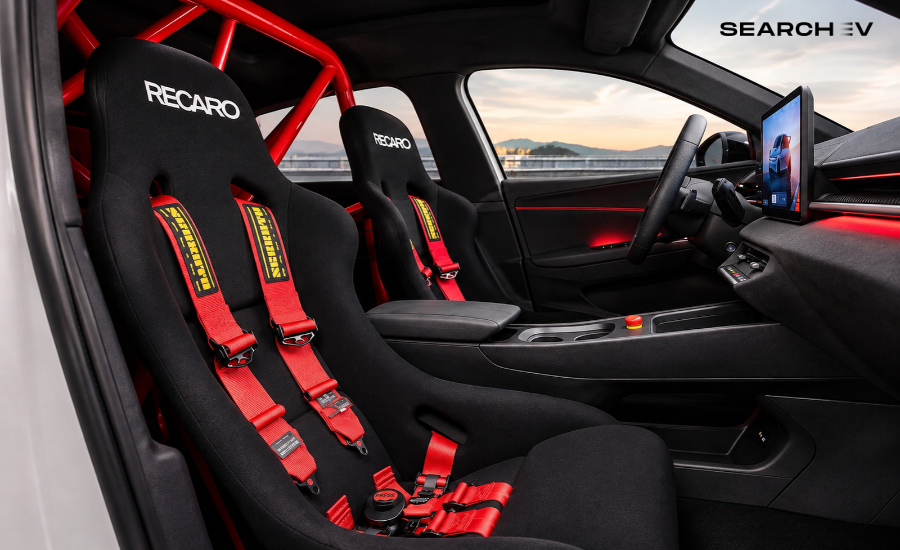
On the inside, the rear bench and boot floor are gone, replaced by a rollover bar painted in GTI Tornado Red. Two Recaro racing bucket seats with red five-point harnesses hold the occupants in place, surrounded by dark ArtVelours microfibre trim and red contrast stitching across the dashboard and door panels.
Conclusion (What SearchEV Thinks)
Sceptics often argue that compact electric hatchbacks feel sterile once the novelty of quick off-the-line acceleration fades. By shoehorning a 550 Nm rear axle motor into the nose of a widened two-door Polo, Volkswagen has shown it still remembers how to engineer a focused track hatch. Even if the ID. Polo GTI Clubsport Concept stays off public roads, it proves that the front-drive MEB+ platform has far more mechanical headroom than the conservative 226 PS output of the regular ID. Polo GTI suggests.