Ola Roadster X Expert Review
- Electric
- Bike
- 2 Seater
What's good
-
Higher claimed top speed and IDC range than its electric rivals on the 3.5 kWh and 4.5 kWh versions
-
Cruise control, reverse mode and app-based tracking, geo-fencing and time-fencing
-
Built-in charger that works from any 5 A socket, with a small storage space when removed
-
Comfortable, upright riding position for city commuting
-
Three battery choices let buyers match range to budget
What's not so good
-
Drum brakes at both ends
-
Inconsistent power delivery that changes with battery charge
-
Uneven build quality and a narrow seat that becomes uncomfortable on long journeys
-
Weak after-sales reputation
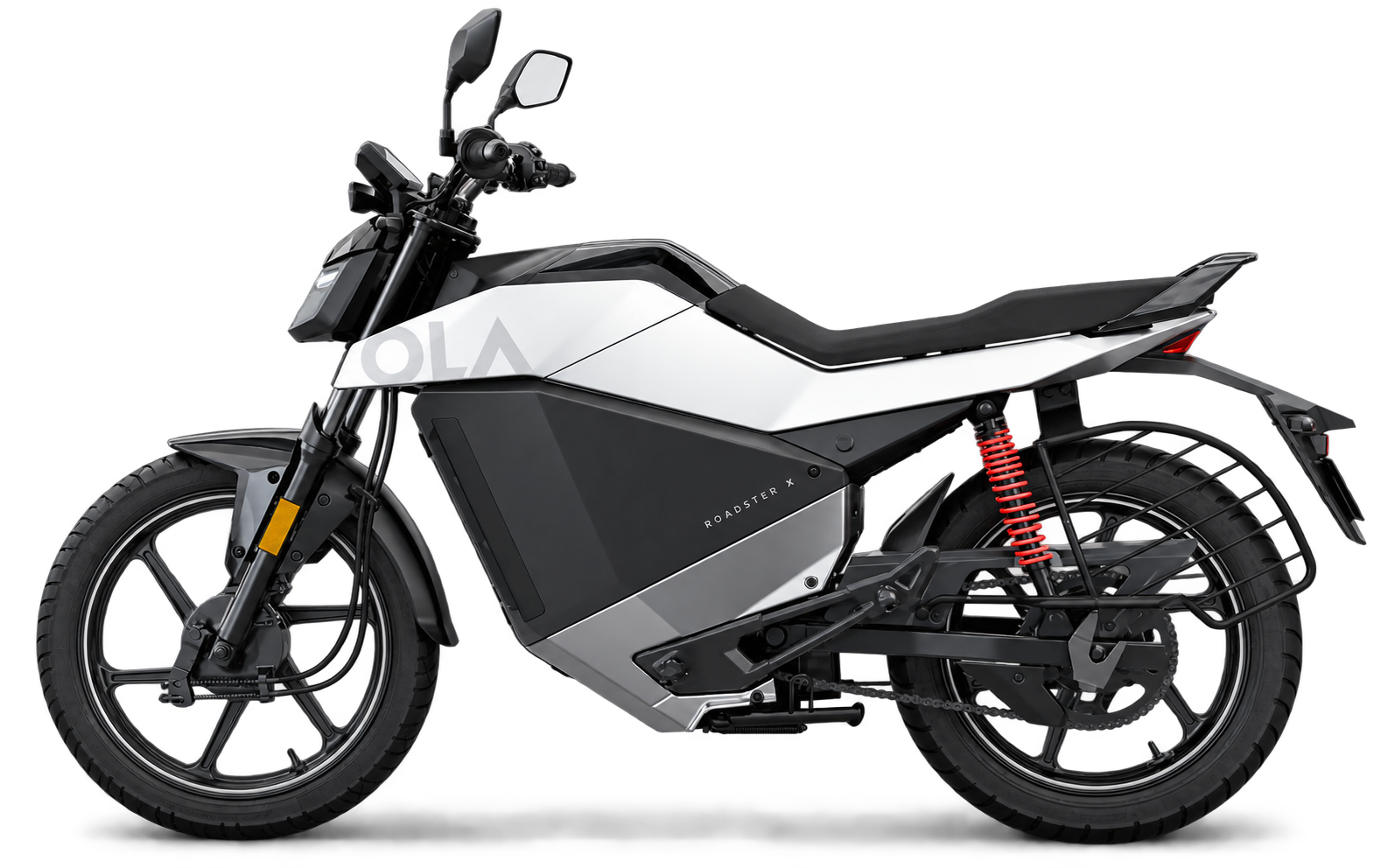
The Roadster X is Ola Electric’s first entry into the high-performance electric bike market, offering a perfect blend of style and affordability. Its dual-cradle frame, telescopic suspension, and alloy wheels provide strength and stability. With a good top speed, quick acceleration, and an IDC range of up to 252 km, the Roadster X is a practical and stylish EV bike for daily use.
What's good
-
Higher claimed top speed and IDC range than its electric rivals on the 3.5 kWh and 4.5 kWh versions
-
Cruise control, reverse mode and app-based tracking, geo-fencing and time-fencing
-
Built-in charger that works from any 5 A socket, with a small storage space when removed
-
Comfortable, upright riding position for city commuting
-
Three battery choices let buyers match range to budget
What's not so good
-
Drum brakes at both ends
-
Inconsistent power delivery that changes with battery charge
-
Uneven build quality and a narrow seat that becomes uncomfortable on long journeys
-
Weak after-sales reputation
The Roadster X is Ola Electric’s first entry into the high-performance electric bike market, offering a perfect blend of style and affordability. Its dual-cradle frame, telescopic suspension, and alloy wheels provide strength and stability. With a good top speed, quick acceleration, and an IDC range of up to 252 km, the Roadster X is a practical and stylish EV bike for daily use.
Ola Roadster X Expert Review
SEV Score

Samarth Kudale
Tested and reviewed by SEV Experts on 8 parameters
SEV Score

Samarth Kudale
Tested and reviewed by SEV Experts on 8 parameters
Expert Verdict
On paper, the Ola Roadster X is a value powerhouse. Rather than merely taking on electric rivals like Revolt or Oben, the Ola Roadster X aims squarely at 100-125 cc petrol commuters, making a particularly lucrative case with its low running costs and unmatched electric range-to-price ratio. The 3.5 kWh and 4.5 kWh versions outpace and outlast price-point electric rivals, and every variant gets cruise control, reverse mode, and app connectivity. However, it is noticeably built to a cost, feeling closer to a budget 100cc bike than a more premium 125cc. Ultimately, uneven build quality, inconsistent power delivery, basic braking setup, and Ola’s shaky after-sales reputation weigh the package down.
Ola Roadster X Design
Exterior
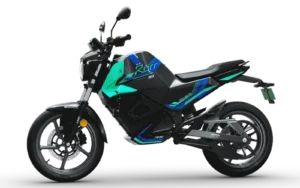
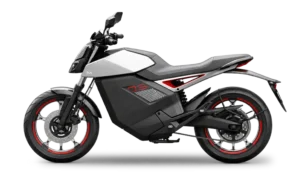
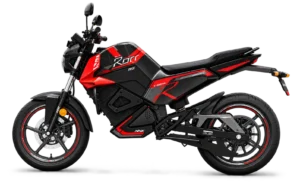
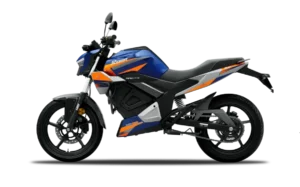
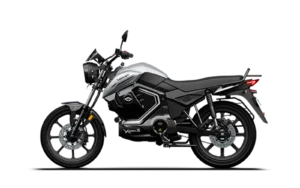
The Roadster X is a slim, minimalist motorcycle with a modern, slightly futuristic look. Large side panels wrap around the battery and motor beneath a faux tank, and sharp creases run through the bodywork to give it a crisp, angular profile. Up front, a horizontal LED headlamp with an LED daytime running light strip sits above a conventional telescopic fork, and the tail ends in a compact LED lamp, with a flat seat and a pillion grab rail in between. Matte metallic finishes on the plastic panels lift the look above that of a basic commuter, and the bike draws curious glances in traffic.
From some angles, though, the proportions and the flat, single-piece seat make it read more like a commuter motorcycle than a streetfighter, which is fair given its purpose. The chain drive, saree guard and pillion footrests are all conventional pieces, and the exposed swingarm looks thin for a motorcycle of this size. Ola offers the Roadster X in five colours across all three battery options.
Build Quality & Fit and Finish
Underneath, a steel double-cradle frame holds the battery under the faux tank, with the mid-mounted motor behind it driving the rear wheel through a chain. Ola says the powertrain relies on ram-air cooling rather than fans and that the battery and electronics are sealed against water and dust.
Fit and finish is the Roadster platform’s weakest point. Uneven panel gaps show up in several places, with the largest gap sitting under the seat, and some fasteners are basic-looking bolts that feel out of place on a modern electric motorcycle. The flap over the charging port feels flimsy, and the gaps between the seat and the bodywork raise questions about water getting in during heavy rain or a wash.
Ola Roadster X Features
The Roadster X carries a feature list that is generous for its price, and all three battery variants get the same equipment. The instrument cluster is a 4.3-inch colour LCD running Ola’s MoveOS software. Riders get three riding modes (Eco, Normal and Sport), cruise control, a reverse mode for edging out of tight parking spots, adjustable regenerative braking, energy-use insights and over-the-air updates. Through the Ola app, owners can track the bike’s live location, set geo-fencing so it alerts them if the bike leaves a defined area, and use time-fencing to lock or allow use at set hours. A vacation mode is meant to protect battery health when the bike is parked for weeks.
The execution is where the package loses marks. The display is clear and legible in daylight, but it is a basic segmented unit that looks dated next to the TFT screens on other electric motorcycles like the Oben Rorr Evo, especially when you consider the 4.5 kWh variant. However, we understand that the Roadster X is also cheaper comparatively, and it is designed to win price comparisons.
But we do have to admit that software glitches have also surfaced on the Roadster platform: the range readout has dropped its leading digit when fully charged, showing a two-digit figure instead of a three-digit one, the trip meter has been found to reset every time the bike is switched on, and the estimated time to full charge can jump around while plugged in.
There is also no clear signal, beyond a small light, that the bike is switched on and ready to move, which matters on a silent electric motorcycle. Over-the-air updates should be able to fix the software issues, but buyers should check them on a test ride.
Ola Roadster X Performance & Range
All three versions use the same mid-drive motor with a peak output of 7 kW. Ola claims 0 to 40 km/h in 3.4 seconds for the 2.5 kWh version and 3.1 seconds for the 3.5 kWh and 4.5 kWh versions, with top speeds of 105 km/h and 118 kmph respectively. That makes the two larger variants quicker at the top end than any of the electric rivals in their price band.
The three riding modes shape how that power is delivered. Eco is heavily restricted and best saved for crawling traffic or squeezing out extra range. Normal is the most natural mode for daily commuting, with a smooth enough response to keep up with city traffic. Sport is the one to use on open roads, and it feels strong when the battery is well charged.
The catch is consistency. On the Roadster platform, power delivery can vary noticeably with speed and battery charge. With a full battery the bike freewheels freely and responds predictably, but once the charge drops below about 90 per cent, regenerative braking can come in more abruptly, and as the battery runs low, Sport mode can feel closer to how Normal mode felt at full charge. Holding a steady throttle can also be tricky at higher speeds, with power appearing to fluctuate, so cruise control turns out to be the easiest way to maintain a constant pace. In Sport, the motor has also been found to keep pushing for a moment after you roll off the throttle. The motor whine is louder than you might expect from an electric motorcycle, and some vibration comes through the footpegs at low speeds.
Range is where the Roadster X looks strongest on paper. The IDC figures stand at 140 km (2.5 kWh), 196 km (3.5 kWh), and 252 km (4.5 kWh). The figures for the 4.5 kWh variant are higher than any competitors’ despite Ola’s cheaper price, which reaffirms its positioning as a utilitarian value-for-money option.
Ola Roadster X Ride & Handling
The riding position is neutral and well suited to commuting. The handlebar is upright, the footpegs are placed so that your legs sit in a relaxed position, and the low, flat seat makes it easy to get on and off and to put your feet down at signals.
The seat itself is the main comfort problem. It is narrow, and the foam compresses quickly, so after about an hour in the saddle it starts to feel uncomfortable. That is fine for short city runs but makes longer rides tiring, and it is an area where many 125cc petrol commuters, with their broader seats, have an advantage.
The suspension, a telescopic fork and twin rear shocks with an 18-inch front wheel, copes well with small bumps and ripples at city speeds, and ride quality is acceptable on most surfaces. Larger bumps at higher speeds are a different story on this platform, as the front end can clunk and the suspension can bottom out abruptly, so it pays to slow down for broken roads and sharp speed breakers.
Once up to speed, the Roadster X leans into corners with reasonable confidence, and the tyres offer decent grip in the dry. It is a motorcycle that suits relaxed riding rather than quick direction changes.
The brakes are drums at both ends, linked through Ola’s brake-by-wire system, which also blends in regenerative braking. Light braking at low speeds is fine, but hard stops from higher speeds do not inspire confidence, and the rear brake pedal has a long travel. With drums instead of the front disc found on the Roadster X+, expect the Roadster X to need a firmer brake press for quick stops.
Ola Roadster X Safety
The Roadster X’s braking hardware is the weakest in its class. Ola’s offers drum brakes at both ends with brake-by-wire combined braking. Most of its electric rivals at similar prices use disc brakes front and rear, including the Revolt RV1 and RV1+, the RV400 BRZ and the Oben Rorr EZ, and among the petrol commuters, the top TVS Raider 125 gets discs at both ends with single-channel ABS, while the Hero Xtreme 125R is available with ABS, including a dual-channel version.
The brake-by-wire system also has quirks that buyers should know about. Touching either brake immediately cuts power to the motor, as on all Ola EVs. We also found that the rear brake switch occasionally sticks in the on position, so the motor stays cut even after you release the pedal until you tap the rear brake again. The rear brake has also, at times, needed a very hard press to respond, and in other situations, has engaged on its own in traffic. These issues may be addressed through software or parts updates.
On the positive side, the battery and electronics are sealed against water and dust, all lighting is LED, and the app’s live location tracking, geo-fencing and time-fencing add a layer of theft protection that most petrol commuters in this price range lack.
Ola Roadster X Space & Comfort
The Roadster X’s charger is built into the bike and stored under the seat, so charging needs nothing more than a regular 5 A household socket. Remove the charger, and Ola says you free up 3.27 litres of storage, enough for a pair of gloves, documents or a small tool kit. That is still more than most motorcycles at this price offer, since the 125cc petrol commuters offer little or no storage.
Day-to-day usability is otherwise good. The reverse mode makes parking in tight spaces easier, cruise control helps on long, empty stretches, and the low seat and upright posture make the bike easy to manage in traffic. Running costs are a fraction of a petrol commuter’s, and the electric drivetrain needs far less routine maintenance than a 125cc engine, though the chain still needs regular cleaning and lubrication.
Unlike the Revolt RV1+, RVX and RV400 BRZ, which use removable batteries, the Roadster X has to be parked next to a socket to charge, which rules it out for many apartment dwellers without a dedicated parking spot. The narrow seat also limits its usefulness for two-up riding over longer distances.
Ola Roadster X Charging & Warranty
Home charging uses the built-in charger and a standard socket. Ola quotes 0 to 80 per cent in 6.2 hours for the 2.5 kWh version, 4.6 hours for the 3.5 kWh and 4.9 hours for the 4.5 kWh. The smallest battery taking the longest to reach 80 per cent suggests it charges at a slower rate. All three are fine for overnight charging, but none is quick enough to top up meaningfully during a short stop.
The Roadster X also supports Ola’s Hypercharging fast-charging network, which can add range faster than the home charger.
The battery is covered for 3 years or 50,000 km as standard, with optional paid extensions available for up to 8 years of coverage. For a buyer weighing long-term costs, the extended warranty is worth budgeting for.
Ola Roadster X Service & Network
Ola sells and services its vehicles directly through its own stores, which double as service points, and it has added third-party network partners to extend its reach. On paper, that gives it one of the larger footprints among electric two-wheeler makers, with a presence across most major cities and many smaller towns.
In practice, Ola’s after-sales reputation is the biggest risk in buying a Roadster X. The company has faced a large volume of complaints about service delays, spare parts and billing. More than 10,000 complaints reached the national consumer protection authority, and its share of the electric two-wheeler market has fallen to a fraction of its peak.
Revolt, by contrast, sells through more than 200 dealerships and Oben through around 150 showrooms, while TVS, Hero and Bajaj have nationwide dealer and service networks that no electric brand can match. Anyone considering the Roadster X should visit their nearest Ola service centre and read recent local reviews before committing.
Who should buy this?
The Ola Roadster X is the entry point to Ola Electric’s motorcycle range and the company’s first electric motorcycle. It sits below the more powerful Roadster X+ in the line-up.
The Roadster X makes the most sense for a budget-conscious commuter who wants an electric motorcycle with more top speed and claimed range than its rivals, rides mainly in the city with the occasional highway stretch, can charge at home, and lives near an Ola service centre with good local reviews. The frequent price swings and time-limited offers also make it worth waiting for the right deal.
All three versions share the same 7 kW mid-drive motor, chain final drive, telescopic fork, twin rear shocks and drum brakes at both ends. What separates them is the battery, which in turn decides the claimed IDC range and the top speed.
If you go ahead, skip the 2.5 kWh version unless your daily riding is short and entirely urban; its lower top speed and slower charging make it the weakest of the three. The 3.5 kWh version gets the full performance, while the 4.5 kWh adds the most range, often for little extra money, making it the best buy when the price gap between the two is small.
Buyers who strongly prioritise safety, reliability, and overall ownership peace of mind, should look at dependable 125cc petrol commuter instead, like the TVS Raider 125, the Hero Xtreme 125R and the Bajaj Pulsar 125, which cost about the same, offer ABS or disc brakes on their better-equipped variants, and come with nationwide service networks, at the cost of higher running expenses.
What's good
-
Higher claimed top speed and IDC range than its electric rivals on the 3.5 kWh and 4.5 kWh versions
-
Cruise control, reverse mode and app-based tracking, geo-fencing and time-fencing
-
Built-in charger that works from any 5 A socket, with a small storage space when removed
-
Comfortable, upright riding position for city commuting
-
Three battery choices let buyers match range to budget
What's not so good
-
Drum brakes at both ends
-
Inconsistent power delivery that changes with battery charge
-
Uneven build quality and a narrow seat that becomes uncomfortable on long journeys
-
Weak after-sales reputation
Ola Roadster X Price
What's good
-
Higher claimed top speed and IDC range than its electric rivals on the 3.5 kWh and 4.5 kWh versions
-
Cruise control, reverse mode and app-based tracking, geo-fencing and time-fencing
-
Built-in charger that works from any 5 A socket, with a small storage space when removed
-
Comfortable, upright riding position for city commuting
-
Three battery choices let buyers match range to budget
What's not so good
-
Drum brakes at both ends
-
Inconsistent power delivery that changes with battery charge
-
Uneven build quality and a narrow seat that becomes uncomfortable on long journeys
-
Weak after-sales reputation
Connect Now