Quick Reads
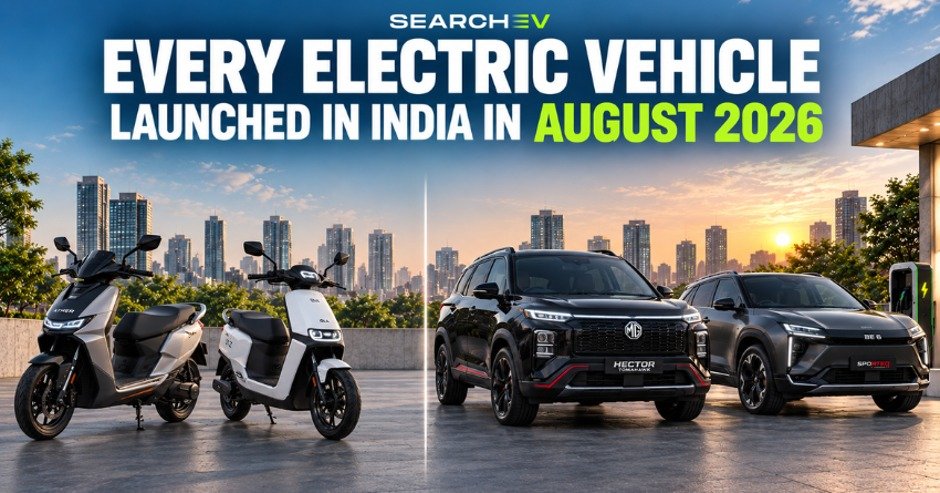
- A total of 10 EVs (two and four-wheelers) were launched in August 2026
- Ather finally entered the sub-Rs 1 lakh scooter fight with the Konarc, priced from Rs 99,999
- Ola relaunched the S1 Z with a mid-drive motor and a claimed range of up to 301 km, starting at Rs 79,999
- JSW MG Motor introduced its first ADAPT-platform SUV with two powertrains, the Hector Tomahawk EV (from Rs 19.49 lakh) and the Hector Tomahawk PHEV (Rs 25.69 lakh)
- Mahindra renamed and updated the BE 6 as the BE 6 Sporteq, adding a 70 kWh battery option and BaaS pricing from Rs 11.45 lakh
- BYD undercuts its own Sealion 7 lineup by nearly Rs 8 lakh with the new Dynamic variant at Rs 41.90 lakh
Electric Two-Wheelers Launched In August 2026
TVS iQube 2.3 kWh Base Variant: Bigger Battery, Same Price
Key highlights:
- The base variant of the TVS iQube now gets a 2.3 kWh battery pack, up from 2.2 kWh
- IDC range rises to 114 km per charge, nearly 20 km more than before
- Peak power output drops to 3.68 kW from 4.4 kW
- Top speed reduced to 68 kmph from 75 kmph
- The front disc brake is no longer offered on this trim
- Price stays unchanged at Rs 1.16 lakh, ex-showroom
TVS quietly updated its most accessible family scooter to improve its competitive edge. The base TVS iQube now features a 2.3 kWh battery. The bigger cell adds real usable range, useful for riders doing longer daily commutes on a budget scooter. But TVS clearly retuned the motor for efficiency over punch, because the peak output has come down noticeably, and so has the top speed. Riders who valued the base iQube’s quicker acceleration might notice the difference, though for stop-and-go city traffic, the trade-off arguably makes sense.
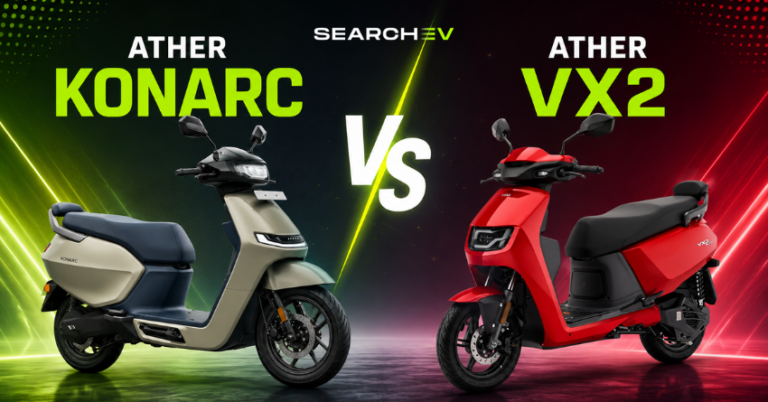
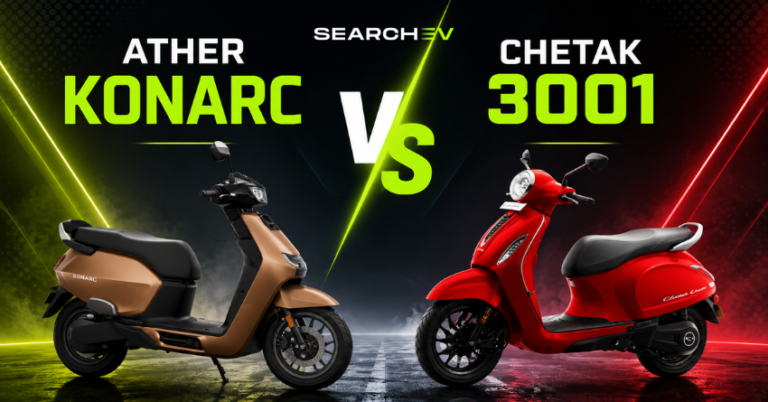
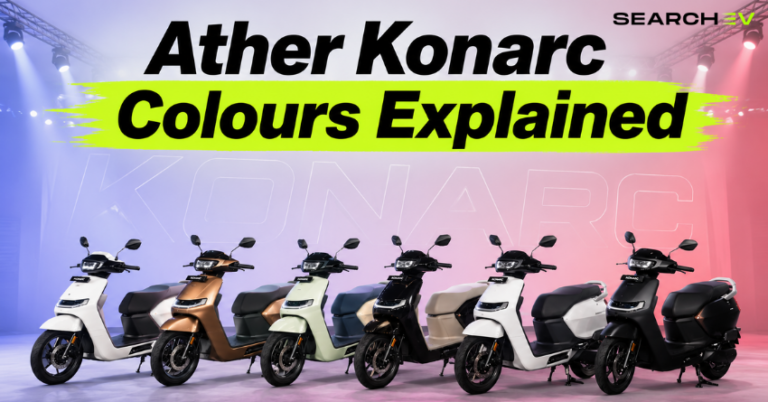
Ather Konarc: Prices Start At Rs 99,999 Onwards; Offered In Six Variants
Key highlights:
- Ather’s first sub-Rs 1 lakh scooter, priced from Rs 99,999
- Built on an entirely new EL platform meant to be more affordable to manufacture
- Two trims, S-line and Z-line, spread across six variants
- Claimed range tops out at 200 km on the top S-line trim
- Gets a 14-inch front wheel and 12-inch rear, with 100 mm of rear suspension travel
- Metal body panels and a steel unibody chassis, uncommon at this price point
- Comes with a keyless Magic Key system, Airwalk assist, and 31 litres of underseat storage
For a company that built its name on performance-first scooters like the 450 series, the Konarc is Ather playing a completely different game. This is a scooter engineered around cost discipline first, and everything about the specification sheet reflects that intent. The base S 100 variant comes in at Rs 99,999 with a 2.1 kWh battery and a claimed 100 km range, while stepping up through the S-line trims gets you to a 3.5 kWh pack and 161 km of claimed range for Rs 1,44,999. A longer-range S-line variant, quoted at up to 200 km, and two Z-line variants are also part of the lineup, though pricing on those hadn’t been announced at launch.
Ola S1 Z Launched At Rs 79,999: Up To 301 Km Claimed Range
Key highlights:
- The S1 Z introduces the in-house developed 46160 LFP Bharat Cells.
- Two variants: 3.1 kWh at an introductory Rs 79,999, and 5.1 kWh at Rs 99,999
- IDC certified range of 179 km on the smaller pack, 301 km on the bigger one
- Warranty of 3 years or 40,000 km, extendable to 8 years or 70,000 km
- Ships with MoveOS 5 software as standard, including cruise control and geo-fencing
- Deliveries begin only in December 2026 for the smaller pack and March 2027 for the larger one
Ola’s second attempt at the S1 Z nameplate barely resembles the first. This one uses a fixed battery pack built around Ola’s own cylindrical LFP cells, which the company says are its safest and most thermally stable yet. The headline number, a claimed 301 km on a single charge for under a lakh, is the kind of figure that could genuinely pull buyers away from petrol commuters like the Activa or Splendor, provided real-world numbers come close to matching it. Ola has deliberately capped the top speed at 70 kmph on both variants.
BGauss Oowah Max Plus: Rs 1.22 Lakh Electric Scooter
Key highlights:
- Now the flagship model in BGauss’s Oowah scooter lineup
- Priced at Rs 1,22,990, ex-showroom
- Gets a 3.0 kWh removable battery pack
- ARAI-certified range of 145 km per full charge
- Vehicle and battery warranty extendable up to 5 years or 75,000 km under the gold plan
BGauss is positioning the Oowah Max Plus squarely at younger, first-time EV buyers, and the colour palette alone makes that intent pretty obvious. Underneath the styling, though, it’s a fairly conventional urban commuter. A 3.0 kWh removable battery and a 60 kmph top speed aren’t numbers that will excite performance-minded riders, but they cover the basics competently for someone doing daily city runs. The removable battery is arguably the bigger selling point here, since it lets apartment dwellers without dedicated charging points simply carry the pack indoors.
E3 Trion Electric Scooter: Priced Between Rs 99,999 and Rs 1,19,999
Key highlights:
- Debut product from Bengaluru-based startup E3 Electric. AI
- Offered in three variants: C1, C1x, and C2
- C1 uses a 2.3 kWh removable battery with a claimed 108 km range, priced at Rs 99,999
- C1x gets a 3 kWh fixed battery and the longest claimed range in the lineup at 165 km, priced at Rs 1,09,999
- C2 trades some range for performance with a 3.5 kW motor and 145 Nm torque, priced at Rs 1,19,999
- Battery warranty extends up to 8 years or 1 lakh km
- Comes with a daily AI Healthscan diagnostic and predictive maintenance alerts
- Deliveries expected to begin toward the end of September 2026
A brand-new scooter maker entering the market is always a bit of a gamble for early buyers, and E3 Electric.AI seems aware of that. Almost everything about the Trion’s pitch is built around addressing reliability anxiety head-on: an eight-year battery warranty, a ten-second pre-ride diagnostic check it calls AI Healthscan, and a modular chassis, dubbed the TRIAXISFRAME, that can support both fixed and removable battery configurations. With a 5-inch display, Google Maps integration, and a 52-litre combined storage figure, the feature set reads competitively against far more established names.
Vida VX2 Go 3.1 kWh Fixed Battery: Price And Specifications
Key highlights:
- New fixed-battery variant of the Vida VX2 Go, priced at Rs 1.13 lakh
- Uses a 3.1 kWh fixed pack
- Continues with the same 6 kW motor and 26 Nm torque as other VX2 variants
- Claimed top speed of 70 kmph with Eco and Ride modes
- Also available under Vida’s Battery-as-a-Service model to lower upfront cost
Hero MotoCorp decided to offer more flexibility to its customers by introducing a fixed battery version of the Vida VX2. While the original models relied on removable packs, the new VX2 Go appeals to buyers who prefer standard direct plug charging. It retains the same 6 kW swingarm-mounted motor and the 4.3-inch digital display found on the premium variants.
Electric Four-Wheelers Launched In August 2026
MG Hector Tomahawk EV Price In India: Rs 19.49 Lakh Onwards
Key highlights:
- First vehicle built on JSW MG Motor’s new ADAPT platform
- Offered in five-seat and seven-seat layouts
- Gets a single 69.2 kWh battery option across the range
- Claimed MIDC range of 517 km
- 204 hp motor takes it from 0 to 100 kmph in a claimed 8.2 seconds
- Supports 90 kW DC fast charging, with a 30 to 80 percent top-up in 35 minutes
- Also gets vehicle-to-home functionality, letting it power household appliances
- Features like 15.6-inch infotainment display, ventilated seats, a 10-speaker Infinity sound system
- Deliveries begin in September 2026
The three-row electric SUV category in India has been fairly thin, and the Hector Tomahawk EV walks straight into that gap. Priced from Rs 19.49 lakh, it undercuts several rivals while offering a genuinely long claimed range of 517 km on a single charge, backed by a 69.2 kWh battery that’s shared across every variant. The Battery-as-a-Service option drops the entry price to Rs 13.99 lakh in exchange for a per-kilometre rental fee.
MG Hector Tomahawk PHEV Price: Rs 25.69 Lakh
Key highlights:
- Also built on the ADAPT platform, launched alongside the EV version
- Combines a 1.5-litre naturally aspirated petrol engine with a 20.5 kWh battery
- Combined output rated at 145 kW (194 bhp) and 230 Nm
- Three-row layout with seating for up to seven
- The battery can be charged externally, unlike a conventional hybrid
- Priced at Rs 25.69 lakh outright, or around Rs 21.79 lakh under BaaS at Rs 3.20 per km
- The feature set includes Level 2 ADAS, a large touchscreen, and a digital instrument cluster
The plug-in hybrid space in India’s mainstream SUV segment has stayed fairly empty, which makes the Hector Tomahawk PHEV an uncommon proposition on the price list. Its 20.5 kWh battery is large enough for a meaningful chunk of daily driving to happen purely on electric power, provided owners can plug in regularly at home, while the 1.5-litre petrol engine removes any anxiety around longer trips where charging infrastructure might be patchy.
Mahindra BE 6 Sporteq Price: Rs 11.45 Lakh Onwards (BaaS)
Key highlights:
- The BE 6 has been renamed and updated as the BE 6 Sporteq
- Adds a new 70 kWh battery option alongside the carried-over 59 kWh and 79 kWh packs
- The MIDC range now goes up to 683 km on the largest battery
- New triple-screen coast-to-coast display layout borrowed from the XEV 9e and XEV 9s
- Level 2 ADAS, a 540-degree camera, and 7 airbags feature on the safety list
- BaaS pricing starts at Rs 11.45 lakh plus Rs 3.75 per km; outright pricing runs up to Rs 26.95 lakh
Mahindra’s decision to rebrand the BE 6 as the BE 6 Sporteq is not only a naming exercise. The cabin has been reworked most visibly, ditching the earlier driver-focused halo cockpit for a wide, coast-to-coast triple-display setup that brings it in line with Mahindra’s larger XEV models. None of this changes the core proposition much: this is still a coupe-SUV with genuinely strong range and fast charging, but it now arrives with a noticeably more premium-feeling interior and a BaaS entry price of Rs 11.45 lakh.
BYD Sealion 7 Dynamic Price: Rs 41.90 Lakh
Key highlights:
- New entry-level Dynamic variant added to the Sealion 7 lineup
- Priced roughly Rs 8 lakh below the previous starting variant, the Premium
- Uses a smaller 71.8 kWh Blade Battery against the 82.56 kWh pack in higher trims
- NEDC claimed a range of 520 km, with 0 to 100 kmph in 7.3 seconds
- Retains the 15.6-inch rotating touchscreen and panoramic glass roof as standard
- Gets 11 airbags and a full Level 2 ADAS suite despite the lower price
- Misses out on a leather steering wheel, head-up display, and gesture-controlled tailgate compared with the Premium trim
Until this launch, getting into a Sealion 7 meant starting at the Premium trim, so the Dynamic variant effectively lowers the door to BYD’s flagship electric SUV by close to Rs 8 lakh. The trade-off is a smaller Blade Battery and a little less equipment. Against rivals like the Hyundai Ioniq 5 and Kia EV6, the Sealion 7 Dynamic continues to undercut on price, but by a wider margin now.