

| Specification | Standard (42 kWh) | Long Range (49 kWh) |
|---|---|---|
| Claimed range (WLTP) | Over 300 km | Up to 355 km |
| Power | About 95 bhp (71.1 kW) | About 115 bhp (85.5 kW) |
| Torque | 147 Nm | 147 Nm |
| Drive type | Front-wheel drive | Front-wheel drive |
| 0 to 100 km/h | About 11.7 seconds | About 10.6 seconds |
| Top speed | 150 km/h | 150 km/h |
Hyundai Inster EV Dimensions
| Dimension | Value |
|---|---|
| Length x Width x Height | 3,825 x 1,610 x 1,575 mm |
| Wheelbase | 2,580 mm |
| Ground clearance | 169 mm |
| Turning radius | 5.3 m |
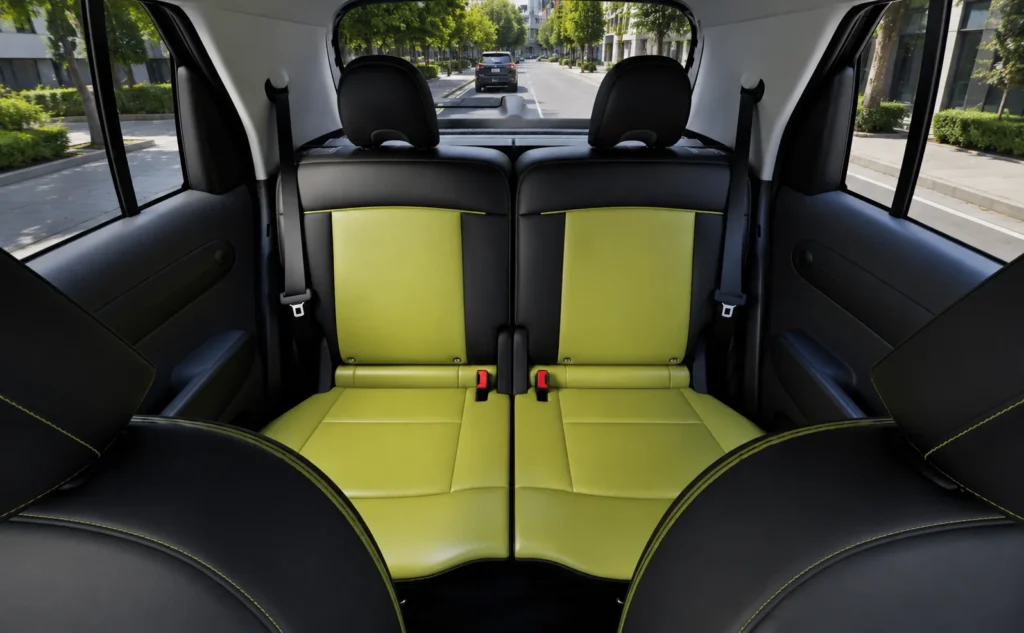
| Boot space | 238 litres (1,059 litres with rear seats folded) |
| Kerb weight | 1,423 kg |
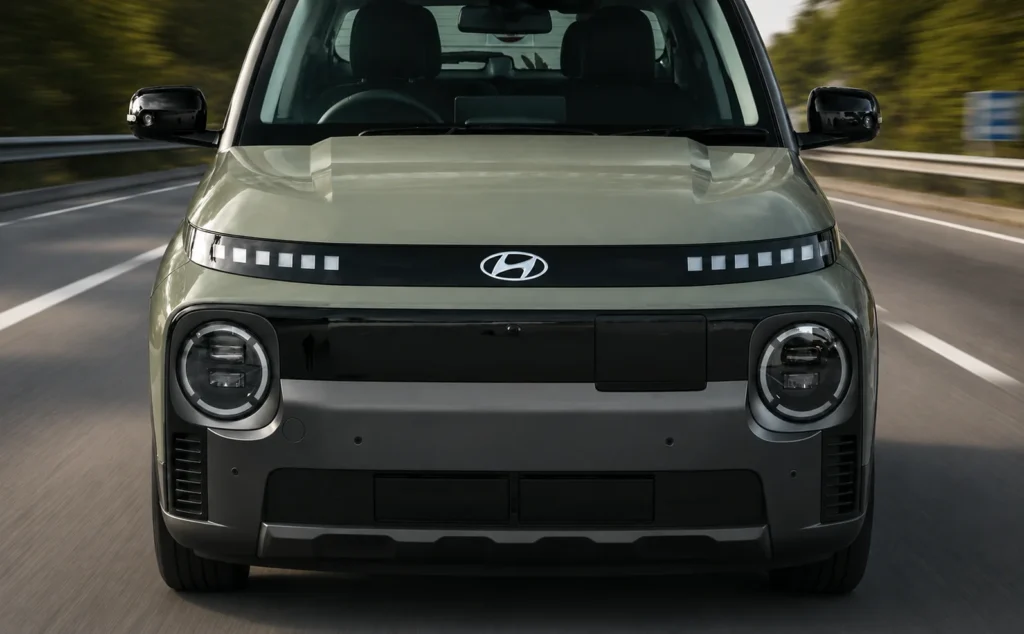
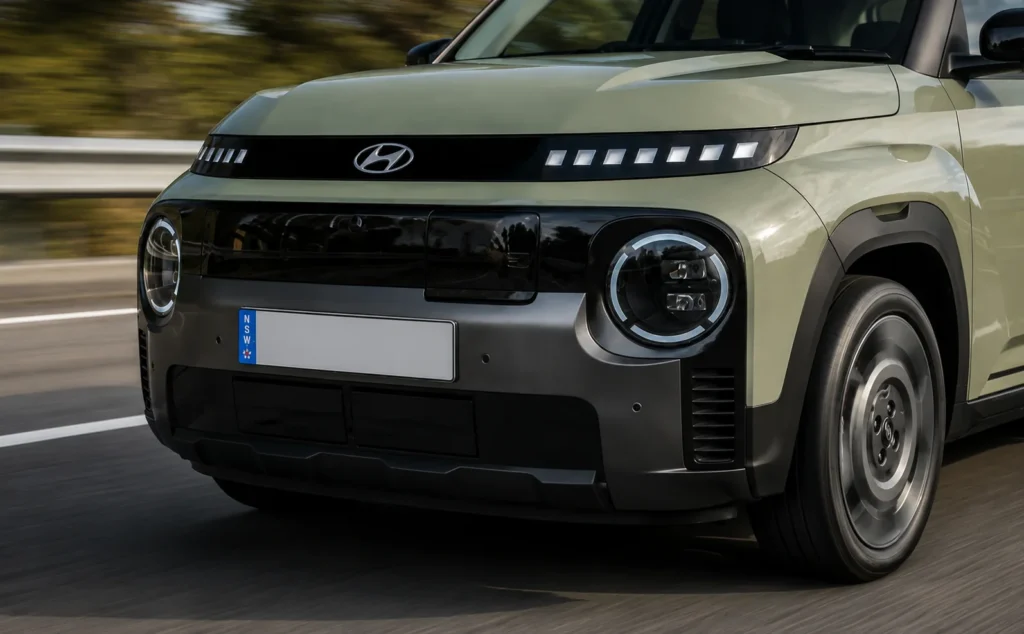
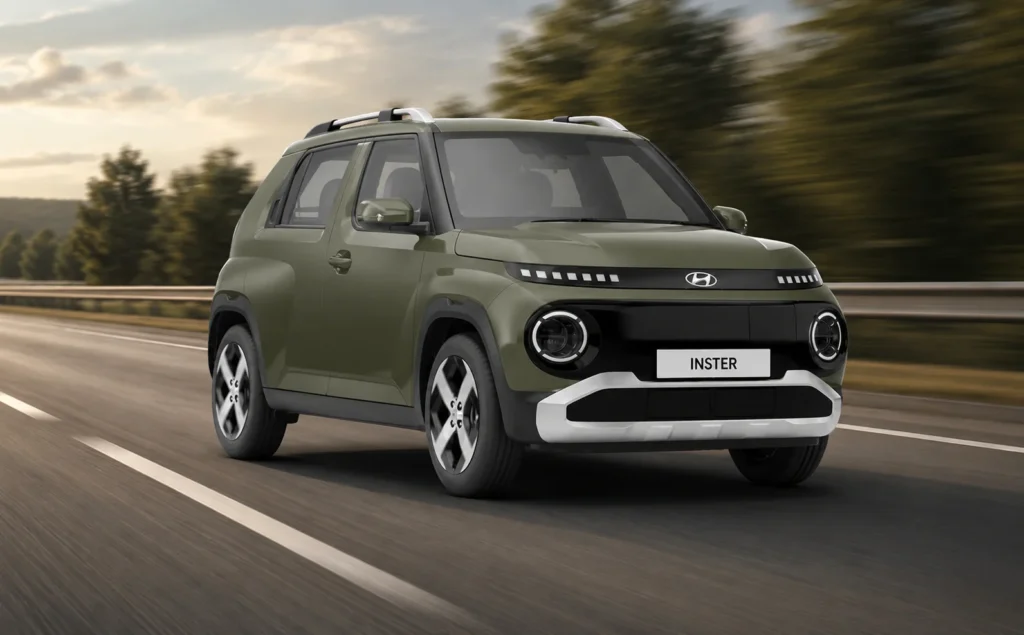
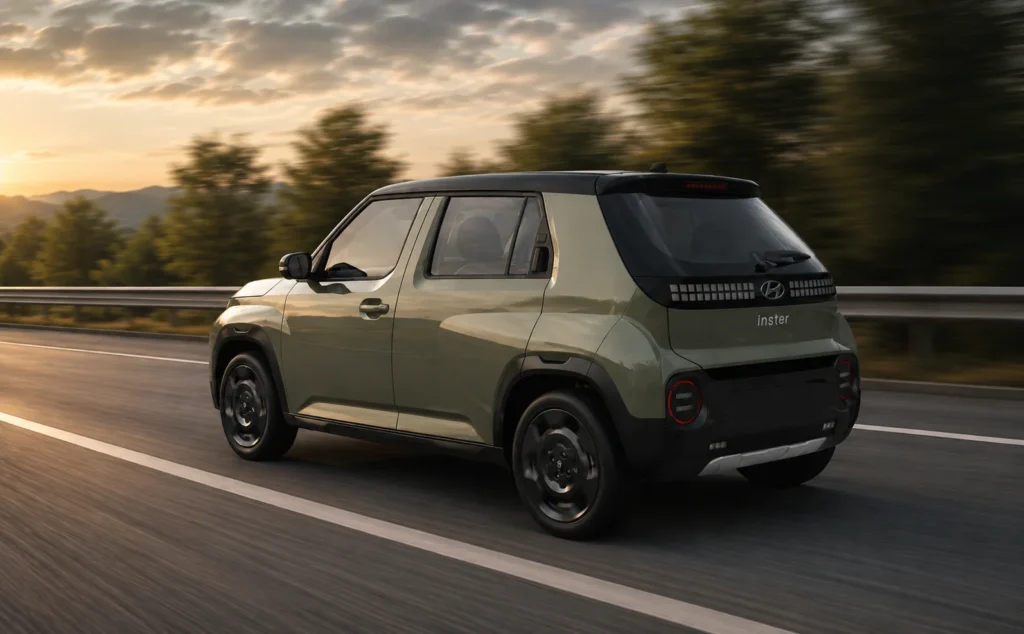
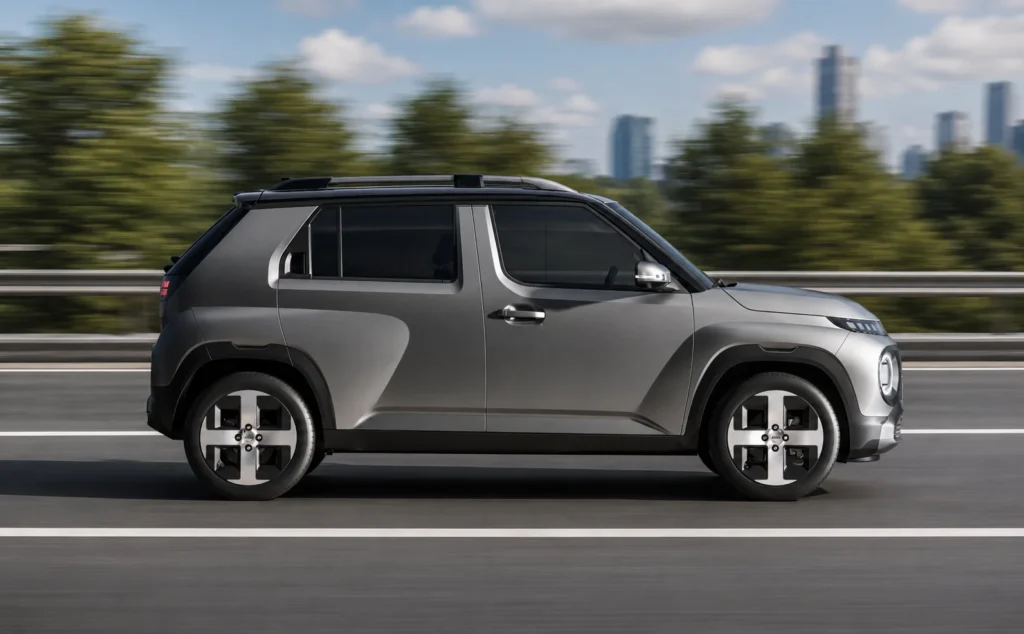
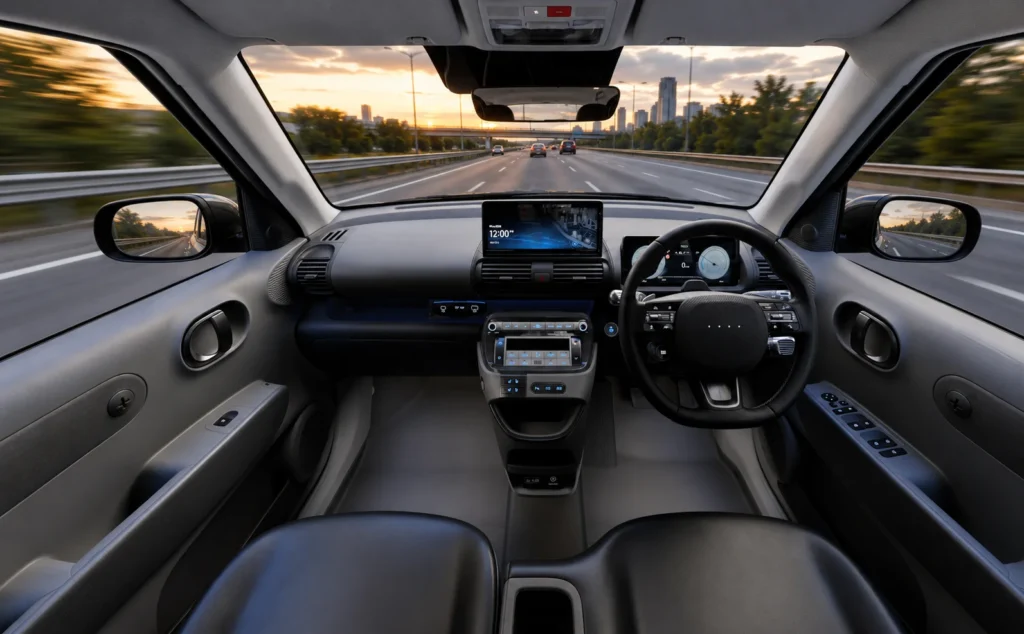
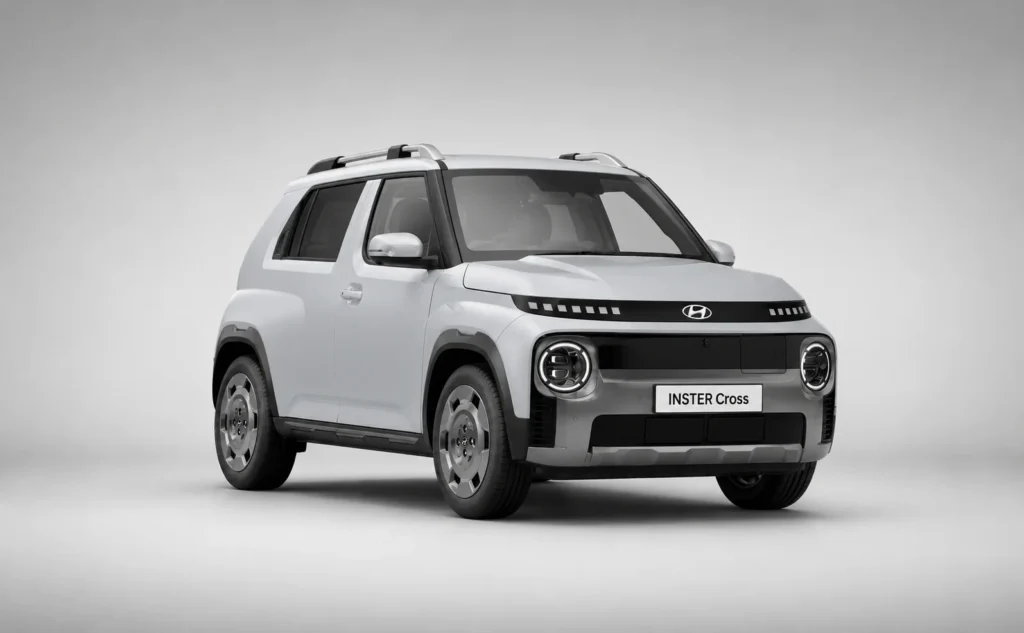
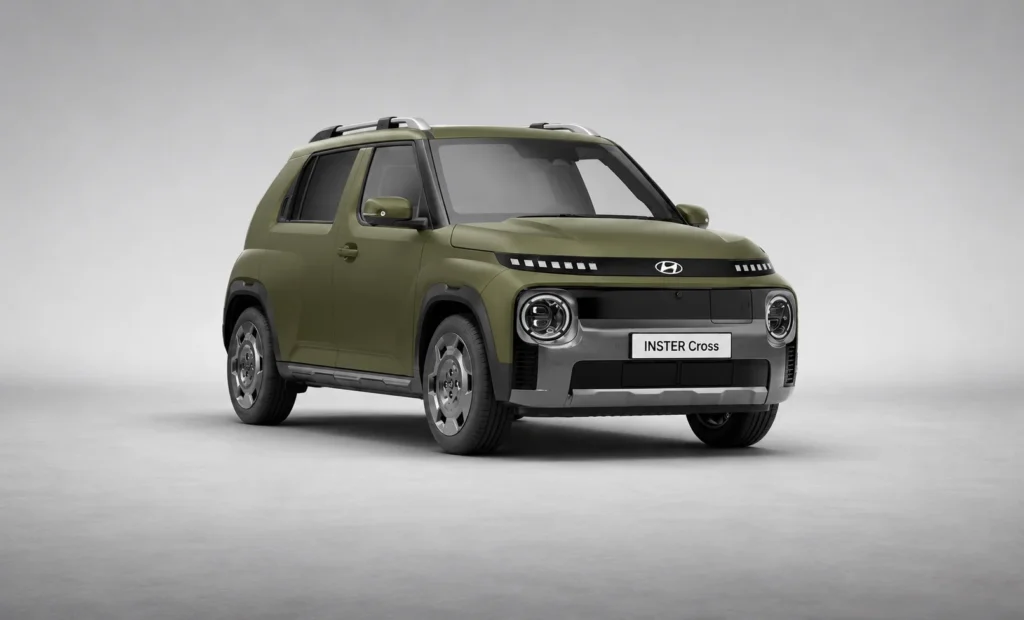
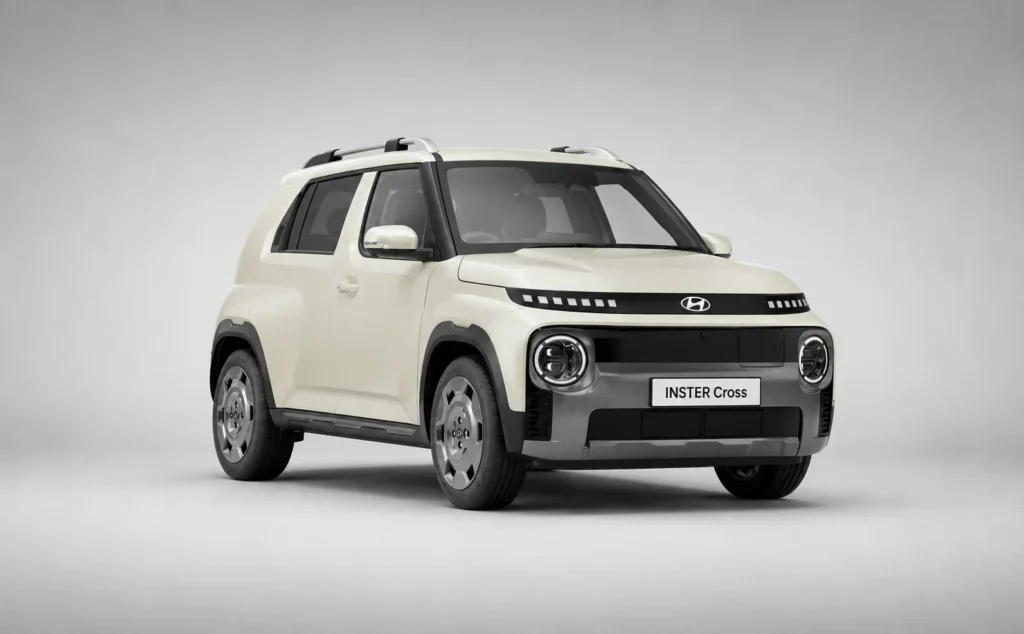
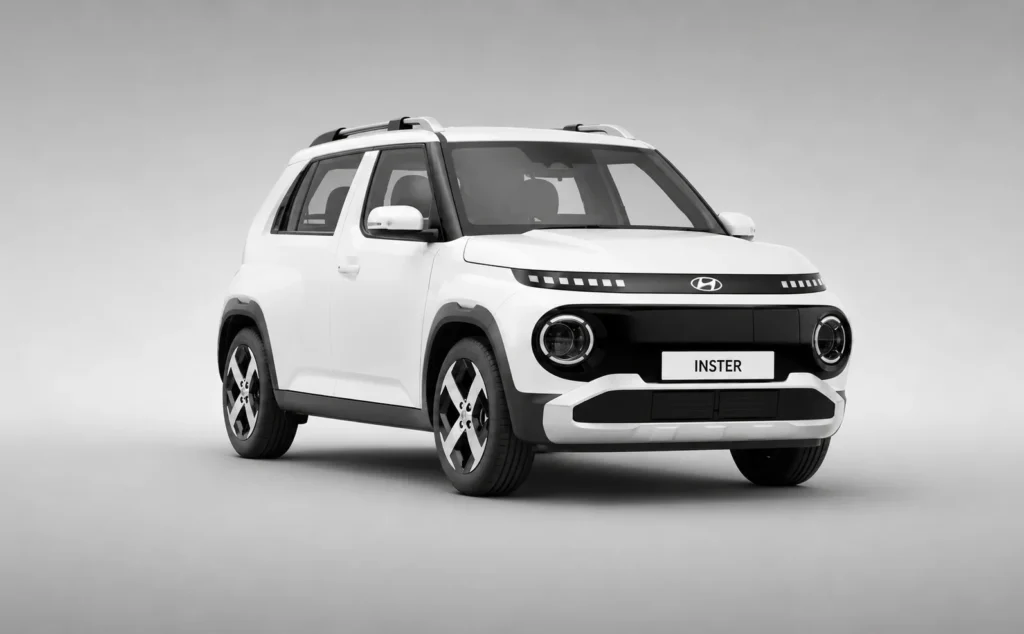
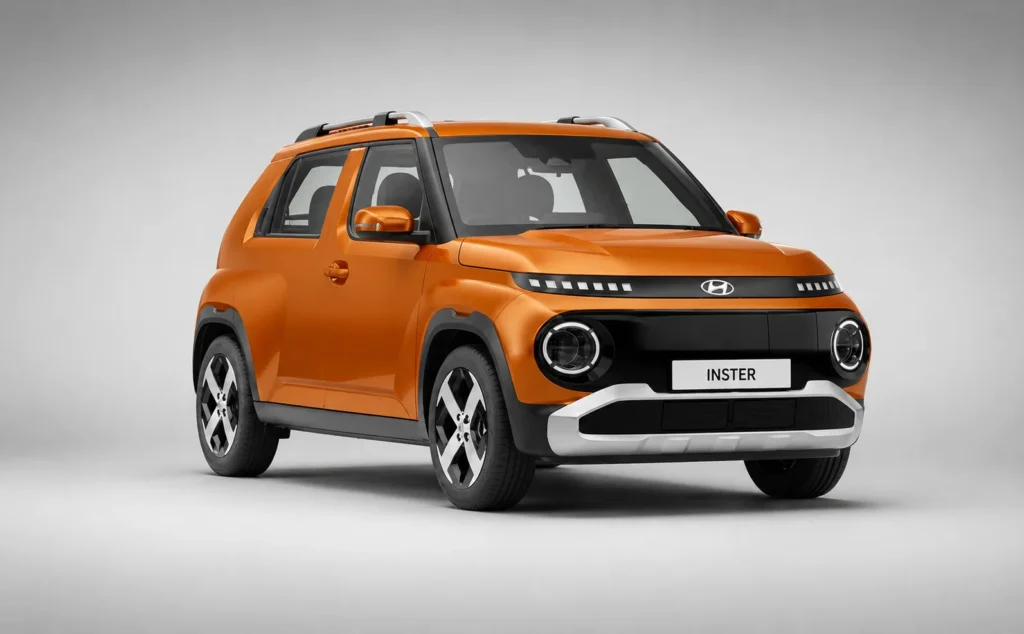
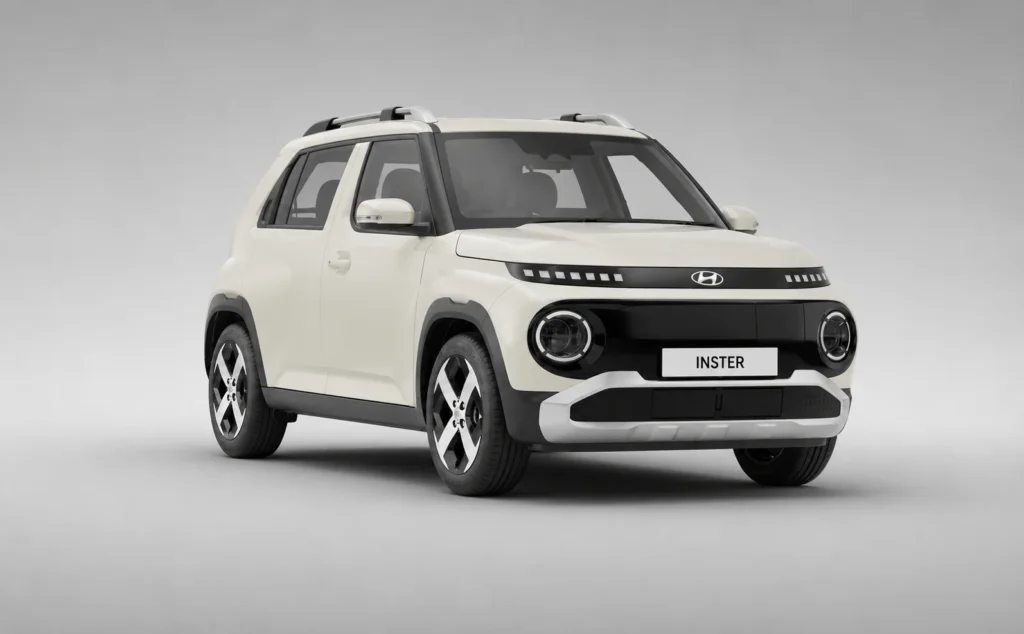
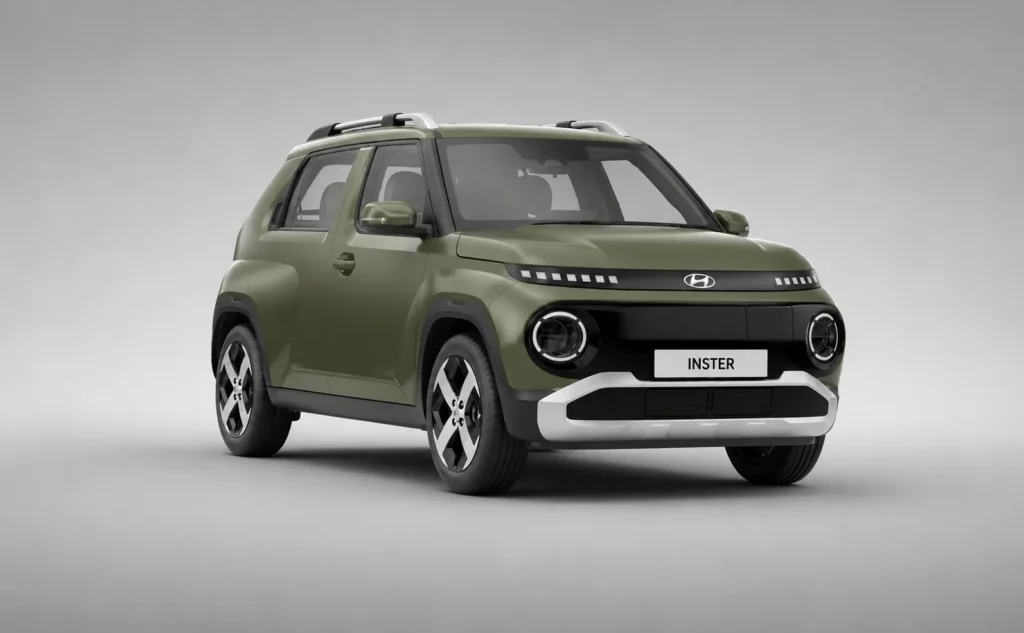
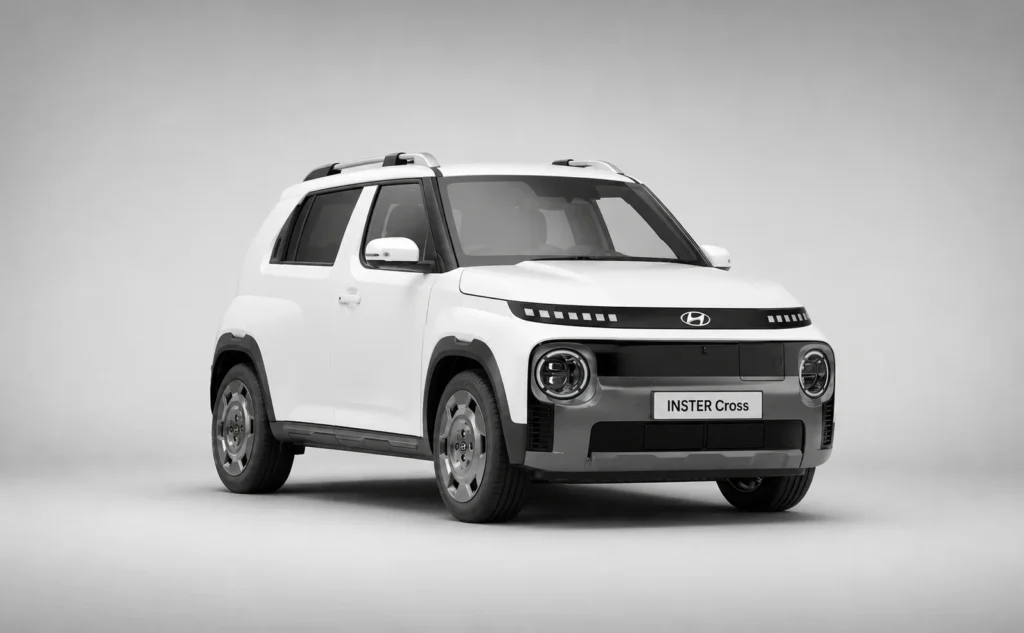
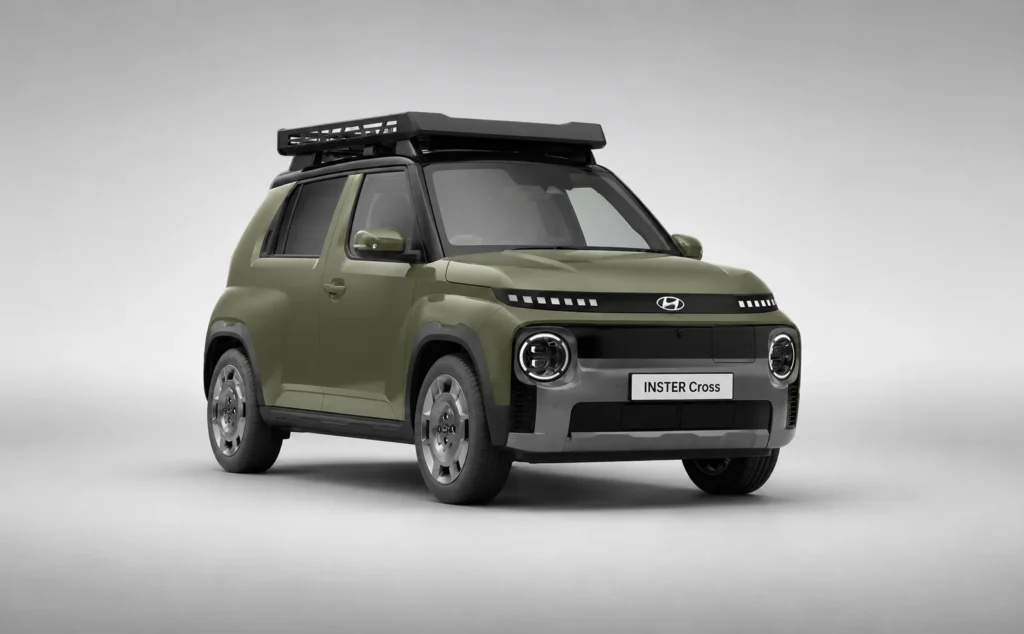
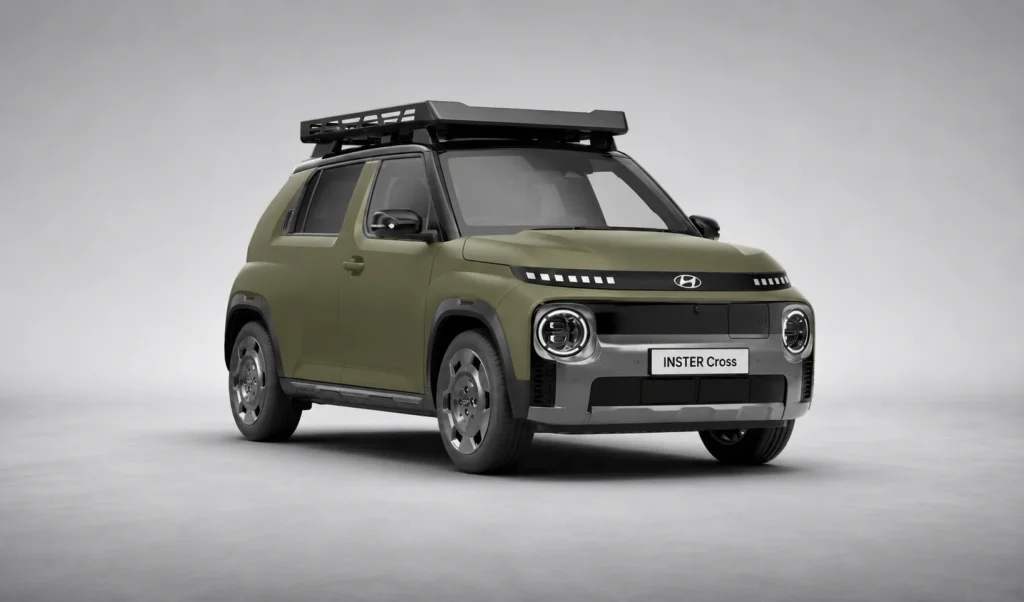
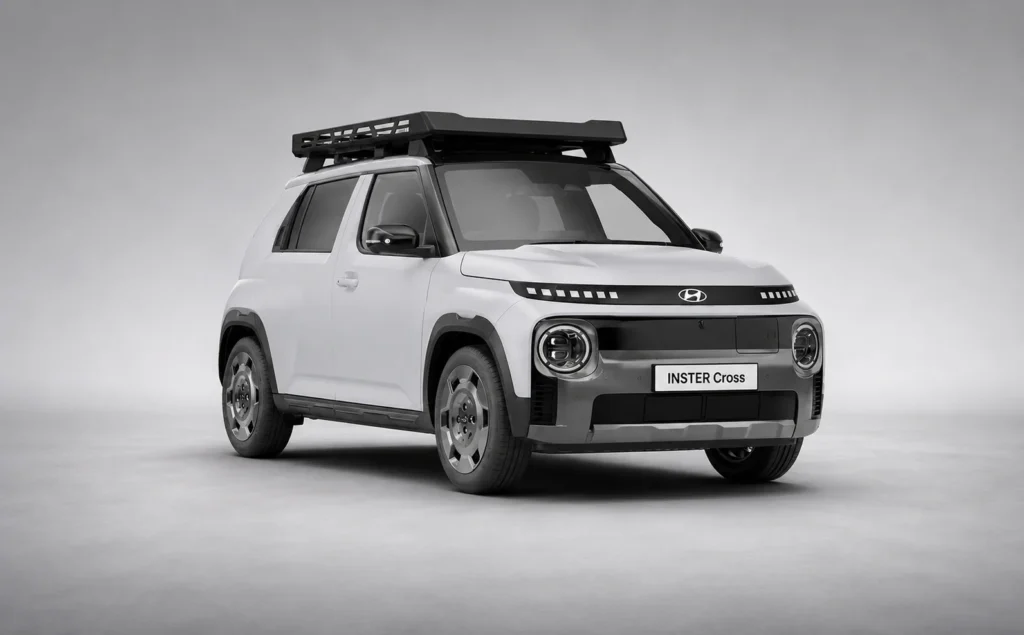
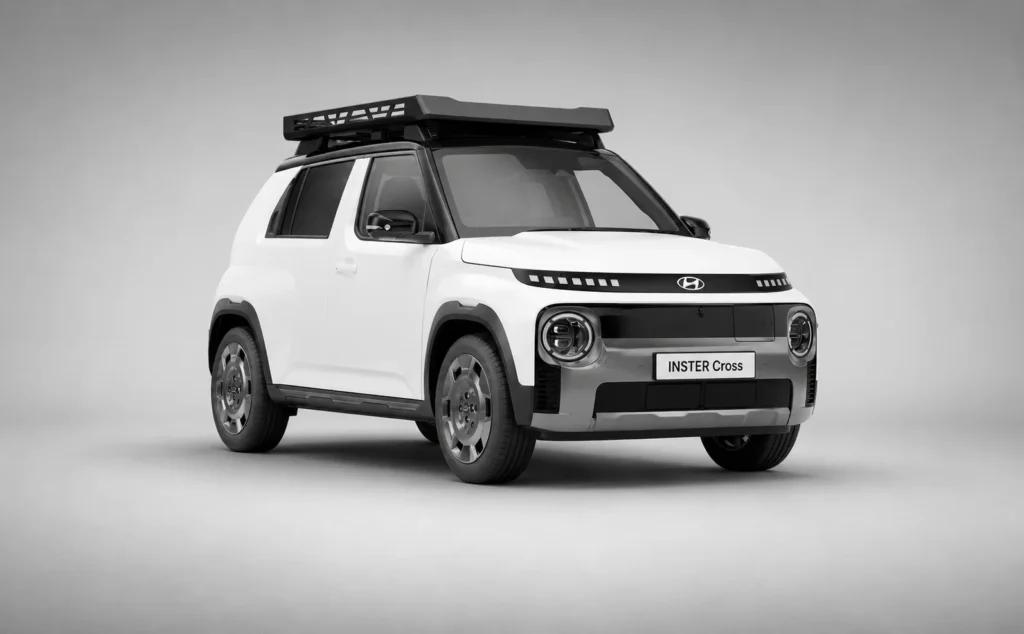
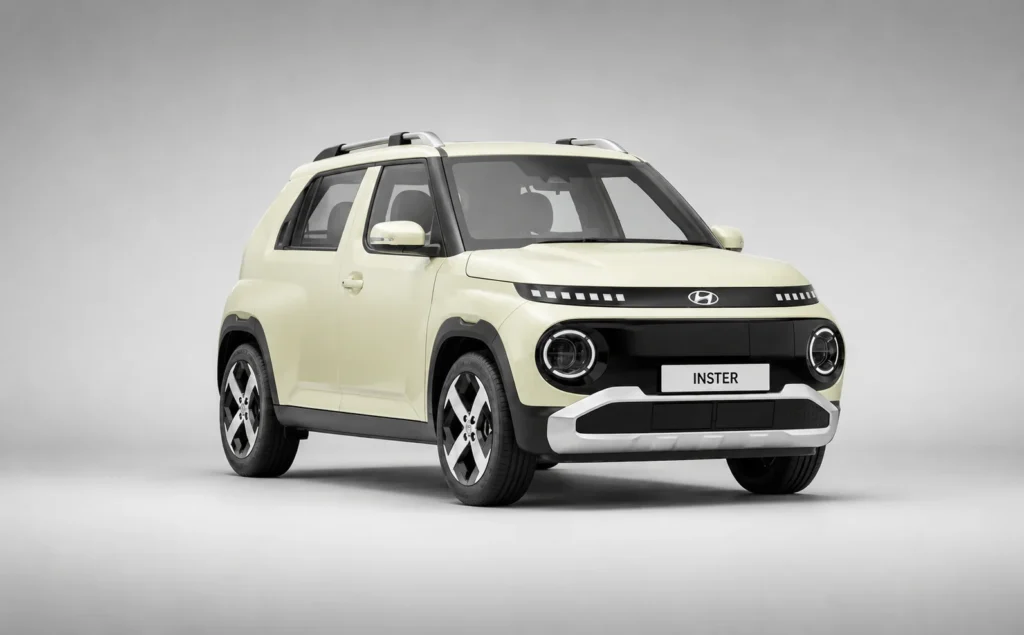
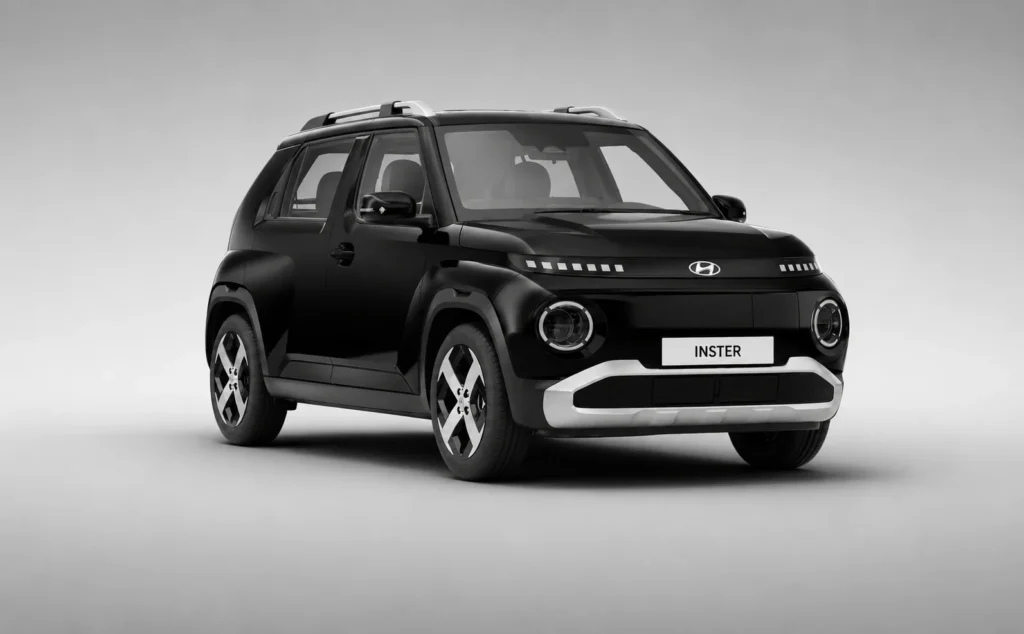
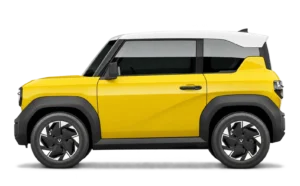
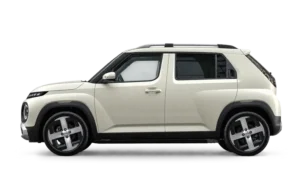
The Inster is a compact micro-SUV, shorter than most hatchbacks in India. However, its long 2,580 mm wheelbase frees up surprising cabin space for its size. In addition, folding the rear seats expands the boot to over 1,000 litres, while 169 mm of ground clearance helps on rough city roads.
Hyundai Inster EV Battery and Range Specifications
Globally, the Inster offers two lithium-ion battery options. The 42 kWh pack claims over 300 km (WLTP), while the 49 kWh Long Range pack claims up to 355 km. In Indian real-world driving, the larger battery could deliver roughly 270 to 300 km. That’s enough for several days of city commuting on one charge.
Motor and Performance
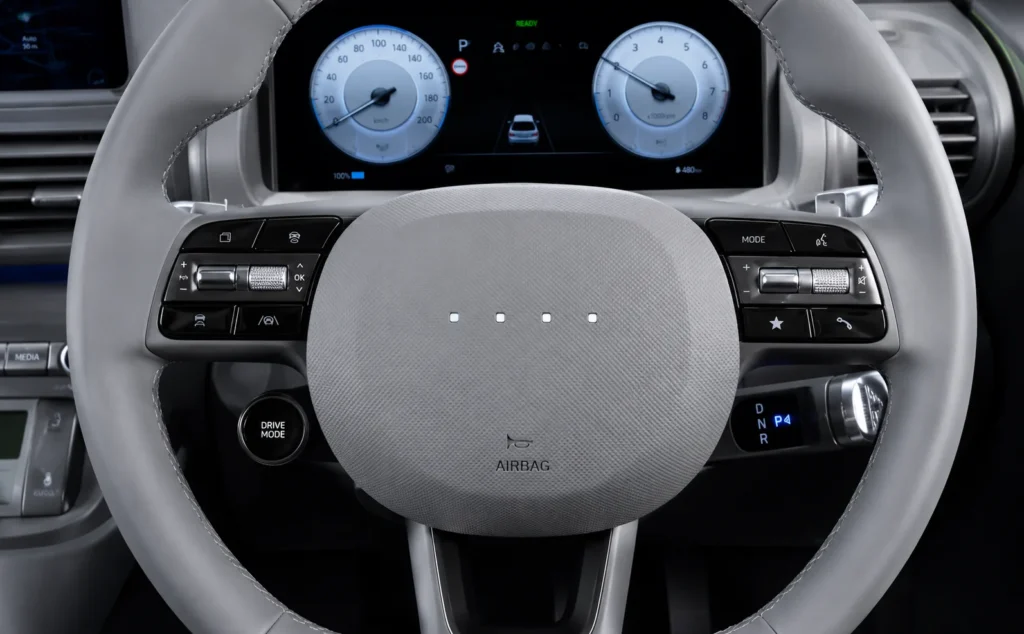
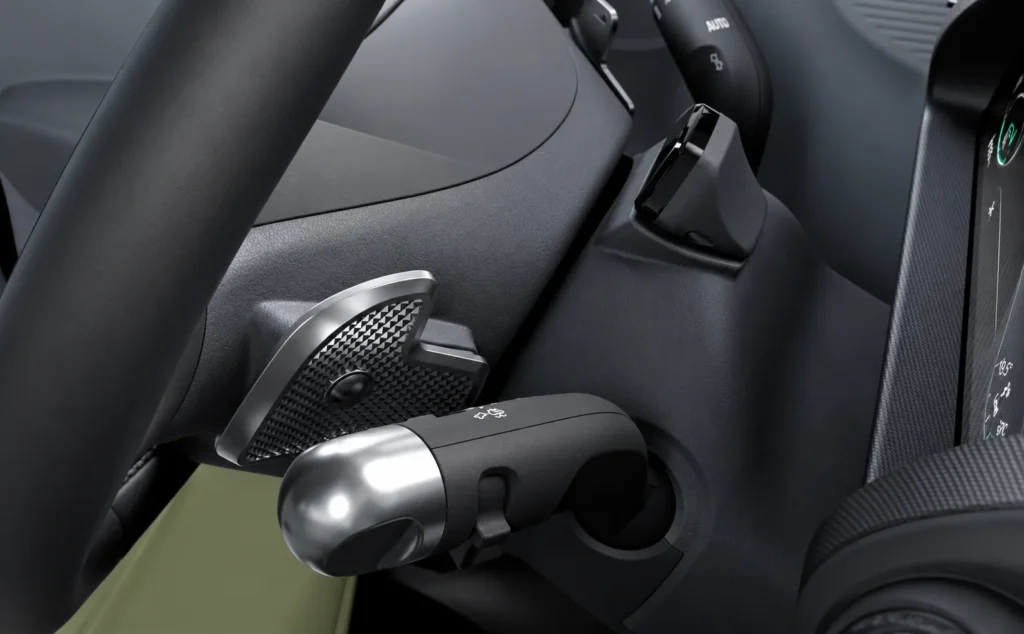
The Inster uses a single front-mounted permanent magnet synchronous motor. The Standard version makes about 95 bhp, while the Long Range makes about 115 bhp, both with 147 Nm of torque. As a result, the Long Range reaches 100 km/h in about 10.6 seconds. Drivers also get Eco, Normal, Sport and Snow modes, plus paddle-adjustable regen with i-Pedal one-pedal driving.
Charging
| Charger | Charging time |
|---|---|
| DC fast charger, up to 120 kW (10 to 80%) | About 30 minutes |
| 11 kW AC wall box (0 to 100%) | About 4 to 4.5 hours |
| 2.3 kW portable charger (0 to 100%) | About 16 to 19 hours |
For a small car, the Inster’s 120 kW DC charging is impressively quick. At home, an 11 kW wall box fully charges it in an afternoon.
Hyundai Inster EV Suspension, Tyres and Brakes
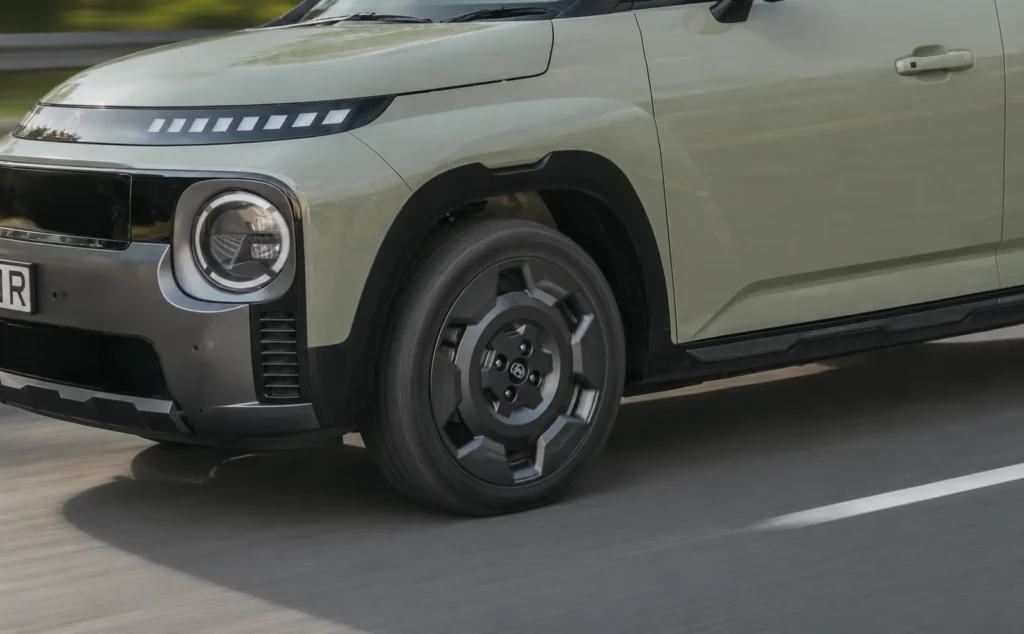
The Inster uses MacPherson strut front suspension and a coupled torsion beam rear setup. Lower versions ride on 185/65 R15 tyres, while higher versions get 205/45 R17 alloys. It gets ventilated disc brakes at the front and solid disc brakes at the rear.
India Launch and Warranty
The Inster is expected to launch in India soon, though Hyundai hasn’t confirmed a date or India specs. Globally, it gets an 8-year or 1.6 lakh km battery warranty. For expected prices, see the Hyundai Inster EV price page. To compare it with a popular rival, check the Tata Punch EV.

What's good
-
 Gets an impressive range in both variants.
-
Gets a sleek and unique design.
-
Get a stable and comfortable riding experience.

What's not so good
-
 The top speed could have been better.
-
The build quality could have been better.
-
The cabin can be narrow.
 268Km/c
 130Kmph
 36Mins

 Connect Now