Quick Reads
- Gets the same twin NMC battery pack as Creta Electric and Carens Clavis EV
- ARAI-certified range stands at 443 km and 526 km respectively.
- Supports up to 100 kW DC fast charging, allowing a 10 to 80 percent top-up in just 39 minutes
- Comes with Lifetime Battery Warranty, a Battery-as-a-Service (BaaS) option, and an Assured Buyback program
Intro
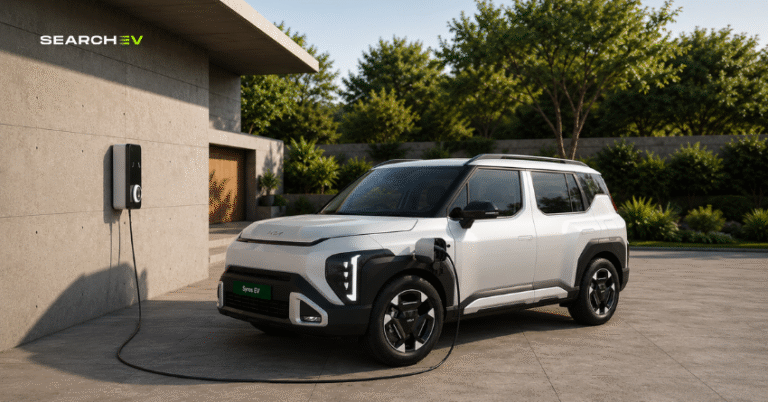
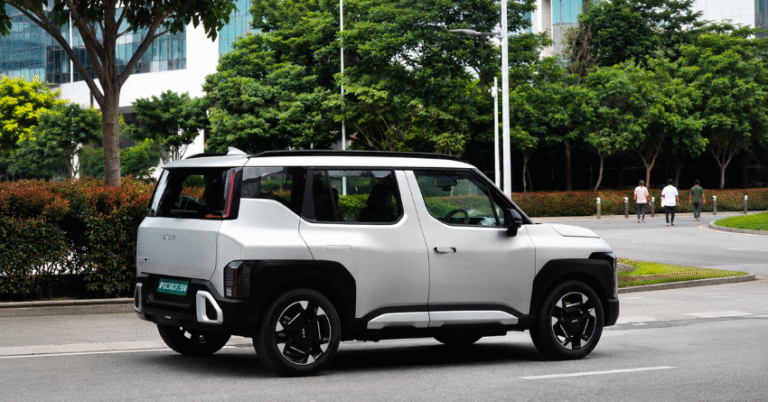
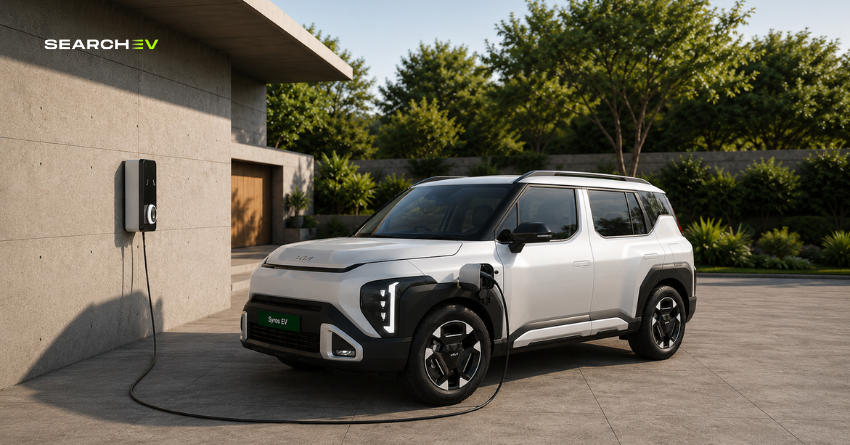
Following a series of teasers and spy shots, Kia India has finally pulled the wraps off the highly anticipated Syros EV. Sharing its roots with the combustion-engine Syros, this all-electric version is ready to take on the MG Windsor EV and the Nexon EV with its class-leading range, and myriad of premium features. With the vehicle unveiled in its entirety, Kia has officially opened the order books for a token amount of Rs 25,000, setting the stage for its market launch later this month.
Battery, Range, and Performance
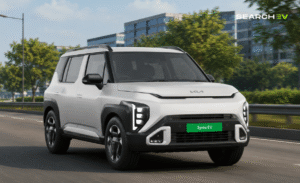
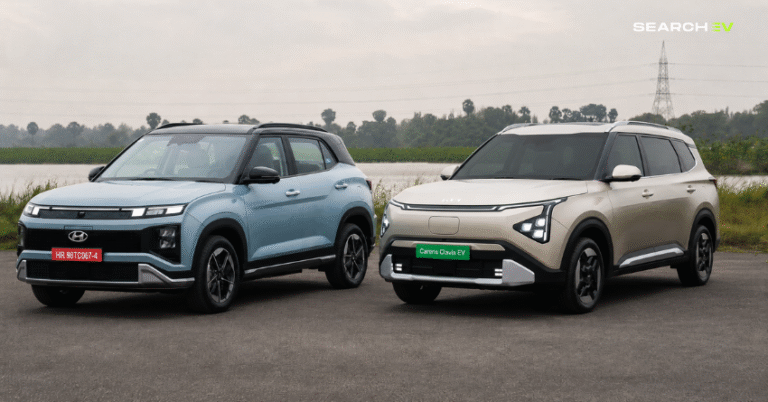
At the heart of the Syros EV are two battery pack options shared with the Carens Clavis EV and Hyundai Creta Electric: a 42 kWh unit and a larger 51.4 kWh Extended Range (ER) pack. Because the Syros is a relatively compact and lighter vehicle, it extracts exceptional efficiency from these batteries.
The standard 42 kWh battery pairs with a front-axle electric motor producing 133 bhp and 255 Nm of torque, yielding a certified MIDC range of 443 km. The larger 51.4 kWh pack gets a more potent motor delivering 168 bhp and 255 Nm, pushing the ARAI-certified range to a segment-best 526 km, making it the first in its class to cross the 500 km milestone. This Extended Range variant can also sprint from 0 to 100 kmph in a brisk 8.1 seconds.
Charging and EV-Specific Tech
The Syros EV is equipped with 7.4 kW or 10.8 kW onboard AC charger options while supporting DC fast charging up to 100 kW. Using a compatible 100 kW fast charger, the battery can replenish from 10 to 80 percent in approximately 39 minutes.
Other EV-specific additions include paddle shifters to adjust regenerative braking, an i-Pedal mode for single-pedal driving, and an internal Vehicle-to-Load (V2L) function allowing the car to power external electrical devices.
Variants and Features
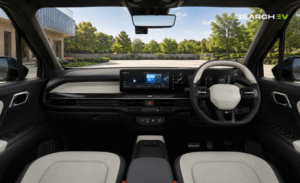
Kia will offer the Syros EV across seven variants: HTK, HTK+, HTX, HTK+ ER, HTX ER, HTX+ ER, and the top-spec X-Line ER.
Inside, the cabin closely mirrors its ICE counterpart, featuring the ‘Trinity Panoramic Display’, which seamlessly merges a 12.3-inch digital driver’s display, a 12.3-inch infotainment touchscreen, and a 5-inch climate control interface. The equipment list is extensive, including an 8-speaker Harman Kardon sound system, a dual-pane panoramic sunroof, 64-colour ambient lighting, and sliding, reclining, and ventilated rear seats, which is a rarity in this segment.
The new Kia EV makes its mark visually with the sealed ‘Digital Tiger Face’ grille, 17-inch two-tone alloy wheels, and a charging port on the front fender instead of the conventional rear flaps.
The Syros EV prioritises safety through standard equipment available for all trim levels with six airbags, electronic stability control, and four-wheel disc brakes. The upper trims get the advantage of a 360-degree camera and Level 2 ADAS suite consisting of adaptive cruise control and lane-keeping assist.
It is expected to be competitively priced at between Rs 14 lakh and Rs 20 lakh (ex-showroom), and the Syros EV would definitely be able to pose strong competition to cars such as the Tata Nexon EV, the Mahindra XUV 3XO EV, and the MG Windsor EV.