Yamaha Aerox E Expert Review
- Electric
- Scooter
- 2 Seater
What's good
-
Styling and road presence lifted almost intact from the widely liked petrol Aerox
-
Agile, confidence-inspiring handling that shrugs off the extra battery weight
-
Strong, progressive brakes with properly reassuring stopping power
-
Loaded instrument cluster with navigation, connectivity and traction control as standard
What's not so good
-
Real-world performance falls well short of what the spec sheet promises
-
Stiff rear suspension makes for a jarring ride
-
Underseat storage has all but disappeared compared with the ICE version
-
Regenerative braking is too mild
-
Priced at a massive premium, without performance or feature lead to match
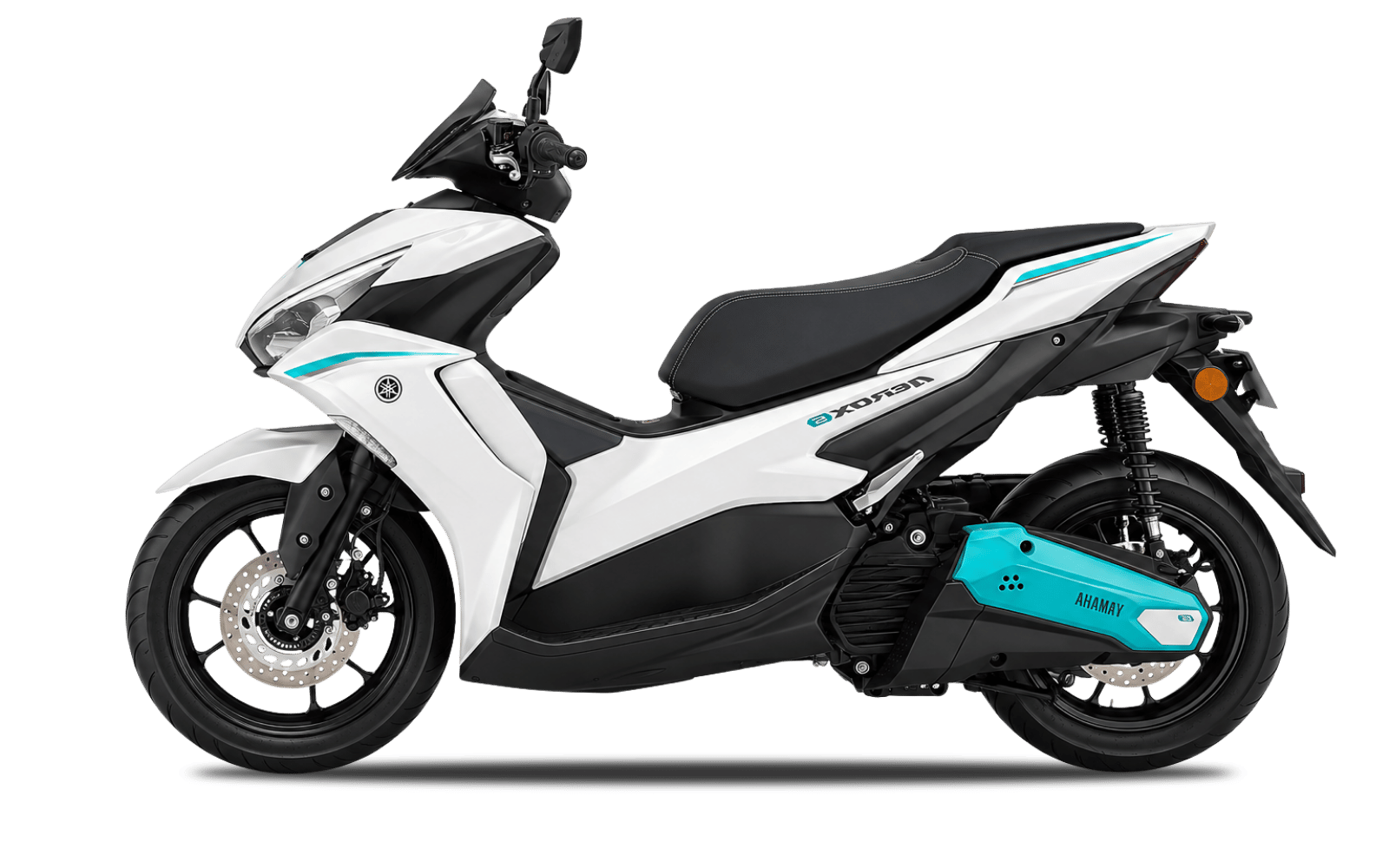
The Yamaha Aerox E is the newest electric scooter from the Japanese two-wheeler manufacturer. It is based on the brand’s popular maxi-scooter – the Aerox 155 – and retains a similar sporty design, aggressive styling, and performance-focused character, just like its petrol-powered counterpart. It blends premium quality and sporty design with an all-electric powertrain, which focuses on performance as well as convenience.
What's good
-
Styling and road presence lifted almost intact from the widely liked petrol Aerox
-
Agile, confidence-inspiring handling that shrugs off the extra battery weight
-
Strong, progressive brakes with properly reassuring stopping power
-
Loaded instrument cluster with navigation, connectivity and traction control as standard
What's not so good
-
Real-world performance falls well short of what the spec sheet promises
-
Stiff rear suspension makes for a jarring ride
-
Underseat storage has all but disappeared compared with the ICE version
-
Regenerative braking is too mild
-
Priced at a massive premium, without performance or feature lead to match
The Yamaha Aerox E is the newest electric scooter from the Japanese two-wheeler manufacturer. It is based on the brand’s popular maxi-scooter – the Aerox 155 – and retains a similar sporty design, aggressive styling, and performance-focused character, just like its petrol-powered counterpart. It blends premium quality and sporty design with an all-electric powertrain, which focuses on performance as well as convenience.
Yamaha Aerox E Expert Review
SEV Score

Samarth Kudale
Tested and reviewed by SEV Experts on 8 parameters
SEV Score

Samarth Kudale
Tested and reviewed by SEV Experts on 8 parameters
Expert Verdict
At nearly Rs 3 lakh on-road, the Yamaha Aerox E costs more than any other electric scooter sold by mass-market automaker in India right now, and that number invites a level of scrutiny the scooter doesn’t fully survive. The styling translates beautifully from the petrol original, and the way it holds a line through a corner is properly enjoyable. But the throttle mapping undersells the spec sheet, the boot has all but vanished, the range feels baffling for the price, and software calibration falls much short of the flagship price and tag.
Yamaha Aerox E Design
Exterior
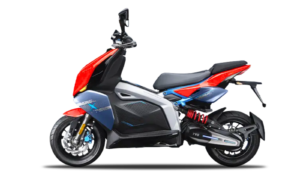
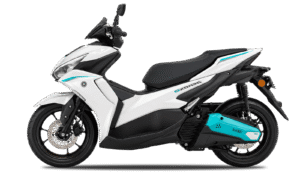
Park the Yamaha Aerox E next to its petrol sibling and most passersby won’t clock the difference until they’re within arm’s reach. The split LED headlamp still glares out from a sharply layered apron, the bodywork still tapers into that unmistakable X-shaped motif up front, and the whole scooter still looks like it’s leaning forward even parked on its stand.
What separates the two at a glance is colour and badging. The Aerox E currently comes in a single launch shade, glossy white finished off with black panels and pale blue graphic touches, with “Aerox E” lettering scattered across the bodywork and slimmer LED turn indicators at the back than the ICE bike gets.
The wheelbase has grown to 1,360mm to make room for the new underfloor hardware, and kerb weight climbs 13kg to 139kg thanks to the battery packs. It still commands attention on 14-inch wheels wrapped in chunky 110-section front and 140-section rear rubber, and it still draws the odd second look from strangers.
Build Quality & Fit and Finish
Panel fit and paint quality match what the combustion-engined Aerox Yamaha already delivered. The one component that doesn’t share that polish is the flap covering the swappable battery bay. It works, but it feels thinner and less confidence-inspiring than everything around it, and latching it shut one-handed takes a couple of tries until you learn the knack.
Yamaha Aerox E Features
The negative-LCD dash of the ICE Yamaha Aerox has been swapped for a 5-inch full-colour TFT. It features turn-by-turn navigation, call and message alerts, music controls, and a Y-Connect app connectivity. Sunlight visibility holds up fine, and the battery percentage for both packs sits right there alongside the usual trip and range readouts.
Beyond the TFT dash and app connectivity, you get standard traction control, single-channel ABS, a reverse function, last-parked-location memory, and maintenance reminders baked into the same screen. A USB-A port tucked into the old fuel-filler cubby means you can top up a phone without hunting for a power bank.
Four modes cover how the scooter behaves day to day: Eco, Standard, Power, and a separate Boost overlay that stacks on top of whichever mode you’re in for a short, sharp shove of extra performance.
Switchgear is mostly sorted but not entirely intuitive. Boost lives on a dedicated left-side button, easy enough to find by feel. The right side does double duty for starting the motor and slipping into reverse, and until muscle memory kicks in, expect a fumbled attempt or two at backing out of a tight parking spot. Regenerative braking is present but fixed rather than adjustable across levels, and it’s mild enough that it barely nudges the range needle.
The features list is not a dealbreaker at this stage of the segment’s evolution, but for a scooter pricing itself at the top of the electric two-wheeler pile, it isn’t the most generously equipped machine in that pile either.
Yamaha Aerox E Performance & Range
On paper, the numbers read like a proper performance scooter: a motor tucked into the rear swingarm making around 9.4kW, with 48Nm of torque and a claimed top speed of around 95 km/h.
We rode it expecting those numbers to show up on the road, and they mostly don’t. Eco mode has a dead patch through the first fifth or so of throttle travel before power arrives all at once, which makes smooth, predictable riding harder than it should be. Standard mode softens that dead zone slightly but still doesn’t feel particularly eager. Power mode alone isn’t dramatically quicker than Standard either, which is the real surprise given the badge on the tail section. It’s only once you thumb the Boost switch that the Aerox E finally feels like it’s living up to its name, surging past 80 kmph without much fuss, for a brief stretch.
That stretch, unfortunately, lasts ten seconds. Release the throttle or touch the brake and Boost cuts out early even if you haven’t used the full window, and it then needs roughly 20 to 30 seconds to recharge before you can call on it again. Treat it as an occasional flourish for overtakes rather than a mode you lean on constantly.
Range tells a similarly mixed story. Yamaha claims a certified figure of 117km on the IDC cycle. Ride it the way most owners actually will, mixing city traffic with the occasional stretch of open road, and something in the region of 80-90km feels realistic if you mostly stick to Eco, dropping under 70km should you spend most of your time in Power. For a scooter charging a premium over everything else in the segment, that’s a harder pill to swallow.
Yamaha Aerox E Ride & Handling
Handling is where the Yamaha Aerox E earns back a good chunk of goodwill. Despite carrying 13kg more than its petrol sibling, it doesn’t feel like it’s hauling extra weight around at all. Tip it into a corner, and it holds its line with solid conviction; direction changes come quickly and predictably, and the wide tyres grip hard enough in the dry that you run out of nerve well before you run out of front-end feel.
Ride quality is a separate conversation, and a less flattering one. Suspension hardware carries straight over from the ICE version: telescopic forks up front, twin shocks at the rear, neither retuned for the extra mass sitting under the floor. The front leans soft and can bottom out over anything sharper than a gentle undulation, while the rear stays firm enough that broken tarmac telegraphs straight up through the seat. Smooth city roads and a well-surfaced highway suit the Aerox E fine. Anything rougher, and you’ll feel every bit of it.
Braking, at least, pulls its weight. Discs sit at both ends, the front backed by ABS, and we found the bite strong and progressive enough that hauling off speed ahead of a bad patch of road becomes second nature quickly. It’s a shame the regenerative side of the equation doesn’t share that confidence: coast off the throttle downhill, and the scooter behaves almost like it’s in neutral, so the mechanical brakes end up doing far more work.
Yamaha Aerox E Safety
Core safety hardware ticks the expected boxes for the price bracket. Disc brakes front and rear, single-channel ABS on the front wheel, and standard-fit traction control cover the fundamentals reasonably well.
What it doesn’t get is dual-channel ABS, which would have added meaningful confidence on the rear wheel during a hard stop on a wet or gravelly surface, particularly given how firm that rear end already rides. It also skips the sort of collision-warning tech that newer electric scooters from homegrown Indian brands have been grabbing attention with.
The swappable battery packs bring their own small safety consideration. Each pack locks into its bay with a latch that, as mentioned earlier, doesn’t feel entirely reassuring to close one-handed. It’s unlikely to work itself loose in normal use, but riders should get into the habit of double-checking that latch every time a pack goes back in, if only for peace of mind.
Yamaha Aerox E Space & Comfort
The Yamaha Aerox E was never going to be the scooter you use for a grocery run, and the electric version has, if anything, sharpened that trade-off. The central spine running down the floorboard is still there, so there’s no flat platform to rest a bag between your feet.
The single-piece seat is wide and well padded for both rider and pillion, though its forward slope means a firm application of the front brake sends you sliding gently towards the tank area. Legroom is the sticking point for taller riders, who will report their knees brushing against the front apron.
Underseat storage is where the compromise really bites. The petrol Aerox offered a properly useful 24.5-litre bin, big enough for a full-face helmet with room to spare. On the Aerox E, both battery packs now live in that exact space, and what’s left barely accommodates anything. A full-face helmet simply won’t go in. The one small consolation sits up front: the cubby where the fuel tank used to live has been repurposed into a lockable nook that fits the portable charger, complete with its own USB-A port.
Yamaha Aerox E Charging & Warranty
The headline idea, twin 1.5kWh packs that pop out and travel with you, works well for anyone who can’t park within reach of a home socket. Each pack weighs around 13kg, and the scooter can keep running on one pack while the other charges elsewhere.
A single pack takes about 3 hours and 10 minutes to charge fully using the supplied portable charger, and charging both together stretches to roughly 6 hours and 20 minutes, so this leans firmly toward an overnight routine rather than a quick top-up between errands. There’s no fast-charging option at all. Want a proper docking station at home? That’s a separate purchase, priced at close to Rs 18,000, an extra line item buyers should factor in.
Warranty cover on the battery packs runs to 3 years or 30,000km.
Yamaha Aerox E Service & Network
Yamaha’s Blue Square network, built specifically around the brand’s premium two-wheelers, has grown past 400 outlets nationwide over the past several years.
The catch is that the Aerox E itself hasn’t been rolled out anywhere close to that entire footprint. At launch, the e-scooter was only made avaialble at select cities like Delhi, Mumbai, Bengaluru, Pune, and Chennai.
Do note that this Yamaha electric scooter is built off a re-engineered combustion platform rather than a ground-up design, and battery-specific service knowledge across its wider technician base is still relatively fresh. The company’s dealer network carries decades of experience with petrol engines; how quickly that expertise translates into EV-specific systems at scale is something only a larger, longer ownership base will properly settle.
Who should buy this?
Overall, the Yamaha Aerox E comes out as a half-baked attempt from Yamaha, and doesn’t qualify as a straightforward recommendation from our side. Only in case if you already love the ICE Aerox’s design and want an electric scooter that looks the part, and you don’t need a big boot or triple-digit daily range, the Aerox E can be considered. For everyone else, rivals like the Ather’s 450 series at a meaningfully lesser price is worth checking.
What's good
-
Styling and road presence lifted almost intact from the widely liked petrol Aerox
-
Agile, confidence-inspiring handling that shrugs off the extra battery weight
-
Strong, progressive brakes with properly reassuring stopping power
-
Loaded instrument cluster with navigation, connectivity and traction control as standard
What's not so good
-
Real-world performance falls well short of what the spec sheet promises
-
Stiff rear suspension makes for a jarring ride
-
Underseat storage has all but disappeared compared with the ICE version
-
Regenerative braking is too mild
-
Priced at a massive premium, without performance or feature lead to match
Yamaha Aerox E Price
What's good
-
Styling and road presence lifted almost intact from the widely liked petrol Aerox
-
Agile, confidence-inspiring handling that shrugs off the extra battery weight
-
Strong, progressive brakes with properly reassuring stopping power
-
Loaded instrument cluster with navigation, connectivity and traction control as standard
What's not so good
-
Real-world performance falls well short of what the spec sheet promises
-
Stiff rear suspension makes for a jarring ride
-
Underseat storage has all but disappeared compared with the ICE version
-
Regenerative braking is too mild
-
Priced at a massive premium, without performance or feature lead to match
Connect Now