While big-bore adventure bikes and European parallel twins usually hog the spotlights in Milan, Indian manufacturers will be running a few very important electric two wheeler showcases.
Here is a list of the Indian electric motorcycles and scooters in focus at the EICMA 2026
| Model | Brand | Category | Expected Battery Capacity | Expected Claimed Range | Expected Performance | India Launch |
| X-47 Venom | Ultraviolette | Electric Crossover | 7.5 kWh / 11 kWh | 227 km to 343 km (IDC) | 30 kW (40.2 bhp) | Launched in India (₹2.65L to ₹3.99L); EICMA debut Nov 3 |
| F77 (100V Update) | Ultraviolette | Electric Sports Bike | 7.5 kWh / 11 kWh | 227 km to 343 km (IDC) | 30 kW (40.2 bhp) | 100V update due within 12 months |
| Tesseract | Ultraviolette | Performance Scooter | 3.5 kWh to 6.0 kWh | 162 km to 261 km (IDC) | 14.7 kW to 15 kW | Pre-bookings open from ₹1.45L; final specs & delivery Q1 2027 |
| Shockwave (100V) | Ultraviolette | Light Dual-Sport | 4.0 kWh | 165 km (IDC) | 10.8 kW (14.5 bhp) | Pre-bookings open; gets VX-100 platform for 2027 launch |
| Flying Flea S6 | Royal Enfield | Urban Scrambler | 3.91 kWh | 154 km | 15.4 kW | expected Jan 2027 |
| Vida VXZ | Hero Vida | Streetfighter | ~8.8 kWh | 150 km to 200 km | ~30 kW | EICMA concept & India design patented; expected late 2026 / early 2027 |
| Vida Ubex | Hero Vida | Modular Scrambler | TBA (Fixed in frame) | ~130 km to 160 km (Exp) | TBA (Mid-drive) | EICMA concept; toned-down production design patented Feb 2026 |
| eFX 3o (EFX30) | TVS Motor | Streetfighter | TBA (Air-cooled pack) | TBA | TBA (300cc class) | EICMA concept; production design patented Jan 2026; expected late 2026 / early 2027 |
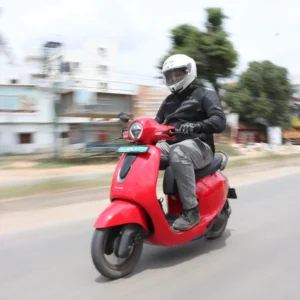
| TVS X Electric | TVS Motor | Crossover Scooter | 4.44 kWh | 140 km to 159 km (ARAI) | 11 kW (15.6 bhp) | On sale in India; European launch slated for late 2026 |
| Vision iQube S / M1-S | TVS Motor | Urban / Maxi Scooter | 2.2 to 5.3 kWh (iQube) / 4.3 kWh (M1-S) | Up to 212 km (Vision Concept) / 150 km (M1-S) | 4.4 kW (iQube) / 12.5 kW (M1-S) | Not announced |
Ultraviolette’s New 100V Architecture: X-47 Venom, F77 (100V Update), Tesseract, and Shockwave
Ultraviolette is not coming to Milan with a single showstopper. It’s bringing an entire fleet of its electric two-wheelers. In late October 2026, the Bengaluru-based company took the wraps off its new 100-volt architecture, unveiled the VX-100 platform, and confirmed that four motorcycles and scooters will roll out on this foundation over the next 12 months. Here is how each of Ultraviolette’s four machines fits into the 100V transition:
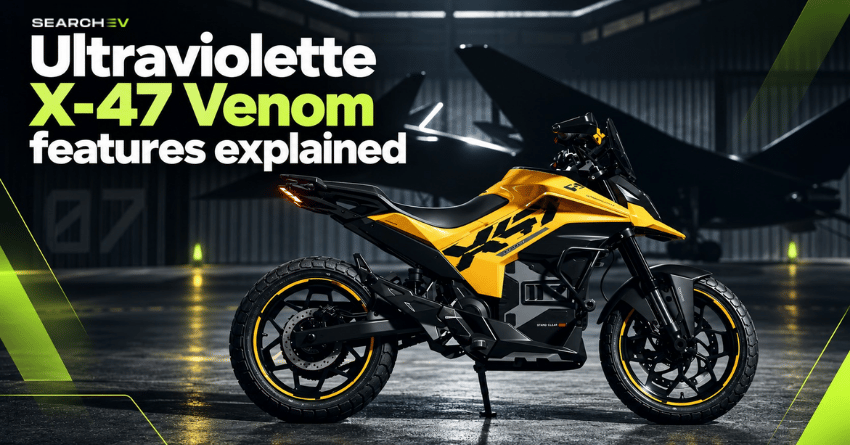
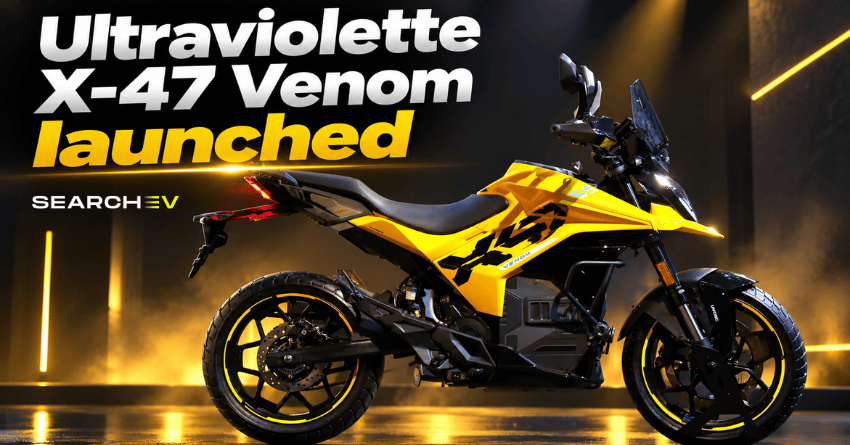
Ultraviolette X-47 Venom
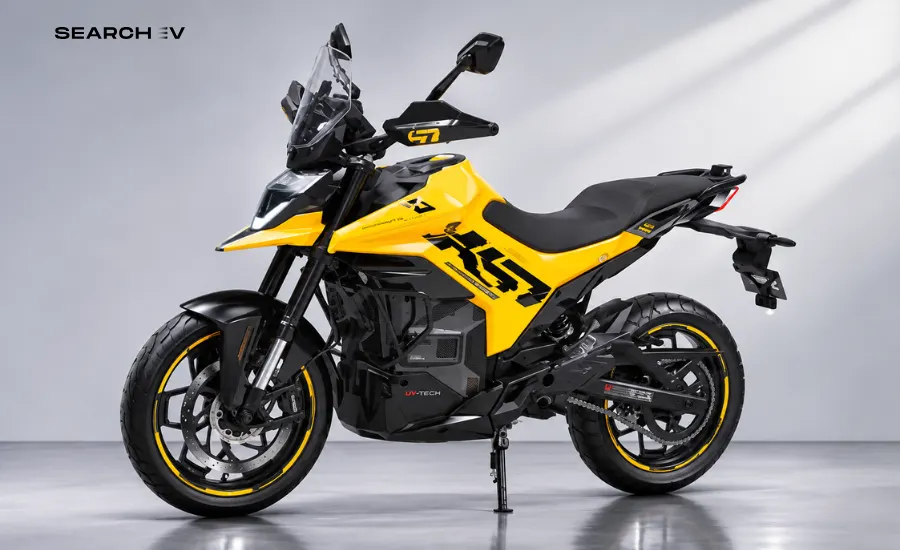
Fresh off its Indian debut in late October 2026, the X-47 Venom is an upright electric crossover motorcycle and the first showroom machine built on the 100-volt platform. Where the earlier X-47 Crossover felt somewhat top-heavy in tight traffic, the Venom pairs an updated battery pack with a new electric motor built using soft magnetic composite materials. That hardware revision trims 20 kg off the kerb weight. It also has high ground clearance for broken tarmac, integrated front and rear dashcams, and a rear-facing radar system that monitors blind spots and compensates for the bike’s lean angle through corners.
What to Expect: Indian customer deliveries kicking off in November 2026 alongside its November 3 European launch in Milan.
Ultraviolette F77 (100V Updated)
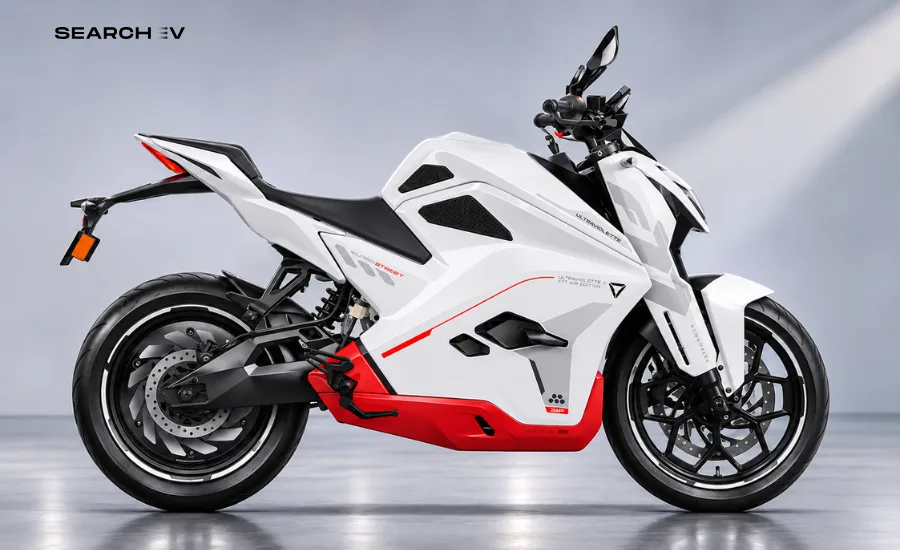
The F77 has been Ultraviolette’s flagship sports bike from day one, evolving through the Mach 2 and the more relaxed SuperStreet ergonomics.
What to Expect: Ultraviolette has confirmed that the F77 will migrate onto the new 100-volt architecture within the next year. You should not expect a dramatic exterior styling overhaul. Instead, expect the updated F77 to inherit the X-47 Venom’s lighter composite motor, upgraded battery chemistry, and improved thermal cooling. The real-world benefit will be a noticeably compliant front end in corners and the ability to sustain hard track sessions without the motor pulling back power to manage heat.
Ultraviolette Shockwave
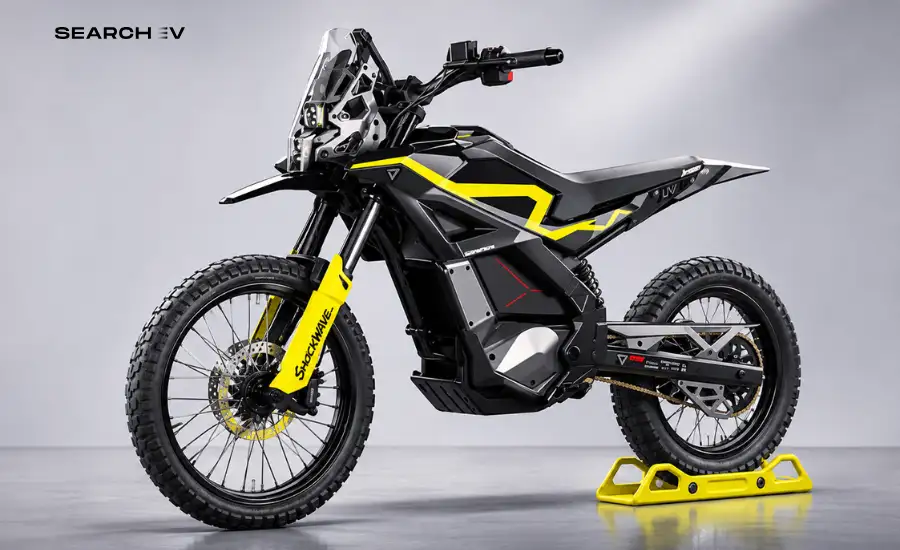
The Shockwave sits at the opposite end of the weight scale from the F77. It is a stripped-back, lightweight dual-sport motorcycle inspired by two-stroke enduro bikes of the past. Built around wire-spoke wheels, long-travel suspension, and a high-mounted beak, it ditches heavy fairings to keep its wet weight close to that of a 125cc commuter bike while sending instant electric torque to the rear wheel.
What to Expect: Originally shown earlier in its development cycle, the Shockwave has now been confirmed to adopt the 100-volt powertrain ahead of its commercial rollout in early 2027. At EICMA 2026, expect closer scrutiny of its final production hardware.
Ultraviolette Tesseract
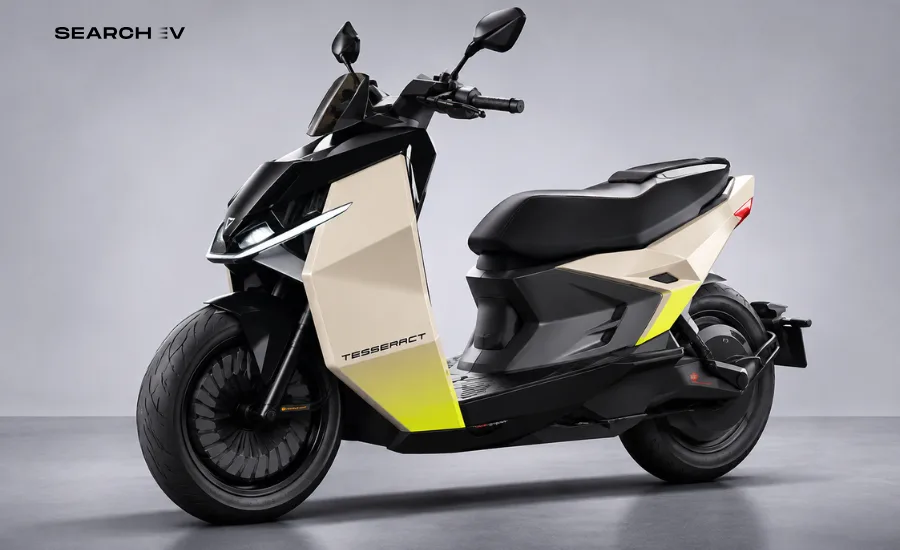
The Tesseract is Ultraviolette’s first step into the electric scooter segment, and it avoids the soft, rounded styling of typical family runabouts. Riding on large 14-inch wheels for better stability over potholes, it packs a 100-volt electrical backbone, a full-colour touchscreen with navigation, under-seat storage big enough for a full-face helmet, and radar-assisted blind-spot alerts built right into the mirrors.
What to Expect: With customer deliveries scheduled to begin in the first quarter of 2027, EICMA 2026 gives riders a look at the near-final production trim.
Royal Enfield Flying Flea S6 Scrambler: Built for Broken Tarmac
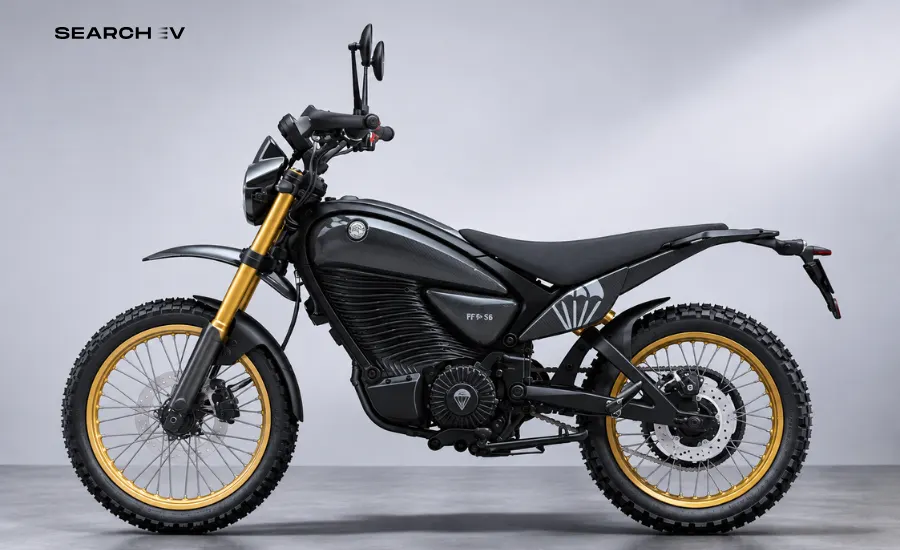
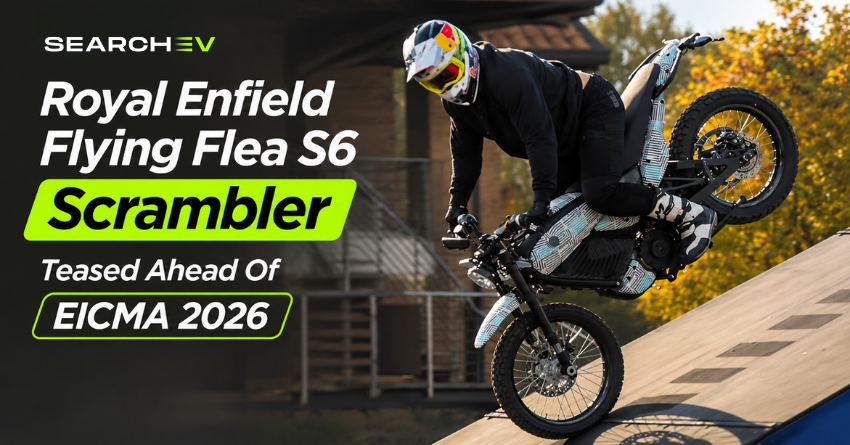
Royal Enfield has used Milan to build its electric sub-brand, Flying Flea. After showing the girder-forked C6 city roadster first, the brand followed up with the S6 concept at EICMA 2025.
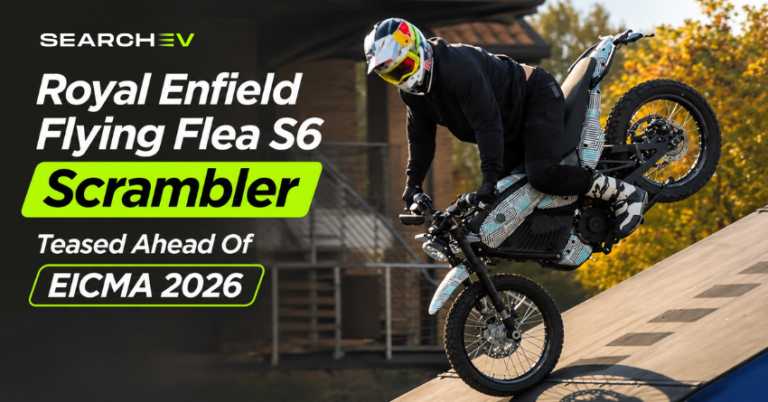
While the C6 is designed for smooth tarmac with a belt drive and cast alloy wheels, the Flying Flea S6 reworks that platform into an urban scrambler. It replaces the girder front end with golden upside-down telescopic forks, swaps the belt for an exposed chain final drive with a large rear sprocket, and rolls on wire-spoke aluminium wheels shod in dual-purpose block-pattern tyres. At the centre of the frame sits a finned magnesium battery casing designed to shed weight and cool the cells naturally in moving air, paired with a round touchscreen running Royal Enfield’s in-house software on a Snapdragon processor.
What to Expect: In the final week of October 2026, an uncamouflaged test mule of the Flying Flea S6 was caught testing on Indian roads, retaining its flat enduro bench seat, high front mudguard, and Himalayan-style tail indicators. The S6 is expected to transition from show-floor concept to production readiness around early 2027.
Hero Vida VXZ and Vida Ubex: Two Paths into Electric Motorcycles
Hero MotoCorp has spent the past couple of years building volume with its Vida electric scooters, but its Milan strategy shows how the company plans to tackle electric motorcycles. Rather than relying on a single platform, Hero previewed two very different motorcycles at EICMA 2025 and followed up by filing official Indian design patents for both in early 2026. Those patent drawings tell us what survived the reality check between the Milan show stage and the factory floor.
Hero Vida VXZ
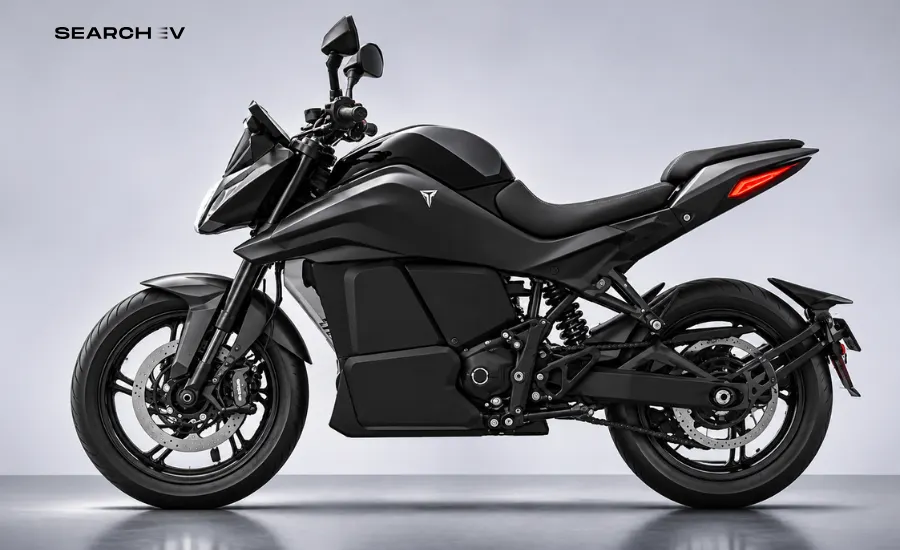
The Vida VXZ is Hero’s flagship electric streetfighter, born out of its technical partnership with California-based Zero Motorcycles. Patented in India in January 2026, the VXZ wears sharp, muscular tank shrouds inspired by Hero’s petrol Xtreme lineup, a projector LED headlamp flanked by V-shaped daytime running lights, split seats, and a trellis frame that uses the fixed battery pack as a stressed member. It pairs a mid-mounted electric motor with a quiet, belt final drive, supported by upside-down front forks, a cast aluminium swingarm, and a radial front brake calliper.
What to Expect: The VXZ is engineered to match the real-world pace of a 250cc to 300cc petrol naked bike. Having already been spotted testing and locked into patent filings, it is expected to edge toward an official production reveal by 2027 or early 2028. Expect the VXZ to serve as the halo product in Hero’s Premia dealerships, trading removable-battery convenience for a larger fixed battery pack and proper highway stability.
Hero Vida Ubex
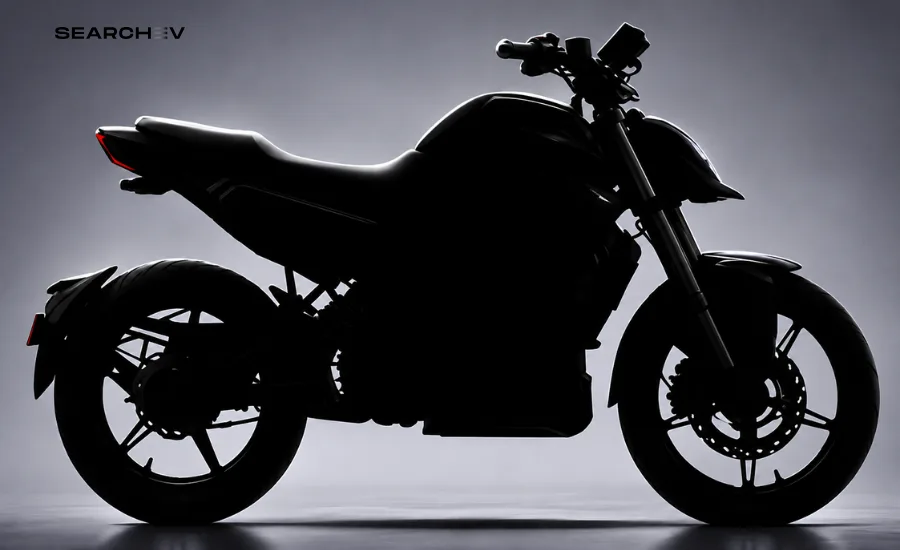
The Vida Ubex is Hero’s answer for everyday commuters who want motorcycle ergonomics instead of a scooter. When the Ubex first appeared as a concept at EICMA 2025, it looked like a futuristic supermoto with a tall front beak and upside-down forks. However, Indian design patents filed in February 2026 reveal a much more grounded machine. For production, Hero has stripped away the off-road beak and expensive inverted forks, fitting a conventional headlamp, standard telescopic front suspension, a single-piece stepped seat, and a chain final drive connected to five-spoke alloy wheels.
What to Expect: Simplifying the hardware is a smart, deliberate move by Hero. Expect the Ubex to move toward a 2027 rollout as an approachable urban commuter motorcycle with an upright riding posture and a fixed mid-frame battery.
TVS Motor’s Electric Push: eFX 3o, TVS X Electric, and iQube Vision S
TVS Motor Company has crossed major volume milestones with its domestic electric scooters, and its current lineup shows a clear split between mass-market utility and high-tech halo engineering. Across its motorcycle and scooter programmes, three models anchor the discussion around EICMA 2026.
TVS eFX 3o (EFX30)
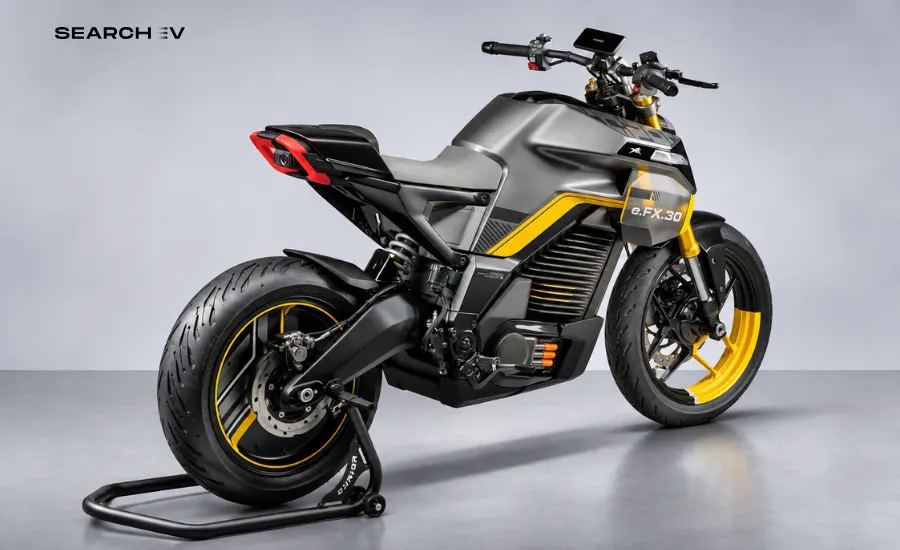
First unveiled on the Milan stage at EICMA 2025 and patented in India in January 2026, the eFX 3o (often referred to as the EFX30) is TVS’s first ground-up electric streetfighter. Unlike the Hero Ubex, TVS’s Indian patent drawings keep almost every sharp detail from the concept bike. Look closely at the chassis, and the Apache RTR 310 influence is unmistakable, right down to the cast-alloy swingarm, adjustable upside-down front forks, rear monoshock, and radial front brake calliper.
Its mid-mounted motor sends power to the rear wheel via a belt drive, while the battery casing sits partially exposed in the lower frame with deep horizontal fins that channel airflow to cool the pack naturally. It even integrates compact front and rear cameras into the bodywork for dashcam recording and blind-spot assistance.
What to Expect: The eFX 3o is TVS’s direct rival to the Hero Vida VXZ and Ultraviolette’s roadsters, targeting the performance bracket of a 300cc petrol naked. With its design patent already secured in India, expect 2027 as the possible showroom arrival timeline.
TVS X Electric
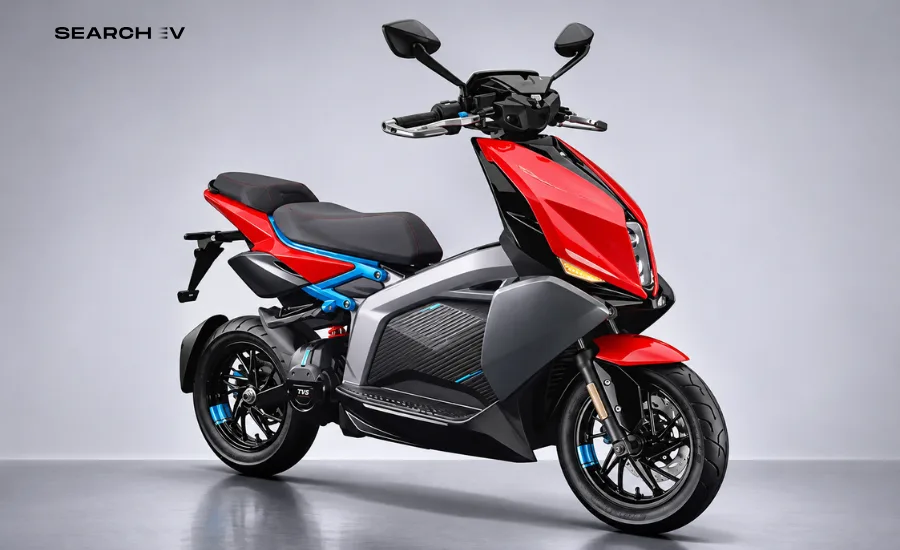
The TVS X is the brand’s flagship crossover scooter built around an exposed cast-aluminium frame called the Xleton platform. Instead of using a traditional step-through floorboard, the TVS X places its battery pack low in the spine of the aluminium frame to sharpen weight distribution and cornering stiffness. It runs a mid-mounted permanent-magnet motor connected via a belt drive, single-channel ABS, and a large 10.2-inch touchscreen console that tilts to match the rider’s eye line.
What to Expect: While the TVS X has had a slow, phased rollout in India, late 2026 marks its planned entry into European markets following its homologation push. At EICMA 2026, expect the TVS X to act as the brand’s design and technology flagship for international buyers who want motorcycle-like handling in a scooter footprint.
TVS iQube Vision S
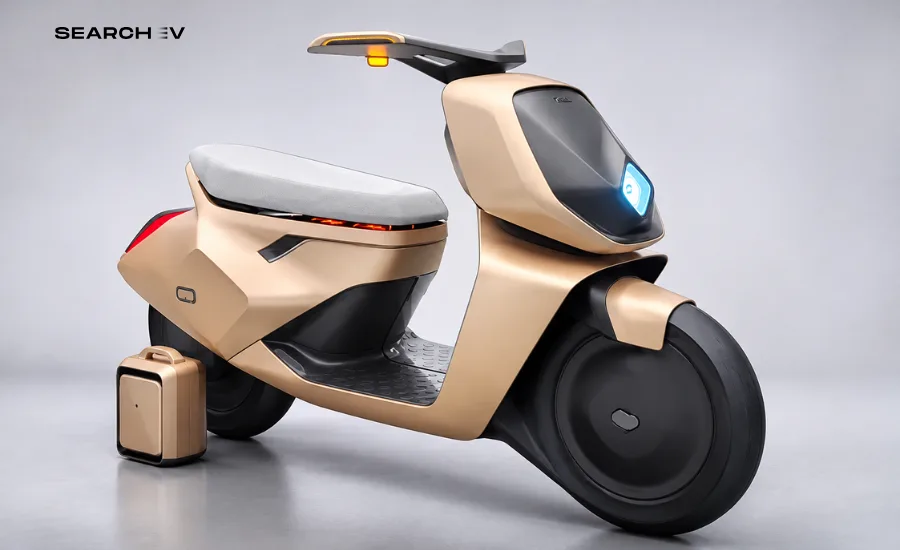
The iQube family is the backbone of TVS’s electric business. Showcased through the Vision iQube concept platform alongside the production iQube S and ST variants, this direction previews how TVS plans to evolve its mainstream family scooter over the next generation. While today’s iQube S focuses on clean, understated bodywork, a flat floorboard, and generous under-seat storage, the Vision iQube blueprint adds sharper aerodynamic panels, a floating head-up display alongside the main screen, height-adjustable ergonomics, and provision for removable range-booster battery packs.
What to Expect: Rather than launching as a standalone niche model, the ideas tested on the Vision iQube concept are built to trickle down into the next generation of the iQube S and ST lineup. Expect TVS to keep refining its commuter scooters around fast-charging turnaround times, modular battery flexibility, and connected navigation while keeping the familiar, family-friendly ergonomics that made the standard iQube a household staple in India.