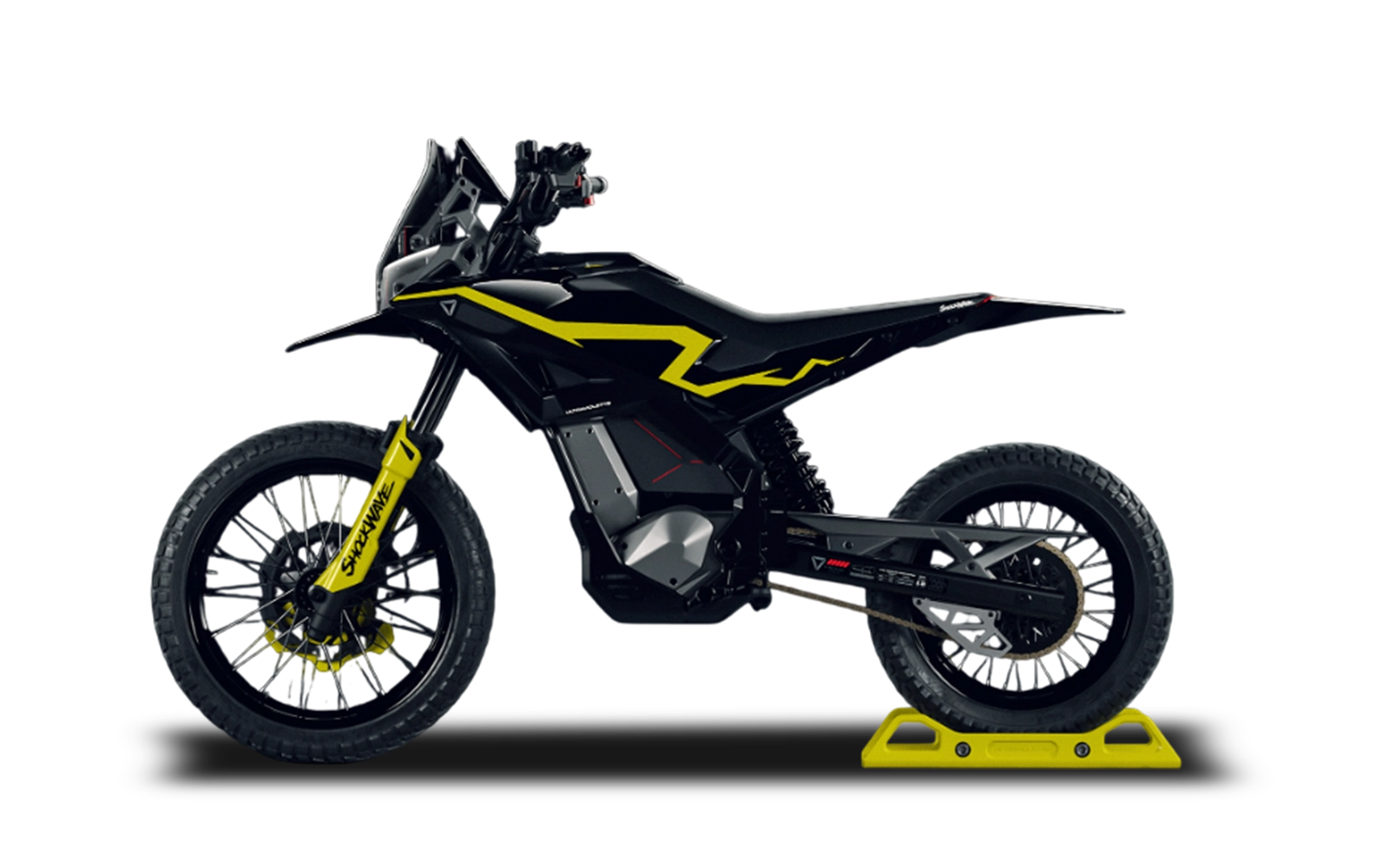
The Ultraviolette Shockwave Standard is an upcoming electric enduro motorcycle with an expected price of Rs. 1.75 lakh (ex-showroom). Its announced specifications include a 10.8 kW motor, 165 km claimed IDC range and a lightweight 120 kg kerb weight. Highlights include long-travel suspension, switchable dual-channel ABS, traction control and a five-inch TFT display. The updated production model will use a 100V electrical architecture, with final specifications still awaited.
At a Glance: Key Specifications
| Specification |
Ultraviolette Shockwave Standard |
| Expected ex-showroom price |
Rs. 1.75 lakh |
| Battery capacity |
4 kWh provisionally recorded; final capacity unconfirmed |
| Motor type |
Chassis-mounted Interior Permanent Magnet Synchronous Motor |
| Announced peak power |
10.8 kW, approximately 14.5 bhp |
| Rear-wheel torque |
505 Nm |
| Claimed acceleration: 0–60 km/h |
2.9 seconds |
| Claimed top speed |
120 km/h |
| Claimed range: IDC |
165 km |
| Real-world range |
Independent production-model results awaited |
| Claimed kerb weight |
120 kg |
| Front suspension |
37 mm cartridge-type fork; 200 mm travel |
| Rear suspension |
Monoshock; 180 mm rear-wheel travel |
| Wheels |
19-inch front and 17-inch rear, wire-spoke |
| Tyres |
Front: 90/90-R19; rear: 110/90-R17 |
| Front brake |
270 mm disc |
| Rear brake |
220 mm disc |
| ABS |
Switchable dual-channel |
| Instrument console |
Five-inch full-colour TFT |
| Home and fast-charging times |
Final figures for the updated model awaited |
| Seat height and ground clearance |
Final figures awaited |
These are announced or provisional figures, rather than a final specification sheet for the revised production motorcycle. The 505 Nm figure measures torque at the rear wheel after gearing, not torque directly at the motor shaft.
What You Get: Comfort, Tech & Safety Highlights
The Shockwave combines a slim enduro silhouette, raised front fender and mixed-size spoked wheels with long-travel suspension. Its narrow bodywork and low claimed weight should appeal to riders looking for a motorcycle they can use on everyday roads and occasional trails.
Equipment highlights include dual projector LED headlights and a five-inch TFT display. Single-seat and dual-seat configurations have been announced, allowing buyers to consider either a solo-focused setup or accommodation for a pillion.
The electronic riding aids include four traction-control modes, six levels of dynamic regenerative braking and switchable dual-channel ABS. These are separate systems: the four traction-control settings should not be described as four riding modes.
Missing Features & Variant Comparisons
Bluetooth connectivity, onboard navigation, LTE/eSIM connectivity, TPMS, Violette AI and radar assistance are absent from the currently published Standard equipment list. Their availability on the final production motorcycle remains subject to confirmation.
There is currently no separately listed higher-power or larger-battery Shockwave trim to compare with the Standard. Single-seat and dual-seat configurations have been announced, but separate prices and specification differences have not been published.
Available Paint Options
The Ultraviolette Shockwave’s announced colour options are:
Final colour and seating combinations will depend on the production configuration.
Battery & Vehicle Warranty Coverage
The Ultraviolette Shockwave Standard’s battery and vehicle warranty terms have not yet been confirmed for the production model.
Buyers should check the coverage period, kilometre limit, battery-health conditions and any extended-warranty options when the final ownership package is announced. Warranty figures from other Ultraviolette motorcycles should not automatically be applied to the Shockwave.
Is This the Right Variant for You?
The Shockwave Standard is worth considering if you want a lightweight electric motorcycle with enduro styling, long-travel suspension and electronic riding aids. Its announced design makes it particularly interesting for riders combining city travel with occasional trail riding.
For regular long-distance use, charging access, seat comfort and verified real-world range will be important deciding factors. A production-model test ride will also help establish how well the dual-seat configuration accommodates a pillion.




 Very quick and easy to handle

 Long waiting period
 212Km/c
 82Kmph
 N/AHrs


 Connect Now