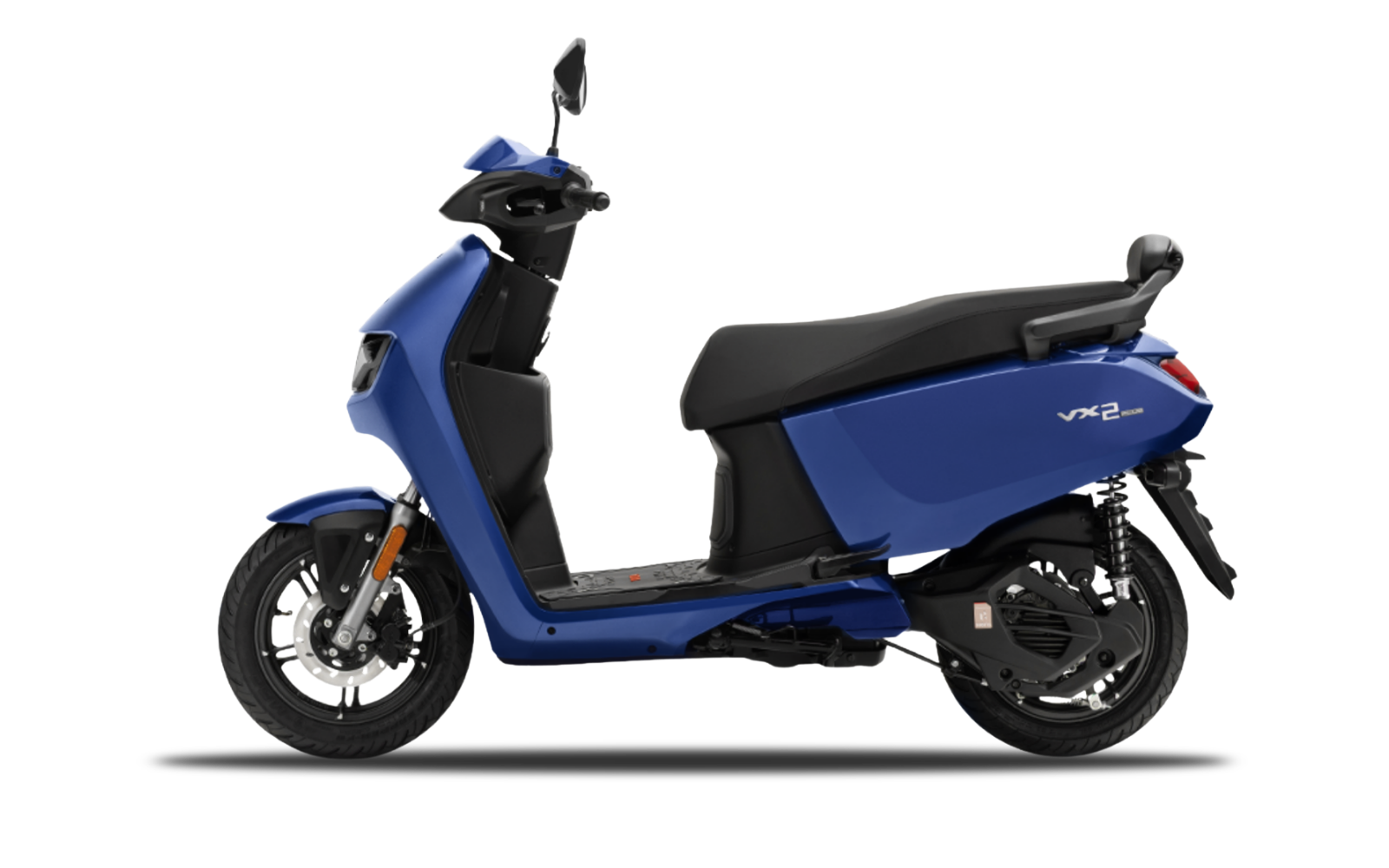
Hero Vida VX2 Expert Review
- Electric
- Scooter
- 2 Seater
What's good
-
Removable batteries on most variants, charged on or off the scooter, plus DC fast-charging access
-
The Plus 4.4 claims a more certified range than any similarly priced rival, with a 90 kmph top speed
-
Smooth, predictable throttle response and a useful boost function on the Plus variants
-
Light kerb weight, agile handling and a stable, planted feel at speed
-
A wide, long seat and a low 777 mm seat height suit riders of most sizes
What's not so good
-
27.2-litre underseat storage on most variants trails behind rivals
-
Firm front suspension sends sharp bumps through at low speed
-
Small 4.3-inch display for even the top variant
-
Flimsy battery and charging-port flaps
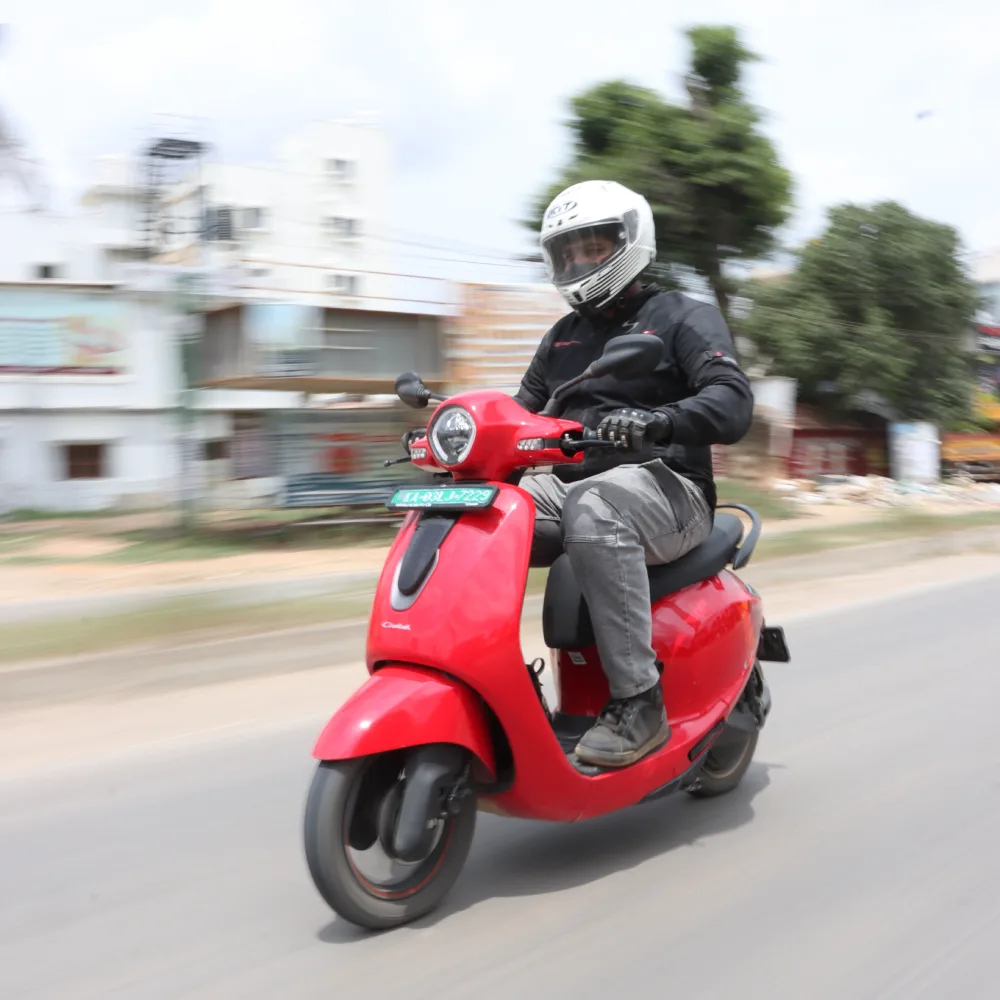
The Hero Vida VX2 is an affordable electric scooter designed for regular urban use. The EV was introduced on July 1, 2025, and it focuses on functionality with a removable battery, making it easier for people who travel daily. The scooter is available in two variants and includes a Battery-as-a-Service (BaaS) option to aid with the initial cost. The VX2 is intended to be a family-friendly mode of transportation, providing a good balance of convenience, reliability, and value for daily commutes.
What's good
-
Removable batteries on most variants, charged on or off the scooter, plus DC fast-charging access
-
The Plus 4.4 claims a more certified range than any similarly priced rival, with a 90 kmph top speed
-
Smooth, predictable throttle response and a useful boost function on the Plus variants
-
Light kerb weight, agile handling and a stable, planted feel at speed
-
A wide, long seat and a low 777 mm seat height suit riders of most sizes
What's not so good
-
27.2-litre underseat storage on most variants trails behind rivals
-
Firm front suspension sends sharp bumps through at low speed
-
Small 4.3-inch display for even the top variant
-
Flimsy battery and charging-port flaps
The Hero Vida VX2 is an affordable electric scooter designed for regular urban use. The EV was introduced on July 1, 2025, and it focuses on functionality with a removable battery, making it easier for people who travel daily. The scooter is available in two variants and includes a Battery-as-a-Service (BaaS) option to aid with the initial cost. The VX2 is intended to be a family-friendly mode of transportation, providing a good balance of convenience, reliability, and value for daily commutes.
Hero Vida VX2 Expert Review
SEV Score

Samarth Kudale
Tested and reviewed by SEV Experts on 8 parameters
SEV Score

Samarth Kudale
Tested and reviewed by SEV Experts on 8 parameters
Expert Verdict
The Hero Vida VX2 is Vida’s family electric scooter, and it now spans five variants across two sub-families: the Go 2.2 (also sold as the Go 2.2 RQ with a faster charger), Go FB 3.1, Go 3.4, Plus 3.4 and Plus 4.4. Every version uses the same 6kW swingarm-mounted motor. What separates them is battery capacity, top speed, braking hardware, display type and other features. Four of the five run removable battery packs that can be carried indoors for charging, and that remains the VX2’s defining trait at a time when the Bajaj Chetak, TVS iQube, Ather Rizta and the new Ather Konarc all use fixed batteries. On price, the range opens near the entry point of the family e-scooter segment and tops out above the Rizta Z 3.5 and Chetak 3501 and below the Konarc iQube S. The VX2 gets the fundamentals right. It’s light, easy to ride and smoothly calibrated, and the Plus 4.4 claims more certified range than any similarly priced rival.
Hero Vida VX2 Design
Exterior
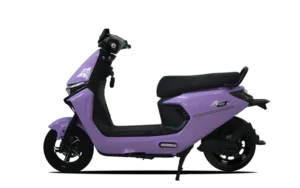
The VX2 takes a far more conventional route than the sharper-looking V2 it sits alongside. The headlamp and tail-lamp design nearly carries over from the V2, with twin LED projectors framed by a DRL signature that wraps around them, and that lighting is the main visual link between the two scooters. Everything else is new. The body panels are smoother and curvier, the flanks carry very few creases, and the tail is tidy enough that it’s unlikely to divide opinion. It looks modern without shouting for attention and suits riders across a family’s age range, which is exactly the brief for a scooter like this. Among its rivals, it occupies the middle ground: less retro than the metal-bodied Chetak and less unconventional than the rounded Simple Wave.
The proportions are compact. The variants share an 851 mm single-piece seat in place of the split seat on older Vida models, along with 12-inch alloy wheels and all-LED lighting. The Plus variants add a front disc brake, which is also one of the quickest ways to tell them apart from the Go versions at a glance.
Build Quality & Fit and Finish
Hero reduced the number of body panels compared with the V2, which trims weight and leaves fewer seams that need to line up. The overall finish is acceptable for the price, and the new switchgear looks and feels a clear step up from older Hero scooters, with positive, tactile clicks. Consistency is where it slips. Panel gaps aren’t uniform everywhere, and the flaps covering the charging socket and battery compartment feel flimsy for parts that get opened daily on a scooter built around removable packs. The battery lock can also be fiddly until you learn its action.
Hero Vida VX2 Features
The display splits the range. The Go 2.2, Go FB 3.1 and Go 3.4 use a 4.3-inch LCD, while the Plus 3.4 and Plus 4.4 get a 4.3-inch colour TFT. Both pair with a phone over Bluetooth for call alerts, music control and turn-by-turn navigation. The TFT’s layout is clean; it changes colour themes with each ride mode, and it stays legible in direct sunlight, though its peak brightness and resolution are modest. Menus are handled through a small joystick on the left switch cube that needs a precise thumb, and it’s easy to flick into the wrong menu while riding until you get used to its sensitivity.
A park mode, engaged by holding the brake and pushing a toggle, lets the scooter creep forward or backward at walking pace, which is more useful than a reverse-only function when nosing into a tight or sloping parking spot. The companion app adds remote immobilisation, live location tracking and geo-fencing, and there’s a phone-charging port on board. Over-the-air updates cover every control unit except the display itself, so changes to the screen’s own software aren’t delivered remotely.
Where the VX2 falls behind is the wider feature set that rivals now offer at the upper end of their lineup. The Rizta, the iQube S and the higher Konarc variants use 7-inch displays. The Rizta Z and Chetak C3501 add Google Maps. The Rizta and Wave also add skid or traction control.
Hero Vida VX2 Performance & Range
Every VX2 uses the same 6kW peak PMSM motor, so the performance gap between variants comes down to battery capacity and controller tuning. The Plus 3.4 and Plus 4.4 reach 40kph from rest in a claimed 3.1 seconds and offer Eco, Ride and Sport modes. The Plus 3.4 tops out at 80 kmph and the Plus 4.4 at 90 kmph. The Go 2.2 and Go 3.4 take a claimed 4.2 seconds to 40kph, top out at 70 kmph, and offer Eco and Ride modes only. The Go FB 3.1 shares the 70 kmph top speed, though acceleration to 40 kph takes longer at 4.5 seconds.
On the road, the throttle mapping is the VX2’s best trait. Response from a standstill is smooth and predictable, and there’s no lurch during a slow U-turn. It isn’t sporty, though. Acceleration is brisk enough for city traffic without feeling especially eager on open roads, and Sport mode on the Plus is quick rather than exciting. Eco has a usable initial response in stop-go traffic, but its low speed cap can feel restrictive on faster, open roads. On the Plus, a boost function fixes that: open the throttle wide, and full motor output becomes available in Eco or Ride without switching modes. Steep, winding climbs don’t trouble the Plus, even with a pillion aboard.
Range follows battery size. The Go 2.2 claims 93 km on the IDC cycle and about 75 km in real-world Eco riding. That trails the certified figures of the Chetak C2501, Konarc S 100 and entry Simple Wave, though the Go 2.2’s 70kph top speed is higher than the C2501’s. The Go 2.2 RQ is mechanically identical and differs only in its bundled charger. The Go FB 3.1 steps up to 127 km IDC. The Go 3.4 and Plus 3.4 share 146 km IDC and nearly 110 km in real-world Eco-use.
The Plus 4.4 claims 187 km IDC and gives about 140 km of real-world range in Eco. That’s ahead of the Chetak C3501, Rizta Z 3.5 and Konarc S 161, and ahead of the pricier iQube S as well. Only the Simple Wave’s 5kWh version claims more, and it sits meaningfully higher on price.
Hero Vida VX2 Ride & Handling
A telescopic fork and rear monoshock handle suspension, and kerb weight runs from 106 kg for the Go 2.2 to up to 120 kg for the Plus 4.4. The lightweight shows the moment you wheel it out of a tight parking spot or pick your way through slow traffic. Steering is light, the scooter is easy to turn in tight spaces, and it changes direction quickly enough to slip through gaps without effort.
The suspension leans firm, particularly at the front. Over broken city tarmac and speed breakers taken slowly, sharp edges make their way through to the handlebar, and a softer front setting would better suit the family riders this scooter targets. Larger undulations and ordinary potholes are absorbed without fuss, though. That firmness pays off as speeds rise. On an open road the VX2 feels planted, and through a corner it holds its line confidently.
Braking on the Plus variants comes from a front disc and rear drum linked through a combined braking system. The brakes are progressive and never grabby, which suits less experienced riders, but the initial bite is soft, and the levers offer little feel, so a quick stop needs a firm squeeze. The Go 2.2 and Go 3.4 use drums at both ends with the same linked system. Regenerative braking works through the throttle: rolling it backwards past the closed position adds regen, and the further you twist, the stronger it gets. It may take some getting used to, particularly for older family members, and even at full twist it scrubs speed rather than bringing the scooter to a halt. There are no selectable regen levels.
Rider comfort is good for a family scooter. The seat is wide and long enough for two adults; the 777 mm seat height lets shorter riders plant their feet, and the riding position is upright and relaxed. Taller riders may find their knees close to the handlebar at full lock during tight U-turns, a trait the Rizta and Simple Wave share.
Hero Vida VX2 Safety
Every VX2 uses a combined braking system, with a front disc on the Plus 3.4 and Plus 4.4 and drums at both ends on the Go 2.2 and Go 3.4. While hill hold is standard on the VX2, competitors like the Rizta and Wave also offer traction control, which the Vida lacks.
The battery packs carry an IP67 rating, in line with the rest of the segment, and the app’s remote immobilisation, live tracking and geo-fencing add a layer of theft protection. The low kerb weight also makes the scooter easier to hold upright at a standstill or while a pillion climbs aboard.
Hero Vida VX2 Space & Comfort
Underseat storage is 33.2 litres on the Go 2.2, which runs a single battery pack, and 27.2 litres on the Go FB 3.1, Go 3.4, Plus 3.4 and Plus 4.4. The smaller figure is the direct cost of fitting two removable packs under the seat. An open-face or compact full-face helmet fits in the 27.2-litre versions, but a larger full-face helmet won’t sit comfortably. That figure trails most rivals: the Chetak 30 and 35 series offer 35 litres, the Rizta 34 litres, the Konarc 31 litres and the iQube 30 to 32 litres depending on variant, while the Simple Wave’s 63-litre of combined storage space is in another league.
Vida sells a 4.8-litre front storage box as an accessory, which helps keep a phone or wallet within reach, much as Ather offers an optional front storage unit for the Rizta. The floorboard is flat and can take small grocery bags. The long seat makes two-up riding easy, and the swingarm-mounted motor means a rear puncture can be fixed at an ordinary roadside tyre shop.
The removable packs bring their own practical trade-off. Charging indoors solves the parking-spot problem, but the packs are heavy, and carrying both up several flights of stairs every day can become a chore.
Hero Vida VX2 Charging & Warranty
Charging flexibility is the VX2’s strongest argument. On the four removable-battery variants, the packs can be charged in the scooter from a socket where you park or lifted out and charged indoors from an ordinary 5A household socket. That solves the problem for buyers with no charging socket at their parking spot. The Go FB 3.1 gives up this option for a fixed pack with direct-plug charging, so it only suits owners who can plug in where they park.
The Go 2.2, Go 3.4 and Plus 3.4 come with a 580W portable charger, while the Go 2.2 RQ and Plus 4.4 get a 1kW unit. Claimed AC charging times from 0 to 80 percent are 3 hours 7 minutes for the Go 2.2 (1 hour 41 minutes for the RQ), 4 hours 44 minutes for the Go 3.4 and Plus 3.4, and 3 hours 17 minutes for the Plus 4.4.
Every VX2 also supports DC fast charging, reaching 80 percent in 62 to 65 minutes depending on the variant. Vida puts its own network at over 5,900 stations. The Chetak and iQube variants in this price band don’t offer DC fast charging and rely on home charging, while the Rizta shares access to Ather’s network.
If you opt for the extended warranty plan, the total warranty coverage on your Vida scooter reaches up to 5 years / 50,000 km for the battery and 5 years / 75,000 for other critical components.
Vida’s battery financing scheme, marketed as Battery as a Service (BaaS), is also available with the VX2 range. Under that scheme, the scooter is bought with a lower upfront payment, and the battery is paid off according to monthly usage over a fixed tenure; the buyer owns both the scooter and the battery from day one, with the scooter hypothecated to the lender until repaid.
Hero Vida VX2 Service & Network
Vida puts its service footprint at more than 700 authorised stations. That’s a good base and wider than Simple or Ather’s network. It still doesn’t match the reach which something like TVS gets from selling the iQube through their long-established two-wheeler networks, which extend further into smaller towns. Buyers outside the larger cities should check how close their nearest Vida service point is.
The charging side of ownership is better supported than the service side. Being able to use both Vida’s own fast chargers and Ather’s grid means a long day’s riding rarely has to end at a home socket, and Hero’s growing stake in Ather adds some confidence that the shared access will continue. Over-the-air updates for the scooter’s control units mean software changes to systems such as the motor and battery management don’t need a workshop visit, although the display isn’t covered.
The VX2 has been on sale since mid-2025, but its motor and battery design carry over from the V2 platform, which gives the core hardware a longer track record than the VX2’s own badge suggests.
Who should buy this?
The VX2 makes the strongest case for buyers without a charging point where they park, since lifting the packs out and charging them indoors solves a problem most rivals leave unaddressed.
Within the range, the Go 2.2 suits short daily commutes, where 75 km of real-world Eco range covers a few days’ riding, and its 33.2-litre boot is the roomiest in the line-up. The Go FB 3.1 is for owners with a socket at their parking spot who want more range than the Go 2.2 without paying for the Go 3.4.
The Go 3.4 is the range pick for city riders who rarely need more than 70kph, while the Plus 3.4 adds the front disc, colour TFT, Sport mode and boost function that make the VX2 easier to live with on faster roads.
The Plus 4.4 is the one to pick for long daily distances or regular bypass and highway runs, and its faster 1kW charger shortens home charging too.
What's good
-
Removable batteries on most variants, charged on or off the scooter, plus DC fast-charging access
-
The Plus 4.4 claims a more certified range than any similarly priced rival, with a 90 kmph top speed
-
Smooth, predictable throttle response and a useful boost function on the Plus variants
-
Light kerb weight, agile handling and a stable, planted feel at speed
-
A wide, long seat and a low 777 mm seat height suit riders of most sizes
What's not so good
-
27.2-litre underseat storage on most variants trails behind rivals
-
Firm front suspension sends sharp bumps through at low speed
-
Small 4.3-inch display for even the top variant
-
Flimsy battery and charging-port flaps
Hero Vida VX2 Price
What's good
-
Removable batteries on most variants, charged on or off the scooter, plus DC fast-charging access
-
The Plus 4.4 claims a more certified range than any similarly priced rival, with a 90 kmph top speed
-
Smooth, predictable throttle response and a useful boost function on the Plus variants
-
Light kerb weight, agile handling and a stable, planted feel at speed
-
A wide, long seat and a low 777 mm seat height suit riders of most sizes
What's not so good
-
27.2-litre underseat storage on most variants trails behind rivals
-
Firm front suspension sends sharp bumps through at low speed
-
Small 4.3-inch display for even the top variant
-
Flimsy battery and charging-port flaps
Connect Now