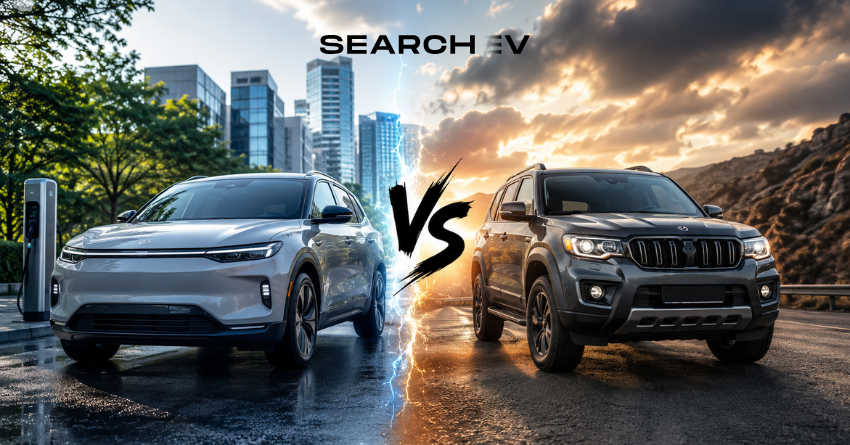
India’s passenger car market is undergoing a significant shift. For over two decades, customers’ default choice has remained diesel vehicles, which offered low ownership costs. But with stricter emission standards in effect and advancements in the EV ecosystem, customers now prefer electric cars over diesel solutions. But, are electric cars really better and more cost-effective solutions in comparison to diesel cars as of 2026? Let us delve into the following details to find an answer:
The Upfront Cost Dilemma
When buying an electric car, as a customer, you probably would face the hurdle of higher upfront purchasing costs in comparison to diesel passenger cars as of 2026. This higher cost of purchase comes with the expensive lithium-ion battery pack fitments in the EV vehicles. To put into context:
- Diesel Cars: A mid-sized diesel SUV or sedan typically comes with a price tag starting from Rs 15 Lakh, ranging up to Rs 18 Lakh (ex-showroom).
- Electric Cars: An electric car with similar feature integrations and a driving range as diesel cars (somewhere around 300 km/charge) sits with a price tag starting from Rs 18-20 Lakhs.
While this might seem steeper in terms of pricing, the Indian Government has put a GST rate of 5% on electric vehicles, compared to the higher tax rates of diesel vehicles, around 28%. Additionally, many states in India offer a tax waiver to enhance the adoption of EVs, while registration charges are reduced as a benefit for buyers choosing electric cars over diesel cars. So, even though the upfront costs incurred when buying EVs are higher, such benefits make it a sweet deal.
The Electricity Costs vs Diesel Costs
The energy or fuel costs incurred define whether an electric car is better than a diesel car in India as of 2026. In fact, let us explore the costs incurred during the ownership of both electric cars and diesel cars; these aspects mentioned below explain which is the better solution in the long run:
Diesel Cars Running Cost
Considering the current diesel fuel prices, rated at Rs 95.20 / Litre (Delhi), a modern diesel car delivering approximately 16 kmpl fuel efficiency in city traffic and highway driving environments, offers a cost per km (CPK) rating of Rs 5.95 / km.
Electric Car Running Costs
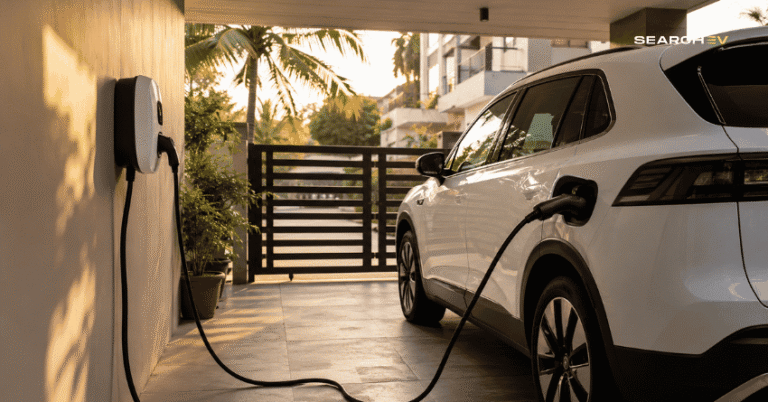
Meanwhile, electric cars offer a lower CPK rating in comparison to diesel cars. To understand this, we need to consider the average electricity costs incurred with a home charger; it is rated at Rs 8 / unit (kWh). This means that to charge, say, around a 40 kWh capacity battery pack of an EV car, approximately 40 units of electricity are needed to juice up the battery fully to get a 300 km range. This translates to an incurred CPK amount of Rs 1.07 / km. That said, public charging costs are higher; it can raise running costs to around Rs 2-3 per km (still less than using diesel cars).
Which One Has Lower Maintenance Costs?
As you may know, modern diesel cars come with complex engineering featuring multiple mechanical components inside and supporting the engine. This includes engine pistons, fuel injection systems, turbochargers, and emission control components requiring fluids (DEF), among others. Due to these same components, diesel cars need periodic services more often than EVs.
In fact, diesel cars need service at 10,000 km intervals, requiring engine oil flush and refilling, oil filter change and fuel and air filter replacements. This is in addition to the change of parts which have endured wear and tear through usage. Hence, each service costs mount up to Rs 12,000 annually. Electric cars bypass these liabilities entirely because they lack a combustion engine and multi-speed transmissions.
Moreover, modern electric cars do not require an engine and transmission oil, spark plugs or an air filter to be replaced. For longer brake component life and effectiveness, electric cars feature a regenerative braking system too. With this, physical brake components last longer than those in diesel cars. Due to such benefits, electric cars come with lower service costs, which are around Rs 4000 to Rs 7000 annually. Let us now break down the total cost of ownership using these vehicles:
To Sum Up | The Total Cost Of Ownership In 5 Years
| 5 Year Cost Criteria | Electric Cars | Diesel Cars |
| Initial Vehicle Purchase Costs | Rs 20,00,000 | Rs 18,00,000 |
| Fuel / Energy Costs Incurred | Rs 64,000 | Rs 3,57,000 |
| Maintenance Costs | Rs 42,000 | Rs 72,000 |
| Insurance | Rs 68,000 | Rs 86,000 |
| Total 5-Year Expenditure | Rs 21,74,000 | Rs 23,33,000 |
From the table above, assuming that a modern electric/diesel car is used for 40 kms per day, the total 5-year distance covered by the owner comes up to around 60,000 kms. Considering this as the baseline running condition for an electric/diesel car, the total energy cost incurred by an electric car owner is around Rs 64,000, while diesel car owners incur Rs 3,57,000 as diesel fuel expenses in the same period.
Meanwhile, maintenance costs incurred through utilisation of an electric car in a 5-year timeframe are around Rs 42,000, assuming that Rs 7,000 is the service cost per 10,000 km interval. On the other hand, the service costs of a diesel car can come up to Rs 12,000 for the same time period with the same service time interval. As mentioned in the above section, insurance costs incurred by an electric car buyer are lower than those of diesel cars; approximately Rs 18,000 is the difference.
Adding up all these expenditures, the approximate total costs incurred by an electric car owner in comparison to a diesel car owner in 5 years are approximately Rs 1,59,000 less. Still confused as to which fuel-type-based car you need as of 2026? Here’s the verdict:
The Verdict: Which Suits Your Needs
Choose An EV Car: If your trips are within city limits and around predictable charging station-equipped highway corridors, an EV car is the best solution to save big on fuel expenditures. The long-term savings through lower service costs will also easily wipe away the initial high-upfront cost hurdle and bring profitability.
Choose A Diesel Car: If your daily trips involve covering short distances, and your lifestyle includes unplanned trips across remote locations where finding an EV charging station can become difficult, buying a diesel car is the smarter option.
Overall, choosing a diesel and EV solution comes with its own unique benefits, as discussed in the above sections. But, before you decide, do consider a quick test drive to understand the difference in performance and overall vehicle handling dynamics to get a better idea as to whether it suits your needs. Nevertheless, electric and diesel cars are currently the most cost-effective solutions.