For most buyers, the motivation behind switching to EVs largely comes from lower running costs. The maths works especially well if you have long daily commutes, as higher annual usage helps offset the premium you pay upfront for an electric car.
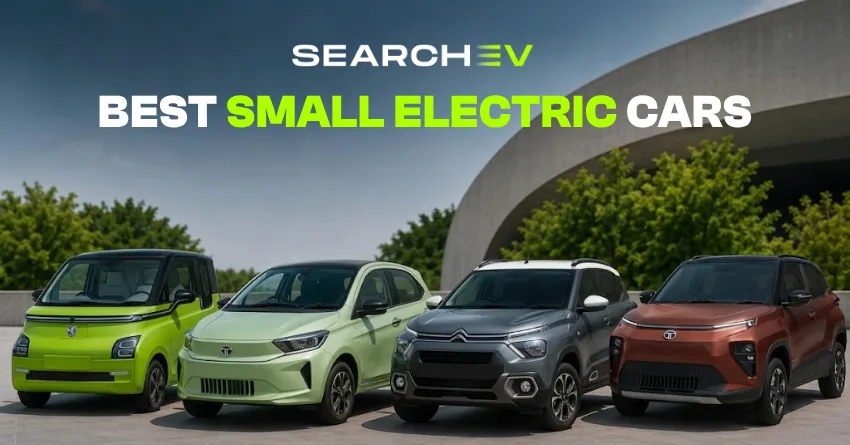
And for many of these commuters, most of that driving happens in crowded city traffic, where a compact, easy-to-drive EV makes far more sense than a larger car. Fortunately, there are now several strong options when it comes to small electric cars in India. Here are five of the best small electric cars in India for city driving.
Best Small Electric Cars in India
| Car Model | Body Style | Length (Footprint) | Claimed Range (ARAI) | Real-World Range |
| MG Comet EV | Ultra-Compact Micro-Car | 2,974 mm | 230 km | 180 – 200 km |
| Tata Tiago EV | Hatchback | 3,769 mm | 250 – 293 km | 150 – 200 km |
| Tata Punch EV | Micro-SUV | 3,857 mm | 365 – 468 km | 250 – 330 km |
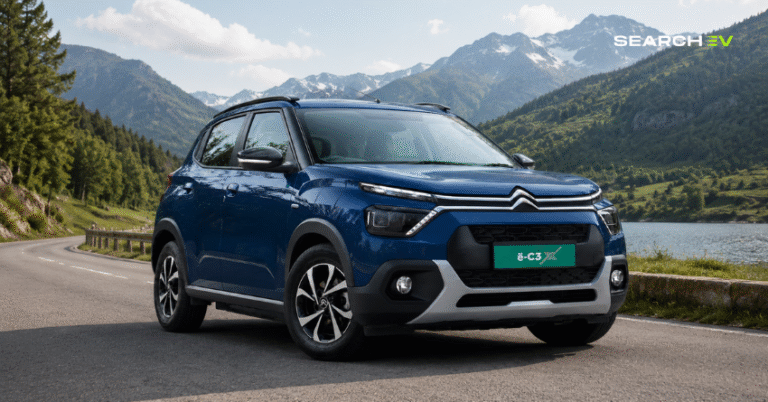
| Citroën eC3 | Crossover Hatchback | 3,981 mm | 320 km | 210 – 230 km |
| Tata Tigor EV | Compact Sedan | 3,993 mm | 315 km | 180 – 200 km |
MG Comet EV: Ultra-Compact Micro-Car (Under 3 Meters)
Expert Review:
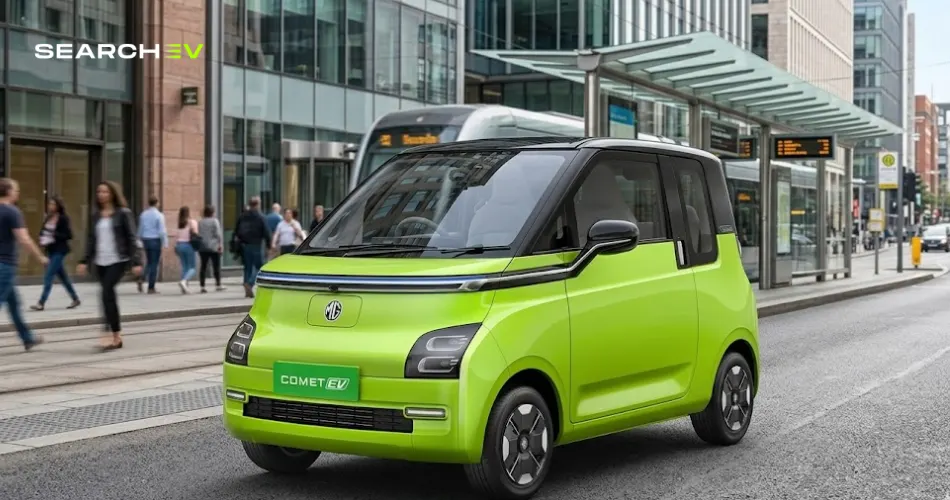
The MG Comet EV is as unconventional as it gets. Essentially a two-door micro electric hatchback, the Comet EV has created its own niche segment of an urban-focused runabout. At just 2,974 mm in length, it feels more like a high-tech gadget on wheels. Inside, the cabin surprises with a dual 10.25-inch screen setup that feels crisp and high-res, offering a premium digital experience that contrasts with its quirky, upright exterior.
While the steering is incredibly light, and the turning radius is effortlessly low at 4.2m, the short wheelbase and tiny 12-inch wheels mean the ride can feel busy over sharp road imperfections. The MG Comet EV is exceptionally peppy in stop-and-go traffic thanks to the instant 110 Nm of torque, but it remains strictly a city specialist. For those navigating the narrowest “gully” or hunting for parking in congested commercial hubs, the Comet EV is an unfamiliar yet excellent choice.
Best Suited For:
- Urban commuters: Professionals looking for an easy, stress-free car for daily office runs.
- As a second family car: Families that need a dedicated city runabout for errands, school drops, or short trips. Its 160–180 km real-world range is practical for this role.
- People dealing with tight parking spaces: Those living in crowded areas where even a regular hatchback can feel difficult to park.
Pros & Cons
| Pros | Cons |
| Effortless to park and U-turn in tight lanes | Expensive for its size, starting at nearly Rs 8 lakh (ex-showroom) |
| Ultra-low running costs at roughly Rs 1/km | Small wheels and short wheelbases struggle with large potholes |
| The twin-screen setup is the best in its price bracket | Negligible Boot Space with all four seats up |
| Surprisingly airy front cabin layout | Range and top speed (101 km/h) limit its use to cities |
Tata Tiago EV: Compact Electric Hatchback
Expert Review:
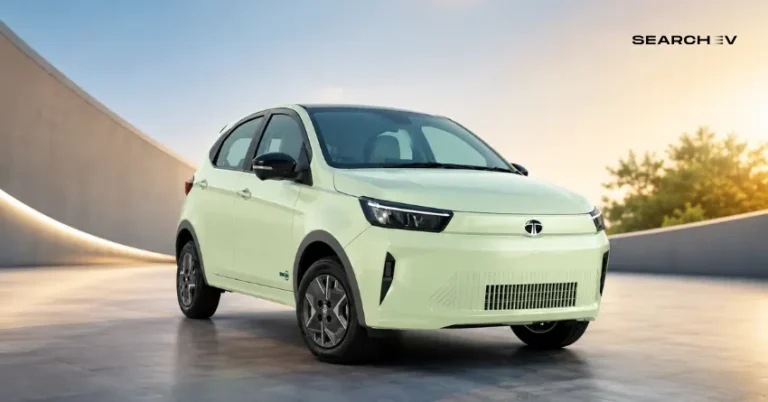
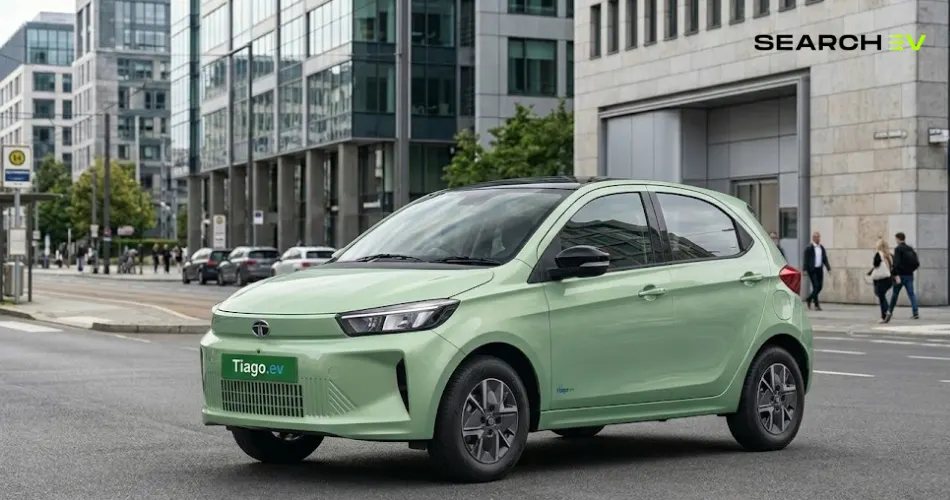
The Tata Tiago EV is the sensible choice for those who want an electric car that looks and feels like, well, a “car”. Built on a converted ICE platform, the interior isn’t as premium as the Comet EV; however, you get much more usable space and sorted high-speed driving dynamics. The ride quality of the Tiago EV, in particular, stands out, while performance feels eager enough for the most part.
Measuring 3,769 mm in length with a 4.9m turning radius, it handles city traffic with predictable ease. It offers the safety net of a 240L boot and five-door accessibility, making it a strong choice for those who find the Comet EV too restrictive, without spending a lot more.
Best Suited For:
- First-Time EV Buyers: Those who want a “normal” car experience without adjusting to something radically different.
- Small Families: A family of two adults and kids needing a practical city car that can handle child seats, and everyday tasks.
- Weekend Intercity Trips: Buyers who primarily commute in the city but may need to travel a longer distance occasionally (Thanks to DC fast-charging capability, which the Comet EV lacks).
Pros & Cons
| Pros | Cons |
| Familiar hatchback design | Cabin still feels budget-grade for a car costing up to Rs 11 lakhs |
| DC fast charging capability (10–80% in 58 minutes) | 19.2 kWh battery struggles to cross 150 km in heavy traffic |
| Practical 5-door layout for better rear-seat access | ICE-derived platform presents some compromises in space and practicality |
Tata Punch EV: Electric Micro-SUVs
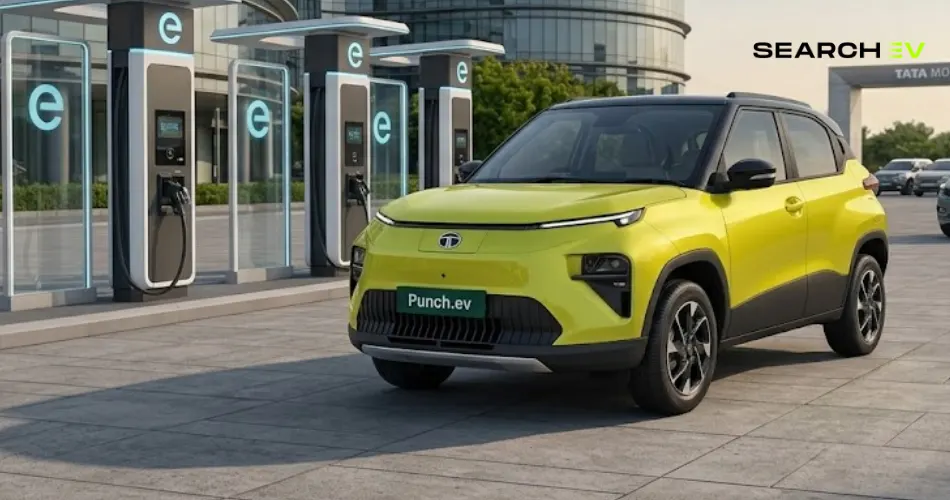
The Tata Punch EV marks the point where affordable EVs start feeling genuinely practical for a typical one-car Indian household. Its Long Range variant starts just under Rs 11 lakh and delivers over 300 km of real-world range, making it viable beyond short city commutes. It also moves past bare essentials, offering niceties such as ventilated front seats, and a 360-degree camera. Not to forget, the dual 10.25-inch high-definition screens, which are exceptionally crisp, elevate the dashboard’s modern appeal.
Its sub-four-metre footprint makes the Punch EV exceptionally easy to manoeuvre through congested city traffic, helped further by a tight turning radius. You also sit higher than you would in most budget electric hatchbacks. Pair that with a mature ride quality that handles broken roads with ease and strong crash safety credentials, and the Punch EV emerges as one of the most well-rounded choices for daily commuters looking to significantly cut running costs.
Best Suited For:
- The One-Car Garage: Middle-class families that need a single car which can handle daily commutes and occasional weekend trips.
- Value seekers: Buyers not wanting to compromise on premium features or overspending upfront.
- Commute in poor road areas: Its high ground clearance makes it more ideal for those dealing with bad roads or large speed breakers regularly.
Pros & Cons
| Pros | Cons |
| Aggressive pricing for what it offers | Tata’s after-sales experience can still be inconsistent for EV-related issues |
| Up to 330 km real-world range from the 40 kWh battery | Rear legroom is tight for taller passengers |
| Premium features like ventilated seats and dual high-res screens | Heavy reliance on touch controls can be distracting |
| Dedicated Acti.ev platform provides better safety, packaging, and driving dynamics | No Spare wheel offered |
Citroen eC3: Electric Crossover Hatchbacks
Expert Review:
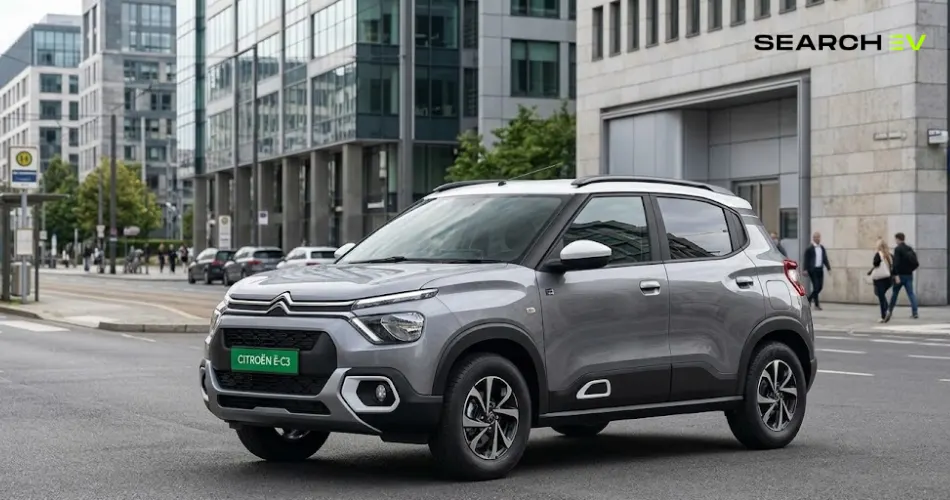
The Citroen eC3 approaches the affordable electric market in India with its unique strengths. While it lacks the futuristic flair of its competitors, it counters with a cavernous cabin made possible by a class-leading 2,540 mm wheelbase.
Inside, the dashboard is dominated by a crisp, highly responsive 10-inch touchscreen, but that’s really about it in terms of highlight equipment. The seats, however, are exceptionally supportive, and where the eC3 truly shines is in its suspension tuning. It absorbs the harsh realities of Indian city infrastructure with a level of composure that simply doesn’t exist in the budget hatchbacks.
Best Suited For:
- Comfort-focused buyers: Those who prioritise ride quality on broken city roads.
- Space-Conscious Families: Those needing ample shoulder and legroom for four large adults without the footprint of a large SUV.
- Fleet operators: Commercial operators looking for a simple, low-maintenance EV with a predictable range.
Pros & Cons
| Pros | Cons |
| Excellent ride comfort over broken roads | Zero-star Global NCAP safety rating is a major concern |
| Class-leading wheelbase offers superior headroom and shoulder room | Air-cooled battery lacks thermal management. An liquid-cooled pack could be a better option |
| Slick 10-inch touchscreen with wireless connectivity | Misses basics like auto climate control and adjustable regen |
| Reliably delivers around 220 km of real-world range | Performance drops off significantly past 80 km/h |
Tata Tigor EV: Electric Compact Sedans
Expert Review:
If you prefer a traditional sedan, the Tata Tigor EV remains the only mass-market electric sedan currently on sale in India. But it remains a niche option that is heavily overshadowed by its newer sibling – the Tata Punch EV. Since it is based on the ICE Tata Tigor platform, it stays under four metres in length (3,993 mm), making it well-suited for city driving and easy to park in tight spaces. That said, its 5.1-metre turning radius makes it slightly less agile than the Tata Tiago EV.
It does offer some practical advantages over the Tiago EV, including an extra 50 mm of wheelbase and 76 litres of additional boot space. The Tigor EV also gets a slightly larger 26 kWh battery pack, though the added weight means real-world range remains fairly similar at around 180–200 km.
Where the Tigor EV feels dated is inside the cabin. Tata hasn’t given it the same facelift treatment as the Tiago EV, so it misses out on the newer dashboard layout and features like the 10.25-inch touchscreen.
Best Suited For:
- Sedan Traditionalists: Buyers who prefer the classic aesthetics and improved comfort associated with a sedan.
Pros & Cons
| Pros | Cons |
| Proven safety with a 4-star Global NCAP rating | Infotainment (7-inch) and instrument cluster feel a generation behind newer rivals |
| Stable, comfortable sedan-like ride quality | Priced close to the far more modern Punch EV and Nexon EV base trims. |
| Strong 170 Nm low-end torque makes it quick in city traffic | Slower DC fast charging than Tata’s newer EVs |