Quick Reads
- Ola Electric is now the first Indian EV manufacturer to cross a million sales
- Over 10,00,846 units sold as of March 2026
- This feat was achieved despite the 67% sales drop this year
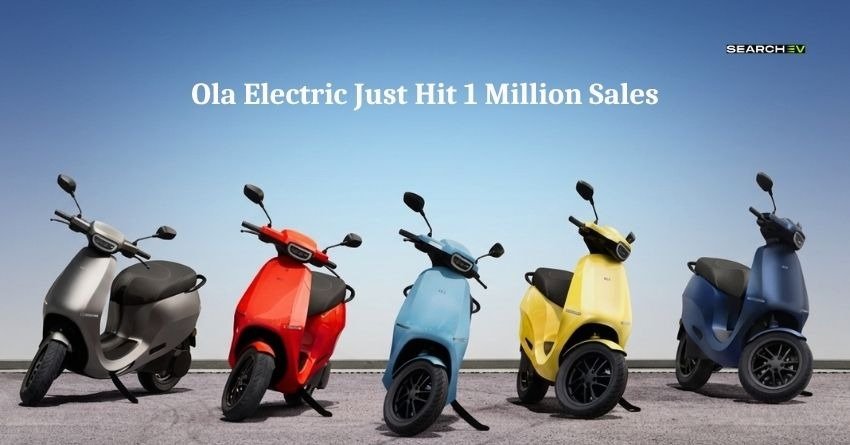
Ola Electric just crossed the 1 million sales milestone in India, with over 10,00,846 units sold as of March 23, 2026. Ola Electric became the first Indian electric vehicle (EV) manufacturer to cross this historic sales milestone. While being a significant achievement, it is also an important strategic warning for the Bengaluru-based EV startup.
The Initial Rise (2021–2024)
Ola entered the Indian market back in 2021 with futuristic tech that was new to the market. The brand focused on feature-loaded products, which were aimed to cut down on running costs, and give you the thrilling performance of an EV – all in a single package. And, the sales took off!
In FY2022, the brand’s first year, it had already crossed the 100K mark with over 1,09,403 units sold. From crossing 100K units in 2022 to consistently hitting higher milestones each year, the brand became one of the prominent manufacturers in the Indian EV market. By 2024, it had reached its peak with over 4 lakh units retailing in a single year, which was a dominant 35% market share.
The Turning Point (2025–2026)
After reaching a peak in 2024, Ola Electric’s sales fell by 51% in 2025, dropping to just below the 200,000 mark. Its market share halved from 35% to around 15%, and the EV crown slipped away to legacy Indian manufacturers TVS, Bajaj Auto and Ather Energy. However, in March 2026, the sales dropped to just 16,714 units, which is barely 5% of the total market share.
During this period, bigger manufacturers like TVS, Bajaj, and Vida (Hero MotoCorp), along with other electric rivals like Ather and Ultraviolette, ramped up their production and service capabilities. And this was the point where Ola lacked! While the brand had innovative products, the centred focus on sales and ignorance of service challenges made the customers lose trust.
What Went Wrong?
Several factors have contributed to Ola’s downfall. The first one is the increased competition from bigger brands that have scaled up their production and have extensive dealership networks. Apart from this, these brands have built up a rapport with the customers over time and even offer much better quality products.
The second factor that contributed to this downfall was the compromised, or rather challenged, service network. Ola focused on the expansion of dealerships rather than solving the basic customer complaints, which often led to a poor after-sales experience. Over time, these issues became increasingly apparent as sales surged.
In 2025, Ola also diversified into electric motorcycles. This move could have diluted the brand’s focus from its bread-and-butter – the electric scooters.
The Road Ahead
Ola Electric’s journey over the last half-decade provides us with important insight into the Indian electric two-wheeler market. The first phase was all about innovation, where futuristic and exciting products made headlines while hitting record-breaking sales targets. But the second phase is all about who’s here to stay. It’s not about who broke the record but about who’s still here to make another one.
Right now, the Indian customers are looking for reliable tech, consistent build quality, and a service centre that is actually helpful when things go wrong. And this is the sole reason the legacy brands are succeeding. While this may be a success story for Ola, it’s no longer leading the market but rather trying to catch up to it.