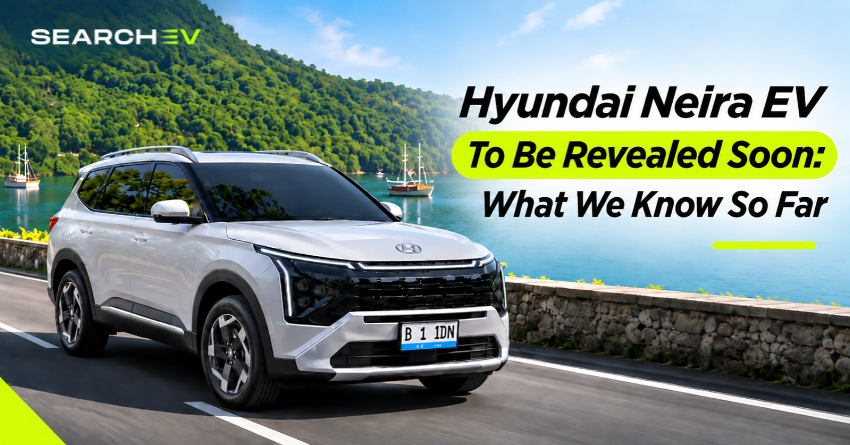
Hyundai has a new three-row electric vehicle, and it looks rather familiar. It is called the Hyundai Neira EV and will be revealed in production specifications ahead of its public debut at the Gaikindo Jakarta Auto Week in Indonesia on November 20, 2026.
And there’s a good reason it looks familiar. Underneath the Hyundai styling, the Neira is closely related to the Kia Carens Clavis EV, which is already on sale in India. That immediately makes the Neira interesting for us because it potentially gives Hyundai easy access into India’s still-small three-row electric MPV segment. So, from the design and interior to its expected battery, range and possible India launch, here’s everything we know about the Hyundai Neira EV so far:
Hyundai Neira EV: Expected Specifications
| Specification | Hyundai Neira EV – Expected |
| Body Style | 3-row electric MPV |
| Seating | 7 seats; 6-seat version possible |
| Battery | 42 kWh / 51.4 kWh expected |
| Maximum Power | Up to 126 kW/171 PS expected |
| Torque | 255 Nm expected |
| Drivetrain | Front-wheel drive |
| Claimed Range | Around 404-490 km expected |
| DC Fast Charging | Up to 100 kW expected |
| 10-80% Charging | Around 39 minutes expected |
| Safety | Level 2 ADAS, 360-degree camera confirmed |
| India Launch | Not officially confirmed but speculated to be in 2027 |
*Powertrain and range figures are based on the closely related Kia Carens Clavis EV and remain unconfirmed for the Neira.
Hyundai Neira EV Design: A Familiar Shape With A New Face
You don’t need to stare at the Neira for very long before noticing the Kia connection. The basic body shell, and overall proportions appear almost identical to the Kia. Even the connected LED lighting elements have largely been carried over. Hyundai has, however, made enough changes to give the Neira its own identity.
The front gets a different blacked-out closed grille with patterned detailing, along with a substantially redesigned bumper. The production version also misses the fog lamps seen on the Kia.
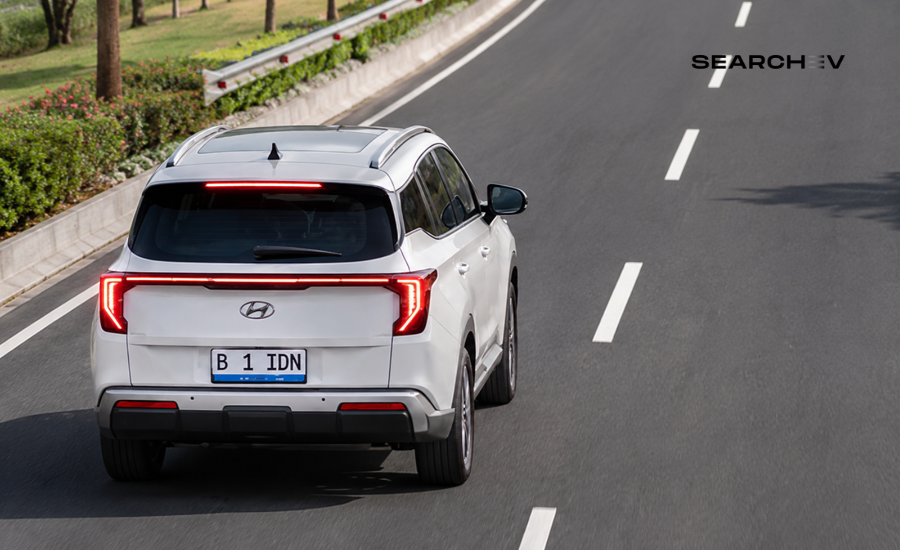
Move around the side, and the biggest change is a fresh set of alloy wheels, while the familiar wheel-arch cladding and roof rails remain. At the back, the connected LED tail lamps are again similar to those on the Kia Carens Clavis EV, but Hyundai has fitted a redesigned bumper with considerably more silver accents. So, no, Hyundai hasn’t completely reinvented the design. But considering how well the Carens Clavis packaging already works, that’s probably not a bad thing.
Hyundai Neira EV Interior And Seating
The cabin follows the same styling. The prototype displayed earlier in 2026 featured a dashboard layout that was almost identical to the Carens Clavis EV, including twin 12.3-inch displays, a dedicated climate-control panel and a floating centre console.
Hyundai-specific touches include black seat upholstery and the brand’s familiar four-dot motif on the steering wheel. The Neira shown so far uses a three-row, seven-seat layout, making it one of the relatively few affordable electric vehicles capable of carrying seven occupants.
A six-seat version with second-row captain seats is also possible considering the Kia sibling already offers both seating configurations, although Hyundai hasn’t confirmed the final Neira variant lineup yet. This is arguably where the Neira could become particularly relevant to India. Most EVs around the Rs 20 lakh mark remain five-seaters. A practical three-row EV gives Hyundai access to family buyers looking beyond conventional electric SUVs.
Hyundai Neira EV Battery And Range
This is where things get slightly more complicated. Hyundai has not officially published the Neira’s complete powertrain specifications yet. Those details are expected around its November 20 public debut. However, multiple reports suggest the Neira will be quite similar to the Kia Carens Clavis EV mechanically as well. The Kia is offered with two battery options:
| Battery | Power | Torque | Claimed MIDC Range |
| 42 kWh | 99 kW/135 PS | 255 Nm | 404 km |
| 51.4 kWh | 126 kW/171 PS | 255 Nm | 490 km |
Both use a single front-mounted electric motor. If Hyundai carries this combination over unchanged, the Neira could offer a maximum claimed driving range of around 490 km from the larger battery.
The smaller 42 kWh version could instead become the more affordable city-focused option with around 404 km of claimed range. Kia officially quotes these battery, motor and range figures for the Carens Clavis EV.
Hyundai Neira EV Charging
Again, Hyundai hasn’t released Neira-specific charging figures. But if the Carens Clavis EV hardware carries over, both versions should support 100 kW DC fast charging. The Kia can charge from around 10-80 percent in approximately 39 minutes using a compatible 100kW DC fast charger.
An 11 kW AC charger takes about four hours for the 42 kWh battery and around four hours and 45 minutes for the larger 51.4 kWh pack. We’d expect similar numbers from the Neira unless Hyundai changes the battery management or charging hardware for its version.
Features Could Be One Of Its USPs
Hyundai has already confirmed some of the important equipment. The production Neira will offer a 360-degree surround-view camera and Level 2 ADAS. Based on the prototype and its relationship with the Carens Clavis EV, we can also expect features such as:
- Twin 12.3-inch screens
- Hyundai Bluelink connected-car technology
- Blind-spot View Monitor
- Automatic climate control
- Wireless smartphone connectivity
- Ventilated seats
- Panoramic sunroof
- Multiple drive and regenerative braking modes
- Vehicle-to-Load functionality
- Digital key functionality
Not all of these have been officially confirmed for every Neira yet, so the final production equipment list should become clearer after November 20.
Ground Clearance Could Be Better Suited To Rough Roads
One interesting detail from the prototype is the focus on everyday usability. The Neira is reported to have around 200 mm of ground clearance, which is fairly generous for something shaped more like an MPV than an SUV. That could make it considerably easier to live with on broken roads, large speed breakers and when carrying a full load of passengers.
Hyundai has also highlighted easier third-row access – an important detail considering three-row vehicles can often look spacious on paper but become awkward when you’re actually trying to get into the last row.
Will Hyundai Neira EV Launch In India?
This is the big question. As things stand on November 18, 2026, Hyundai Motor India has not officially confirmed the Neira for our market. Some reports suggest the Neira could arrive here in 2027, potentially alongside an ICE-powered derivative, but that should still be treated as an expectation rather than a confirmed launch plan.
What we do know is that Hyundai intends to expand into new segments in India over the coming years, although its officially confirmed near-term mass-market EV is a separate compact electric SUV, which could be called the Hyundai Ioniq P, rather than the Neira.
The Neira’s case for India is nevertheless fairly strong. The Carens Clavis EV is already built and sold here, so much of the platform, powertrain and supply-chain groundwork already exists within the Hyundai Motor Group. So, it is very likely that the Niera will eventually make its way to India, but WHEN? is the biggest question as of now.
Hyundai Neira EV Expected Price In India
Pricing is completely speculative at this stage. However, its Kia sibling gives us a useful reference point. The Carens Clavis EV is currently priced from Rs 18 lakh to Rs 25 lakh (ex-showroom) depending on the battery and variant. If Hyundai eventually launches the Neira here with similar specifications, an expected Rs 18 lakh-Rs 25 lakh price bracket would make sense, with breathing room for Rs 1-2 lakh. That would put it directly against the Carens Clavis EV rather than more expensive three-row electric SUVs.
Hyundai Neira EV Rivals
If launched in India, the obvious rival would be the Kia Carens Clavis EV. In fact, the similarities between the two could make this one of those rare sibling rivalries where the buying decision eventually comes down to design, features, dealer experience and pricing.
The Neira could also face competition from upcoming three-row electric MPVs from other manufacturers, including Maruti Suzuki’s future electric people mover, the Maruti Suzuki YMC MPV, which was spotted testing on Indian roads. More importantly, it would give Hyundai something it currently doesn’t have in India: a relatively attainable three-row electric family car.
SearchEV’s Take
The Neira isn’t groundbreaking in the conventional sense. Underneath, it appears to borrow heavily from the Carens Clavis EV we’re already familiar with. The styling isn’t dramatically different either, and the expected 42 kWh and 51.4 kWh batteries won’t rewrite the range record books. But that might actually become its biggest strength.
The Carens Clavis EV already provides a proven base, Hyundai knows the Indian mass market extremely well, and a practical seven-seat EV priced somewhere around the Rs 20 lakh mark could make far more sense to a family than another coupe-SUV chasing headline performance figures.
For now, though, there’s one important caveat: the Hyundai Neira EV is real, but its India launch isn’t official yet. The November 20 reveal should answer the battery, motor, range and variant questions. After that, all eyes will be on Hyundai India.
Source: Hyundai Motors Indonesia OEM website and inputs for SearchEV experts.